After next week’s elections, the Party of Wales looks likely to become the largest group in the Welsh Parliament
What’s happening in Wales?
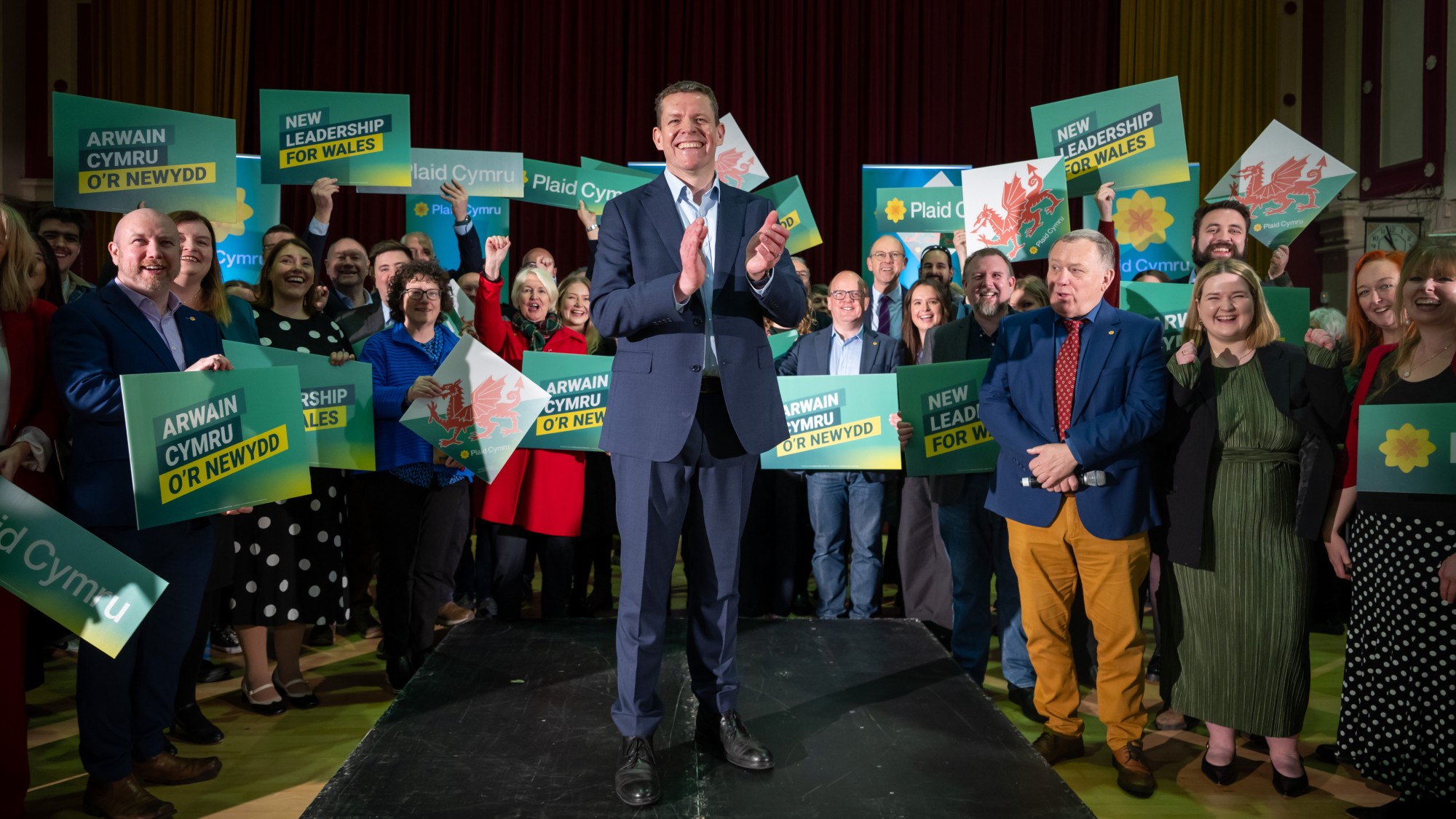
Labour has dominated Welsh politics for a century; since devolution in 1999, it has always been the largest party in Wales’s national assembly, known since 2020 as the Senedd Cymru, the Welsh Parliament. But the polls suggest Labour will drop to third place in the Senedd elections on 7 May, and that Plaid Cymru will emerge as the largest party – if it can beat Reform UK. According to the FT’s poll tracker, Plaid is projected to get around 29% of the vote, giving it more than 30 seats in the new, enlarged 96-seat Senedd (up from 13 out of 60). Reform is projected to get around 26% and Labour 16%. If this is right, Rhun ap Iorwerth, the party leader and Member of the Senedd (MS) for Ynys Môn (Anglesey), will become first minister, in a minority or coalition government. The direction of travel was suggested by the Caerphilly Senedd by-election last October. In that former Labour stronghold, Plaid’s candidate Lindsay Whittle, who had previously unsuccessfully contested 13 elections, won 47.4% of the vote. Reform took 36%, while Labour collapsed to 11%.
Why is Plaid set to eclipse Labour?
The party was founded a century ago and has long had a solid base of support among the country’s Welsh speakers – around 800,000 of its population of 3.2 million people. But support now seems to be surging. In Senedd elections, in which Plaid has generally won around 20% of the vote, it is well placed to capitalise on Labour’s difficulties. The most important factor is the poor state of Welsh public services (under the devolution settlement, Cardiff controls health and social care, education, transport, environment and local government). The NHS is particularly problematic. Despite recent improvements, 543,000 patients are on NHS waiting lists in Wales – about one in six – compared with one in 10 in England. Welsh schools are sliding down the international league tables. When the Conservatives were in power in Westminster, some of the blame could be placed on them, but with an unpopular Labour government in London, Welsh Labour can no longer blame England for its struggles.
Is this to do with Welsh identity?
Welsh identity is a powerful force: according to Office for National Statistics census figures from 2021, 55.2% of people in Wales identify as “Welsh only”, while 8.1% feel both Welsh and British, and just 18.5% identify as British only. But this does not appear to be growing more pronounced. Rather, according to Jac Larner of Cardiff University, what has happened is that voters have split into a progressive, Welsh-identifying bloc, and a conservative, British-identifying one. Plaid has wrested leadership of the progressive bloc from Labour, while Reform has taken leadership of the conservative bloc from the Tories.
What are Plaid’s policies?
Among its headline pledges are universal childcare, increasing child benefit by £10 per week, more out-of-hours GPs, and rent controls. But given how devolution works – about 80% of Welsh government spending comes from the UK government via the block grant, calculated using the Barnett Formula – many of its plans involve asking Westminster for more money and more powers. Plaid Cymru is, for instance, seeking £4 billion that it believes Wales is owed in transport funding (because it hasn’t benefitted from HS2). It wants control over the Crown Estate, which owns coastal areas, to be devolved so it can create wind farms and green jobs. Welsh Labour has also sought these, and has not been granted them.
What about independence?
The second article of Plaid Cymru’s constitution says: “As the National Party of Wales, the Party’s aims shall be: to secure independence for Wales in Europe.” However, Rhun ap Iorwerth says, if elected, he will not legislate for an independence referendum in his first term; he did not even mention the “i” word in his conference speech in February. This is pragmatic. A recent poll carried out for the BBC found support for Welsh independence at 32%, with 52% against and 16% uncertain. According to the Wales Office, the annual net fiscal deficit – between tax raised and spending on public services – is around £21.5 billion, or just under £7,000 per person in Wales. “There is an odd dynamic at play,” says the BBC’s Gareth Lewis: “the Welsh pro-indy parties tend to be talking about it less than those who are against it.” But Plaid will aim to build up to a referendum – as the SNP did. And, if elected, it will establish a National Commission to lay the groundwork for a future White Paper on Welsh independence.
How is Reform UK faring in Wales?
Reform has seen a much more rapid expansion in its support than Plaid Cymru: it won just 1.6% of the vote in the 2021 Senedd election, and most polls now show it in the mid-20s or in some cases even level-pegging with Plaid. Reform’s support is particularly strong in the formerly industrial South Wales Valleys, and, as in England, it is drawing a mixture of former Conservative voters and disillusioned traditional Labour supporters. It aims to scrap Wales’s net zero carbon targets, and the 20mph speed limits imposed by Labour – a totemic issue for many. Its leader Dan Thomas regards independence as a “huge risk”. A big electoral issue for him is whether left-leaning voters vote tactically to “stop Reform” – as they did in Caerphilly. And even if Reform becomes the largest party, Plaid, Labour and the Greens have all ruled out entering into a coalition with it.
How important will this vote be?
According to Ipsos, 52% of Welsh voters may still change their mind before 7 May. But if Plaid Cymru does win, it will be an important symbolic moment, not just in Wales. It seems likely that, after the elections, for the first time, all three first ministers in Wales, Scotland and Northern Ireland will want their nations to leave the UK, posing a major challenge to Westminster.
A century of Plaid
Plaid Genedlaethol Cymru – originally the National Party of Wales – was founded in August 1925, as a social movement to support the Welsh language and national identity. Saunders Lewis, one of its founders, declared that “the chief aim of the party [is] to take away from the Welsh their sense of inferiority”. He was one of three men who set fire to the RAF Penyberth base in Gwynedd in 1936, in protest at its sitting in the Welsh-speaking heartland. Plaid was long a fringe party, contesting only a handful of seats in the early 1950s. The 1957 decision to flood the village of Capel Celyn in the Tryweryn Valley to supply Liverpool with water, made without the support of a single Welsh MP, boosted Plaid’s growth.
In 1966, it won its first seat, Carmarthen, at a by-election. That MP, Gwynfor Evans, fought a campaign (including threatening a hunger strike) to force the Conservative government to establish S4C, a Welsh-language TV station, succeeding in 1982. From the 1970s on, Plaid’s support at general elections hovered around the 10% mark, but it mostly failed to expand beyond the Welsh-speaking areas in the north and west – Gwynedd, Anglesey, Ceredigion – to the more populous English-speaking Valleys and cities of South Wales.