The Week The Week
flag of US
US
flag of UK
UK
https://cdn.mos.cms.futurecdn.net/flexiimages/jzblygzdxr1769609154.gif

SUBSCRIBE

Try 6 weeks free

Sign in
  • View Profile
  • Sign out
  • The Explainer
  • Talking Points
  • The Week Recommends
  • Podcasts
  • Newsletters
  • From the Magazine
  • The Week Junior
  • More
    • Politics
    • World News
    • Business
    • Health
    • Science
    • Food & Drink
    • Travel
    • Culture
    • History
    • Personal Finance
    • Puzzles
    • Photos
    • The Blend
    • All Categories
  • Newsletter sign up Newsletter
  • Saturday Wrap, from The Week
    Israeli alliances, Palantir power, and a secret £5 million gift

     
    controversy of the week

    ‘Our unity is a message’: Netanyahu’s rivals unite

    Is Benjamin Netanyahu’s time finally up? Is Israel’s longest-serving prime minister, in power for almost 15 of the past 17 years, heading for a fall at the forthcoming October general election?

    Following the decisive move made by Israel’s opposition parties last week, that is now a real possibility, said Ravit Hecht in Haaretz (Tel Aviv). The hardline right-winger Naftali Bennett and the centrist Yair Lapid have announced they will merge their two parties to form a single party called Yachad (Together). Before their announcement, polls had Bennett’s party projected to win 21 seats and Lapid’s party seven. A total of 28 seats would make Yachad the biggest party in the 120-seat Knesset, ahead of Netanyahu’s Likud, on a projected 25. 

    This pair have teamed up before, said Philissa Cramer on the Jewish Telegraphic Agency. After the 2021 election that briefly dislodged Netanyahu from office before he stormed back in late 2022, they struck an unusual power-sharing deal, agreeing to take it in turns to serve as prime minister. This time, they are presenting their combined party as a more permanent antidote to the polarisation in Israeli society that has deepened under Netanyahu. “Our unity is a message to the entire people of Israel,” declared Bennett on announcing the merger. “The era of division is over. The era of correction has arrived.” 

    Don’t be so sure, said Ori Wertman in The Jerusalem Post. This merger may well backfire. True, the two men have agreed on some significant issues, including the need for an eight-year cap on a PM’s time in office and for a full army draft with sanctions on Haredi (ultra-Orthodox) draft evaders. But the fact remains that Bennett is an Orthodox Jew who has called for the annexation of parts of the West Bank – teaming up with Lapid, a secular Jew who has previously endorsed the two-state solution, he may well prompt some of his supporters to defect to Likud. Conversely, Lapid’s shift to the right – he has agreed to rule out the possibility of a coalition with any of Israel’s Arab parties – will alienate much of his moderate base. Indeed, the first post-merger poll projected the new party winning just 26 seats, not the 28 total forecast when the two parties were running separately. 

    Still, there is a clear political logic behind the merger, said Aaron T. Walter in The Times of Israel. Lapid’s support has crashed since his party won 24 seats in the last election, while Bennett, who is going to lead the new party, has gained in popularity. The trouble is, Yachad has a “core arithmetic problem”. Without Arab parties, which it has ruled out as potential coalition partners, its only hope of securing the 61 seats needed for a majority is to lure Gadi Eisenkot, former chief of staff of the Israel Defence Forces, to join the party. Eisenkot’s military credentials and his moving personal story of having lost a son to the war in Gaza have made him a leading contender of the Right. But for that very reason, he’d probably join only if he were made leader, something Bennett has made plain he won’t countenance. 

    But what would a Yachad victory actually achieve, asked David Issacharoff in Haaretz. Lapid and Bennett are keen to highlight the corruption charges Netanyahu has managed to fend off by staying in power, and to blame him for the security failures that enabled Hamas’s October 2023 attack. But on the big questions – how to extricate Israel from the conflicts in Gaza and Lebanon, and how to prevent settler violence in the West Bank – they’ve nothing new to say.

    Yachad’s central weakness, said Hani Hazaimeh in Arab News (Riyadh), is that its focus is simply on removing Netanyahu from office. By refusing to address “the unresolved Palestinian issue” and “the normalisation of military-first policies”, they have missed the chance to redefine Israel’s future in any meaningful way. Even if his rivals do displace him, Netanyahu’s fall would be less a “political revolution” and more a “reshuffling of power within the same troubled system”.


    Briefing of the week

    Palantir: ‘software that dominates’

    The US tech firm is fast becoming one of the most notorious corporations in the Western world. Why?

    Why is Palantir in the news? 
    Palantir Technologies Inc., a Miami-based company that specialises in data integration and analysis, is seldom out of the news. This is partly because it works in controversial sectors: its biggest client is the US military, and its software is used in conflicts from Israel to Ukraine. Clients also include the CIA and US Immigration and Customs Enforcement (ICE); it was involved in Elon Musk’s short-lived Department of Government Efficiency (Doge). It has also expanded into healthcare: in Britain, its contracts include a £330 million deal with NHS England and a £240.6 million deal with the Ministry of Defence.

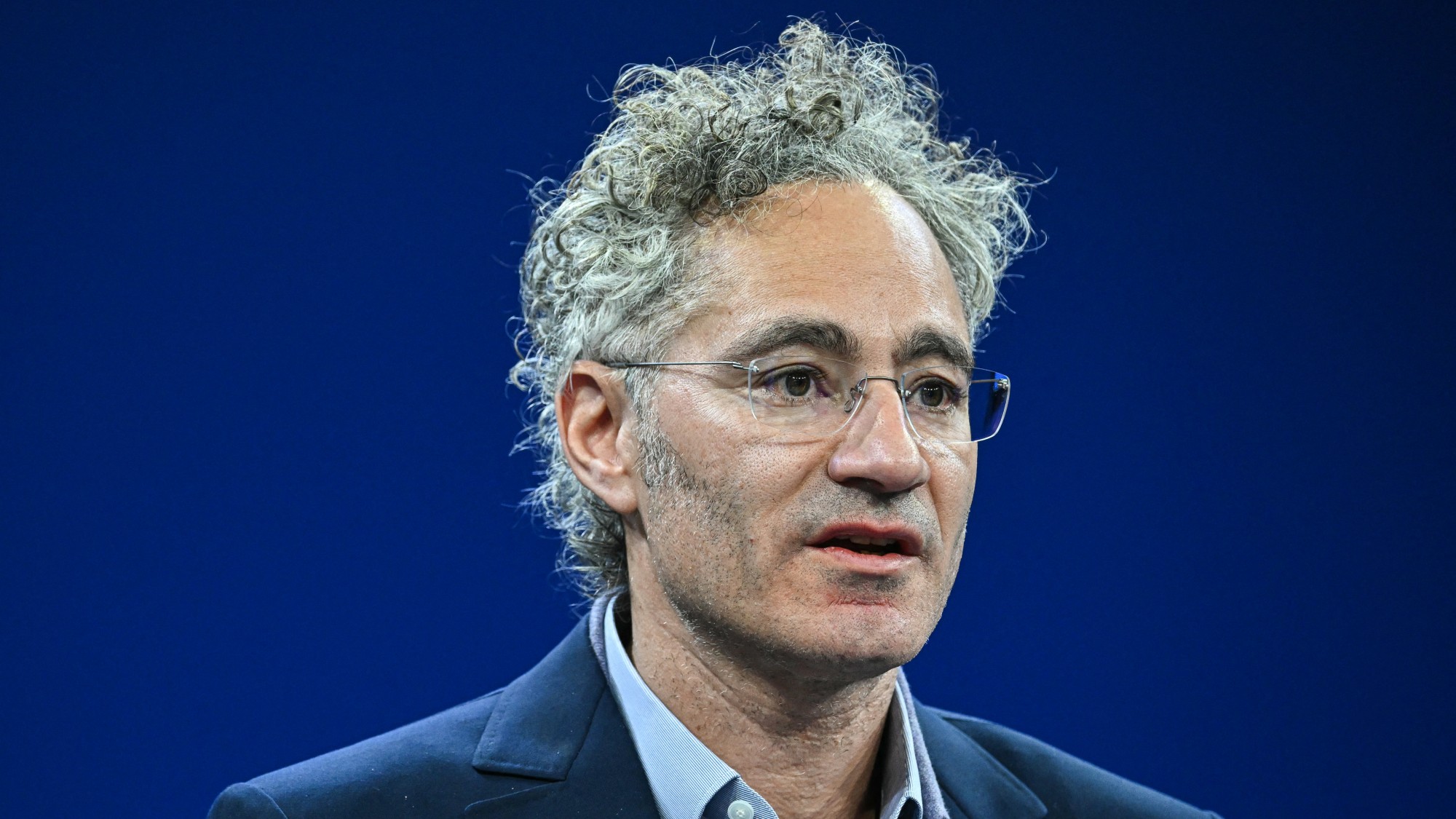
    But its notoriety is in part because of its eccentric CEO, Alex Karp. Palantir recently posted a manifesto penned by Karp on X, which, among other things, declared that “Silicon Valley has an affirmative obligation to participate in the defence of the nation”; called for universal conscription; encouraged the development of AI weapons; and condemned the West’s “vacant and hollow pluralism”. One MP called it “the ramblings of a supervillain”. 

    Where did Palantir come from? 
    Founded in 2003 by a group of tech moguls headed by Peter Thiel, a co-founder of PayPal and a libertarian political activist, Palantir was named after the “seeing stones” in “The Lord of the Rings”. (Thiel is a J.R.R. Tolkien fan.) Originally, it applied PayPal’s fraud detection system, which successfully identified fraudulent activity on eBay, to US national security; early funding came from In-Q-Tel, a venture capital firm that funds projects for the CIA. Palantir’s technology was taken up by the US defence establishment under President Obama – it is rumoured it was involved in the assassination of Osama Bin Laden – and it helped the US and UK governments with contact tracing and vaccine distribution during the Covid pandemic. It now helps the Trump administration track undocumented immigrants and provides Israel’s military with “intelligence and surveillance services”. Palantir currently has a market capitalisation of some $350 billion. 

    What does it actually do? 
    One former employee likened Palantir’s work to “really extravagant plumbing with data”. Most big companies and government agencies have a lot of information they can’t easily use because it’s stored in a hodgepodge of different systems and databases. Palantir’s core products: Foundry – primarily for civilian use – and Gotham – for military and law enforcement – sit on top of those different systems and pull all the data together in an interface that’s easy to use (little coding is required). A big selling point is that Palantir doesn’t itself access or exploit the data, which stays with the customer; it just makes it easier to analyse. This is useful for all sorts of unobjectionable things, such as Covid testing and tracing. But it also allows ICE to collect large amounts of information to investigate individuals, and it helps the US military to plan bombing campaigns.

    What is its military role? 
    Palantir is the leading contractor for Project Maven, the US military’s (and Nato’s) targeting system. Maven draws together a mass of data from drones, satellites, signals and other sources to flag potential targets; it presents findings to human analysts in one clear user interface; and can relay their decisions to appropriate weapons systems. According to a new book, “Project Maven” by Katrina Manson, the entire “kill chain”, from target identification to target destruction, consists of four clicks. Maven allows hundreds of targets to be hit per day, and adding in AI tools to help interpret data means that number is capable of rising into the thousands. Similar Palantir technology is used in Ukraine, and since 7 October 2023, it has worked closely with the Israel Defence Forces, whose AI-assisted systems use algorithms to identify and assassinate suspected Hamas agents. 

    What are the implications of this technology? 
    Speeding up the steps between identifying a target and destroying it is fundamental to modern warfare, so it is immensely valuable. In Ukraine, Palantir’s tools have helped to fuse battlefield intelligence, track and destroy drones, even document war crimes. But such systems are not infallible, and accelerating the kill chain also minimises the role of human judgement: Maven was used to wrongly identify a primary school in Minab, Iran (in a building used years before by the Revolutionary Guard Corps), as a military target. US missiles killed some 168 people, mostly young girls. 

    Where does the NHS come into this? 
    Palantir has been involved in the NHS’s data-handling since 2020, during Covid. In 2023, it won a contract to develop the Federated Data Platform, designed to streamline tangled datasets across the NHS and help clear hospital backlogs. In some hospitals, for example, scheduling operations may require staff to consult separate systems for waiting lists, theatre bookings, staff rotas and equipment orders. But many critics dislike the idea of a US spytech firm, with links to the US and Israeli militaries, potentially gaining access to sensitive health data. Others question its value for money. 

    How worried should we be? 
    Palantir has become “a cultural shorthand for dystopian surveillance”, said Wired magazine. It is a cause célèbre on the British Left that has been taken up by the Greens’ Zack Polanski. Arguably, though, it is just a data analytics company with a militarised culture designed in part to give it a mystique: the company’s slogan is “We build software that dominates”; it uses military and intelligence jargon instead of more standard office terms. (Its data consultants are known as “forward deployment software engineers” or “deltas”.) But not least because of its close links to a US administration that is an unreliable ally at best, many policymakers in Western Europe are now reconsidering the wisdom of using Palantir’s services.

    The world according to Karp 
    Alex Karp, 58, the son of a Jewish doctor and an African-American artist from Philadelphia, was a left-wing student activist; he studied in Frankfurt under the socialist philosopher Jürgen Habermas and has no background in computing. He became friends with Peter Thiel at Stanford Law School and in 2003 helped co-found Palantir.

    Karp has always been outspoken about the company’s values – Palantir has long refused to work with Chinese or Russian companies – but these have moved markedly to the right over the years, and today he often rails against “woke” thinking, describing it as “pagan”. Karp is a fan of martial arts and pistol shooting, and has a retinue of bodyguards drawn mostly from Norwegian special forces, apparently because they are able to keep up with his obsessive cross-country skiing. His net worth is estimated at over $15 billion.

    Palantir’s “manifesto”, like Karp’s recent book “The Technological Republic”, seemed to argue for a merger between Silicon Valley and a nationalistic, militarised US state; but it also railed, idiosyncratically, against the iPhone and the “post-war neutering of Germany and Japan”. It was seen by some as an attempt to curry favour with the Trump White House, which has turned on tech firms deemed unsupportive, such as Anthropic.




    Spirit of the age

    Chinese car manufacturers are finding the edge in a crowded market by introducing ever more luxurious fittings, said The Times. Now, the tech firm Huawei has unveiled the latest of these: headlights that can project movies. Unveiled at a show in Beijing, they allow the driver to beam whatever they are playing on their in-car entertainment system onto a wall or screen in front of the car. Other eye-catching features include in-car fridges, and one firm recently patented an in-car toilet that slides out from under a seat.


    VIEWPOINT

    A skeuomorphic world

    “I learnt another new word this week and it’s a belter. It’s ‘skeuomorphism’, and it describes how old technology is incorporated into new technology even though it provides no function. The mechanical shutter noise your phone makes when you take a photo? It just makes us feel more at home, because it’s what we are used to. Cooling grilles on electric cars? Rivets on a pair of today’s jeans? They are doing nothing at all. My favourite is the ‘horsey horseless’ carriage of 1899. One of the first automobiles, it had a life-sized wooden horse head attached to the front. Once you know it, you’ll suddenly start noticing just how skeuomorphic the world is.” 

    Deborah Ross in The Times


    talking point

    Nigel Farage: a secret £5 million gift

    “There’s no money in politics,” is something Nigel Farage has said often over the years. Yet it turns out that in his case, there is really quite a lot, said Anna Isaac in The Guardian. Last week, it emerged that shortly before announcing his plan to stand in the 2024 election – having previously repeatedly ruled it out – Farage pocketed £5 million from the crypto-billionaire Christopher Harborne. The tycoon, who is based in Thailand, has since given Reform UK £12 million, making him one of the biggest political donors in UK history. The £5 million, though, was a gift to Farage himself. It was, he explained, to pay for his personal security, and he said he’d had no need to declare it, as it was given to him before he became an MP, and it was purely “personal”. 

    It’s hard to square this with the rules, said The Observer. MPs are obliged to declare gifts they received in the year before they were elected, and in assessing the propriety of a gift, they must consider what a reasonable person would make of it. Even if Farage believed that a £5 million gift – unprecedented in British politics – would not influence him in his public duties, it surely failed this “appearance test”. Perhaps inevitably, he has been referred to the standards watchdog. 

    Harborne says he expects nothing in return for his donations, said Fraser Nelson in The Times. And maybe he does not. But “it just so happens” that Farage is proposing a crypto “Big Bang” – the creation of a national bitcoin reserve; crypto-specific tax cuts; lighter regulation – that could massively benefit crypto firms. Harborne’s gifts to Reform are huge: two-thirds of its funding comes from him. And he is not the party’s only crypto donor. But in crypto world, these sums amount to “a bar tip”. It seems that the wall of money that has flooded US politics, handing millions to candidates who back crypto-friendly policies, is arriving in Britain. We have to wonder how many prospective Reform MPs have already accepted large “personal” gifts. The party poses as anti-establishment, but while promising “genuine hope” to voters who feel betrayed by the failures of the established parties, it is quietly “advancing the interests of its own patronage networks”. In other words, it is not smashing the elites: it is replacing them.


    It wasn’t all bad

    Arthritic, visually impaired and suffering from a condition that means his tongue always lolls out, Lazare has not been dealt the easiest of hands, said The Times. But on the plus side, the continental toy spaniel might win a place in history as the world’s oldest ever dog. Lazare’s microchip and France’s pedigree register indicate that he was born in December 1995, making him 30. The current record holder, an Australian cattle dog named Bluey, died in 1939, aged 29. Guinness World Records has yet to verify the claim, but Lazare’s owner, who recently adopted him from a shelter (his previous owner having died), said she doesn’t care what it decides. She re-homed Lazare, she told the media, because she felt an “instant bond” with the ancient dog.


    People

    Anthony Geffen

    As a veteran producer of David Attenborough documentaries, Anthony Geffen has had some memorable days at work. But none more so than the 8th of May 2015, he told Damian Whitworth in The Times. Attenborough was due to be in Washington that day for a screening, and Geffen had got in touch with the White House to see if he might be able to meet Barack Obama to discuss climate change. Obama’s aides informed him that the president was actually a great admirer of the naturalist. “He grew up watching his programmes in Hawaii,” said Geffen. Obama didn’t just want to meet him: he wanted to interview him. 

    And so on Attenborough’s 89th birthday, the two men sat down together in the Oval Office. It was an odd moment. “We were all out of our comfort zone,” said Geffen. “Obama was clearly fascinated that he was meeting somebody who genuinely meant a lot to him.” They spoke at length, “utterly engaged” in what the other was saying. “You could have heard a pin drop.” 

    Afterwards, Obama asked “Atten-burrow” to sign a tatty copy of one of his early books. “It was like he had interviewed one of his heroes.” The Englishmen then retired to a bar to reflect on what Attenborough described as one of the most “extraordinary” days of his life. “I’ve got a photograph of us sitting there and we look like we can’t believe what just happened.”


    Image credits, from top: Emmanuel Dunand / AFP / Getty Images; Fabrice Coffrini / AFP / Getty Images; Leon Neal / Getty Images; John Phillips / Getty Images / Tourism Australia
     

    Recent editions

    • Evening Review

      Labour’s next move

    • Morning Report

      Labour loses first councils as Reform surges

    • Evening Review

      Do the Greens have an antisemitism problem?

    VIEW ALL
    TheWeek
    • About Us
    • Contact Future's experts
    • Terms and Conditions
    • Privacy Policy
    • Cookie Policy
    • Advertise With Us
    • FAQ
    Add as a preferred source on Google Add as a preferred source on Google

    The Week UK is part of Future plc, an international media group and leading digital publisher. Visit our corporate site.

    © Future Publishing Limited Quay House, The Ambury, Bath BA1 1UA. All rights reserved. England and Wales company registration number 2008885.