The Week The Week
flag of US
US
flag of UK
UK
https://cdn.mos.cms.futurecdn.net/flexiimages/jzblygzdxr1769609154.gif

SUBSCRIBE

Try 6 weeks free

Sign in
  • View Profile
  • Sign out
  • The Explainer
  • Talking Points
  • The Week Recommends
  • Podcasts
  • Newsletters
  • From the Magazine
  • The Week Junior
  • More
    • Politics
    • World News
    • Business
    • Health
    • Science
    • Food & Drink
    • Travel
    • Culture
    • History
    • Personal Finance
    • Puzzles
    • Photos
    • The Blend
    • All Categories
  • Newsletter sign up Newsletter
  • Saturday Wrap, from The Week
    SpaceX flotation, post-war Gaza, and a shadow fleet raid

     
    controversy of the week

    Elon Musk: the making of a trillionaire

    Back in 2001, his plan to start a rocket company seemed so misguided, his friends urged him to abandon it. Last Friday, Elon Musk listed SpaceX on the Nasdaq at an initial valuation of $1.77 trillion. The largest flotation in history, it blasted Musk into the stratosphere as the world’s first trillionaire. 

    What makes the flotation doubly extraordinary, said Boris Johnson in The Mail on Sunday, is that it amounted to a punt, a gamble on one man’s vision for the future. In a nutshell, Musk plans to use the $86 billion capital injection to build thousands of huge, fully reusable Starship rockets, which will slash the cost of sending mass into space. These will be used to launch data centres into orbit, so that they can tap into the energy of the Sun to power our ever-growing use of AI, along with thousands more Starlink satellites, to bring reliable internet access to the three billion people who still do not have it. With the revenue this generates, Musk will build a city on Mars. How exactly this will “butter our parsnips” on Earth, we still do not know; but what a thrilling prospect this is for humankind. 

    On paper, the flotation makes little sense, said John Rapley on UnHerd. SpaceX has never generated a profit; its eye-popping valuation is based on a price-to-sales ratio of 92 to one – way above the 3.6 to one average in the S&P 500. That the IPO succeeded was due in large part to excitable forecasts by investment banks who stood to make vast sums from it; but it is also the case that many investors have faith in Musk’s ability to make science fiction a reality. 

    His plans are hugely ambitious, said The Economist. They depend on Starship, which is already late; and tech that doesn’t even exist yet. But Musk has defied sceptics before: people said he’d never be able to land rockets for reuse; now his firm does it twice a week. And 10,000 of his Starlink satellites are already beaming internet access to 12 million people – as well as to various arms of the US government. 

    Of course, some people will hate the idea of doing anything that adds to Musk’s wealth and power, said Will Dunn in The New Statesman. Others, who do not object to his hard-right political interventions, may worry that his commercial vision is crackpot: cities on distant planets sounds exciting, but you have to wonder how many people will want to move from Earth – which has “terrific amenities including a magnetic field and an atmosphere” – to the toxic deserts of Mars. But most of us will be giving Musk money, like it or not. SpaceX and Tesla are now such a huge presence in the market, there will hardly be a retirement or savings fund that is not invested in them.


    Briefing of the week

    Gaza after the war

    Since the ceasefire between Israel and Hamas, the Gaza Strip has largely dropped out of the headlines

    Who currently controls Gaza?
    Under the terms of the US-brokered ceasefire agreed last October, the Israel Defense Forces (IDF) withdrew to a demarcation line known as the “yellow line”, and retained control of some 53% of Gaza. Nearly all of Gaza’s two million residents are living in Hamas-controlled areas, where the militant group has tightened its grip: since the turn of the year, it has extended its control over security, tax revenue and government services.

    In the meantime, Israeli forces have pushed the yellow line steadily into Hamas-controlled areas. PM Benjamin Netanyahu recently confirmed that Israeli forces now control about 60% of Gaza, and that he hopes to increase that to 70% (though Israel officially denies that it wants to occupy the strip permanently). In at least one place, Israel has moved the yellow line to intersect with Salah al-Din Road, Gaza’s main north-south artery. 

    What were the terms of the ceasefire?
    In theory, Israel and Hamas stopped fighting on 10 October. Under Phase One of the deal, Hamas agreed to return the last 20 hostages it had taken during its attack on Israel in October 2023, while Israel agreed to release 1,950 Palestinian prisoners, mostly Gazans. Israel also allowed aid delivery to resume.

    Under the second phase of the deal, announced by Donald Trump’s special envoy Steve Witkoff in January, military control was to be handed over to an International Stabilisation Force, and civilian affairs to a Palestinian-led technocratic administration. The IDF was meant to withdraw further; Hamas was meant to disarm; and international funds were to be provided for Gaza’s rebuilding. 

    Why has progress stalled?
    Israel refused to withdraw before Hamas disarmed, arguing that it would leave a security vacuum that a technocratic administration or international force could not fill. It also complains that the remains of dead hostages have not been returned.

    The Palestinians, and Arab mediators, regard this as a violation of the ceasefire deal. And though the intensity of fighting in Gaza – at least 70,000 Palestinians were killed in the two years to October – has slowed greatly since the ceasefire took effect, it has not stopped. According to the Gaza Health Ministry, more than 900 Palestinians have been killed there since October 2025; a substantial proportion of these deaths occurred near the yellow line. Five Israeli soldiers have also been killed in Gaza. 

    How are conditions in Gaza? 
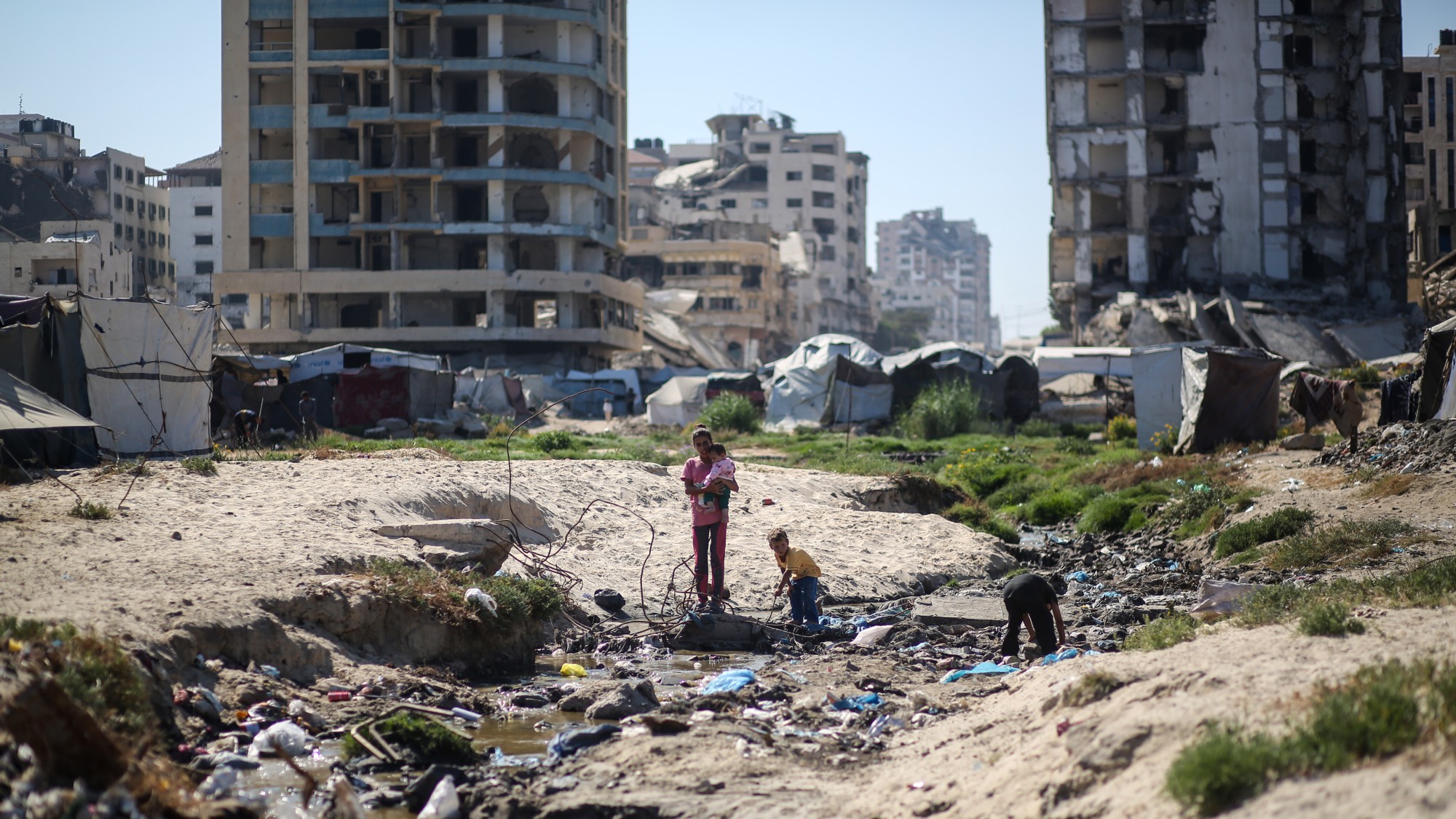
    The vast majority of Gaza’s occupants – about 1.7 million – are still living in tents or makeshift accommodation, according to the UN. Overcrowded campsites are afflicted by raw sewage and pests such as rats and weasels. The World Health Organization says there have been reports of some 111,500 cases of disease or infestation due to external parasites this year. About 728,000 school-aged children have been out of formal education for almost three years. Only about half of hospitals are even partially functional. Thousands of patients needing medical treatment have been evacuated to more than 30 countries, including through the Rafah Border Crossing into Egypt, which reopened in February.

    Meanwhile, aid agencies continue to have trouble making humanitarian deliveries to Gaza; they were halted last week following Iranian attacks on Israel. Food shortages continue, and one in five families are eating only once a day, the UN says.

    Is any rebuilding taking place? 
    Ahead of the ceasefire, Trump and his aides talked of turning Gaza into a gleaming hub for trade, tourism and tech. The “Board of Peace” unveiled by Trump in September was supposed to oversee the reconstruction, which the UN estimates could cost more than $70 billion.

    But so far, no contracts to clear the rubble and start rebuilding have been awarded, while the Board of Peace is struggling with funding shortfalls. Meanwhile, Israel is razing buildings on its side of the yellow line (it says it is taking down uninhabitable buildings, and destroying structures that could pose a threat to Israel and the IDF). 

    How strong is Hamas now? 
    During the war, Hamas lost roughly 10,000 fighters, most of its political top echelon, and nearly the entire military command council that planned the massacres of 7 October 2023. Prior to the war, however, it had run Gaza since 2007 – and it has used the truce to rebuild. It immediately launched a crackdown on rival gangs that had taken control in parts of Gaza City and Rafah.

    By February, it had largely reasserted control over the population: traders say Hamas fighters routinely extort fees and taxes from them. Israeli intelligence assessments now suggest that Hamas has rebuilt some of its infrastructure, including sections of its underground tunnel network and command-and-control systems.  

    Are there any signs of diplomatic progress? 
    Talks designed to push the ceasefire plan forward began in Cairo last week. According to a draft text, Hamas would hand its weapons over to an agreed Palestinian authority, in return for Israel announcing a timetable for its departure from Gaza. However, these proposals have not been accepted by the US or Israel, which has reportedly drawn up plans for a new round of attacks on Gaza, to begin when the war with Iran ends. 

    What other challenges are there? 
    The US is distracted by the Iran conflict. Netanyahu is seeking re-election by late October, and is unlikely to view an Israeli withdrawal from Gaza as politically expedient; ministers in his coalition have long talked of overseeing the “voluntary migration” of Gazans from the enclave. Gazans are very concerned that Israel now controls much of their territory, including around 60% of its fertile agricultural land, the majority of its water wells, and some of its wastewater facilities.

    The Board of Peace
    When Trump unveiled plans to set up a “Board of Peace” to implement the Gaza ceasefire, he said it could be “one of the most consequential bodies ever created”. Chaired by Trump himself, with board members including Tony Blair, Jared Kushner and Witkoff, it was established in January at a grand ceremony in Davos, Switzerland. About 20 countries signed up to it almost immediately, including Qatar, the UAE, Saudi Arabia, Pakistan and Vietnam; but dozens more, including Russia, China and most European nations, failed to join, balking at what they saw as an attempt to establish a rival to the UN. 

    The board’s initial task was to oversee the creation of a civilian government, and a new International Stabilisation Force, including troops from Arab, European and Asian nations, as well as reconstruction. Progress has stalled on all fronts. Despite pledges of funds (including $100 million from the UAE, to train a new police force), no money has yet been deposited in the board’s World Bank-administered official fund. The board itself points to successes including a committee of Palestinian technocrats being selected to serve as an interim government, taking over from Hamas; but so far, it bears all the hallmarks of a failure.




    Spirit of the age

    In a new online microtrend, people who live alone are going on social media to promote their solitary lifestyles. The “loneliness influencers” – most of them women – typically film themselves coming home to a pristine flat, stroking their cat or feeding their plants, then enjoying an oven pizza in front of the TV. Happily single – and even friendless – they use hashtags such as #alonenotlonely and #cosyathome. One proclaims in her Instagram bio: “NYC with no friends and no complaints”.


    VIEWPOINT

    Ministers on social media

    “The government is profoundly concerned by the role of social media in fuelling unrest. It is so worried that the technology secretary has ‘asked Ofcom to discuss with X and other platforms how they will comply’ with government regulations. We know all this because the prime minister, his technology secretary and others have told us – on X/Twitter. This position is absurd. The genius of social media, as a business model, is that it persuades interesting and important people to create content for free, which is then monetised. Choosing not to use X, unlike banning or regulating it, would be easy. Either stop using X, or stop moaning about it.”

    Ciaran Martin in The Times


    talking point

    Russia’s shadow fleet: a raid in the Channel

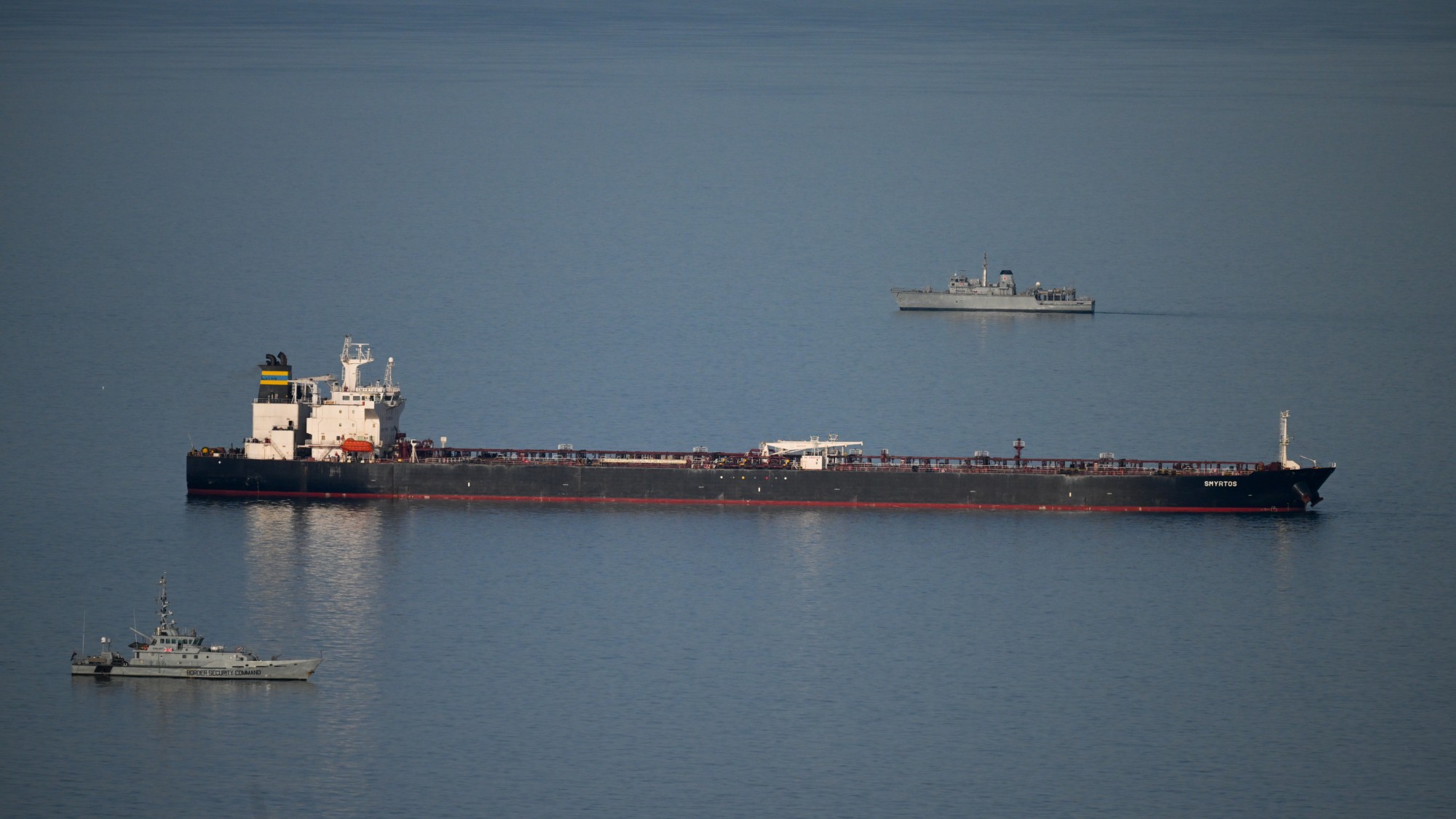
    In the early hours of Sunday morning, “a daring military operation took place in the Channel”, said The Times: Royal Marine commandos boarded the MV Smyrtos, a tanker carrying 700,000 barrels of Russian oil bound for India. It was the first time British forces had acted against the Kremlin’s shadow fleet – a network of ships used to circumvent Western sanctions on Russia. The six-hour mission had an “immediate impact”: other shadow tankers nearby could be seen quickly changing course. At a time when the UK’s naval capabilities are “something like a national embarrassment”, this served as a “reminder of the bravery and abilities of our Armed Forces”. 

    Keir Starmer heralded the operation, revealed in a blaze of publicity, as “another blow to Russia”. But “the reality is more sobering”, said Jennifer Kavanagh on UnHerd. Britain has had the legal authority to seize sanctioned tankers in its waters since March, but until now has only participated in operations alongside its allies. Coming in the wake of defence secretary John Healey’s resignation over defence funding, it seems likely that this one was a “political gambit” aimed at deflecting criticism of the state of Britain’s Armed Forces. 

    It was less “a Tom Clancy thriller” and more “a John Grisham legal potboiler”, said Owen Matthews in The Spectator. UK forces were only authorised to board the ship because it was “falsely flagged”; Cameroon, where the Smyrtos had previously been flagged, deregistered it earlier this month, under international pressure. Now the tanker will probably be impounded until its legal owner, a Hong Kong company, sorts out the paperwork and pays a large fine. Then it will likely go on its way. Temporarily halting one ship will do precious little to dent Kremlin profits, particularly when Britain’s European allies are still buying billions worth of Russian oil and gas. 

    Still, the operation wasn’t just political theatre, said Tom Sharpe in The Telegraph. Detaining Russian-controlled vessels forces other shadow tankers to avoid the Channel, and go the long way around Ireland. This “will raise the price of doing business and force Russia to spread its own limited naval resources more thinly”.


    It wasn’t all bad

    A centenarian dancer living in a care home in Worcester has gone viral on social media, amassing more than 1.5 million views for one 21-second dance video. Bernard Gilbert reluctantly took up ballroom dancing in 1942, when he was 16 years old, after breaking his leg playing rugby and being advised to hang up his boots. More than half a century later, following the death of his wife and dance partner, he became an instructor. Now, at Fernhill House Care Home, he says that his dancing – which has been widely praised for its grace and style – makes him “forget everything” and feel “alive”.


    People

    Lemn Sissay

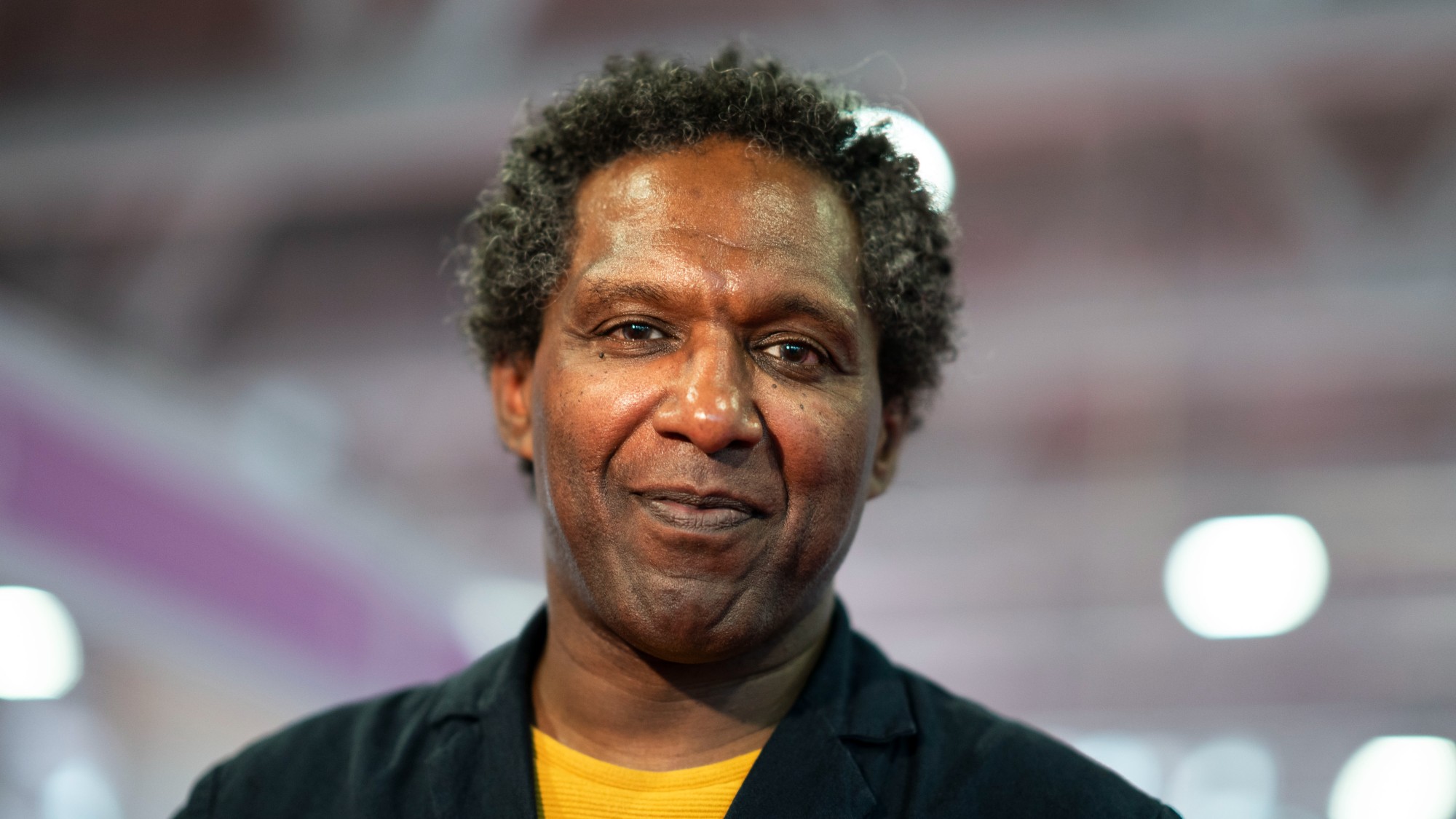
    Lemn Sissay has often spoken about his appalling experiences as a child in care in the 1970s. Yet he has only good things to say about the town where he spent his early childhood, says Caroline Scott in The Sunday Times. In fact, life in Ashton-in-Makerfield – part of the constituency thrust into the spotlight by its by-election this week – was idyllic in its way. 

    A smiley happy child, he recalls walking to primary school, and everyone smiling back at him, from Mr and Mrs Jolly in the sweet shop to the lollipop lady who ushered the kids across the road. Post-industrial decline had set in, but it didn’t feel like it. “We had a library. We had a chemist, J. Morris, a butcher and a baker and a greengrocer, Green’s, run by Alan Green. There was a shoe mender and a repair shop full of cogs and half-engines, where everyone went to get things fixed...” There was also a park, with football pitches, tennis courts and formal gardens. 

    At secondary school, he was subjected to racist bullying; then his foster parents rejected him, and he was sent to a children’s home in Wigan. But he never stopped loving Ashton. He was there only last month. “I parked my car on Osborne Road [where he’d lived] and a gentleman came over. He said, ‘Lemn, I remember you.’ That meant so much to me.” Ashton people, he adds, are “salt-of-the-earth people, strong people, kind people”, and the place is “gorgeous. You’ve got the big parks and the surrounding green countryside. It’s lush.”


    Image credits, from top: Spencer Platt / Getty Images;  Ahmad Hasaballah / Getty Images; Finnbarr Webster / Getty Images; David Levenson / Getty Images
     

    Recent editions

    • Evening Review

      Will the King in the North go south?

    • Morning Report

      Burnham wins decisively in by-election

    • Evening Review

      Will Iran deal alleviate cost-of-living woes?

    VIEW ALL
    TheWeek
    • About Us
    • Contact Future's experts
    • Terms and Conditions
    • Privacy Policy
    • Cookie Policy
    • Advertise With Us
    • FAQ
    Add as a preferred source on Google Add as a preferred source on Google

    The Week UK is part of Future plc, an international media group and leading digital publisher. Visit our corporate site.

    © Future Publishing Limited Quay House, The Ambury, Bath BA1 1UA. All rights reserved. England and Wales company registration number 2008885.