The Week The Week
flag of US
US
flag of UK
UK
https://cdn.mos.cms.futurecdn.net/flexiimages/jzblygzdxr1769609154.gif

SUBSCRIBE

Try 6 weeks free

Sign in
  • View Profile
  • Sign out
  • The Explainer
  • Talking Points
  • The Week Recommends
  • Podcasts
  • Newsletters
  • From the Magazine
  • The Week Junior
  • More
    • Politics
    • World News
    • Business
    • Health
    • Science
    • Food & Drink
    • Travel
    • Culture
    • History
    • Personal Finance
    • Puzzles
    • Photos
    • The Blend
    • All Categories
  • Newsletter sign up Newsletter
  • Saturday Wrap, from The Week
    Il Generale, Australia’s social media ban, and disgraced former DUP leader

     
    controversy of the week

    Will ‘Il Generale’ turn Italy upside down?

    Giorgia Meloni is suffering from a “splitting political headache”, said Hannah Roberts on Politico. Italy’s first female PM has enjoyed remarkable success since her election in October 2022. She has kept her Brothers of Italy party dominant in the polls; she has held together her coalition formed with two other right-wing parties – Lega (the League) led by Matteo Salvini, and Forza Italia (the party created by Silvio Berlusconi). Come September, she will be Italy’s longest-serving post-war leader. And she’s achieved all this by skilfully “pushing Italy’s post-fascist right towards the political mainstream”. 

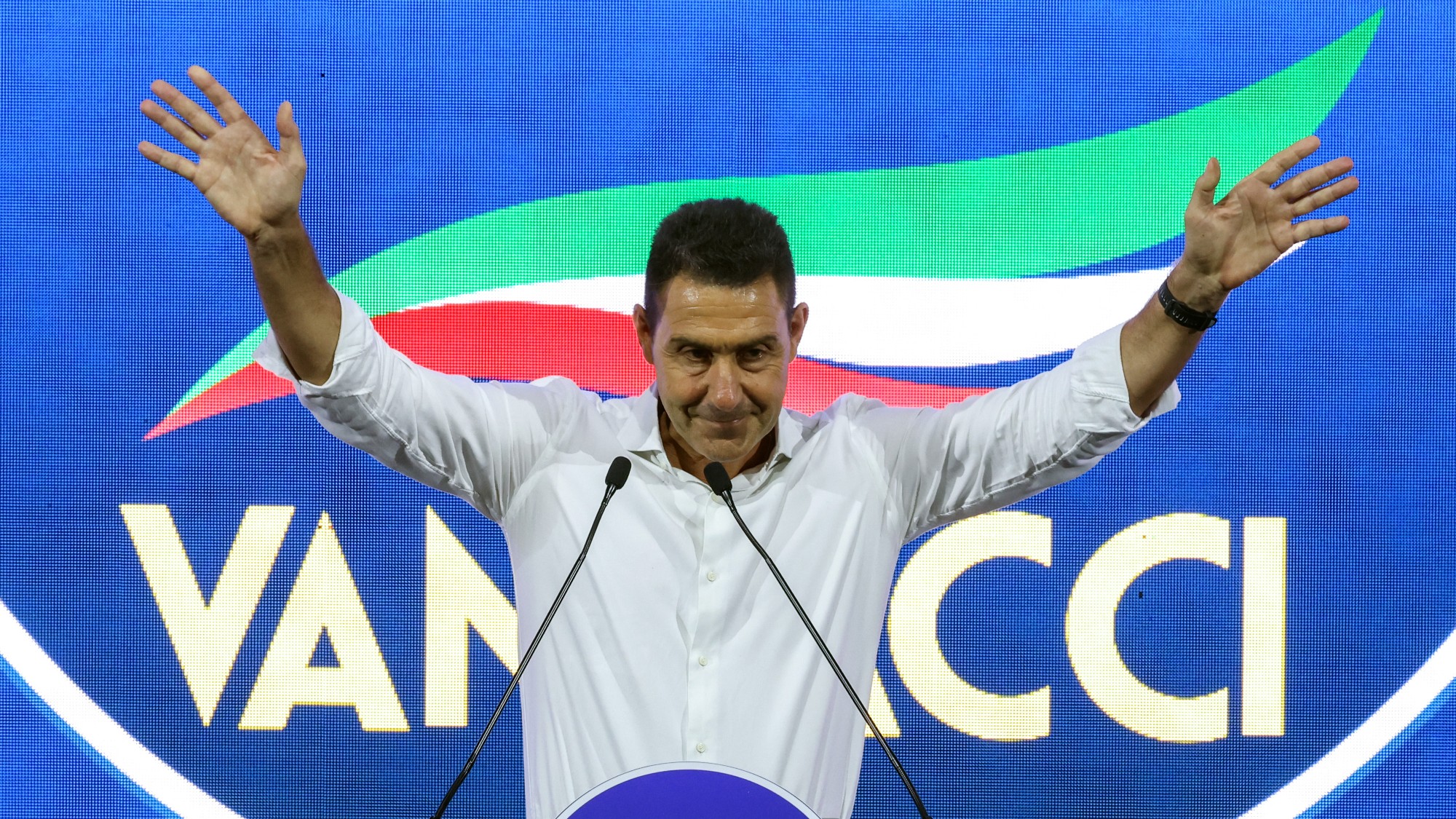
    This month, though, a figure has emerged who threatens to undo it all and drag the right back the other way. Roberto Vannacci, a highly decorated retired general, formally launched a new hard-right, fiercely anti-immigrant party, National Future, in Rome last week. It is rapidly gaining support: it already has 100,000 registered members; boasts eight MPs after a string of defections from Lega and Forza Italia; and is polling at over 5%. Meloni’s headache is whether to keep him at arm’s length or bring him into her political orbit. So far she’s picked the first option, but if Vannacci’s popularity keeps rising in the run-up to next year’s general election, she may have to reconsider. 

    Since the fall of Mussolini, Italy has produced a long line of populists, said Antonio Preiti on Linkiesta (Milan). But none has been “more incandescent, more aggressive, more disturbing” than Vannacci, nicknamed Il Generale by his legion of fans and hailed as a modern-day Julius Caesar by his colleagues. The Afghanistan and Iraq War veteran’s controversial demand for “remigration” – the forced deportation of immigrants to their countries of origin – should come as no surprise. This is the man, after all, who made a name for himself in 2023 with his outlandish book “The World Upside Down”, in which he hit out at the “dictatorship of minorities”; claimed that Black immigrants could never be Italian; and derided gay people as “not normal”. That made him hugely popular, and prompted Salvini, the deputy PM, to ask him to join his Lega party to help revive its fortunes. 

    But that gamble “backfired in a spectacular fashion”, said Nick Squires in The Telegraph. Elected as an MEP for Lega in 2024, he proved not a “pliant acolyte” but a thorn in its side. His new party is now wooing Salvini’s supporters. 

    The old soldier may have learnt to “move shrewdly” in politics, said Stefano Folli in La Repubblica, and he sure knows how to grab people’s attention. But can he keep up the momentum? Doubtful, said Lisa Di Giuseppe in Domani. He’s been conspicuously short on economic and foreign policy ideas for a start. At his party’s inaugural congress this month, the 57-year-old gave little indication of strategy “beyond resentment, revenge and remigration”. Vannacci is a man known for “extremist passions masquerading as common sense”, said David Allegranti in Quotidiano Nazionale. Such policies as he has are designed to lure disgruntled right-wingers: plans to build more jails and to pay mothers to stay at home to free up jobs that “men can’t find”. His pitch at the conference was abundantly clear. “We represent the rejects and the scum, and we are proud of it,” he told party delegates. 

    Meloni must “behave like a statesman”, erect a “cordon sanitaire” around National Future, and ostracise this “latest adventurer” in Italian politics, said Mario Lavia on Linkiesta. It may result in her losing office to the centre-left, but for the good of the nation she needs to do it. Vannacci is no Mussolini, it’s true, but given half a chance he’ll corrode democracy with his pro-Russia and anti-EU rhetoric. But would that isolation strategy actually work, asked Roberto Gressi in Corriere della Sera. It certainly hasn’t in the case of the National Rally in France or the AfD in Germany, both now trending in the polls. Sad to say there’s no easy way to slay the populist far-right crocodile.


    Briefing of the week

    Australia’s social media ban

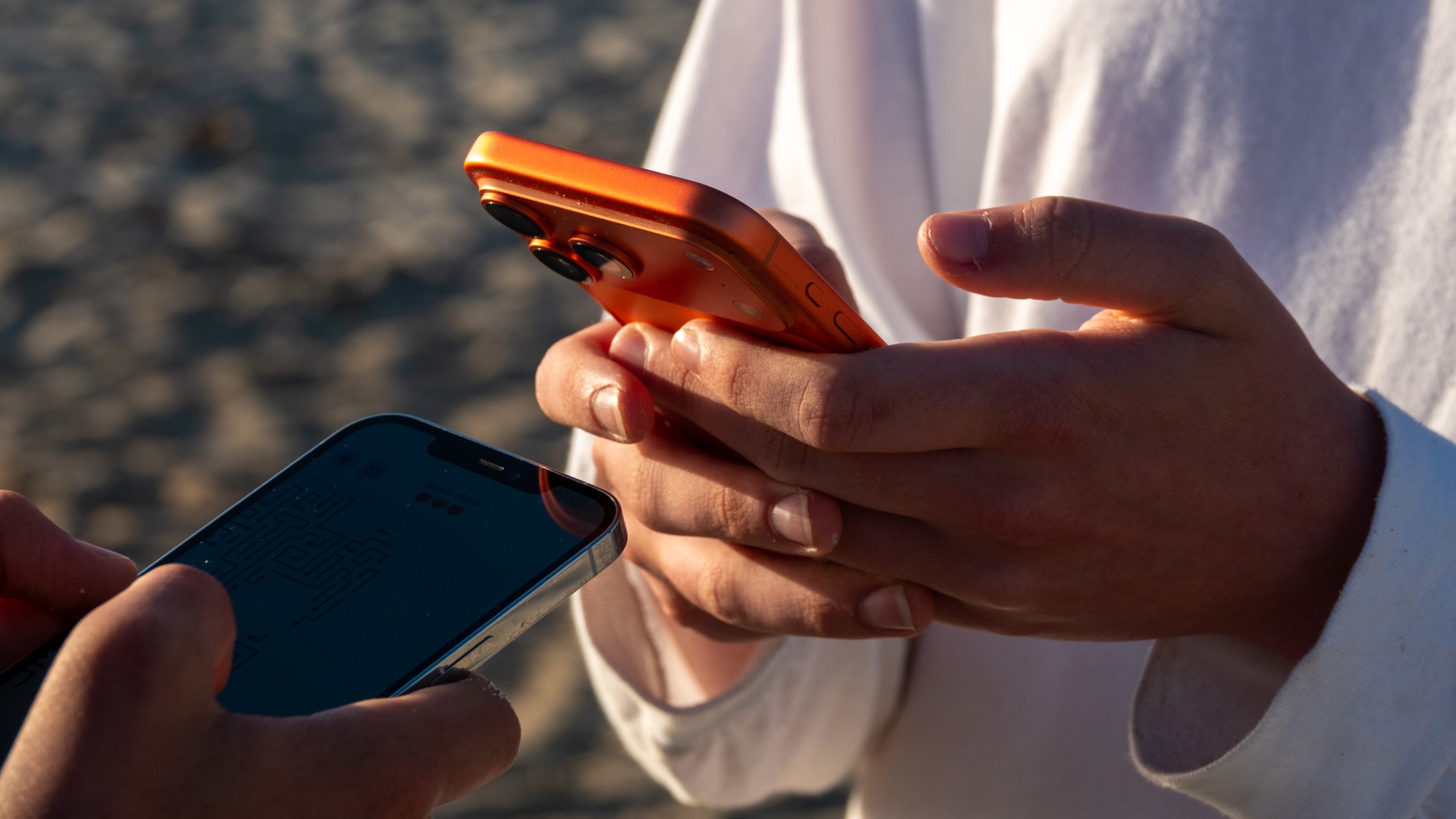
    Britain is following Australia in banning under-16s from social media. How have such efforts worked out Down Under?

    Why did the Australian ban happen? 
    Parents the world over worry about the role that social media plays in all kinds of adolescent problems: sleep deprivation, eating disorders, self-harm, cyberbullying, grooming and more. Australia is proud of its groundbreaking public health policies (in 2011 it became the first nation to require plain packaging for tobacco products), and in May 2024 two separate campaigns – one led by a radio DJ, the other by Rupert Murdoch’s Australian tabloids – began to publicise the harrowing stories of parents whose children had died following social media cyberbullying. This led to a groundswell of support for a ban. 

    Influenced by the American psychologist Jonathan Haidt, who blames the smartphone for a disastrous “great rewiring” of childhood, South Australia’s state premier developed legislative proposals. Anthony Albanese’s Labor government, which was then seeking re-election, rushed a federal law through that November, taking advantage of a rare instance of broad political consensus: the conservative opposition had already pledged to enact a ban.  

    How does the Australian ban work? 
    It puts the onus on tech companies rather than their users: there are no penalties for parents or children. Instead, social media companies have to satisfy Australia’s eSafety commissioner that they’ve taken reasonable steps to prevent anyone under 16 who’s located in the country from having accounts on their platforms, with penalties of up to £26 million for any company in breach. 

    The list of affected platforms includes Instagram, Snapchat, TikTok, Tinder, Twitch, X/Twitter and YouTube, though not WhatsApp or YouTube Kids (there is a complex definition of a social media site, which requires a platform’s “significant purpose” to be interaction between users, and for it to allow content sharing). No fines have been issued yet, but Facebook, Instagram, Snapchat, TikTok and YouTube are currently under investigation for potential violations. 

    How well has it worked? 
    Social media platforms deactivated 4.7 million accounts when the new rules came into force on 10 December 2025. The ban has been, at best, partially effective. According to an April poll by the Molly Rose Foundation, a UK online safety charity founded by the family of a teenager who took her own life after being exposed to self-harm content, by March, 61% of Australian 12- to 15-year-olds who previously had accounts on restricted platforms still had one. 

    Critics of the ban – including tech companies, aware that at least 13 other countries considering similar policies are watching closely – say this proves it’s a flop. Proponents say that a 39% fall is a good start, and that changing the culture is more important than instant results; 59% of Australian adults think the ban has been reasonably effective.  

    Why hasn’t it worked better? 
    According to the poll, 66% of parents whose children still had access said that “no action” had been taken by the platform to remove or deactivate an account. Around a quarter had been successfully able to get around an age check. Much smaller numbers either used a virtual private network (VPN) to make it look as if they lived abroad, or enlisted a family member to set up an account. 

    The eSafety commissioner’s first report into the issue blamed “poor practices” by platforms, such as allowing children to repeatedly try to get past age verification checks. But in the view of many analysts, the fundamental problem is that age verification is hard to do, and opens up a can of worms. 

    How does the British plan differ? 
    On 15 June, Keir Starmer announced an “Australia plus” plan, to come into force early next year. The proposal is an under-16s ban on much the same list of platforms, with additional restrictions on livestreaming and communication with strangers on gaming sites such as Minecraft and Roblox. Access to AI chatbots that offer “sexualised content” will also be restricted for 16- and 17-year-olds. 

    The government is looking into other measures for this age group: midnight to 6am digital curfews, and disruption of addictive features such as infinite scrolling. The ban should theoretically be popular: polls consistently show that around three-quarters of the public think social media platforms have a negative impact on young people and support some kind of age restriction. However, many practical problems, and principled objections, remain. 

    What are the main objections? 
    The evidence that social media is harmful is ambiguous. Harm appears to spike with heavy use (three to five hours per day), but moderate use correlates in some studies with positive well-being; social media is very important to many teenagers today, and can also be a lifeline for troubled or isolated children. 

    Most get their news from social media now; in Australia, more than half of affected teenagers reported a significant drop in news access. The Molly Rose Foundation argues that forcing the platforms to incorporate “safety by design” – content controls, limited scrolling – is far better; if children are in theory banned, the companies can disclaim responsibility. 

    And even if a ban works, there’s a “migration effect”: children forced off mainstream sites use messaging apps and gaming sites instead, or darker corners of the web, or use VPNs to evade restrictions.

    What does Australia show us? 
    Australia’s experience shows that it’s difficult to stop determined teenagers from accessing social media. In the UK, there is not yet a clear plan for resolving the central issue of age verification. The regulator Ofcom has been asked to produce a plan for “highly effective age assurance”. In Australia, as in Britain, however, there is widespread support for attempting to shift the social norms around the issue; and, as with underage drinking and smoking, the public seems to think restrictions are worth trying even if they don’t work perfectly.

    The vexed question of verification 
    From a government’s point of view, a central problem with age verification is that the more accurate it is, the more data about themselves people have to give tech companies. 

    A Department for Science, Innovation and Technology consultation suggested that checks would be done by facial age estimation. If this came back with a “low confidence” score, the platform could offer an alternative method, such as uploading a photo ID. The “strongest possible” way of enforcing it would be for every social media user to be verified. In theory, this could mean millions of users sharing biometric data and sensitive information. In Australia, face-scanning quickly became a bit of a joke: “One of my friends printed out a photo of Michael Jackson and used that on the face recommendation ID thing and it worked,” Norman, 14, told Australia’s ABC News. 

    Yoti, the company that provides face scanning for TikTok and Instagram, responded that it has “anti-spoofing technology” to prevent this, but most platforms have chosen not to use it. New age-verification rules for porn sites introduced in the UK under the Online Safety Act last year led to a big drop in traffic to legally compliant sites, and a rise in visits to non-compliant sites – as well as an increase in the use of VPNs.


    Spirit of the age

    A third of Gen-Zers prefer to text or call when they arrive at someone’s house, rather than knock or ring the doorbell. Roughly 40% of them said that sending a text seemed less intrusive. Overall, nearly a quarter of Britons said they’d react negatively if someone rang the doorbell without first heralding their arrival with a text: 12% said it would catch them off guard: 7% said it would make them anxious or stressed; and 5% said they would be annoyed.


    VIEWPOINT

    Keir and loathing

    “Loathing is now the great engine of our politics. Keir Starmer came to power because everyone loathed the Tories and many in his party loathed Jeremy Corbyn. Andy Burnham has returned to Parliament, in part, because the voters of Makerfield loathe Keir Starmer and Rupert Lowe loathes Nigel Farage. The Green Party and Reform UK are doing well because their voters loathe someone else: ‘Zionists’, rich people and conventional politicians in one case; immigrants, liberals and conventional politicians in the other. Loathing is a very attractive emotion. It feels good. But it is no way to drive or choose governments.” 

    Sam Leith in The Spectator


    talking point

    Jeffrey Donaldson: ‘he duped everyone’

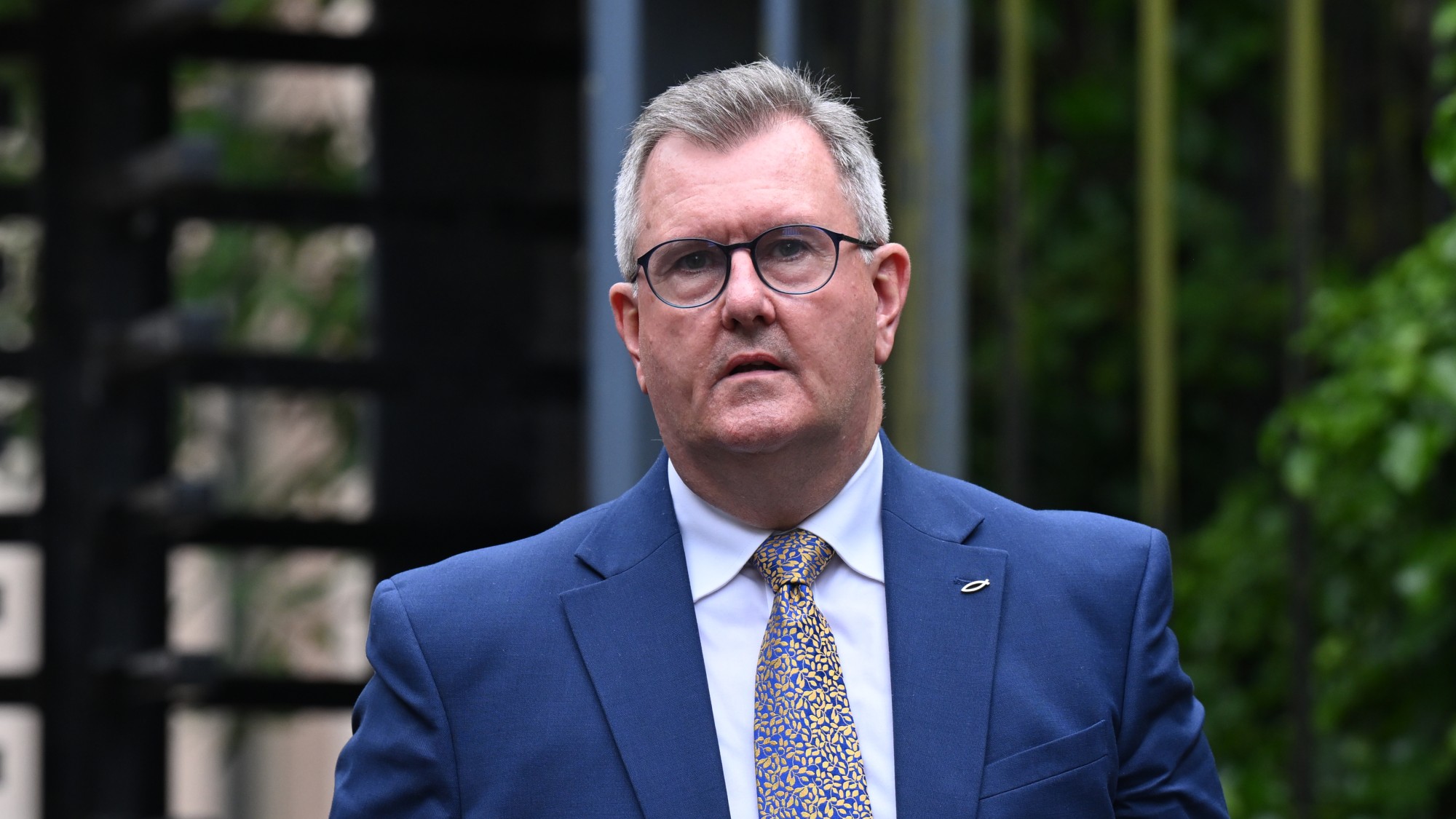
    “There’s arguably been no greater fall from grace in the modern political era than that of Sir Jeffrey Donaldson,” said John Manley in The Irish News. The former Democratic Unionist Party (DUP) leader was once regarded as the “nice man” of unionism. He was always polite in media appearances, and wore a fish badge on his lapel as a symbol of his Christian faith. But it’s now clear that this virtuous demeanour was “a mask that hid serious crimes”. 

    This week, he was convicted of abusing two girls over a period of more than 20 years. The jury found him guilty of raping one victim when she was seven or eight, and carrying out multiple other indecent assaults. It concluded that his wife of 39 years, Eleanor Donaldson, had enabled his crimes by failing to act when red flags were raised or when she witnessed abuse herself. She was deemed unfit to stand trial on medical grounds. 

    Donaldson’s journey to the top had been a long one, said Mario Ledwith in The Times. Born in 1962, he began his political career working for the MP Enoch Powell and was first elected to Stormont when he was 22. It was around that time, the court heard, that his depravity towards children began. Years later he wrote a letter to one of his victims, expressing regret for causing her “hurt, pain and distress” and asking forgiveness for his “sinful nature”; he apologised in person to the other victim at a meeting organised by a Christian group in 1997. In court, Donaldson claimed that those apologies referenced not abuse, but unrelated matters. 

    Even as a victim of sexual abuse myself, I never picked up on Donaldson’s dark side during my time as a politician, said Máiría Cahill in The Irish Times. “He duped everyone.” We can only wonder at the hypocrisy of the man and the sense of entitlement that led him, despite his secret crimes, to seek “such public roles and prominence”. We should be grateful to the two women for breaking their silence and revealing the truth about Donaldson, said Gail Walker in the Belfast Telegraph. He is scheduled to be sentenced in September, and the judge has warned him to expect a lengthy jail term. Let’s hope that this late arrival of justice brings his victims “some form of closure”.


    It wasn’t all bad

    The discovery of a rare Anglo Saxon die stamp in a field in Kent has raised the possibility that the Sutton Hoo helmet – buried with other elite regalia in a large ship in Suffolk 1,400 years ago – was not an example of Swedish craftsmanship, but rather made by metalworkers nearby. Discovered by a metal detectorist, the die stamp seems to have been used to create decorative panels very similar to those on the garnet-encrusted helmet unearthed at Sutton Hoo. “For the first time, there is really no reason for saying the helmet couldn’t have been made in the British isles,” said archaeologist Dr Andrew Richardson.


    People

    Laverne Cox

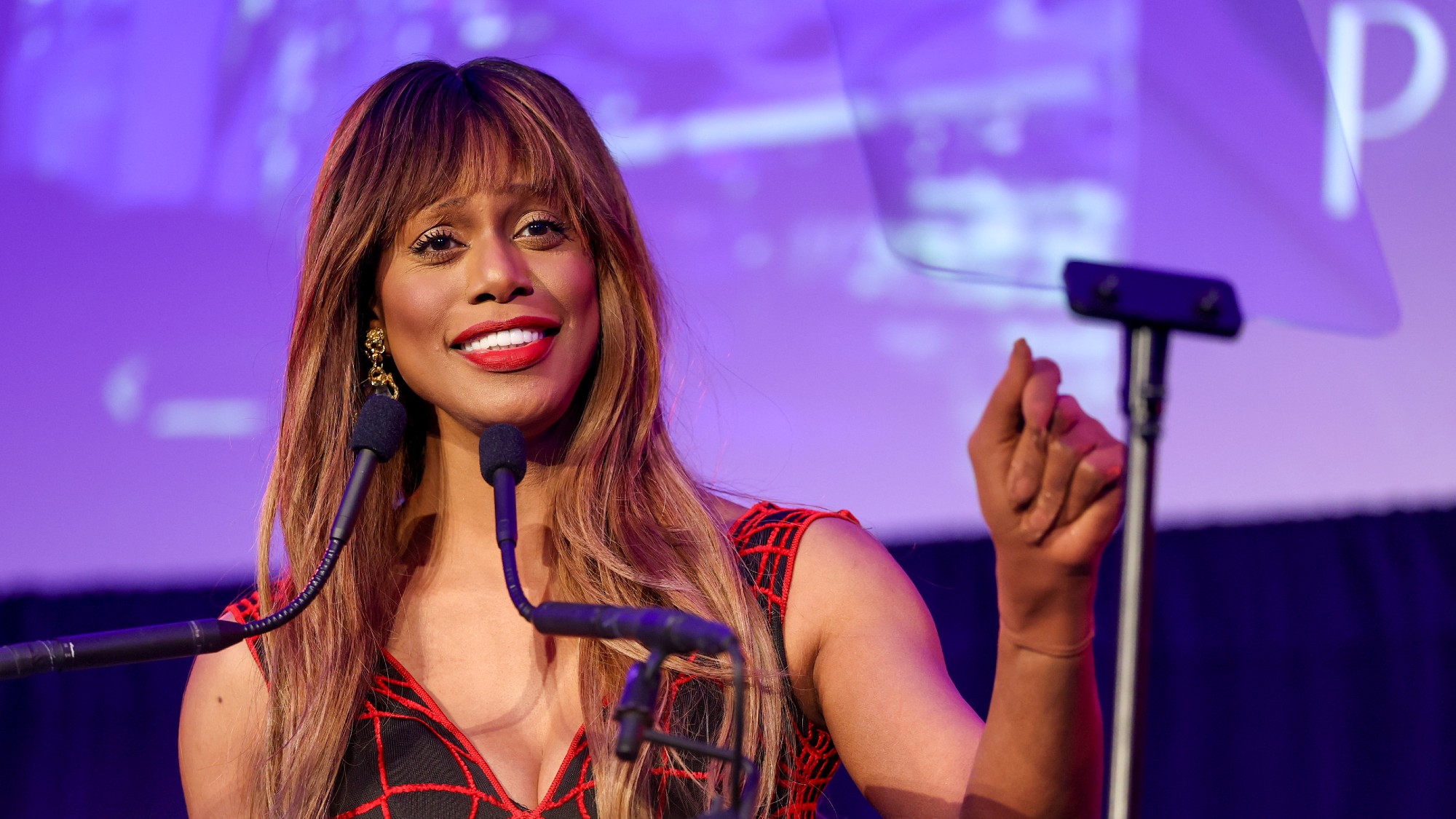
    The actress Laverne Cox was 21 when she pitched up in New York to study ballet, chase fame, and find a place where she could live as a trans woman. Raised by a single mother in Alabama, she’d had a sometimes brutal childhood; but in the Manhattan club scene of the early 1990s, she found acceptance. “Everyone partied together,” she told Zoe Williams in The Guardian. “There was a period in New York where you’d want club kids and drag queens and transsexuals at your party, or it wouldn’t be a happy party.” 

    The vibe changed a few years later with the spread of “bottle service”, in which very rich men order expensive drinks at tables. The scene became commercialised, and the impoverished artists and bohemians were driven out. But Cox pressed on, and in 2012 she landed a role in “Orange Is the New Black” – the prison drama that made her a star. She won awards, and critical acclaim. “The world was so alive.” 

    But the good times haven’t lasted. In the past two years, Cox has fallen victim to the backlash against DEI (diversity, equality and inclusion). She can’t even get jobs teaching acting, she says, “because it could be perceived as promoting trans ideology”. Her income has fallen 90%. She’s not complaining, she insists. “I’m very blessed.” But if a well-known figure like her is struggling, what’s happening to “all the other trans people who are not as privileged as I am?”


    Image credits, from top: Alessia Pierdomenico / Bloomberg / Getty Images;  Anna Barclay / Getty Images; Charles McQuillan / Getty Images; Mat Hayward / Getty Images / Lifelong
     

    Recent editions

    • Evening Review

      The rise of remigration

    • Morning Report

      Iran asserts control over Hormuz with fresh strike

    • Evening Review

      What will Donald Trump make of Andy Burnham?

    VIEW ALL
    TheWeek
    • About Us
    • Contact Future's experts
    • Terms and Conditions
    • Privacy Policy
    • Cookie Policy
    • Advertise With Us
    • FAQ
    Add as a preferred source on Google Add as a preferred source on Google

    The Week UK is part of Future plc, an international media group and leading digital publisher. Visit our corporate site.

    © Future Publishing Limited Quay House, The Ambury, Bath BA1 1UA. All rights reserved. England and Wales company registration number 2008885.