The Week The Week
flag of US
US
flag of UK
UK
https://cdn.mos.cms.futurecdn.net/flexiimages/jzblygzdxr1769609154.gif

SUBSCRIBE

Try 6 weeks free

Sign in
  • View Profile
  • Sign out
  • The Explainer
  • Talking Points
  • The Week Recommends
  • Podcasts
  • Newsletters
  • From the Magazine
  • The Week Junior
  • More
    • Politics
    • World News
    • Business
    • Health
    • Science
    • Food & Drink
    • Travel
    • Culture
    • History
    • Personal Finance
    • Puzzles
    • Photos
    • The Blend
    • All Categories
  • Newsletter sign up Newsletter
  • Saturday Wrap, from The Week
    Burnham’s brain, the Bayeux Tapestry, and patriotic millionaires

     
    controversy of the week

    The crisis facing Britain’s new energy secretary

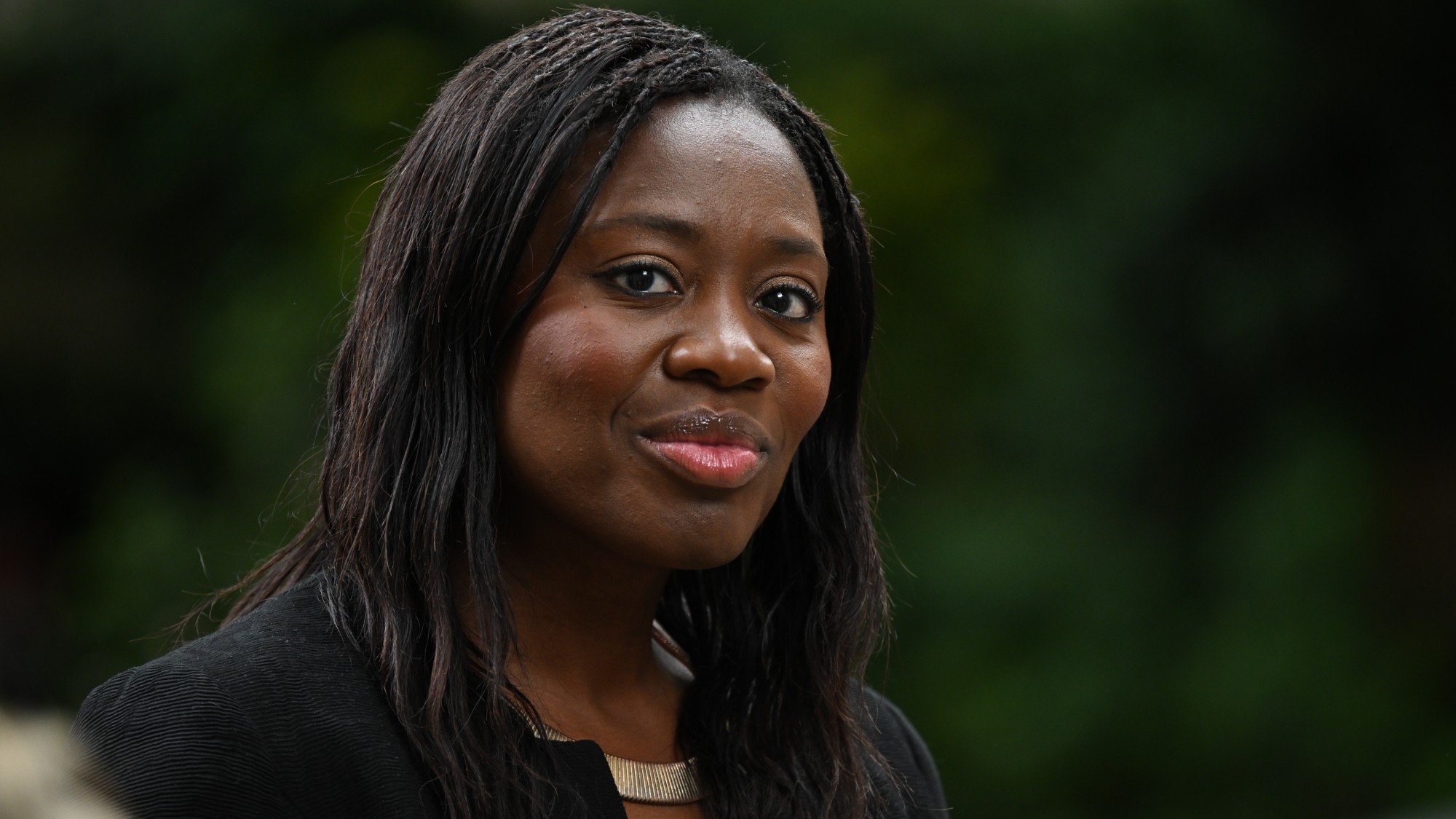
    Miatta Fahnbulleh, the new energy secretary, is sometimes referred to as “Burnham’s brain”, said John Rapley on UnHerd. The MP for Peckham, who came to Britain as an asylum seeker from Liberia aged six, has a doctorate from the London School of Economics, and is an expert on industrial and green policy. She’ll need all her intellectual resources to deal with the “big decisions” facing her: “how to bring down energy bills about which consumers and businesses alike have been screaming; and how to reconcile that imperative with her commitment to net zero and the phasing out of fossil fuels”.

    The oil industry, unions and even, reportedly, Andy Burnham himself are pushing for more drilling to be approved in the North Sea, which could create jobs and provide local gas to replace imports. However, such benefits would be mostly “short-term”: the most effective way to bring down bills in the longer term, and to reduce emissions, is to “double down on renewables” and drive expensive gas out of the UK system.

    Under Fahnbulleh’s predecessor Ed Miliband, net-zero policy was based on this misconception, said The Times: that there are “no trade-offs” in pursuing a speedy transition to renewables. In fact, renewables have serious drawbacks: they are intermittent, not as cheap as their cheerleaders claim, and require a much more complex grid than the old system that used only big power stations. We were given a taste of the problems involved last week when a report was leaked from the National Energy System Operator, which runs the National Grid. It found that, because there are now so many small energy providers – wind farms, solar panels, batteries – it is hard to assess energy supply and to balance it with demand. During the June heatwave, the grid repeatedly came close to blackouts.

    More worrying still, 20% of the world’s supply of liquefied natural gas “remains trapped on the wrong side of Hormuz”, said Ambrose Evans-Pritchard in The Telegraph. Britain has little gas storage of its own, and inventories in Europe are critically low. Fahnbulleh ought to tell us soon how “she plans to address a national energy crisis”. Approving the large Jackdaw gas field 150 miles off Aberdeen, which is “basically ready to go”, would help. The government is expected to approve some “tiebacks” – new gas and oil fields linked to existing production facilities – next month, said Jim Armitage in The Times. This, however, will come at a political cost: it will infuriate some 60 green-minded Labour MPs on Fahnbulleh’s wing of the party.


    Briefing of the week

    The Bayeux Tapestry

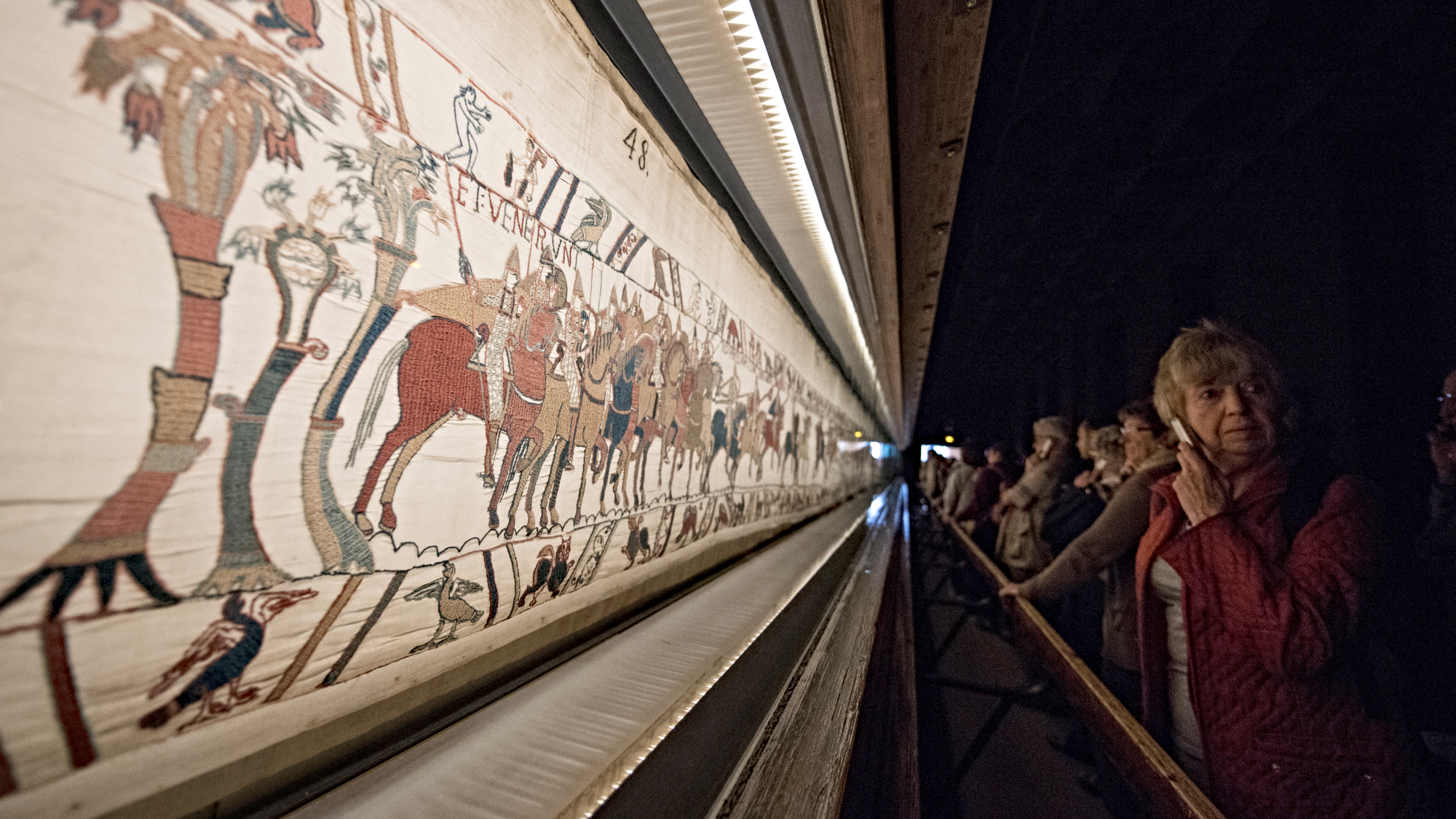
    Nearly 1,000 years old, evocative, rich and ambiguous, the Bayeux Tapestry will soon be on show in the British Museum

    Why is it so significant?
    It “must be the only artistic masterpiece that is also a crucial source for a major historical event”, wrote the medieval historian Patrick Wormald. The Bayeux Tapestry’s survival, largely intact, is miraculous in itself. A strip cartoon-style rendering of the Norman Conquest, from 1064 to the Battle of Hastings, it is rich, evocative and astonishingly vivid. The tapestry is “not merely a record of conquest, but an incomparable mirror of medieval life”, says the French scholar Lucien Musset. Colourful, graphically violent and occasionally ribald, it is rich in background detail, allowing us to look back nearly a millennium and see the world of the Anglo-Saxons and their Norman foes: their arms and armour, their ships, their cooking, their horses and dogs, their hairstyles (the English have flowing locks and long moustaches, while the Normans are cropped and clean-shaven).

    How was it made?
    It is not actually a tapestry, but an embroidery: a linen cloth 50cm high and 68 metres long, showing 58 scenes embroidered with woollen yarn of 10 colours, and captioned with brief Latin titles. When it first surfaced in history, in 1476, it was hung to decorate the nave of Bayeux Cathedral in Normandy every year at an annual feast. According to local tradition, it was made by William the Conqueror’s wife Matilda and her ladies-in-waiting, but most scholars now think it was, in fact, commissioned in the 1070s by William’s half-brother Odo, Bishop of Bayeux (and later Earl of Kent), who features four times (more than anyone except the main protagonists) and is seen rallying the troops at Hastings.

    So is it a work of propaganda?
    In outline, it tells the Norman version of the conquest, similar to that in the two main Norman chronicles of the period – framing it as a crusade against a perjurer. Harold Godwinson, Earl of Wessex, crosses over to northern France in 1064, is captured by Count Guy I of Ponthieu and is rescued by William. Harold then swears an oath over holy relics, before returning to England and assuming the English crown upon the death of Edward the Confessor (his sister’s husband, who died without a direct heir). William’s case was that Harold had made, and broken, a sacred oath to support his claim to the English throne (this is how he gained the papacy’s backing for his invasion). The tapestry shows Halley’s comet – a bad omen – appearing above the newly crowned Harold. However, the tapestry is thought to have been made in England, probably in Odo’s earldom of Kent, which was famous for its needlework: some designs match those in manuscripts in Canterbury. This could explain its sympathetic portrayal of the English.

    How is it pro-English?
    The Norman invaders are shown seizing the locals’ food, and burning a house while an English woman, holding her son’s hand, implores them to stop. Harold is portrayed without rancour, and with dignity, even heroism; he saves two Norman soldiers from a river while in France. The action starts with him, and he appears more times than William: one academic has even called it “the tragedy of Harold”.

    So it’s subversive?
    Arguably. Looking at the scene of Harold’s oath, it could be interpreted as showing that it was extorted from him – as one early 12th-century English source argued. It could even be said to endorse Harold’s claim to the English throne. After his coronation, Harold is described as “Harold Rex”, whereas the Domesday Book is careful only to call him Earl Harold. The Conqueror, by contrast, is never called “Rex” (only “Dux”) in the tapestry, though this may be because the final section, presumably showing his coronation, was torn off and lost. The tapestry is, at the very least, enigmatic and ambivalent – it can be seen both as “a Norman brag and a Saxon lament”, says art critic Jonathan Jones.

    What about the background detail?
    Along the top and bottom run decorative borders featuring scenes from fables, and of farming and hunting, along with a few naked human figures (there are at least five human penises). In one unexplained scene, “a certain cleric” is shown touching the face of a woman named as Ælfgyva. A priapic naked man squats below. And when the story reaches the Battle of Hastings, carnage from the battlefield spreads out onto the margin: decapitated bodies, severed limbs, looters stealing armour from the dead.

    Has it always been in Bayeux?
    Almost always. Antiquarians started taking an interest in the tapestry in the 1700s, and in the early 1800s it went to Paris, where Napoleon displayed it to whip up enthusiasm for an invasion of England. The final caption – et fuga verterunt Angli (“and the English turned in flight”) – was added shortly before 1814, presumably for propaganda reasons. The Gestapo also took it to Paris during the Second World War: Heinrich Himmler then ordered it to be taken to “a place of safety” in 1944, but Paris was liberated before his order was executed. It then returned to Bayeux.

    Why was the loan agreed?
    For two main reasons: because its home, Bayeux Museum, is closed until October 2027; and because President Macron was determined to make it happen. Macron first proposed the loan in 2018; he joked that it has taken longer to sort out than Brexit. The Bayeux Museum’s curator initially called it “unthinkable”; the risk of damage in transit led 78,500 people to sign a petition blocking the loan. But Macron insisted – knowing, said Peter Ricketts, who coordinated at the UK end, that the exhibition “would be a sensation”. The Norman Conquest is, after all, just a detail in French history but central to Britain’s national story.


    Spirit of the age

    The proportion of e-bike riders jumping red lights at busy urban junctions has risen to 54%, up from 45% last year, according to a new research project. The study, at 78 intersections in London, Manchester and Glasgow, found that while half of e-bike riders failed to stop at red lights, only 19% of pedal cyclists ran them (no rise on last year). The most dangerous junction was at Finsbury Park and Stroud Green Road in north London, where 86% of all bikes went through a red.


    VIEWPOINT

    Back to the 1970s

    “The Tories should be careful about saying that Andy Burnham will return us to the 1970s; a lot of people would vote for that. The three-day week, flying pickets, union barons and  unburied bodies – they are a tiny part of a far larger picture. Other shocking features of the times were that almost everyone walked out of school into a job; that the streets were peaceful and patrolled by the police; that you could keep a family and house on one  income; that most of the things you ate and drank or used were grown or  made in Britain; that if you got into university you weren’t forced into  a lifetime of debt. In many ways it was a pleasing, comfortable era.”
    Peter Hitchens in the Daily Mail


    talking point

    Patriotic millionaires: calling for more taxes

    Suggesting that Britain’s tax burden is currently too low feels a bit like complaining that “the turnover of prime ministers is too slow”, said Melissa Twigg in The Telegraph. “In other words, wildly out of step with the national mood.” And yet, no sooner had Andy Burnham taken office last week than 120 high-net-worth Britons, including Gary Lineker (pictured above), Richard Curtis and Brian Eno, signed an open letter demanding higher taxes on the rich. The self-described “patriotic millionaires” want the government to introduce a 2% tax on assets above £10 million, and to bring capital gains tax in line with income tax – measures they claim could raise £36 billion a year. “We want you to tax us,” they wrote. “We are proud to pay and here to stay.”

    The signatories should be commended – and Burnham should heed them, said the Daily Mirror. The total wealth of Britain’s 157 billionaires is now equivalent to a fifth of GDP, having increased fivefold since 1990. Meanwhile, public services are creaking and people on low or middle incomes are having to “scrape to survive”. Surely it is time to address this imbalance?

    Burnham could certainly use more money, said Matthew Lynn in The Spectator, but are Lineker et al. right when they say that they and other millionaires would gladly pay up – and not find ways to avoid the tax? It is very easy to pay more tax voluntarily if you want and yet, in the past five years, there have only been 62 instances of it. We don’t know if Lineker has done so, but it seems unlikely, given that he recently fought a long, successful battle with HMRC over a tax bill of nearly £5 million.

    The real problem is not that these people are hypocrites, said Robert Colvile in The Sunday Times, but that when it comes to tax policy, they are “idiots”. HMRC’s own calculations say raising capital gains tax would lose money, as investors hold onto their assets or vanish abroad. As for a wealth tax, that would be complicated to levy, and would also send investors fleeing. In the 1970s, the last Labour chancellor named Healey – Denis – spent years trying to draft a wealth tax that would generate enough revenue to be worth the costs, before giving up. It would be even harder in this era of hypermobility. 


    It wasn’t all bad

    In the early 1990s, two friends – both scuba divers – realised that overfishing and bottom trawling in the waters around Arran had devastated the seabed, and with it, marine life. So Howard Wood, now 72, and Don MacNeish, 79, launched a successful campaign for the Scottish government to ban fishing in much of Lamlash Bay. Now, the fruits of their work have become clear: a new study has found a three-fold increase in marine life on the protected seabed, and sea mosses are returning too.


    People

    Amy Hunt

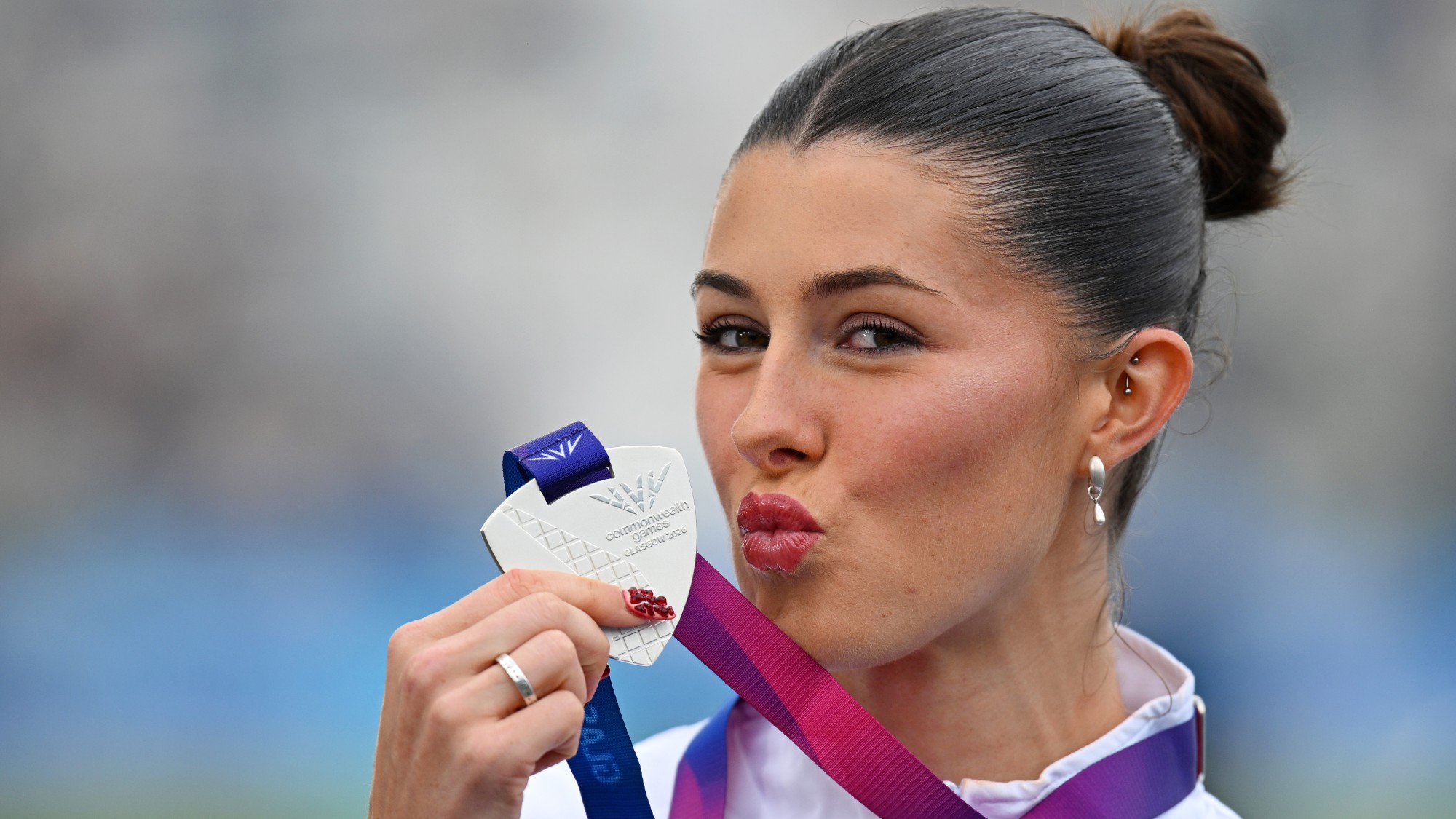
    A star of Team GB, Amy Hunt won a silver in the 200 metres at the World Athletics Championships last year, and she is only the fourth British woman to have run 100 metres in under 11 seconds. Now, she has set her sights on a rather bigger prize, says Jeremy Wilson in The Telegraph: she wants to become Britain’s first female Olympic gold medallist in either the 100m or 200m. Has she always had this level of drive? “Oh yes, I love that element of putting on a show, being gladiatorial in the arena and receiving the cheers,” she says.

    At school, she’d “race the boys” every lunchtime, and “I wanted to be on every sports team”, she says. “There is a funny video of a race when I was younger, doing an indoor 60m [event]. It was me and seven boys who entered and I won.” Usually, at the end of a race, all the competitors stick around, to shake hands; but the boys “just walked straight off. I felt quite embarrassed for them.”

    With the 2028 LA Olympics fast approaching, the Cambridge graduate – who has previously described herself as an “academic badass and track goddess” – is training hard, confident that she can achieve her goal. “I like to live my life in a kind of radically optimistic way,” she says. “I want to be Olympic champion, but I’m having fun. I think the world maybe needs more optimism and more happiness. And I think sport is such a tool to do that.”


    Image credits, from top: Leon Neal / Getty Images; Loic Venance / AFP / Getty Images; Marc Atkins / Getty Images; Matthias Hangst / Getty Images
     

    Recent editions

    • Evening Review

      Is Spain facing a migrant crisis?

    • Morning Report

      Border surge overwhelms Spanish enclave of Ceuta

    • Evening Review

      Why isn’t Andy Burnham ‘cringe’?

    VIEW ALL
    TheWeek
    • About Us
    • Contact Future's experts
    • Terms and Conditions
    • Privacy Policy
    • Cookie Policy
    • Advertise With Us
    • FAQ
    Add as a preferred source on Google Add as a preferred source on Google

    The Week UK is part of Future plc, an international media group and leading digital publisher. Visit our corporate site.

    © Future Publishing Limited Quay House, The Ambury, Bath BA1 1UA. All rights reserved. England and Wales company registration number 2008885.