The Week The Week
flag of US
US
flag of UK
UK
https://cdn.mos.cms.futurecdn.net/flexiimages/jzblygzdxr1769609154.gif

SUBSCRIBE

Try 6 weeks free

Sign in
  • View Profile
  • Sign out
  • The Explainer
  • Talking Points
  • The Week Recommends
  • Podcasts
  • Newsletters
  • From the Magazine
  • The Week Junior
  • More
    • Politics
    • World News
    • Business
    • Health
    • Science
    • Food & Drink
    • Travel
    • Culture
    • History
    • Personal Finance
    • Puzzles
    • Photos
    • The Blend
    • All Categories
  • Newsletter sign up Newsletter
  • Saturday Wrap, from The Week
    Cambridge controversy, ships in the Gulf, and a fragile nuclear deal

     
    controversy of the week

    Plagiarism: the bitter row at Cambridge

    When Jason Arday became the youngest Black professor in Cambridge’s history in 2023, he was “lionised by the academic world” and became a “poster boy for the university’s diversity drive”, said Gordon Rayner in The Telegraph. Then only 37, he had defied “almost impossible odds” to get there. Raised on a council estate in south London, he was diagnosed with autism at the age of three. He couldn’t speak until he was 11, and did not read or write until 18. Yet he’d managed to obtain a bachelor’s degree, followed by a PhD, and had gone on to forge a remarkable career in academia. 

    Now, though, Arday has resigned from his position as professor of sociology, following a “bitter row over plagiarism that has pitted his peers against each other”. His critics note that his PhD thesis contained passages that are strikingly similar to those in other academic papers. His defenders say that these were innocent errors, resulting from a lack of formal supervision when he was doing his PhD, and insufficient support for his complex learning disabilities. They say he cited the sources in question in his bibliography, but failed to do so within the text proper. 

    Concerns about Arday’s work have circulated in academic circles for several years, said Jennifer Schuessler and Alexandra Alter in The New York Times. But they “exploded into public view” last month when Nathan Cofnas, a self-defined “race realist” who was sacked from Cambridge in 2024, published a lengthy blog post about them. As journalists dug deeper, said Guy Adams in the Daily Mail, other aspects of Arday’s “Hollywood-style life story” were also called into question. For instance, doubts were cast about his claim to have raised £5.5 million for charity, including by running an astonishing 600 miles in six days. He has since said it was actually 12 days, and that the £5.5 million was a collective effort. 

    “Academic integrity matters,” said Daniella Maison in The Independent. But Arday was officially cleared of plagiarism some years ago. That he is still being pursued over his PhD, and other achievements that are not even related to his job, suggest that legitimate scrutiny has shifted into something more “punitive”. Yet leading academics thought the scrutiny was “fair” for a professor at Cambridge, said Lanre Bakare in The Guardian. This is a fraught business, and the stakes are high for all concerned. The university – which appointed Arday at a time when its own track record on race was being scrutinised in the wake of the Black Lives Matter movement – is facing questions about its judgement. As for Arday, his reputation, and his career, are on the line.


    Briefing of the week

    Stranded in the Gulf

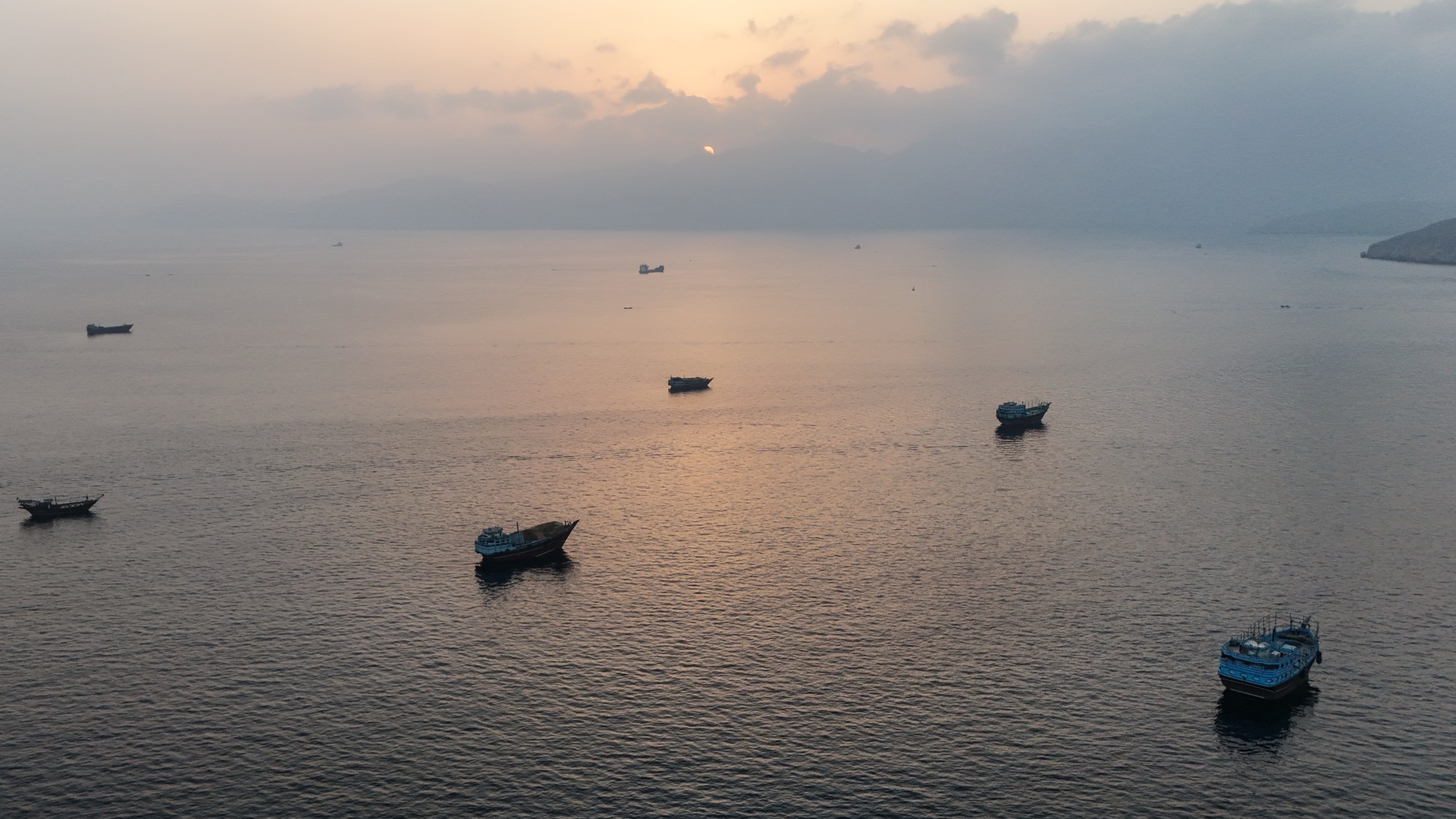
    The Iran war has trapped hundreds of ships on the wrong side of the Strait of Hormuz

    How many sailors are stranded? 
    At least 6,000 seafarers are stuck on board at least 400 tankers and cargo ships, according to the UN’s International Maritime Organization (IMO). Many of the ships have been stranded in the Persian Gulf since the US-Israel war with Iran erupted in late February. “It’s as if we are trapped in a pond,” Shafiqul Islam, captain of a ship carrying some 37,000 tonnes of fertiliser bound for South Africa, told the BBC in June. “There’s only one way out”: via the Strait of Hormuz, the narrow waterway between Iran and Oman through which some 20% of the world’s oil and liquefied natural gas – as well as crucial commodities including fertiliser, aluminium and helium – once flowed from Saudi Arabia, Kuwait, Bahrain, Qatar, Iraq and Iran to global markets. 

    Before the war, more than 130 ships a day transited the strait, which is 21 miles wide at its narrowest point. Iran declared the waterway closed and launched missiles and drones at vessels trying to sail through, grinding traffic to a halt. At one point, up to 20,000 mariners and 2,000 ships were stuck in the Gulf, with only a few vessels squeezing through each day. 

    How were they able to get out? 
    India, China, Pakistan and other nations negotiated with Iran for safe passage for their flagged vessels, and some tanker operators paid Iran up to $2 million for transit rights for individual ships. The logjam in the Gulf eased in June after Washington and Tehran struck a preliminary peace deal, after which about 30 ships a day were able to exit the strait. But that number dropped back to single digits earlier this month when the war restarted. 

    For the trapped sailors – mainly from India and the Philippines, as well as from nations including Bangladesh, Pakistan, Syria and Ukraine – the fear of death or injury is a constant. “Everyone is just exhausted,” said captain Hassan Khan, “both physically and mentally.” While trapped on ships often loaded with explosive substances, the crews have watched missiles and drones streak overhead, and at least 17 mariners have been killed in Iranian and US strikes. Raman Kapoor, a tanker captain who had 10 days left on his tour when the war erupted, watched helplessly in March as a nearby tanker exploded after being hit by an unmanned craft. One sailor died. “Everyone was so scared,” Kapoor said. “We are just seafarers. We are not trained for any war.”

    What is life like on board? 
    Long, monotonous and very hot (daytime temperatures are usually above 40C in July). While the crews work to ensure their ships remain seaworthy, and films and ping-pong serve as distractions, staving off boredom and depression is a struggle. “We do our best to keep [up] morale,” Abhijit Chopra, the captain of a tanker that had been stuck for more than 120 days, told Bloomberg. “But there is definitely a sense of strain and uncertainty.” 

    To entertain themselves and add some diversity to onboard meals, some crews are catching and cooking fish. Calls home are a boon, but infrequent, because satellite phone time is limited and expensive. To protect sailors’ mental health, captains encourage crews to do everything together and to never leave anyone alone – even when they dine or relax. Sailors report that access to knives and other sharp objects is more tightly controlled than normal, to prevent people from harming themselves or others. Meanwhile, food, water and medicine on many vessels are running low.

    Is anything being done about that? 
    Boats from nearby ports are delivering supplies, but prices keep going up. One Korean sailor told the BBC that it feels like suppliers “are trying to take advantage of the situation and make excessive profits”. The engineer of one ship said the cost of 180 tonnes of water has spiked from about $2,000 to $11,000. Fees for “bottom cleaners”, removing biofouling – barnacles, mussels, algae – from ships’ hulls have shot up, too. Scammers are also taking advantage, claiming to belong to Iran’s Revolutionary Guard, they’ve tricked shipping firms into sending hefty payments to their cryptocurrency wallets in exchange for safe passage. 

    Has there been any formal evacuation attempt? 
    A short-lived one. While a ceasefire was in effect in late June, the IMO began ushering ships through the strait’s southern and northern corridors – avoiding the central lanes where Iran had laid mines. Some 115 ships and 2,500 sailors made it out, but the US-backed initiative was scrapped within days after Iran attacked a tanker that was not taking part in the evacuation off Oman’s coast. 

    Some sailors have taken matters into their own hands. Stuck at an Iranian port, Santosh Kumar borrowed nearly $7,000 to pay an agent to drive him the 600 miles to Armenia, where he boarded a flight to Dubai and then on to his native India. “My family just wanted me home alive,” he said. 

    But such escapes have become increasingly difficult: some Gulf Arab states have restricted short-term shore passes for sailors over security concerns. Many merchant sailors are now wondering if the profession has become too dangerous, because the Iran war is only the latest crisis to hit the shipping industry. 

    What have been the other crises? 
    Mariners were stranded at sea during the pandemic, and drone attacks on vessels in the Black Sea have become routine since Russia’s 2022 invasion of Ukraine. Iran’s Houthi allies in Yemen – who attacked more than 100 vessels during the war in Gaza – last month declared an embargo of Saudi Arabian shipping in the Red Sea, putting more commercial vessels in the line of fire. Merchant seamen seem increasingly wary of going to sea: companies have struggled to secure replacement crews to relieve sailors in the Gulf whose contracts have expired, despite offering substantial bonuses. The war, said Arsenio Dominguez, IMO’s secretary general, has heightened the feeling among seafarers that they are “invisible, that they are not valued”.

    A hidden workforce 
    Seafarers move 90% of global trade ($16.5 trillion worth of goods annually), yet they are largely invisible to the public. There are an estimated 2.6 million seafarers currently serving aboard 85,000 merchant vessels worldwide, according to the Seafarer Workforce Report 2026, published by the shipping association Bimco and the International Chamber of Shipping. More than half of all merchant mariners are provided by the “big five”: the Philippines, India, China, the Russian Federation and Indonesia; Poland, Romania and Ukraine are also important “supplier” nations. About a million are officers, and 1.5 million are ratings. 

    As ships have got bigger, and docks more automated, the number of sailors required per tonne of cargo has reduced drastically. Pay has become globalised, with most packages for able seamen around $1,200- $1,500 per month (the International Transport Workers’ Federation minimum basic wage is $690 per month). Around 24,500 UK merchant mariners were at sea in 2025; a collapse from the 1970s, when there were nearly 90,000 British sailors. This was driven by British-owned vessels shifting to foreign registries (known as “flagging out”) and the rise of recruitment from Asia and eastern Europe.



    Spirit of the age

    Morrisons is trialling AI-powered smart trolleys that promise to bring “the convenience of online shopping” to physical stores. Already widely used in supermarkets in the US, the trolleys recognise items as they are put in. They can weigh and price vegetables; update the tally when items are removed, and alert the shopper to multi-buy discounts. The tech allows shoppers to put their goods straight into bags and see how much their bill is coming to as they navigate the aisles, before paying it at a dedicated checkout.


    VIEWPOINT

    Consolation for liberals

    “A decade on from Brexit and the rise of the Maga movement, I offer one consoling thought for liberals. Populism will eat itself. More than that, populism must eat itself. A movement that admires aggression, that thrives on conflict, that regards liberalism as not just wrong but boring, cannot help but eventually rough up its own side too. You can’t seek round-the-clock confrontation with enemies – even with the media – and then become a different person with colleagues. Belligerence is just too difficult a trait to psychologically compartmentalise.” 

    Janan Ganesh in the Financial Times


    talking point

    Trump’s nuclear deal: a disaster for the Middle East?

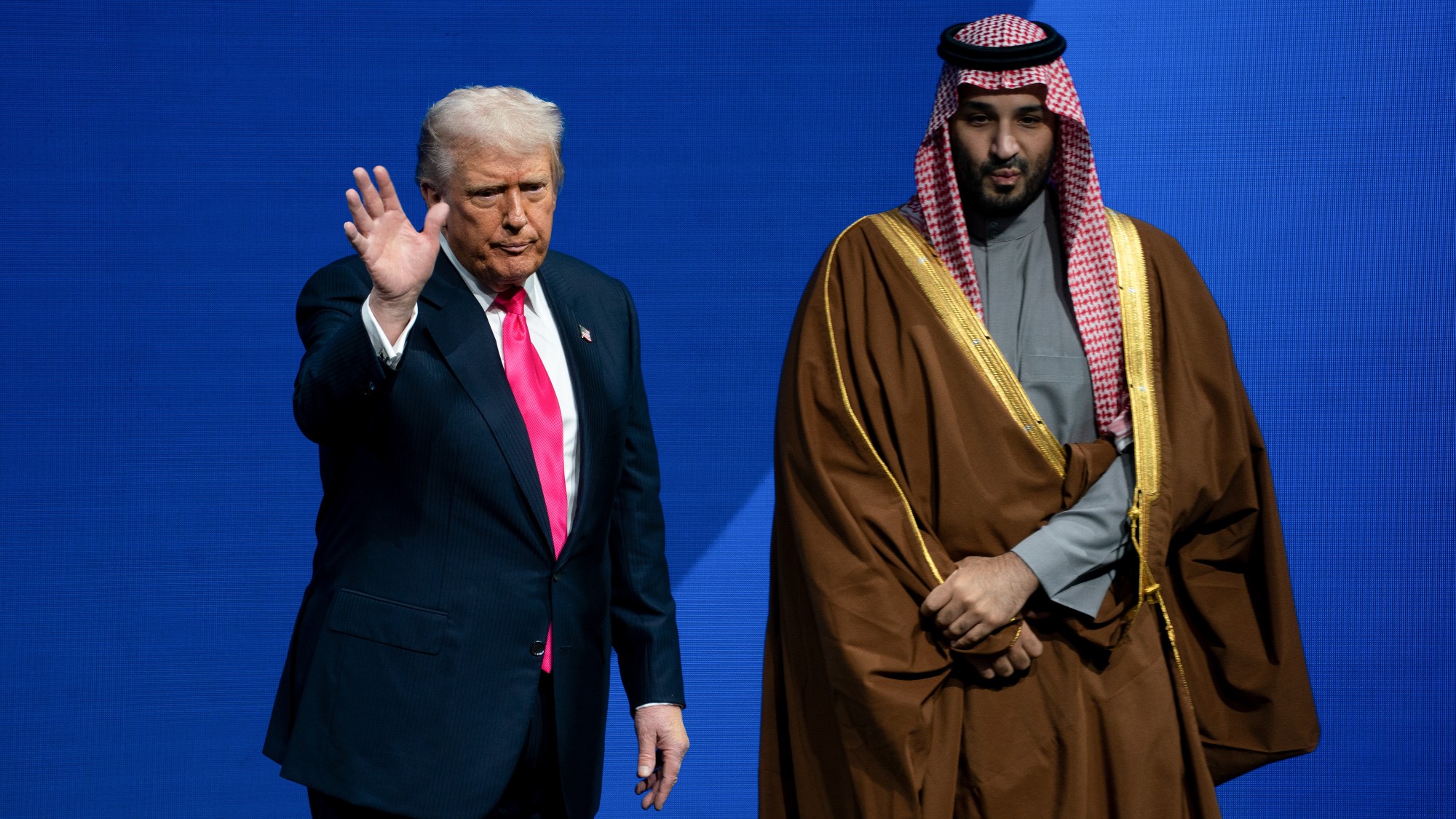
    Well, is it on or is it off? No one’s quite sure, said Al Jazeera. Two weeks ago, the United States and Saudi Arabia signed a multibillion-dollar deal allowing US companies to build and operate nuclear power plants on Saudi soil over the next 30 years. But a day later, President Trump added a new condition, via social media: Saudi Arabia must fall in line with the UAE and other Arab nations that have signed the Abraham Accords, and recognise the state of Israel. 

    And that may prove a deal breaker, said David Frum in The Atlantic. Riyadh had been working towards this landmark pact for almost two decades. Thanks to the savvy of its de facto leader Crown Prince Mohammed bin Salman (MbS), who ensured the private equity firm of Trump’s son-in-law, Jared Kushner, would get its share of the billion-dollar nuclear licensing deals at stake, he almost got it over the line. 

    But now it must surely be in doubt, said Mohamad Elmasry on Middle East Eye. Riyadh has vowed it won’t normalise relations until Israel guarantees Palestinian statehood. And MbS has reportedly told US officials that hostility towards Israel is so great among Saudis in the wake of Israel’s devastating war in Gaza, that to sign a normalisation treaty would probably get him assassinated. 

    It’s obvious why the Saudis still badly want this nuclear deal, said Joseph Cirincione on MS Now. It’s not, as they claim, to diversify their energy profile: that makes no sense for a nation sitting on an ocean of oil and blessed with the ideal wind and solar conditions for generating renewable energy – a far cheaper option. No, the real reason is to gain atomic weapons to protect itself against its main foe: Iran. MbS has made no secret of his desire to build a bomb, and the deal would be a concrete step in that direction. Despite Trump’s claims to the contrary, it appears to permit nuclear enrichment on Saudi soil, thus enabling Riyadh to follow the likes of India, Israel and Pakistan in covertly enriching uranium to weapons-grade levels.

    Who knows what’ll happen if this “reckless” deal goes ahead, said Mitchell Plitnick on Mondoweiss. The “gold standard” nuclear-power pact that the US signed with the United Arab Emirates in 2009 required the UAE to forego the ability to enrich uranium, and obliged it to submit to International Atomic Energy Agency inspections: this Saudi deal has no such restrictions. Which is why it would inevitably trigger a Middle East arms race, said Azriel Bermant in Foreign Policy. If the deal proceeds, Iran would openly seek its own nuclear deterrent, something it has so far officially forsworn. “It beggars belief that the US went to war against Iran to prevent it from acquiring a nuclear weapon yet now acts in a way that is an open invitation for Tehran to weaponise.” And in a way that would also pour “proliferation kerosene” on Turkey and Egypt’s “smouldering nuclear ambitions”, said Matthew Kroenig and Henry Sokolski in The Wall Street Journal. Trump’s deal invites disaster. 

    Actually, the US is doing the right thing, said the Washington Examiner. The hard truth is that the “era of non-proliferation is coming to an end”: Pakistan and North Korea are both testing nuclear weapons. Given that sobering reality, better the US offer “a guiding hand” to the Saudis and oversee their nuclear agenda than let China or Russia fill the void. 

    Good or bad, the deal matters a lot to the US president, said Sharon Squassoni in The Bulletin of the Atomic Scientists, so rumours of its death “are premature”. After all, it’s not some “spur-of-the-moment fantasy” cooked up by Trump. The same deal was also being considered under Joe Biden, and then too enrichment was a quid pro quo for recognising Israel. The Saudis won’t do so, of course, given recent history, but they won’t have to. Although Congress can disapprove the deal once it’s submitted, the present Congress – due to adjourn on 18 December – is much less likely to do so than any freshly elected one. So the Saudis can “call Trump’s bluff by simply sitting back” and waiting for him to succumb to the pressure of the December deadline.


    It wasn’t all bad

    A 42-year-old New Zealander has set a new record for the Via Alpina – one of the world’s toughest endurance races. Sophie Woods started in Italy, on 4 July, and then ran 2,000km through seven more countries along the length of the Alps, ending up in Monaco. Along the way, she climbed the equivalent of Mount Everest 12 times. She also faced intense heat, storms, a swarm of horseflies and wildfires. The British runner Jake Catterall set the previous record for the Via Alpina of 35 days in 2024. Woods did it in 29, running 15 to 18 hours a day. “I am ecstatic but knackered,” she told the BBC.


    People

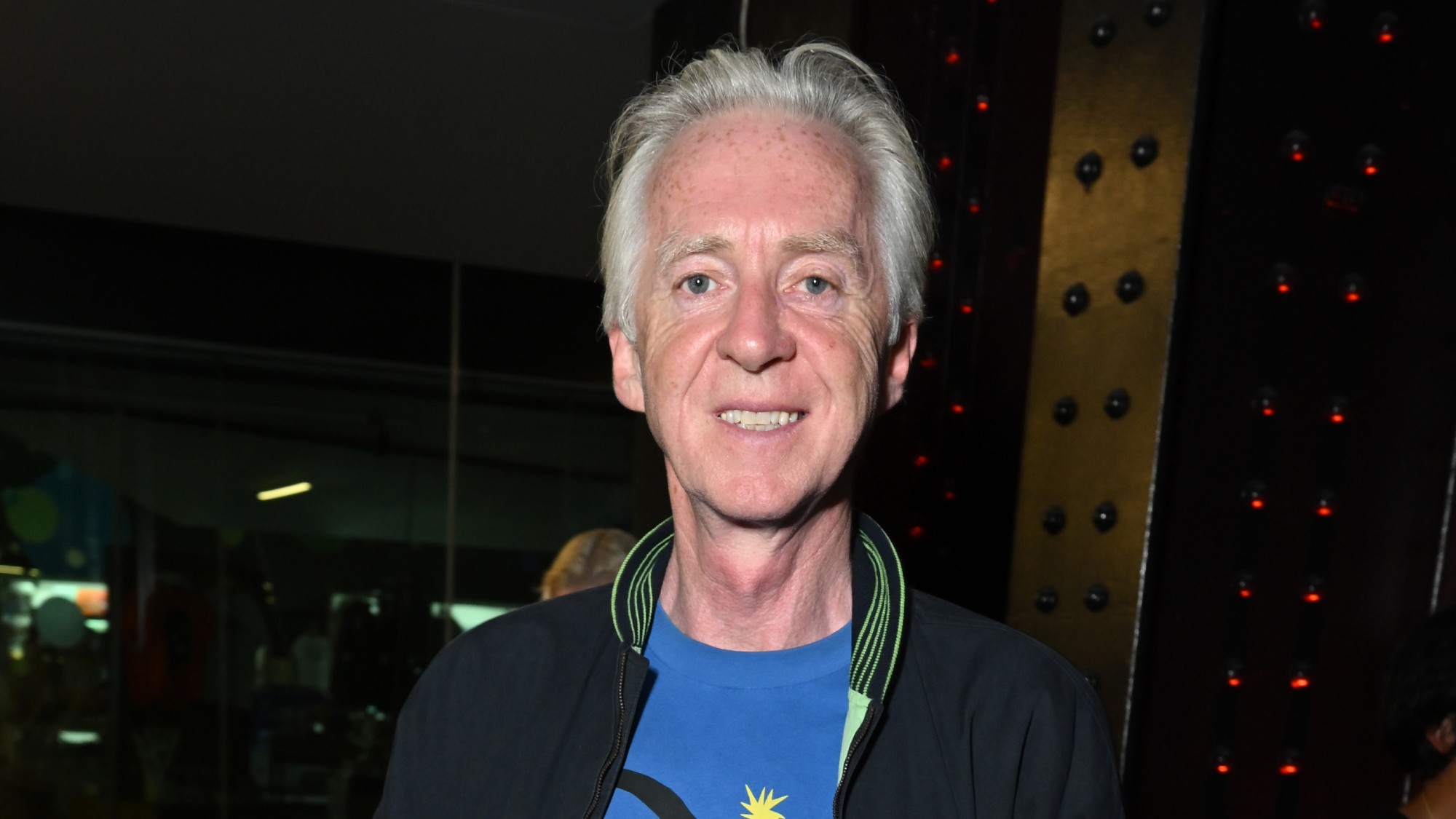
    Philip Treacy

    A milliner to the stars, Philip Treacy has made hats for everyone from Elizabeth Taylor to Lady Gaga. He got his break in the 1980s, when he crossed paths with Isabella Blow. The maverick fashion editor became his champion, and his friend. But more than that, says Bethan Holt in The Telegraph, she introduced him to “fashion in its purest form”. 

    Back then, says Treacy, “people didn’t applaud extrovert dressers at all like they do now”. If they went out to dinner, “I’d have to take a sharp intake of breath before we walked in because the whole restaurant would just stop, and they didn’t look thrilled… But she didn’t see that.” Not that it troubled him: the village in Ireland in which he had grown up was “full of eccentrics, so I was well prepared”. Blow died in 2007; but “she still inspires me”, he says – and after almost four decades in the business, he’s still at the top of his game: Madonna wore him to this year’s Met Gala and he’s the go-to milliner for the royals. 

    That said, the industry is not what it was. “The conglomerates have changed it because it’s about profit more than creativity,” he says. Even top designers can quickly “find themselves out of a job” if profits don’t match expectations; most now work as part of big teams, at a frantic pace. “Fashion is an illusion,” he says. “People don’t realise how Wizard of Oz it is. It’s pretending everything’s wonderful, [when] behind the scenes it’s less so.”


    Image credits, from top: Ken McKay / ITV / Shutterstock; AFP / Getty Images; Stefani Reynolds / Bloomberg / Getty Images; Dave Benett / Getty Images
     

    Recent editions

    • Evening Review

      Why can’t politicians just apologise?

    • Morning Report

      Yemeni violence surges

    • Evening Review

      How worried should we be about rogue AI?

    VIEW ALL
    TheWeek
    • About Us
    • Contact Future's experts
    • Terms and Conditions
    • Privacy Policy
    • Cookie Policy
    • Advertise With Us
    • FAQ
    Add as a preferred source on Google Add as a preferred source on Google

    The Week UK is part of Future plc, an international media group and leading digital publisher. Visit our corporate site.

    © Future Publishing Limited Quay House, The Ambury, Bath BA1 1UA. All rights reserved. England and Wales company registration number 2008885.