The Week The Week
flag of US
US
flag of UK
UK
https://cdn.mos.cms.futurecdn.net/flexiimages/jzblygzdxr1769609154.gif

SUBSCRIBE

Try 6 weeks free

Sign in
  • View Profile
  • Sign out
  • The Explainer
  • Talking Points
  • The Week Recommends
  • Podcasts
  • Newsletters
  • From the Magazine
  • The Week Junior
  • More
    • Politics
    • World News
    • Business
    • Health
    • Science
    • Food & Drink
    • Travel
    • Culture
    • History
    • Personal Finance
    • Puzzles
    • Photos
    • The Blend
    • All Categories
  • Newsletter sign up Newsletter
  • Saturday Wrap, from The Week
    The ‘human printer’, the rise of GB News, and a debt bomb

     
    controversy of the week

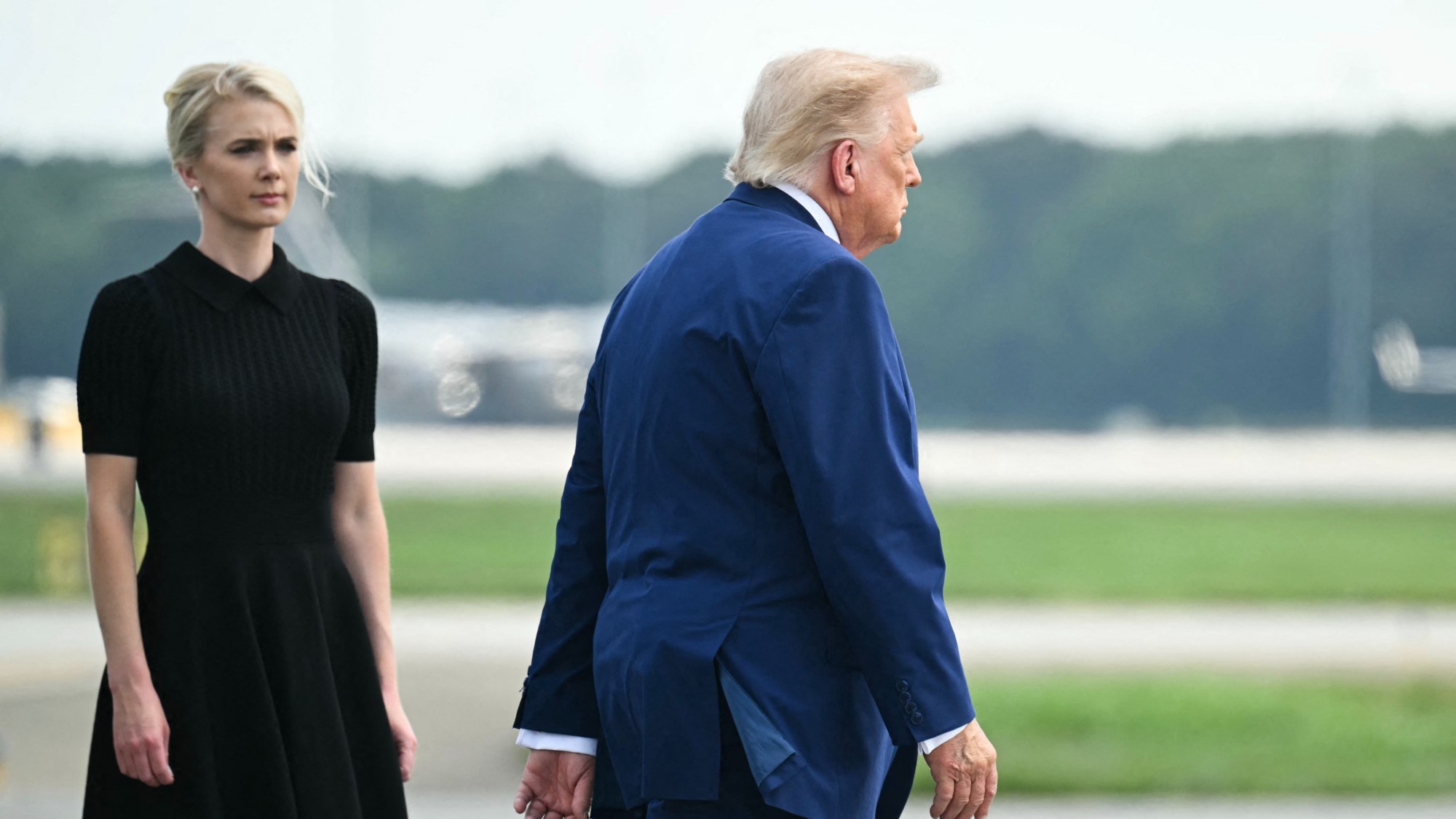
    Natalie Harp: Trump’s doting aide and ‘human printer’

    Democratic senator Jon Ossoff unleashed a furious row last week, said Jason Kyle Howard on Salon. Speaking at a campaign event, he declared that Donald Trump was neglecting his presidential duties because he just wanted “to build his ballroom and travel with Natalie on their apparently defenceless flying palace gifted by the emir of Qatar”. 

    The Natalie in question is Natalie Harp, Trump’s 35-year-old executive assistant. Nicknamed Trump’s “human printer”, she’s always at his side – whether in the White House or on Air Force One or the golf course – armed with a portable printer, from which she feeds him favourable coverage and memes. Until now, Harp hasn’t drawn much public attention. But Ossoff’s comment, and the response to it, has changed that. 

    Ossoff should be ashamed of his “disgustingly sly” insinuation, said Miranda Devine in the New York Post. Harp battled debilitating bone cancer in her 20s that left her in a wheelchair. Her fierce loyalty to Trump stems from the fact that she believes he saved her life by giving patients access to experimental drugs in his first term. 

    She expressed her gratitude to Trump in an impressive speech at the 2020 Republican National Convention, and he offered her a job in 2022. “Does Ossoff really think a hard-working single professional woman can’t succeed without sleeping with her boss?” 

    If only Trump and Harp were having an affair, said Jonathan V. Last on The Bulwark. Their odd form of co-dependency is somehow worse. Harp has reportedly unnerved other staff by writing intense personal notes to Trump with messages such as “You are all that matters to me,” and “I don’t ever want to let you down.” In one, she thanked him for being her “Guardian and Protector in this Life”. Trump, in turn, reportedly told staff, concerning Harp: “All of you will go off and make money… She’ll never leave me.” It’s not healthy that the president is employing “an in-house stalker”. 

    This isn’t just tittle-tattle, said Rex Huppke in USA Today. Trump backers are presenting Harp as some “innocent bystander”, but she controls a lot of his media diet and helps draft his social media posts. It turns out she worked in the White House for more than a year without the requisite security clearance. Ossoff was right to draw attention to her, because her case deserves scrutiny and “highlights the weirdness endemic to this administration”.


    Briefing of the week

    The rise of GB News

    GB News, founded just over five years ago, now claims to be ‘Britain’s No. 1 news channel’

    How did GB News get to where it is?
    GB News went live on 13 June 2021, the first news channel start-up in the UK since Sky News in 1989. Broadcast free on most platforms, it promised to serve audiences on the right who felt ignored by traditional media with a news agenda not governed by liberal metropolitan values and assumptions: it calls itself “the people’s channel”.

    GB News had a rocky start. Chair and star presenter Andrew Neil stepped back after just two weeks on air; he later complained of a lack of professionalism and “nutty” politics. It has firmly established itself since then. In December 2025, GB News announced that it had become the UK’s biggest news channel, by daily average viewers.

    In 2025 it had more than 80,000 viewers between 6am and 2am, narrowly overtaking BBC News’ figures. It still trails BBC and Sky in terms of weekly audience reach, with 2.1 million; the other channels have perhaps twice that. But its higher average viewership suggests it is watched consistently by a smaller and more loyal audience. 

    Why is the channel’s rise significant?
    Its content is not just culturally conservative: it is tilted specifically, and vociferously, towards Reform UK and the right-wing of the Conservative Party. Many of its presenters are politicians. Nigel Farage presents an evening prime-time show three nights a week, while other contributors from Reform include Lee Anderson, Richard Tice, Matt Goodwin and Darren Grimes; from the Tory right there are, among others, Jacob Rees-Mogg, Miriam Cates and Esther McVey. Michelle Dewberry, who has her own evening show, is a former Brexit Party candidate. (One former Labour MP, Gloria del Piero, serves as a presenter.)

    The channel has come under fire from journalists for breaching the impartiality rules that apply to news broadcasters. Ex-Sky News editor Adam Boulton called for the channel to be stripped of its broadcasting licence. 

    What does GB News coverage look like?
    Its content is focused strongly on populist-right themes: culture wars and “anti-woke” subjects; climate scepticism; and, most of all, illegal migration. Typically, a GB News evening show will begin with a few minutes of the presenter’s own firmly expressed views. Next, there will be four or five segments of news tilted heavily towards the channel’s favoured talking points. Then a panel of guests will discuss the issues. There’s usually a panel of two: say, Reform’s Zia Yusuf offset by one less-well-known liberal, such as Matthew Stadlen or Benjamin Butterworth, in order to provide a semblance of balance. This person is frequently shouted down by the presenter and the other panellist. Critics describe such guests as the “token leftie” or the “chew toy”. 

    Is this against impartiality rules?
    The Broadcasting Code, a list of rules established by the communications regulator Ofcom, covers both TV and radio broadcasters: all news coverage by broadcasting companies, whether across their main channels, or elsewhere, must be presented “with due impartiality”. Ofcom stresses it doesn’t mean an equal division of time has to be given to every view or every argument represented, only that there must be a level of impartiality “adequate or appropriate” to the subject and nature of the programme.

    What does this mean in practice?
    In the last decade, Ofcom has permitted greater flexibility in the interpretation of its rules, allowing broadcasters to provide more partisan coverage through presenters and guests, with fewer challenging voices. The boundaries were first tested by radio stations, with LBC and TalkRadio featuring more political presenters, including politicians. GB News and Rupert Murdoch’s TalkTV followed suit.

    In June, the former chair of Ofcom, the Tory peer Michael Grade, gave some idea of the thinking, saying that sometimes “a sentence in a script” would be enough to comply with impartiality rules. He defended GB News, which he said represented a “majority agenda”, adding that critics just disliked perspectives outside a “liberal, Islington consensus”. Ofcom distanced itself from these views.

    However, a High Court ruling from February 2025 also allowed some latitude. It found that “news programmes” must remain impartial at all times, and opinion and fact must be clearly separated, but for “current affairs programmes” – in this case, Jacob Rees-Mogg’s show – broadcasters should be given more flexibility.

    Is this a matter for concern?
    It opens up the possibility of a much more nakedly partisan and less factually rigorous broadcast media – along the lines of Fox News in the US, from which GB News drew inspiration. Ofcom’s investigation of an interview with Donald Trump conducted by the presenter Bev Turner may be a test case. In the interview, in November 2025, Trump claimed climate change was “a hoax”, parts of London operated under sharia law, and that the capital had no-go areas for police, none of which Turner challenged. She also told Trump it took “real backbone” to “drop so many truth bombs”. Ofcom is now looking at breaches of “due impartiality” and “material misleadingness” rules. 

    What do its defenders say?
    To its critics, GB News is “Reform TV” – a partial, irresponsible outlet that is pushing the news agenda towards the anti-immigrant right. To its defenders, it has taken a vital step in wrenching the news out of the hands of its self-appointed liberal controllers in the mainstream media, and is providing reporting on issues that really do matter to people. A major documentary on grooming gangs in 2023 by Charlie Peters, for instance, helped to refocus attention on continuing police and local authority failures. GB News has also investigated issues such as the abuse of visas. The channel’s critics, argued Simon Evans in The Critic, “just don’t like the plebs having a show that looks them… square in the eye”.

    The investors
    The main backers of GB News’ parent company All Perspectives, as listed on its website, are Paul Marshall and the private investment firm Legatum Ventures. Nigel Farage is also a shareholder.

    Marshall earned the bulk of his estimated £870-950 million fortune from his fund management company, Marshall Wace. He has long been involved in politics, having migrated from supporting the Liberal Democrats to the Conservatives via support for Brexit. He co-founded the political news website UnHerd, and bought The Spectator in 2024. Marshall has said that he hopes his media outlets will fight “progressivism”. In 2023, he established the Alliance for Responsible Citizenship (ARC) with the conservative culture warrior, psychologist Jordan Peterson. Legatum, a Dubai-based fund founded in 2006 by the New Zealand billionaire Christopher Chandler, is also a backer of ARC. 

    GB News has lost investors £131 million since launch, although it is moving closer to breaking even. Its latest figures, for the year to May 2025, showed revenue had grown to £26 million. Its losses were still high, at £22 million, but the annual report stated that there was “no reason to believe” its investors’ support “might vary to a significant degree”.


    What the scientists are saying…

    More people die in car crashes on the days when major new albums have been released, research suggests. A study, by a team from Harvard Medical School, used data from a US government register of fatal motor car accidents and from the music streaming platform Spotify, to look at deaths on roads in the US around the release of the 10 most-streamed albums from 2017 to 2022. These included Taylor Swift’s “Midnights” and “Harry’s House” by Harry Styles, which were each streamed tens of millions of times on the first day. The research, published in Jama Network Open, found that the amount of music streamed increased by 43% on launch days – and that the number of fatalities was 15% higher on these days than on those either side. The likelihood is that scrolling through tracks on smartphones, particularly when locating new albums, is proving dangerously distracting for drivers: the 10 album releases were associated with 182 extra deaths.


    VIEWPOINT

    Resurrected clichés

    “It’s often said that clichés lose their life through too frequent repetition. Do they therefore revivify as they fall into disuse? I think they might. Often, rereading old journalism, I’m struck by the unexpected freshness of once-hackneyed phrases. Recently I was taken with the vividness of ‘roaring boy’, to describe a riotous or swaggering young man. Overused in the mid-20th century it has since lain dormant and regathered its strength, allowing us to see the qualities that made people want to use it so much in the first place. How many similar archaeological treasures lie buried deep in the strata of our language?” 

    James Marriott in The Times


    talking point

    The debt bomb

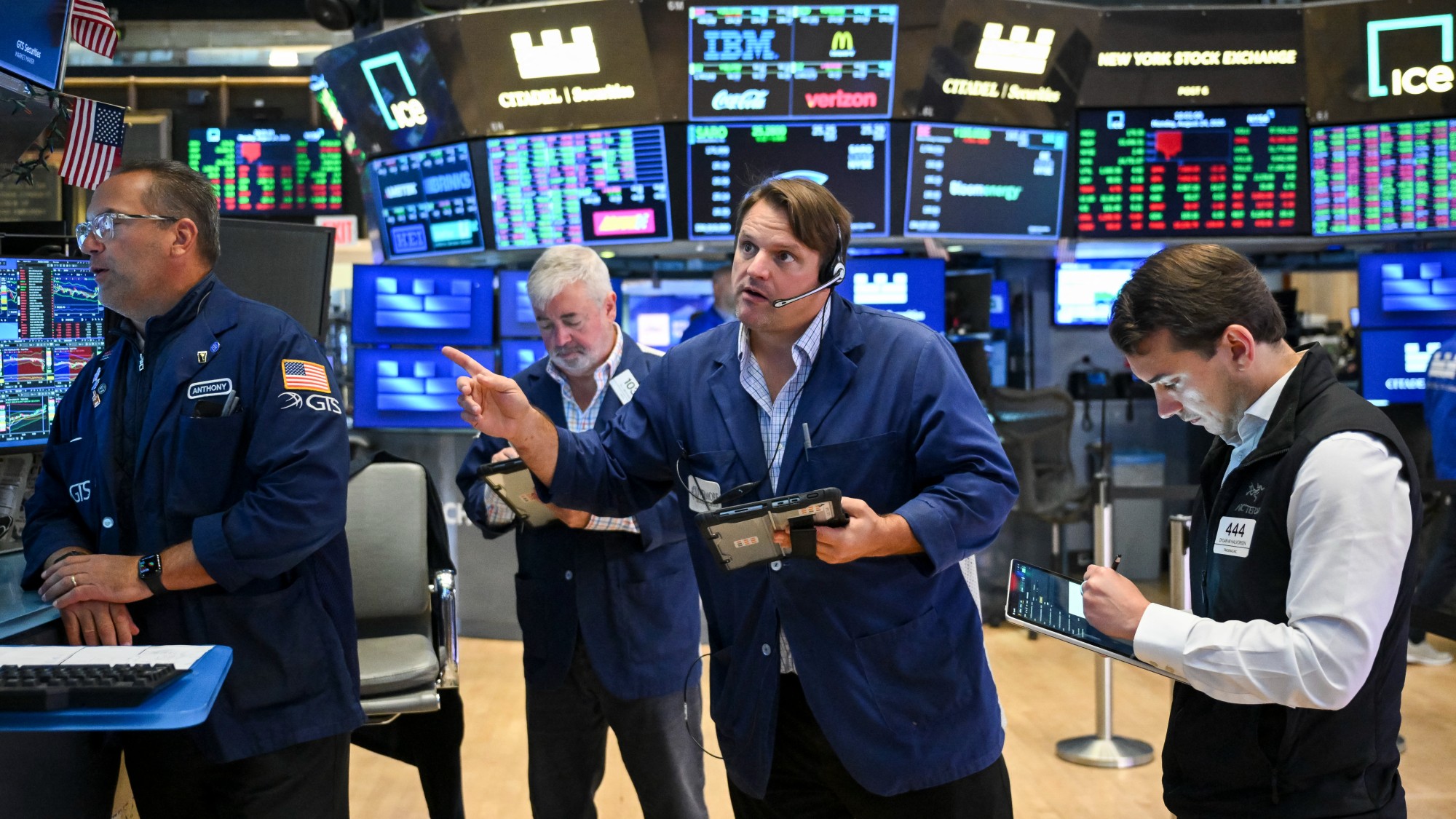
    The world could be on the brink of a “credit crunch not seen since the 1930s”, said The Independent – and all “thanks to Donald Trump”. Last week, US Treasury Secretary Scott Bessent was forced to intervene to calm a jittery bond market, after the yield on US government bonds – the cost of borrowing for the federal government – soared to its highest level in almost two decades. 

    The panic was driven largely by America’s gargantuan debt, which on Wednesday reached “the barely imaginable milestone” of $40 trillion. (That’s 13 zeros). With no end to the borrowing in sight, markets are beginning to doubt “America’s ability to meet its financial obligations”. 

    Bessent’s interventions only temporarily stemmed the tide. The great danger is that the US enters a doom loop, said Alex Brummer in the Daily Mail. A surge in yields makes it more expensive for the government to borrow, making the cost of servicing its vast debt ever more expensive “and ultimately risking a new financial crisis”. Add to that the prospect of the AI bubble bursting, and “Wall Street’s Fear Index” is officially flashing red. 

    Much of this crisis has been driven by “Trump’s fiscal incontinence and geopolitical blow-ups”, said Hans van Leeuwen in The Telegraph. His six-month “excursion” in Iran has sent fuel prices and inflation soaring. His trade war has failed: tariff revenue was meant to raise $280 billion a year, but the White House now has to refund more than it collects, after the Supreme Court struck many of the tariffs down. 

    Problem is, when the US catches a cold, the whole world “gets pneumonia”. Bond market panic will push the cost of borrowing up everywhere. “Mortgages will get more expensive… businesses will struggle.” Taxes will have to rise. 

    It’s not just America’s fault, said Geoffrey Smith on Politico. Many European countries are also in hock to the bond market, having “accumulated huge debts in the last 20 years”. Some of this was to pay for crises such as the pandemic; but it came on top of a “steady, long-term deterioration in public finances due to rising health and pension obligations”. As long as interest rates were low, the bill on that debt was manageable. But in the last week, the cost of borrowing for Britain, France and Germany has reached levels not seen in a decade. 

    This moment was inevitable, said Andrew Neil in the Daily Mail. The bond markets have “rightly” concluded that politicians on both sides of the Atlantic have given up trying to get to grips with debt. “Nobody has the guts to take away the punchbowl.” Even today, the left and much of the right continues to promise both rearmament and welfare; “guns and butter”. And voters lap it up: rather that than making the “tough choices” required to balance the budget. 

    But it can’t last. A “reckoning” is coming – and the UK, which pays more to borrow than any other G7 country, is particularly vulnerable. “Be in no doubt: in these times of bond market turbulence, we are in the crosshairs.”


    It wasn’t all bad

    A border terrier who vanished on Helvellyn, in the Lake District, has been tracked down and rescued after three weeks missing. Volunteers had been searching for Teddy since he went missing on England’s third-highest peak on 2 August, and eventually tracked him down last Friday, when they heard barking from Dry Gill. The dog was transported down the mountain in a backpack before being assessed by a vet, who found that he had lost a “considerable” amount of weight but was otherwise unharmed. The Keswick Mountain Rescue Team, which ran the operation, said it was “a remarkable outcome”.


    People

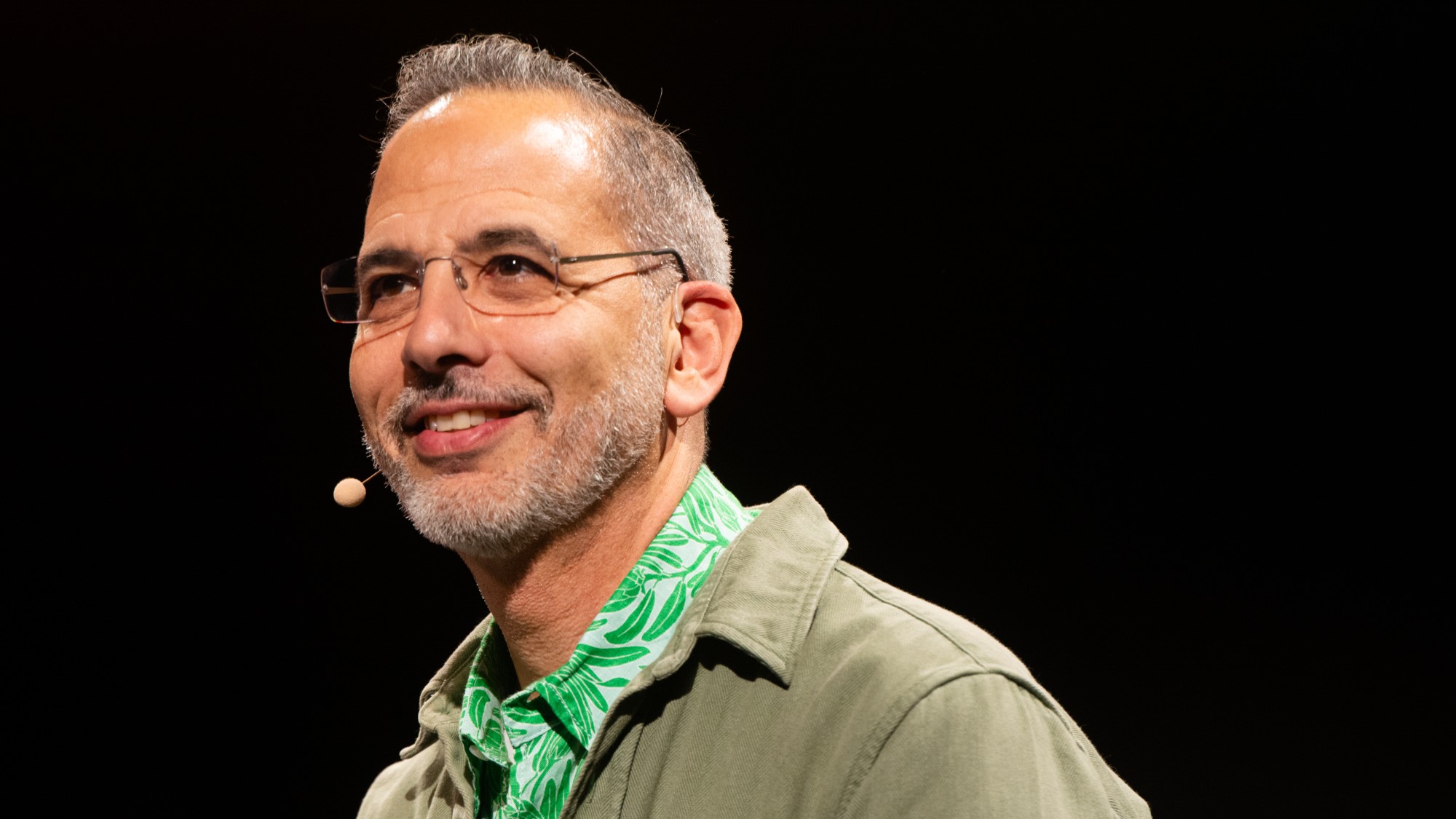
    Yotam Ottolenghi

    Ottolenghi was raised in Jerusalem, in a family of high-flyers. His grandmother was in the Mossad and helped track down Adolf Eichmann in Argentina; his father was a chemistry professor; his mother a head teacher. 

    A gifted student, he’d seemed set for academia or journalism, says Laura Pullman in The Sunday Times. But at 29, and living in Amsterdam, he told his father that he was swapping his studies, in philosophy, for a career in food. “He said, ‘You’re wasting your time.’ He was worried I was giving up something great for something very risky.” Ottolenghi moved to London to train at Le Cordon Bleu and worked at a Michelin-starred restaurant. “It was long, long, long hours. I just couldn’t handle it.” 

    Then, at 33, he opened his first 10-seat deli, in Notting Hill. With towering salads, vibrant vegetables and vast meringues in the window, it was an instant hit. “It was insane,” he recalls. “On the first Saturday, there was a queue around the corner.” 

    Today, he has seven delis, two restaurants and a series of influential cookbooks to his name. His success, he sees now, was driven by high parental expectations. “People who know me well will tell you that I am ambitious. I wear it lightly. I grew up in an environment where you were expected to be very good at what you were doing. I resented it for a while, but I ended up falling into that place as well.”


    Image credits, from top: Saul Loeb / AFP / Getty Images; Betty Laura Zapata / Bloomberg / Getty Images; Angela Weiss / AFP / Getty Images; Ying Tang / NurPhoto / Getty Images
     

    Recent editions

    • Evening Review

      Can Canada withstand a US trade war?

    • Morning Report

      Nepal flash flood relief effort faces race against time

    • Evening Review

      Andy Burnham turns up the heat on Israel

    VIEW ALL
    TheWeek
    • About Us
    • Contact Future's experts
    • Terms and Conditions
    • Privacy Policy
    • Cookie Policy
    • Advertise With Us
    • FAQ
    Add as a preferred source on Google Add as a preferred source on Google

    The Week UK is part of Future plc, an international media group and leading digital publisher. Visit our corporate site.

    © Future Publishing Limited Quay House, The Ambury, Bath BA1 1UA. All rights reserved. England and Wales company registration number 2008885.