The Week The Week
flag of US
US
flag of UK
UK
https://cdn.mos.cms.futurecdn.net/flexiimages/jzblygzdxr1769609154.gif

SUBSCRIBE

Try 6 weeks free

Sign in
  • View Profile
  • Sign out
  • The Explainer
  • Talking Points
  • The Week Recommends
  • Podcasts
  • Newsletters
  • From the Magazine
  • The Week Junior
  • More
    • Politics
    • World News
    • Business
    • Health
    • Science
    • Food & Drink
    • Travel
    • Culture
    • History
    • Personal Finance
    • Puzzles
    • Photos
    • The Blend
    • All Categories
  • Newsletter sign up Newsletter
  • Saturday Wrap, from The Week
    A postcode ‘gone mad’, a lost generation, and rebuilding bridges

     
    controversy of the week

    Trouble in Teesside

    Every now and again, a single news story exposes what is “going wrong in modern Britain”, said The Telegraph. The head-on crash that killed two policemen and five joyriders in Middlesbrough in August, and its aftermath, is the latest. This is “a community beset by brazen criminality”. The five young men were linked to organised crime and had 37 convictions between them. And the horrific crash has been followed by a series of gang-related incidents and acts of destruction. A house was rammed by a car and a man stabbed in suspected tit-for-tat attacks. At a memorial for one of the men, cars were smashed into each other in a field and set alight. In a separate incident, a seven-year-old and her aunt died in an arson attack. Last week, 200 officers from the National Crime Agency and other forces were drafted in to calm tensions. “Almost all of the recent crimes have taken place in just one postcode,” said Felix Pope on UnHerd: TS6, a collection of deprived estates in southeast Middlesbrough with what one local politician calls “a feral underclass”. Residents speak of balaclava-clad young men on electric bikes and scooters terrorising the community. One local told The Yorkshire Post: “TS6 has gone mad.”

    All this in a town that “once brimmed with pride”, said Ross Clark in The Sun. “Middlesbrough was once ‘Ironopolis’, one of the biggest producers of pig iron in the world.” Teesside shipyards turned out trawlers by the dozen. But after heavy industry went into a long and deep decline in the 1980s, Middlesbrough never recovered. The steelworks closed in 2015; the town is now one of the most deprived places in England – a place where the last two generations of many families have never known paid employment. Successive governments should have done more to help these people, said Simon Heffer in The Telegraph. Instead, “the white working class has been pushed aside to stew on welfare benefits or in low-esteem jobs” – abandoned by a state whose first duty is to protect them. “No wonder so many of them feel no connection with it.”

    Cleveland Police, the local force, is also a victim of neglect, said Leigh Jones in The Independent. Its area now has the highest crime rate outside central London. Yet it is one of the smallest forces in the country, and has been gutted by years of austerity. Had its budget kept up with inflation, it would be at £246 million this financial year; instead, it is just £196 million. Yet this force is not an outlier, said Dominic Adler on UnHerd. Across the country, cash-strapped local constabularies are sitting on “potential powder kegs”, but these forces don’t have the resources to deal with even “modest” manifestations of organised crime, such as county-line drug gangs. Look beyond the police, and the whole criminal justice system – prisons, the courts and probation service – is poorly run, and often in crisis. Middlesbrough’s plight is the sign of a “full-spectrum failure, from nose to tail”.


    Briefing of the week

    Neets: a lost generation?

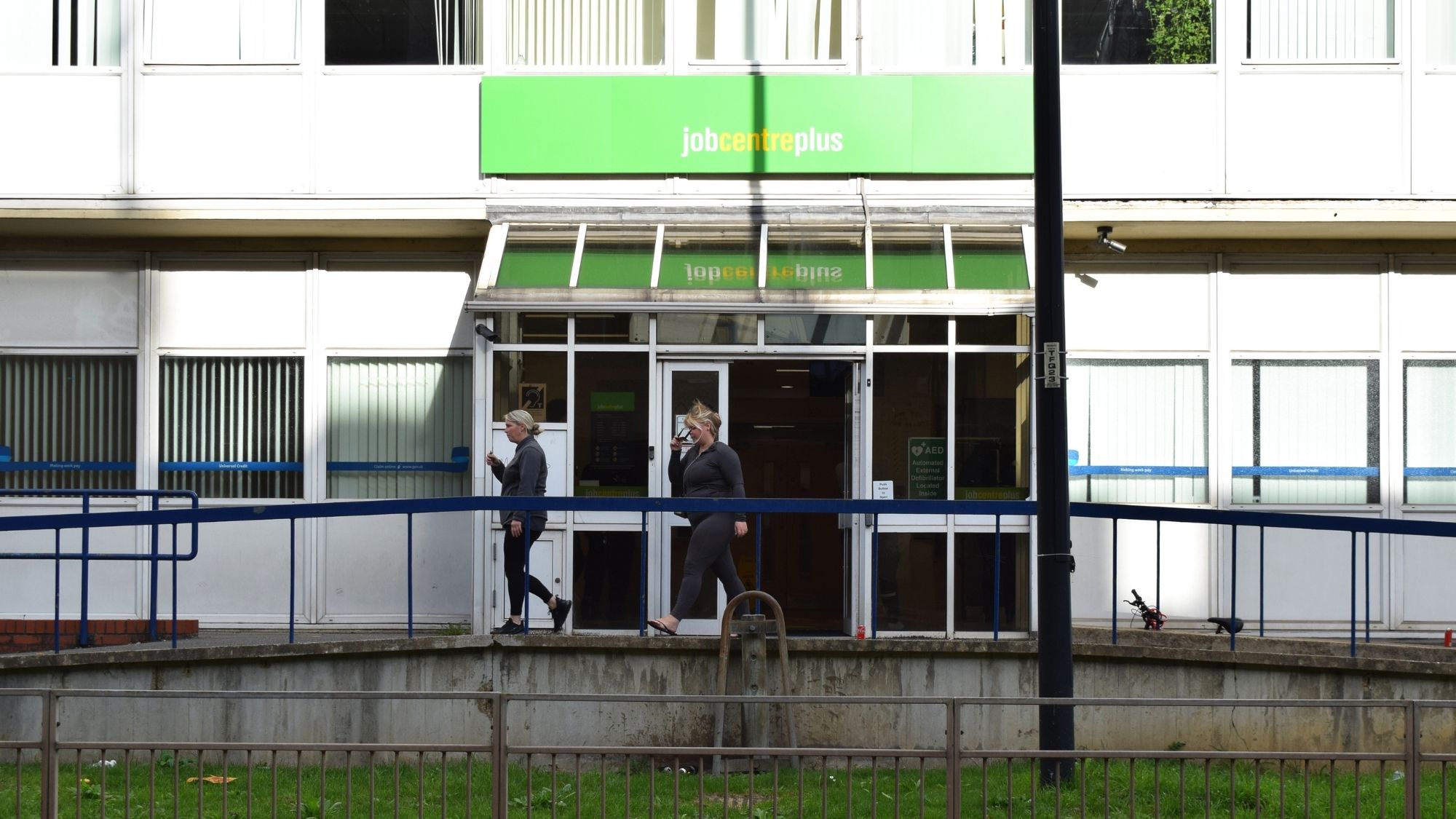
    There are around a million 16- to 24-year-olds in the UK who are “Neet”: not in education, employment or training. Why?

    How long has this been a problem?
    The proportion of 16- to 24-year-olds in the UK who are classified as Neets has been at 10% or above for most of the last 25 years. But the problem is getting worse – today, around one in eight young people are Neet – and stickier, too. The former Labour health secretary, Alan Milburn, set out the scale of the problem in an interim report of his review on Young People and Work in May. On present trends, the number of Neets is set to swell to 1.25 million within five years. A decade ago, the rate was close to the EU average, but Britain’s is now among the highest in Europe: it has nearly three times as many, proportionally, as the Netherlands, and double Ireland’s rate. Six in 10 Neets today have never had a job, up from four in 10 in 2005

    How serious is the issue?
    It is, in Milburn’s view, an “urgent national crisis” which, despite its importance, is too often taken for granted and ignored. Obviously, for those directly affected, it is a tragedy: it “is corrosive of life chances” – if you’re a Neet in youth, you’re about six times more likely to be economically inactive in midlife. Neets risk becoming a “lost generation”, permanently excluded from the workforce. But Milburn’s review also estimates the cost in the main welfare payments to young people at around £8 billion per year, and the cumulative annual social cost of the broader problem at £125 billion – more than we spend on education or defence. It is, he found, “fast becoming a strategic economic risk for Britain. We cannot complain about labour shortages, low growth, rising welfare costs and pressure on public services while allowing the talent of nearly one million young people to go to waste.”

    Why is this happening?
    Milburn’s report argues that there is no single explanation. Rather, it is down to a “perfect storm” of many factors. The education system, though recently improved, allows many vulnerable people to fall through the cracks as they transition to adulthood, rather than catching them. The welfare system acts as a gateway to “a life outside the labour market”: it spends roughly £25 on working-age benefits for every £1 spent on active employment support. As well as these long-standing problems, there are two other relatively recent developments. First, that “the first rungs on the old career ladder have weakened”. The youth share of the labour market has decreased even as employment overall has increased; entry-level roles have become less plentiful and more demanding. Secondly, Milburn identifies “one stand-out change”: a growth in ill-health, particularly mental ill-health. Disability rates among Neets have more than doubled over the past 15 years.

    Why is ill-health growing?
    In 2024 to 2025, 45% of Neets in the UK reported having a disability; nearly half of these are mental health problems, which have risen sharply – primarily anxiety and depression, and to a lesser extent autism and ADHD. Such trends were exacerbated by the pandemic, but predate it. Milburn rejects the idea that people are “softer” than in previous generations; rather, he says, “a growing number of people are in genuine distress, while the system is struggling to respond” – in part because of a lack of coordination between health and welfare. The official definition of a disability has widened; a diagnosis of mental illness often becomes a gateway to welfare and a life permanently outside of employment. This creates a vicious cycle: poor health reduces participation in work; reduced participation worsens health and the likelihood of return to work. The NHS often merely “certifies” poor mental health, rather than treating it and encouraging a return to work.

    And why is work harder to get for young people?
    The number of workers under 25 has fallen since 2000. Education has absorbed some, but the proportion of unemployed people has risen (from 9.2% in 2022 to nearly 16% now). For those aged 16 to 17, the impact has been “dramatic”. Routes into work have narrowed: Saturday jobs and apprenticeships have both declined. Half of youth employment is in three areas: retail and wholesale; hospitality; and health and social care. High-street retail has contracted; hospitality is struggling; social care is poorly paid, taxing and unpopular. AI and automation have also impacted jobs, and have helped to tighten the graduate labour market, with the result that graduates are snapping up lower-paid jobs, creating a “cascade” effect. Employers complain that the cost of hiring has risen, because national insurance and youth minimum wages have gone up. Applicants say the automation of recruitment is discouraging: Neets describe applications disappearing into a “black hole”, with no response. All in all, “detachment from the labour market among the young is growing”, Milburn warns.

    What can be done to help them?
    Milburn is due to unveil his recommendations on how to tackle the problem this autumn: he has called for “fundamental and far-reaching reform” to the education, welfare and health systems. He has also highlighted the need to expand vocational training, citing the fact that fewer young Britons are in vocational education compared with better-performing countries such as Germany and the Netherlands

    What will the government do?
    In theory, the Neets issue could be a major opportunity for Andy Burnham’s government: both a classic campaigning Labour cause, and an opportunity, as the PM has put it, to show that he is “really serious” about cutting welfare spending. On the other hand, backbench Labour MPs have in the past proved reluctant to institute any cuts at all to the benefits system: the rejection of modest reductions to disability and sickness payments in June 2025 proved a turning point in Keir Starmer’s tenure.

    Lessons from the Netherlands
    At 4.1% (compared with 13% in the UK), the Netherlands has one of Europe’s lowest rates of Neets. If Britain’s Neet rate were equivalent, 600,000 more people would be in work. So what makes the Dutch different? Young people there report similarly high levels of anxiety and depression, for example. One big difference, according to the Resolution Foundation think tank, is that young people in Britain who do not go to university are starved of other choices.

    In 2024, just 22% of 18- to 21-year-olds in the UK were on vocational courses, compared with 35% in the low-Neet trio of the Netherlands, Denmark and Germany. There are also comparatively few demands made of Britons with health issues: in 2025, 84% of young people on universal credit for health were under no obligation to undertake “work-readying” activities such as volunteering, study or employment preparation. In the Netherlands, by contrast, a “no-engagement” approach is usually a last resort after training, rehabilitation and subsidised employment have been tried. Pat McFadden, the work and pensions secretary, highlighted this difference during a fact-finding trip to Rotterdam earlier this year, saying that it “reinforced” his desire to get welfare reforms across the line.




    Spirit of the age

    The fees at some of the most prestigious British boarding schools are now
    just short of £70,000 a year, analysis by The Times has found. The most expensive day schools cost £40,000 a year.


    VIEWPOINT

    Robot vs. man

    “A lot of excitement followed the news than an X-Humanoid robot beat Usain Bolt’s 100m record of 9.58 seconds at the robot games in Beijing, but why? It’s like losing to a Peugeot 408. It’s still a machine, even if robots look like us. Machines have always been able to outperform humans, achieve things humans cannot. Like flight. And, for now at least, X-Humanoid robots do not know they are in a competition, do not want medals, have no concept of external pressure or the shame of defeat. The robot games were a wonderful achievement; but they were still a triumph of human ingenuity. We shouldn’t excuse ourselves, or Bolt, from sporting history just yet.”

    Martin Samuel in The Times


    talking point

    Rebuilding bridges: the US lifts sanctions on Syria

    Syria is on the verge of an “economic revolution”, said Ksenia Svetlova in Haaretz. Its interim president, Ahmed al-Sharaa, the former al-Qa’eda militant who led the rebel offensive that overthrew dictator Bashar al-Assad in December 2024, has been struggling to rebuild a nation devastated by almost 14 years of civil war. One of his biggest coups last year was to persuade the Trump administration to lift the strict economic sanctions imposed on Syria in 2019. But the country was still on the US list of state sponsors of terrorism, a designation first made in 1979 in response to Damascus’ support for Iran and its harbouring of Palestinian terrorist groups. So, like Iran, it remained cut off from the international banking system, and large-scale reconstruction proved impossible. But that all changed last week at the stroke of US Secretary of State Marco Rubio’s pen. Now, at long last, the flow of “dollars, dinars and dirhams” to Syria can begin in earnest. Saudi Arabia has promised to build desalination plants and two airports, and invest in telecommunications projects worth more than $1 billion. Other countries are keen to follow suit. “If everything goes according to plan, Syria will soon become one vast construction site.”

    The rehabilitation of Syria into the world order has happened at “remarkable speed”, said Ilan Berman in The Washington Post. And there’s an obvious logic to it. By removing Damascus from its terrorism list, the US has pulled it towards the West and away from Iran and Russia’s orbit. Yet there are dangers to being so hasty: Washington is “basing its bet more on hope than hard evidence”. For all their promises of liberalisation, Sharaa and his government haven’t fully moved on from the past. Jihadist ideology is prevalent in school curriculums, and there has been no more than “limited progress” in removing 5,000 foreign fighters – extremists loyal to the current regime – from the new Syrian army.

    Sharaa also won a significant victory last week in his quest to centralise power, said Smadar Perry on Ynet: he has managed to disband the Syrian Democratic Forces (SDF), the Kurdish-led militia founded in 2015 to fight Islamic State and create a secular, democratic and federalised Syria. At its height, it controlled at least a quarter of the country, including its major oil fields. Its commander, Mazloum Abdi, has now agreed to let his troops be incorporated into the national army, in what he calls “a genuine transition from battlefields to the fields of construction”. But the truth of it is that Sharaa forced his hand by seizing swathes of the SDF’s territory in a lightning offensive in January. Folding the SDF into the army is going to be a hard ask: and though the president has promised to make Kurdish a national language and to protect Kurdish rights, many Kurds still don’t trust him.

    Sharaa’s government has also been busy bringing members of the Assad regime to justice, said Chris Doyle in Arab News. In August, nine of its most senior figures, including Assad himself, were sentenced to death for war crimes – verdicts that gave rise to an “outpouring of joy”. However, only Atef Najib, Assad’s cousin, a security chief infamous for his brutality, is likely to face execution, the rest having been tried in absentia. Nor is this exactly a victory for the rule of law: the accused can hardly be said to have received a fair trial; and no corresponding action has been taken against the perpetrators of last year’s massacres of over 1,400 Alawites, the minority sect to which the Assad family belongs. There’s a strong smell of victor’s justice about it all. Still, progress is undoubtedly being made and “the psychological importance of the removal of sanctions should not be underestimated”, said The National. We have room to hope that the barriers now being torn down in Syria will be replaced “with bridges, roads and tunnels en route to a more stable, secure and prosperous future”.


    It wasn’t all bad

    Three years ago, The Guardian revealed that Turkmenistan was the worst country in the world for mega-leaks of methane – one of the more potent of the greenhouse gases. Now, it has reported that the authoritarian state has quietly started plugging the leaks that spew methane from its ageing gas
    and oil facilities. According to UN data, it has plugged eight leaks – work described as an “incredible first step”, and a positive sign of its willingness to engage with foreign partners.


    People

    Anthony Scaramucci

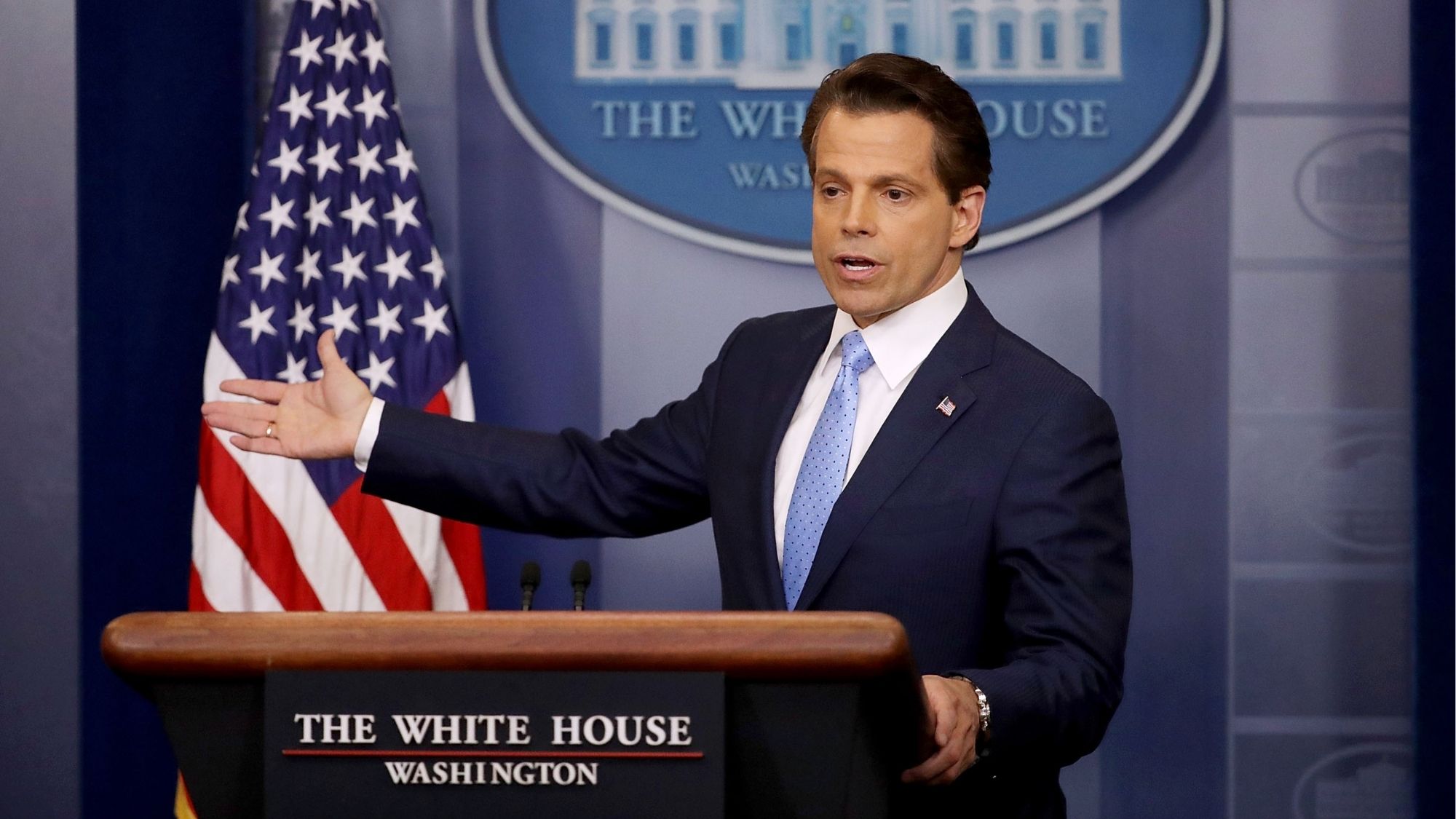
    Anthony Scaramucci lasted only 10 days as Donald Trump’s White House communications director, but it was a wild ride even so, said Will Pavia in The Times. His wife, Deidre, loathed Trump, and his decision to accept the White House job on 21 July 2017 nearly cost him his marriage. She filed for divorce, thinking that “I had lost my marbles”. Three days later, she went into labour prematurely: Scaramucci missed the birth of his son because he was in West Virginia watching Trump make a “crazy” speech at a Boy Scouts rally.

    Soon after, Scaramucci called a reporter, to vent about his new colleagues. He thought their conversation had been off the record; but his unflattering descriptions of Trump’s White House team (he called Reince Priebus, who was then Trump’s chief of staff, “a f**king paranoid schizophrenic”) ended up all over the media. Not that Trump cared: he thought it was funny, says Scaramucci. “He goes, ‘You know, we got street Anthony and Harvard Anthony. Let’s go with more Harvard Anthony, OK?’”

    What got him booted out, he thinks, was that he contradicted Trump in front of others. “Because he’s a very insecure guy.” On 31 July, Scaramucci was fired – a fate he has now come to view as providential. “The universe, if you believe in this shit, was like, ‘Hey man, you’re not a bad guy. We’re gonna try to save your ass,’ and blew me right the hell out of there.”


    Image credits, from top: Ian Forsyth / Getty Images; Jun Huang / Getty Images; Saul Loeb / AFP / Getty Images; Chip Somodevilla / Getty Images
     

    Recent editions

    • Evening Review

      Are the Brits and French friends now?

    • Morning Report

      Milei ramps up dispute over Falklands

    • Evening Review

      Four issues that will decide the US midterm elections

    VIEW ALL
    TheWeek
    • About Us
    • Contact Future's experts
    • Terms and Conditions
    • Privacy Policy
    • Cookie Policy
    • Advertise With Us
    • FAQ
    Add as a preferred source on Google Add as a preferred source on Google

    The Week UK is part of Future plc, an international media group and leading digital publisher. Visit our corporate site.

    © Future Publishing Limited Quay House, The Ambury, Bath BA1 1UA. All rights reserved. England and Wales company registration number 2008885.