The Week UK
flag of US
US
flag of UK
UK
https://cdn.mos.cms.futurecdn.net/flexiimages/jzblygzdxr1769609154.gif

SUBSCRIBE

Start your trial today

Sign in
  • View Profile
  • Sign out
  • The Explainer
  • Talking Points
  • The Week Recommends
  • Podcasts
  • Newsletters
  • From the Magazine
  • The Week Junior
  • More
    • Politics
    • World News
    • Business
    • Health
    • Science
    • Food & Drink
    • Travel
    • Culture
    • History
    • Personal Finance
    • Puzzles
    • Photos
    • The Blend
    • All Categories
  • Newsletter sign up Newsletter
  • Sunday Shortlist, from The Week
    A ‘beguiling’ stop-motion film and a ‘wonderfully vital’ play

     
    Theatre Review

    Ilford Boy

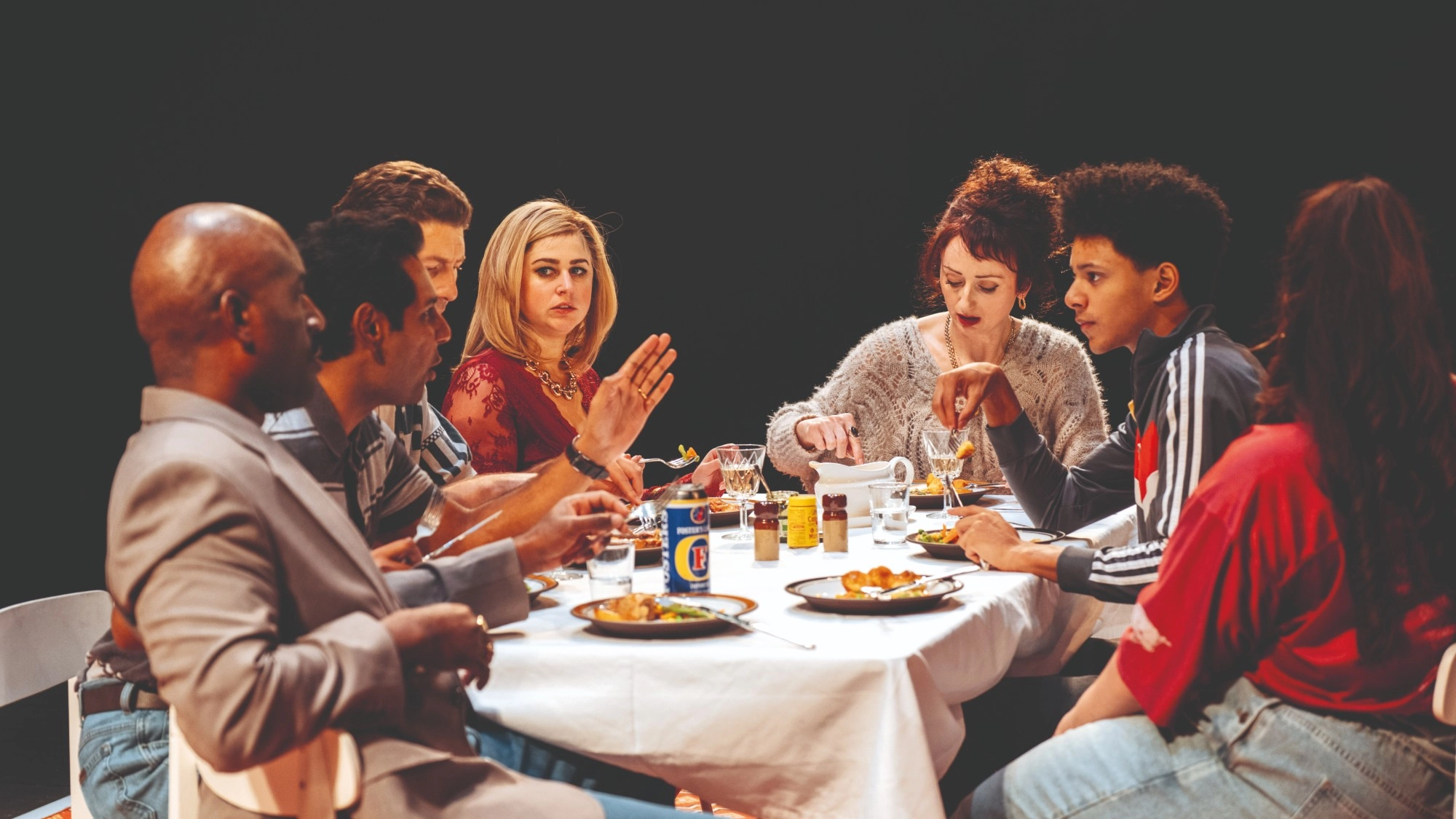
    Danny Lee Wynter’s ‘thought-provoking’ play about a mixed-race family in the 1990s

    “What a transformation,” said Clive Davis in The Times. Three years ago, actor Danny Lee Wynter’s debut play, “Black Superhero”, was staged at the Royal Court and I found it “so self-indulgent and overwrought that it had me squirming in my seat”.

    But now he has produced a second piece – a family drama about growing up gay and mixed-race in 1990s east London – and it is brilliant: quietly moving, “extraordinarily funny, endlessly thought-provoking, and propelled by some electrifying performances”. It is “quite simply the most entertaining” new British play I’ve seen since “Till the Stars Come Down”, Beth Steel’s wedding-day masterpiece that premiered at the National Theatre in 2024.

    As in Steel’s “zinging” play, the focus here is on a big, working-class family gathering, said Fiona Mountford in The Telegraph. Rather than a wedding, though, it’s a funeral that has drawn a large cast of characters back to the family home, including the dead woman’s grandson, biracial 14-year-old Ted, and her daughters – a witty and acerbic trio whom I could have happily watched “strop and bicker all day”.

    Ted’s white mother, Tilly (Ria Zmitrowicz, “who always lights up a stage”), now only sees his Black father Ken (a terrific Gershwyn Eustache Jnr) once a week when he arrives to take Ted to a boxing lesson, said Nick Curtis in The Standard. Ken wants to bond with Ted over boxing, but Tilly’s Black gay best friend Patrick (Craig Stein) blows in and broadens Ted’s horizons.

    The play is mostly set in 1995 but it flashes back to the 1980s, as “Wynter captures the camaraderie and affection that unites the characters” before revealing “the legacy of prejudice and violence that divides them”.

    Ultimately, Wynter “crams too much into his narrative”, said Sarah Crompton on WhatsOnStage, and his play never quite escapes the sense of being a “therapeutic outpouring”. But it is “wonderfully vital”, the “dialogue crackles, and Tim Sheader directs the whole with energy and warmth”.
    Donmar Warehouse, London. Until 28 November


    Film REVIEW

    Wildwood

    Stunning animation from Laika Studios

    I am not sure if I have ever seen a stop-motion film as “intricate or lavish” as “Wildwood”, said Robbie Collin in The Telegraph, nor if I will again. This “surpassingly beautiful” fantasy adventure – every frame of which was handcrafted with breathtaking artistry – is the latest gem from the American animation studio Laika.

    A “beguiling modern day Narnia fable”, adapted from a book by the folk-music star Colin Meloy, it is about two children: the tenacious Prue (voiced by Peyton Elizabeth Lee), and her “anxious” classmate Curtis (Jacob Tremblay). They venture outside their home city (hipster-ish, modern-day Portland) into the “impossibly deep and tangled forest” beyond, to rescue her baby brother. He has been spirited there by a murder of crows, working for a wicked duchess (Carey Mulligan) who lives in the forest – a storybook world full of bandits, talking animals and unsettling sights.

    A story about the “terrible fear and wish-fulfilment euphoria of being called upon to confront secret forces that the grown-ups know nothing about”, “Wildwood” is an exuberant, old-fashioned tale, said Peter Bradshaw in The Guardian. It lacks the scary punch of Laika’s “Coraline” but its stop-motion animation is a very refreshing change from Pixar’s “digital look”.

    I think it’s even better than “Coraline”, said Phil de Semlyen in Time Out. Every scene is extraordinarily realised, from Portland’s hip shops to the battlefield strewn with corpses. And it takes some genius to borrow from Stephen King, J.R.R. Tolkien and Alfred Hitchcock, and forge a story that feels this fresh.


    PODCAST REVIEW

    Bram Stoker’s Dracula 

    Audible’s new, all-star adaptation of “Dracula” is a “creepy autumnal delight”, said Miranda Sawyer in The Observer. Starring Jonathan Bailey as Dracula, Aimee Lou Wood as Lucy Westenra and Maggie Gyllenhaal as a gender-swapped Van Helsing, the show is “immersive, lavish and gloriously OTT. The sound is wraparound, the music full of atmosphere, the script a rollercoaster.” The whole thing is superbly performed, with excellent turns by Lesley Manville and Johnny Flynn in supporting roles. But Bailey tops them all. “Charming and crisply high status, with the teensiest sprinkling of Frank-N-Furter”, his Dracula is “just the right side of camp to be utterly compelling”. The result is a “blood-and-drama-packed” triumph.


    BOOK OF THE WEEK

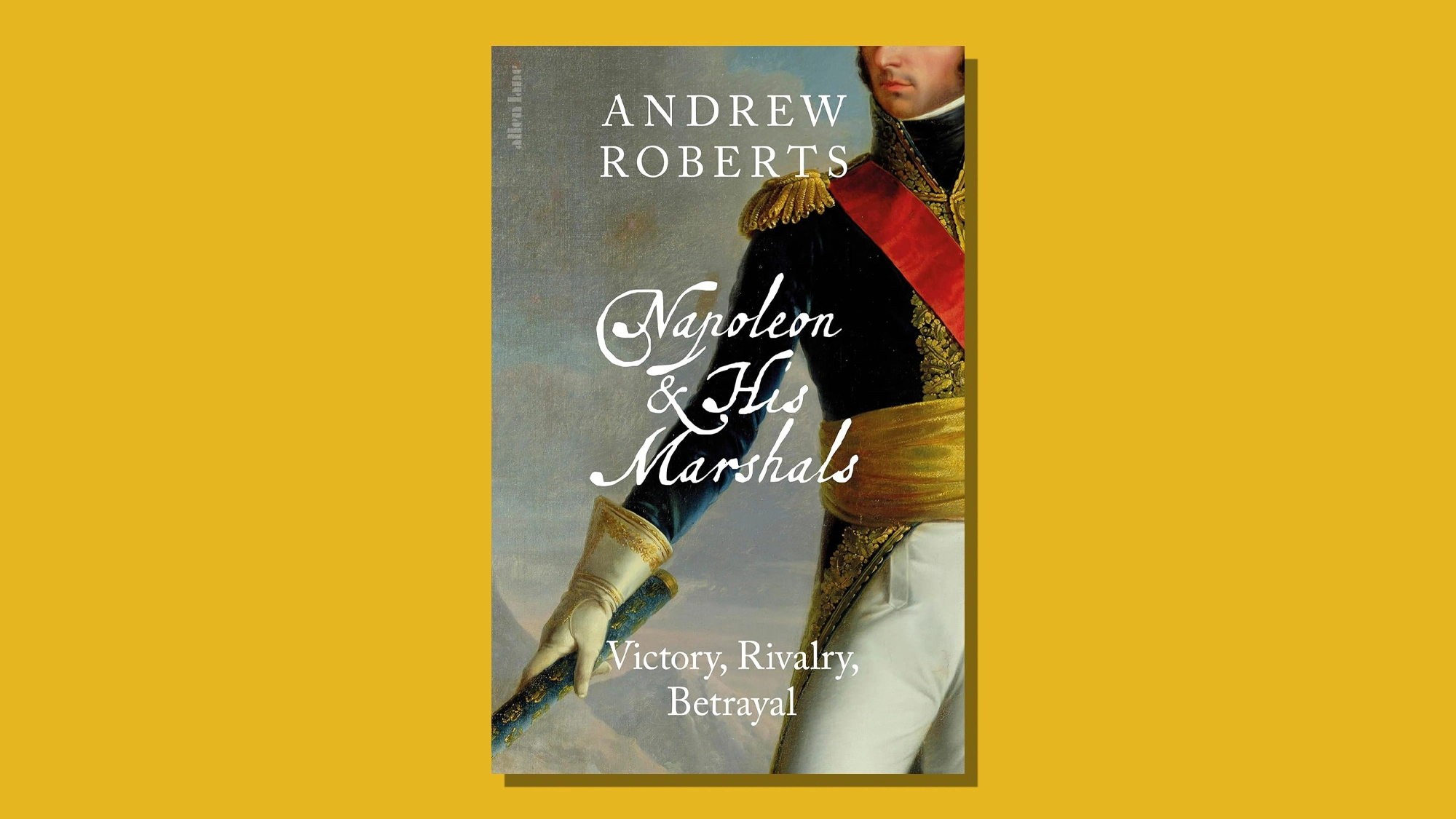
    Napoleon and His Marshals

    by Andrew Roberts 

    In 1804, upon being proclaimed emperor, Napoleon decided that he needed a new office of state “to bind his most important military commanders to his regime”, said George Owers in The Times. The “Little Corsican” therefore resurrected the “medieval title of marshal, which had been abolished during the Revolution”. Initially, 14 marshals were created but, by the time of Napoleon’s “final, desperate throw of the dice” in 1815, he’d bestowed the title on 26 men.

    The marshals were indispensable to his “imperial project”: they led the armies that conquered Europe, and several became “vastly rich”. Yet they were a fractious and unpredictable group, intensely rivalrous, and ultimately willing to turn on their master.

    As Napoleon’s regime unravelled, his marshals “began quietly to abandon him” and, “at Waterloo, just two fought by his side”. In his “ambitious” new book, Andrew Roberts tells the story of the marshals – a saga that is “Tolstoyan in scale”. At first, he struggles under the weight of his material but the book gains “momentum as it goes on”, and becomes “irresistibly exciting”.

    The marshals were envisaged as an “elite leadership team”, and many were supremely talented, said The Economist. Louis-Alexandre Berthier, Napoleon’s chief of staff, was instrumental in devising the intricate system of orders and updates that enabled the emperor to keep a close watch on “every unit of the Grande Armée”. Louis-Nicolas Davout, one of five marshals who came from an aristocratic background, was a brilliant strategist.

    Yet, while the system worked well at first, cracks increasingly began to show – partly as a result of Napoleon’s hectoring management style, and partly because of his deliberate policy of stoking “continual jealousy” between his various marshals. As a result, Roberts notes, these men came to view warfare as a “race among rivals for individual triumph”, and this left Napoleon critically bereft of support when he “desperately needed” it.

    As the “colourful parade” of the Napoleonic era goes by, Roberts “proves an engaging Dimbleby in our ear”, said Jonathan Boff in Literary Review. He “gets the level of military detail just right, giving us enough to understand what happened without overwhelming us”. And the result is that his book rattles along like a “gun carriage charging into action”.

    Roberts, who has “walked 53 of Napoleon’s 60 battlefields”, has an unparalleled grasp of the complexities of war, said Philip Mansel in The Spectator. This is “great military history”.


    OBITUARY

    Margaret Hamilton

    Computer scientist whose work powered the Moon landings

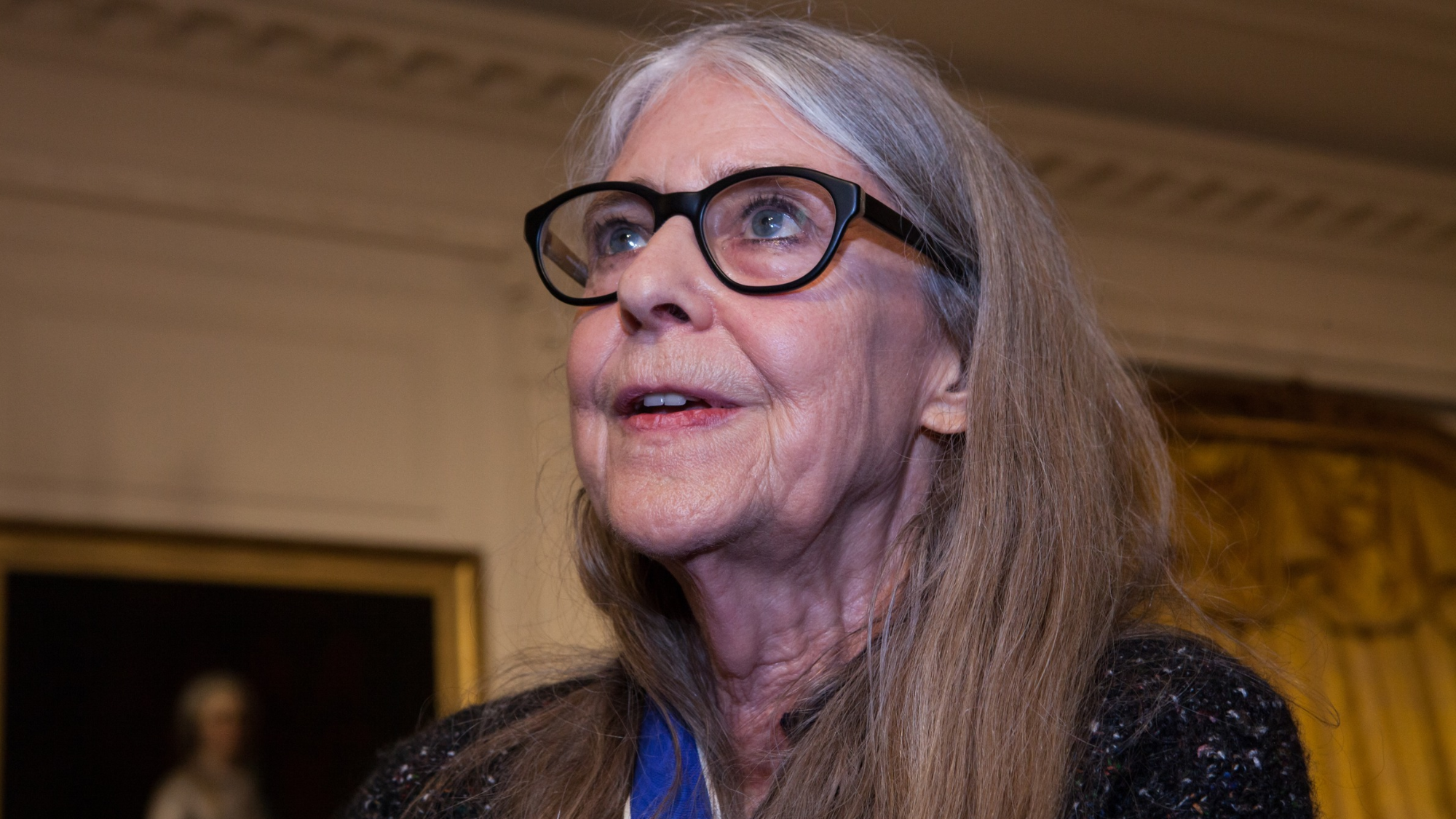
    The Apollo 11 Moon mission was an extraordinary project that tested human ingenuity to the limit, said The Guardian; but there was one thing it did not challenge, and that was the “prevailing hierarchy”. Nearly everyone involved at a senior level in the Nasa space programme in the 1960s was white and male; if you were not, you had to be truly exceptional to make a mark. Margaret Hamilton, who has died aged 90, was one of those “exceptional people”. As a computer scientist at the Massachusetts Institute of Technology, she led the team of engineers who wrote and tested the software that went into Apollo 11’s computer systems and allowed the astronauts to guide and navigate the spacecraft and its lunar module, Eagle. Without her input, it is possible that Neil Armstrong would not have set foot on the Moon on 20 July 1969.

    Margaret Heafield was born in Indiana, and brought up in Michigan. She excelled at school and, in 1958, graduated from Earlham College with a degree in maths. The following year she moved with her first husband to Boston. While he studied at Harvard Law, she took a job at MIT. She’d never done any programming before but had soon developed a forecasting program using a computer with a 4,096 word memory. In 1961, she moved to a defence project at MIT, coding software to identify enemy aircraft for the US air force. Her achievements there put her in pole position when Nasa started recruiting for the space programme.

    In this era, when computers had millions of times less capacity and power than a modern smartphone, the 100 or so programmers Hamilton managed had to write code on sheets of paper, said The Times; it was then printed onto punched cards that had to be fed into a wardrobe-sized mainframe for processing overnight. Once tested, the code was literally hardwired into the computer’s memory: copper wires were hand-woven through or around magnetic rings.

    Hamilton sometimes had to bring her four-year-old daughter Lauren to work. Once, playing with the guidance system, Lauren hit a series of keys that crashed it. Hamilton wanted to fix “Lauren’s Bug” but her bosses insisted no real astronaut would repeat the error. Then, during Apollo 8, Jim Lovell did exactly that. From then on, more credence was given to Hamilton’s detail-oriented approach. It paid dividends during the Apollo 11 mission, when an overloaded radar triggered critical system alarms during Eagle’s descent. There were fears that the mission would have to be aborted, but Hamilton had already programmed the software to prioritise essential navigation tasks when the system overloaded. The landing went ahead.

    In 2016, Barack Obama awarded her the Medal of Freedom. Her daughter, Lauren, survives her.


    Image credits, from top: Pictorial Press Ltd / Alamy; Helen Murray; Allen Lane; NurPhoto / Getty
     

    Recent editions

    • Saturday Wrap

      ‘Steep headwinds’ for Republicans

    • Evening Review

      Orbán for UN chief?

    • Morning Report

      Putin says Russia is ready for war with Europe

    VIEW ALL
    TheWeek
    • About Us
    • Contact Future's experts
    • Terms and Conditions
    • Privacy Policy
    • Cookie Policy
    • Advertise With Us
    • FAQ
    Add as a preferred source on Google Add as a preferred source on Google

    The Week UK is part of Future plc, an international media group and leading digital publisher. Visit our corporate site.

    © Future Publishing Limited Quay House, The Ambury, Bath BA1 1UA. All rights reserved. England and Wales company registration number 2008885.