The Week The Week
flag of US
US
flag of UK
UK
https://cdn.mos.cms.futurecdn.net/flexiimages/jzblygzdxr1769609154.gif

SUBSCRIBE

Try 6 weeks free

Sign in
  • View Profile
  • Sign out
  • The Explainer
  • Talking Points
  • The Week Recommends
  • Podcasts
  • Newsletters
  • From the Magazine
  • The Week Junior
  • More
    • Politics
    • World News
    • Business
    • Health
    • Science
    • Food & Drink
    • Travel
    • Culture
    • History
    • Personal Finance
    • Puzzles
    • Photos
    • The Blend
    • All Categories
  • Newsletter sign up Newsletter
  • The Week Evening Review
    Consequences for Comey, Musk vs. Altman, and Trump’s staffing changes

     
    talking points

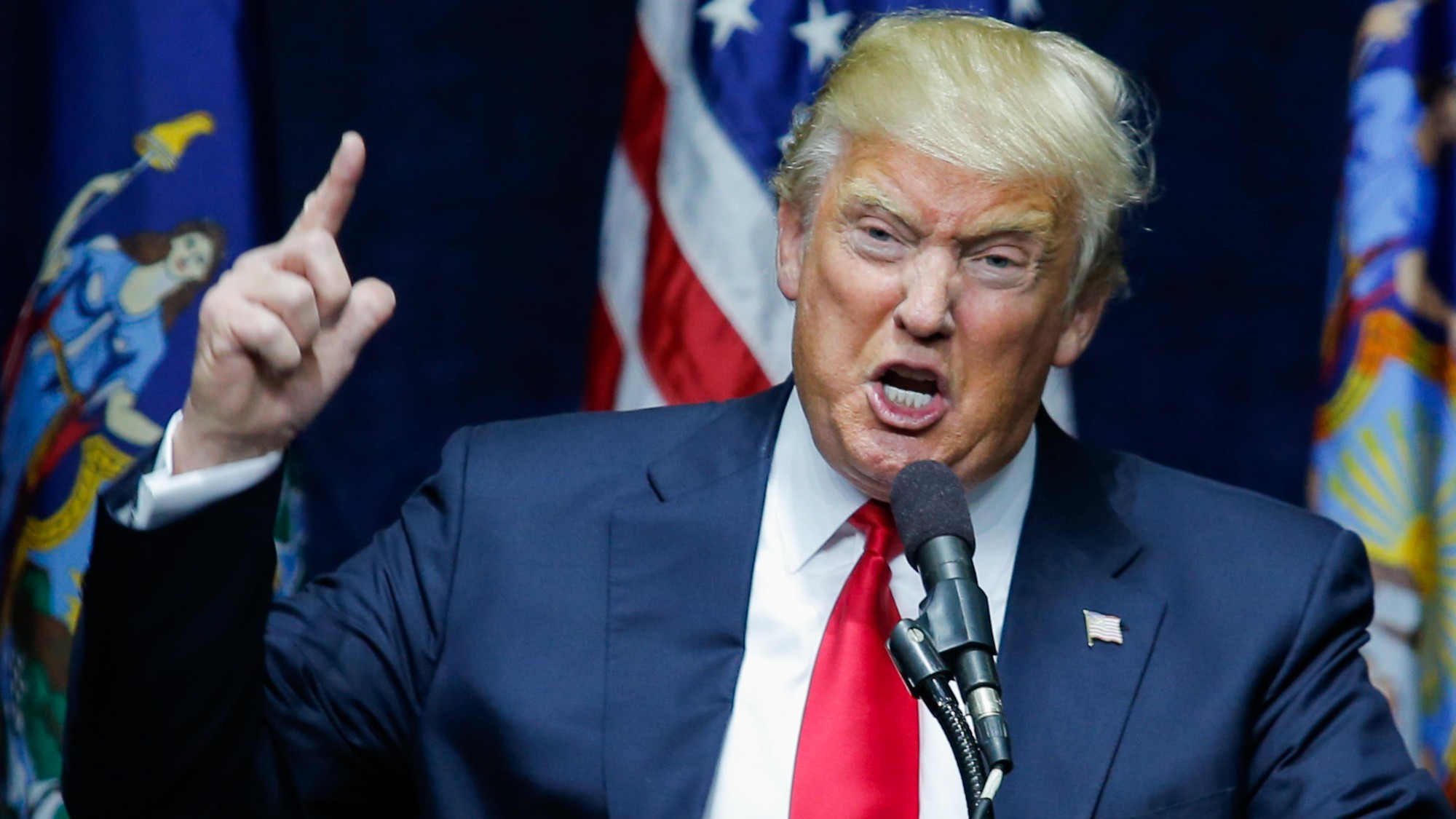
    The DOJ might be the big loser in the Comey charges

    Not many legal experts expect this week’s federal indictment of former FBI Director James Comey to result in a conviction. Instead, observers say President Donald Trump’s Department of Justice finds its credibility wavering amid ongoing efforts to prosecute the president’s political rivals.

    The case will be a “challenge for the Justice Department to win,” said The Associated Press. Comey was charged with threatening Trump with an Instagram post showing seashells arranged in the numbers “86 47.” (He later deleted the post.) The message was “ambiguous” at best, and given Comey’s background, he likely “didn’t intend to convey a threat of violence,” said John Keller, a former Justice Department official, to the AP. “Broad First Amendment protections” for political speech will make proving the case a “tall burden for the government,” said the outlet.

    DOJ ‘got the message’
    Trump-friendly pundits and outlets are finding it difficult to defend the charges. The Comey indictment is “bogus,” said Andrew McCarthy at the National Review. The Justice Department “shreds its credibility with the courts” when it “abuses power this way” and could invite retaliatory investigations from Democrats. 

    The Instagram post may have been “crass,” but the First Amendment “protects bad and hateful speech,” said Jonathan Turley at Fox News. The indictment may “fulfill Comey’s narrative” about the dangers posed by the Trump administration.

    The indictment shows the Justice Department “got the message” from the recent firing of Attorney General Pam Bondi, said Glenn Thrush at The New York Times. The agency’s “roiled leadership,” including acting Attorney General Todd Blanche, is now sharply focused on the president’s “efforts to exact vengeance on his enemies.” That may keep Trump “happy.” But with Democrats poised to take control of Congress, the department’s leaders may find that the “opinion of a lame-duck president” is not “worth heeding.”

    ‘Whims and petty desires’
    The prosecution will “almost certainly fail,” said Steve Benen at MS NOW. But a conviction may not be Trump’s “intended end point.” Instead, the president is making clear he can “orchestrate federal prosecutions based entirely on his whims and petty desires.” And federal prosecutors are getting a message they should “play along with the revenge campaign or face unemployment.”


    QUOTE OF THE DAY

    ‘If what you are seeing as success now is winning, I would hate to see what losing looks like.’

    Sen. Richard Blumenthal (D-Conn.) to Pete Hegseth at a Senate hearing after the defense secretary characterized the Iran war as an “astonishing military success.” The American people “aren’t buying it,” added Blumenthal. 


    today’s big question

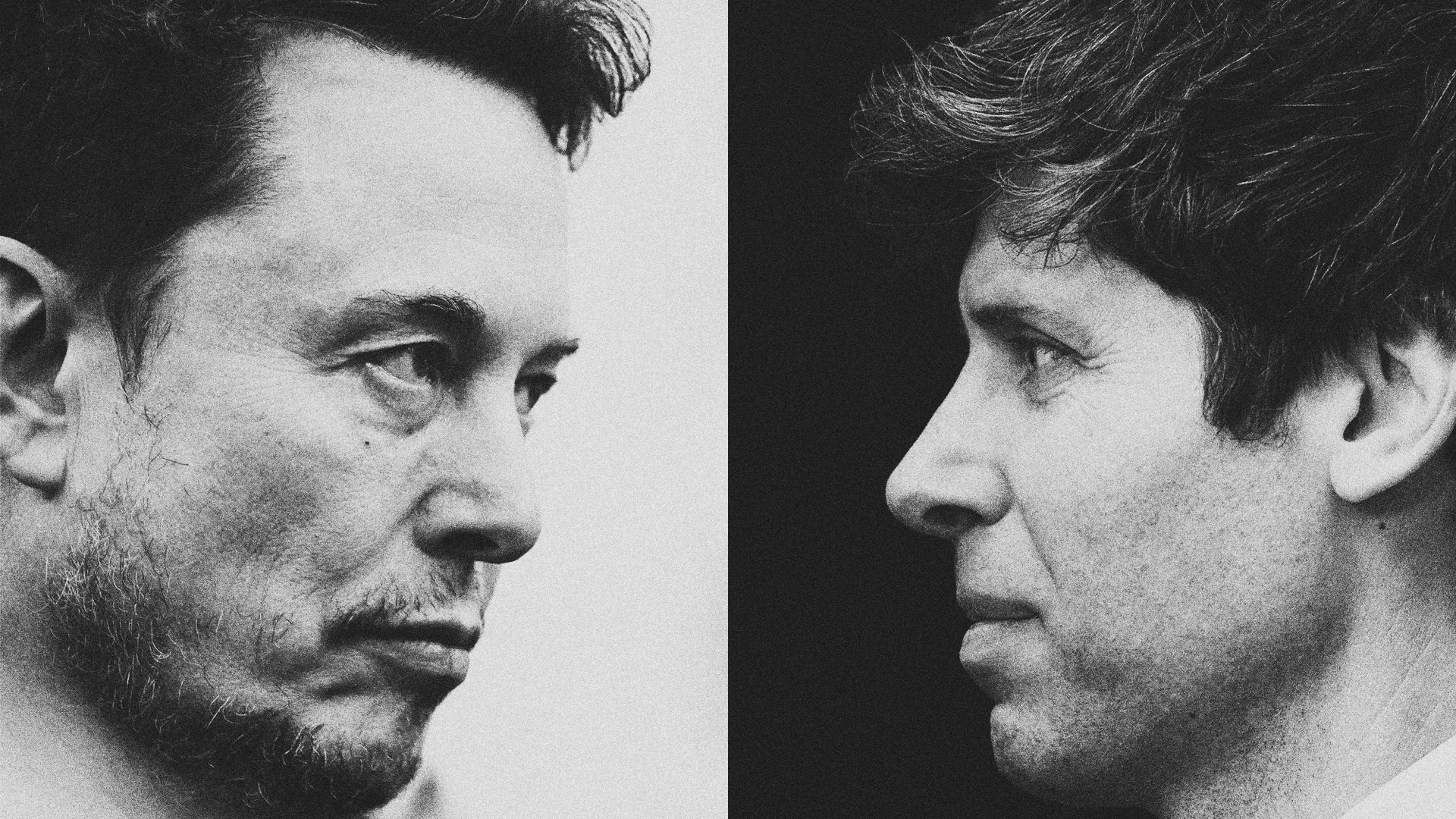
    Why are Elon Musk and Sam Altman clashing in court?

    Two of the world’s richest and most powerful men are in court battling over the origins of OpenAI and its pivot from a nonprofit organization to a for-profit business. It’s a “deeply personal” civil trial, said The New York Times, featuring “two very different tales” of its founding.

    Elon Musk helped start the company and contends it was “ripped from its promise of altruism” by Altman’s greed. It’s “not OK to steal a charity,” Musk said on the witness stand. Altman, OpenAI’s CEO, counters that the lawsuit is simply “sour grapes” for the success of the company’s ChatGPT years after Musk parted ways in 2018, said the Times. 

    What did the commentators say?
    The trial is “big in every conceivable measure,” said Slate. Musk is seeking $130 billion in damages and the removal of Altman and another OpenAI co-founder, Greg Brockman, from the board of directors. It also comes as both OpenAI and Musk’s SpaceX, which houses the current AI venture xAI, prepare to take their companies public. The verdict could “change the very future of Silicon Valley and the future of tech throughout the world.”

    Altman and Musk founded OpenAI because they disagreed with Google’s approach to artificial intelligence and then split up over their own disagreements. The trial is giving the public a “glimpse” at a clique of tech pioneers whose “bickering is shaping the most expensive infrastructure buildout in human history,” said Matteo Wong at The Atlantic. It’s a technology that could “upend the labor market” and “reshape the geopolitical order,” and neither man wants the other to have that kind of power. 

    What next?
    The trial comes at a “precarious moment” for OpenAI, said Rob Nicholls at The Conversation. Altman was recently the subject of an embarrassing profile in The New Yorker, and the company is “bleeding” money as rival Anthropic surges to the front of the AI conversation. OpenAI expects to lose $14 billion in 2026 and recently shut down its Sora video-creation product. A Musk victory might derail OpenAI’s IPO and leave “ripple effects” that could be “felt for many years to come.”


    Statistic of the day

    $9 million: The amount in bets that gamblers on the prediction markets Kalshi and Polymarket have placed on the future number of people infected with measles in the U.S. since January. There’s some evidence that these predictions are “accurate enough to be useful for modeling its spread,” said New Scientist. 


    in the spotlight

    The officials Trump has removed in his second term

    President Donald Trump’s first term in office was marked by the cyclonic speed with which his White House’s revolving door spun for aides both incoming and outgoing. During his second term, his penchant for abrupt staffing changes has continued. Here’s who has already been shown the exit, shuffled into a new role or given little choice about their continued employment in the administration.

    National Counterterrorism Center Director Joe Kent
    In resigning from the Trump White House this past March, former anti-terrorism official Joe Kent became the “most high-profile figure within the Trump administration to publicly criticize the U.S.-Israeli attack on Iran,” said the BBC. Rights groups had spoken out against Kent’s initial nomination to the NCTC over “extremist links of his in the past,” including with far-right figures such as Tucker Carlson and Nick Fuentes, said Liz Landers on “PBS NewsHour.”

    Acting ICE Directors Todd Lyons and Caleb Vitello
    Longtime Immigration and Customs Enforcement official Todd Lyons’ mid-April announcement that he plans to retire at the end of this month adds to the list of “leadership shakeups at the Department of Homeland Security,” said NPR News. Though it was “not immediately clear” what prompted Lyons’ retirement announcement, the news came amid “continued scrutiny” of ICE’s “aggressive immigration tactics.”

    Lyons had initially been tapped to lead ICE to replace previous Acting Director Caleb Vitello in 2025, after administration figures “expressed anger that the number of people being deported” was “not higher,” said NBC News. Vitello had been seen as “very popular among the rank and file during his month as acting director,” said a source to the outlet.

    National Security Advisor Mike Waltz
    Trump’s May 2025 announcement that he had removed National Security Advisor Mike Waltz marked the “first major staff shakeup since the president took office,” said CNN. Although Waltz was the official responsible for the White House’s infamous “Signalgate” security breach, “in the end, it wasn’t Signalgate that toppled Mike Waltz,” said Politico. It was instead “increasing ire” over his “stance on Iran,” a position that, at the time, placed him “out of step with the administration.” But the “onetime congressman was nominated to serve as United Nations ambassador.”

    Read more


    Good day 🗨️

    … for online accountability. Greece has proposed a ban on anonymous social media accounts to curb rising toxicity, according to Minister of Digital Governance Dimitris Papastergiou. Mandating verification should “inspire us as we shape a new digital democracy,” he said to Euractiv. Greece also looks to ban social media for children under 15 starting early next year.


    Bad day 👨‍⚕️

    … for online security. The Centers for Medicare & Medicaid Services has “inadvertently exposed” the Social Security numbers of health care providers in a database powering a new Medicare portal, said The Washington Post. A directory was created to help seniors look up which insurance plans medical professionals accept, but the database used to populate it revealed personal information.


    Picture of the day

    Workers ignite

    Demonstrators light flares during an International Workers’ Day rally in Marseille, France. People have marched in cities worldwide this May Day to demand better working conditions and higher wages as the Iran war drives up energy costs and reduces purchasing power.
    Miguel Medina / Getty Images


    Puzzles

    Daily sudoku

    Challenge yourself with The Week’s daily sudoku, part of our puzzles section, which also includes guess the number

    Play here


    The Week recommends

    New movies are all over the map in the best way

    With the real world defined by inequality and rapid technological change, it’s no surprise that filmmakers are offering critiques of both. This month’s new releases include a body-horror film that takes aim at the GLP-1 dieting craze, a communist multiverse adventure, and escapism in the form of a human-like octopus who helps lost souls find each other. Whatever brings you to the movies, there’s a proper destination for you this month.

    ‘Remarkably Bright Creatures’
    Director Olivia Newman (“Where the Crawdads Sing”) helms Netflix’s adaptation (pictured above) of Shelby Van Pelt’s 2022 novel about Tova (Sally Field), a grieving aquarium custodian in the Pacific Northwest who befriends a sentient Giant Pacific octopus named Marcellus (voiced by Alfred Molina). The novel’s “popularity has always given the project a built-in audience, and the film’s ensemble only adds to the appeal,” said The Playlist. (May 8 on Netflix)

    ‘I Love Boosters’
    Writer-director Boots Riley (“Sorry to Bother You”) returns with his first feature film in eight years, and it’s a doozy. “I Love Boosters” is the “first socialist stoner movie of the Trump era,” featuring a “conspiracy so insane that it’s about one molecule away from adrenochrome,” said Ryan Lattanzio at IndieWire. (in theaters May 22)

    ‘Saccharine’
    The parade of movies skewering contemporary Ozempic-driven dieting trends continues with this body-horror entry from director Natalie Erika James (“Relic”). The film shows that the “horror of one’s own body is the most insidious kind of body horror at play here,” said Guy Lodge at Variety. (in theaters May 22)

    Read more


    Poll watch

    A majority of Americans (61%) believe the U.S. economy is on the wrong track, up from 43% in January 2025, according to a Reuters/Ipsos survey. Of 1,269 adults polled, 20% think the economy is the most important problem facing the country, up from 16% in March.


    INSTANT OPINION

    Today’s best commentary

    ‘The Trump administration’s latest attempt to decimate Black political power’
    Solomon Jones at The Philadelphia Inquirer
    A 6-3 U.S. Supreme Court decision has “gutted a key element” of the 1965 Voting Rights Act, “leaving Black voters twisting in the proverbial wind,” says Solomon Jones. The Voting Rights Act was “meant to protect Black voters, the very people who are now disenfranchised by this decision.” The “destruction of Black power was always the point. But demolishing Black power requires bolstering white supremacy.” This administration has “sought to target African American voting power at every turn.”

    ‘The tragic decline of the American Navy’
    Robert D. Kaplan at The New York Times
    The U.S. Navy is “in decline relative to its own history and to the growth of the Chinese Navy and has surrendered the control of the world’s vital choke points,” says Robert D. Kaplan. If the Navy “doesn’t grow significantly in size, the outcome could be disastrous for the whole world,” as “free trade, global capital flows and migration — the root of America’s worldwide power — would be impossible without a great U.S. Navy.”

    ‘Space is critical infrastructure — it needs an alliance to guard it’
    Kathleen Curlee and Brian Golden at Newsweek
    Space systems are “increasingly vulnerable to collisions and interference that can shut down critical systems such as navigation and communications in an instant,” say Kathleen Curlee and Brian Golden. “Robust policy and international coordination should support the advancement of space infrastructure and protection of the capabilities that already exist. What’s needed is a military-backed alliance in space: an Artemis Alliance.” The “value of space goes well beyond the satellites we use each day.”


    WORD OF THE DAY

    micromoon

    A full moon that appears smaller and dimmer than usual when it’s at its apogee, the furthest point from Earth in the moon’s orbit. Tonight’s flower moon — May’s full moon at the height of spring’s bloom — is a micromoon, as well as the fifth full moon of the year and the first of two full moons this month. 


    Evening Review was written and edited by Theara Coleman, Nadia Croes, David Faris, Scott Hocker, Anya Jaremko-Greenwold, Justin Klawans, Joel Mathis and Rafi Schwartz, with illustrations by Stephen Kelly.

    Image credits, from top: Illustration by Stephen P. Kelly / Getty Images; Illustration by Stephen P. Kelly / Getty Images; Samuel Corum / Sipa / Bloomberg / Getty Images; Courtesy of Netflix
     

    Recent editions

    • Morning Report

      Terror threat level raised to ‘severe’

    • Evening Review

      Beginning of the end for Opec?

    • Morning Report

      Golders Green stabbings treated as terrorist attack

    VIEW ALL
    TheWeek
    • About Us
    • Contact Future's experts
    • Terms and Conditions
    • Privacy Policy
    • Cookie Policy
    • Advertise With Us
    • FAQ
    Add as a preferred source on Google Add as a preferred source on Google

    The Week UK is part of Future plc, an international media group and leading digital publisher. Visit our corporate site.

    © Future Publishing Limited Quay House, The Ambury, Bath BA1 1UA. All rights reserved. England and Wales company registration number 2008885.