The Week UK
flag of US
US
flag of UK
UK
https://cdn.mos.cms.futurecdn.net/flexiimages/jzblygzdxr1769609154.gif

SUBSCRIBE

Start your trial today

Sign in
  • View Profile
  • Sign out
  • The Explainer
  • Talking Points
  • The Week Recommends
  • Podcasts
  • Newsletters
  • From the Magazine
  • The Week Junior
  • More
    • Politics
    • World News
    • Business
    • Health
    • Science
    • Food & Drink
    • Travel
    • Culture
    • History
    • Personal Finance
    • Puzzles
    • Photos
    • The Blend
    • All Categories
  • Newsletter sign up Newsletter
  • The Week Evening Review
    A superpower summit, midterm scapegoating, and a violent Palestinian harvest

     
    TODAY’S BIG QUESTION

    What could happen at Putin’s superpower summit?

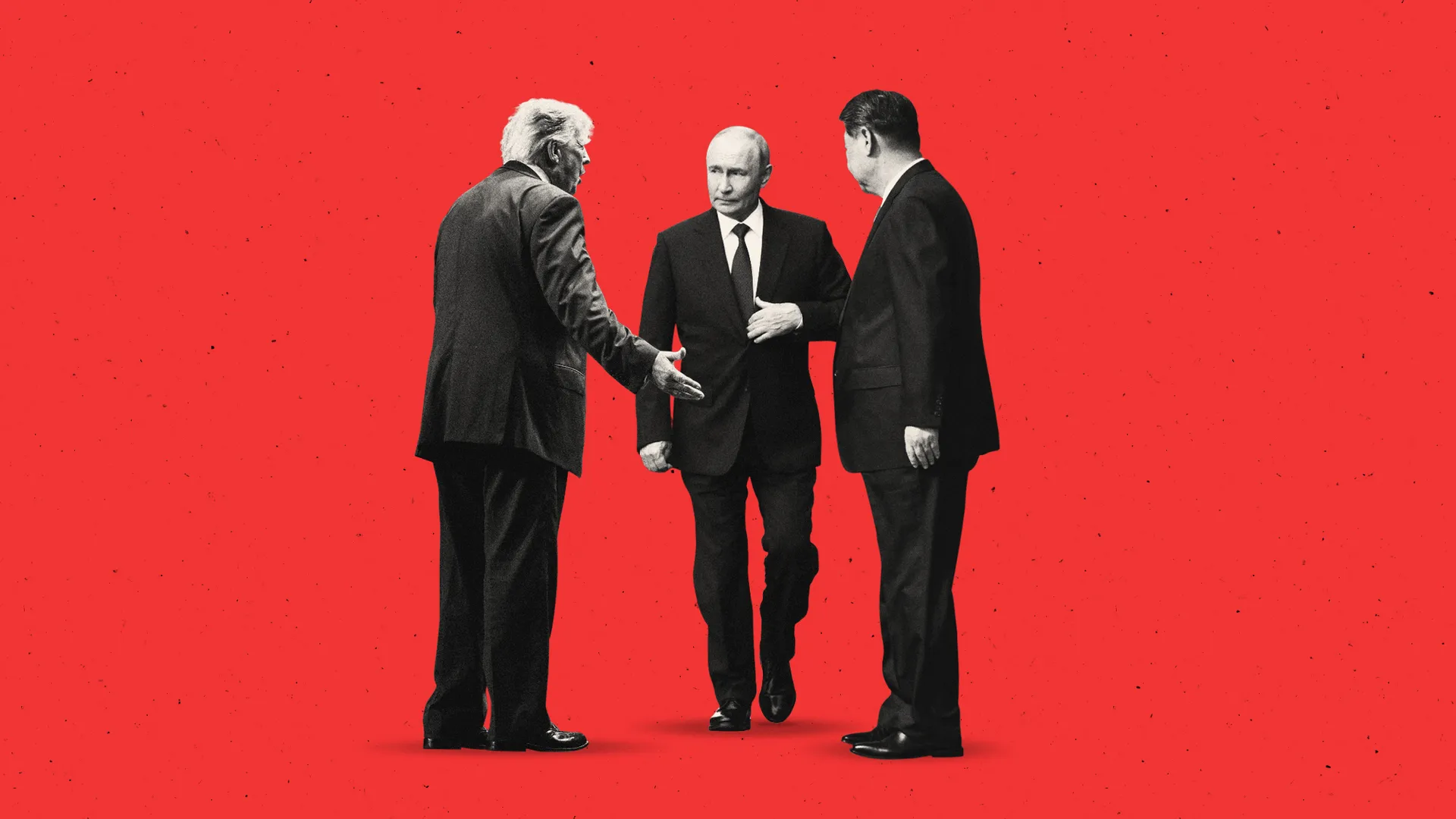
    When President Harry S. Truman, Soviet General Secretary Joseph Stalin and British Prime Minister Winston Churchill met in Potsdam, Germany, in 1945, the goal was for World War II’s victorious leaders to coordinate plans for postwar Europe. Eighty years later, Russian President Vladimir Putin has proposed another seismic trilateral meeting — this time between himself, President Donald Trump and Chinese President Xi Jinping. Meanwhile, Russia continues its attempted invasion of Ukraine, a country conspicuously left off the invitation list.

    What did the commentators say?
    Putin is attempting to “capitalize on warming ties” between himself and Trump in the hopes of negotiating an end to the war in Ukraine that “would favor Moscow,” said The Wall Street Journal. But by omitting Ukraine, Putin’s “unprecedented” summit would “send alarm bells ringing in European capitals and beyond.” Coordinating a summit of global superpowers “appeals to Trump’s idealized view of the world” — powerful leaders carving up territory with Trump “taking his seat, recognized by all, as one of those great powers,” said Slate.

    Publicly, Trump has shown interest in Putin’s summit as an opportunity to address atomic weaponry. “I would do it, not so much for Ukraine,” said Trump to reporters this week, per Bloomberg. “We would have it to talk about denuclearization.” For years, Trump has had an “aspiration to reach a deal” with Russia and China regarding nonproliferation, said Axios. But “so far, Putin and Xi haven’t shown much openness to the idea.”

    While the three countries have “overlapping interests,” they lack a “common strategic vision,” said Denis Simon, of the Quincy Institute for Responsible Statecraft, to the South China Morning Post. Nuclear weapons offer the “most obvious potential starting point,” yet issues like Ukraine, Taiwan and the “broader international order” would “inevitably enter any conversation” among the trio.

    What next?
    Chinese officials have “privately welcomed” the potential talks but have not “pushed aggressively for them,” said SCMP. There’s “no clear understanding yet regarding the meeting itself or its potential agenda,” said Kremlin spokesperson Dmitry Peskov to the Journal. Still, “all three parties acknowledge the hypothetical possibility of such a meeting taking place.”


    QUOTE OF THE DAY

    ‘From what I’ve heard from my people in Ohio, it’s warning that this may have actually been a backfire. It’s going to blow up in their face.’

    Conservative commentator Scott Jennings on CNN about Ohio GOP gubernatorial candidate Vivek Ramaswamy’s attack ad against his opponent, Amy Acton, featuring her estranged mother. It’s the “most shameful, disgusting, offensive ad this election season,” said Rep. Nancy Mace (R-S.C.) to CNN.


    IN THE SPOTLIGHT

    Trumpland is already looking for midterm scapegoats 

    With polls looking dire for Republicans ahead of next month’s highly anticipated midterm elections, President Donald Trump and his allies are reportedly wasting little time on the most pressing question of this election cycle: Who will take the blame for the likely, if still theoretical, electoral drubbing? Cue the MAGA infighting, as various White House operators and GOP power brokers jockey to avoid, and in some cases direct, the president’s guaranteed post-midterm scapegoating.

    ‘Knives are now fully out’
    Although Trump has “proven largely incapable of getting out of his own way,” he’s “keenly aware of the grumbling” in his party over its midterm prospects and has “begun looking for someone else to take the fall,” said Puck. “Currently at the top of the list” is former White House Deputy Chief of Staff James Blair, who “crafted the party’s midterm strategy.” Days away from a potentially “dire midterm reckoning,” Republicans are “turning their cannons” toward Blair and consulting partner Chris LaCivita, the two men tasked with the “herculean job of maintaining control of Congress,” said Politico.

    The hostility toward Blair and LaCivita follows their recent trip to the Balkans to “advise a Russia-friendly regime’s reelection effort” even as GOP prospects “dwindle back home,” said Politico. That excursion “opened the floodgates,” said one source to the outlet. The “knives are now fully out for these two.”

    ‘Ice maiden is melting’
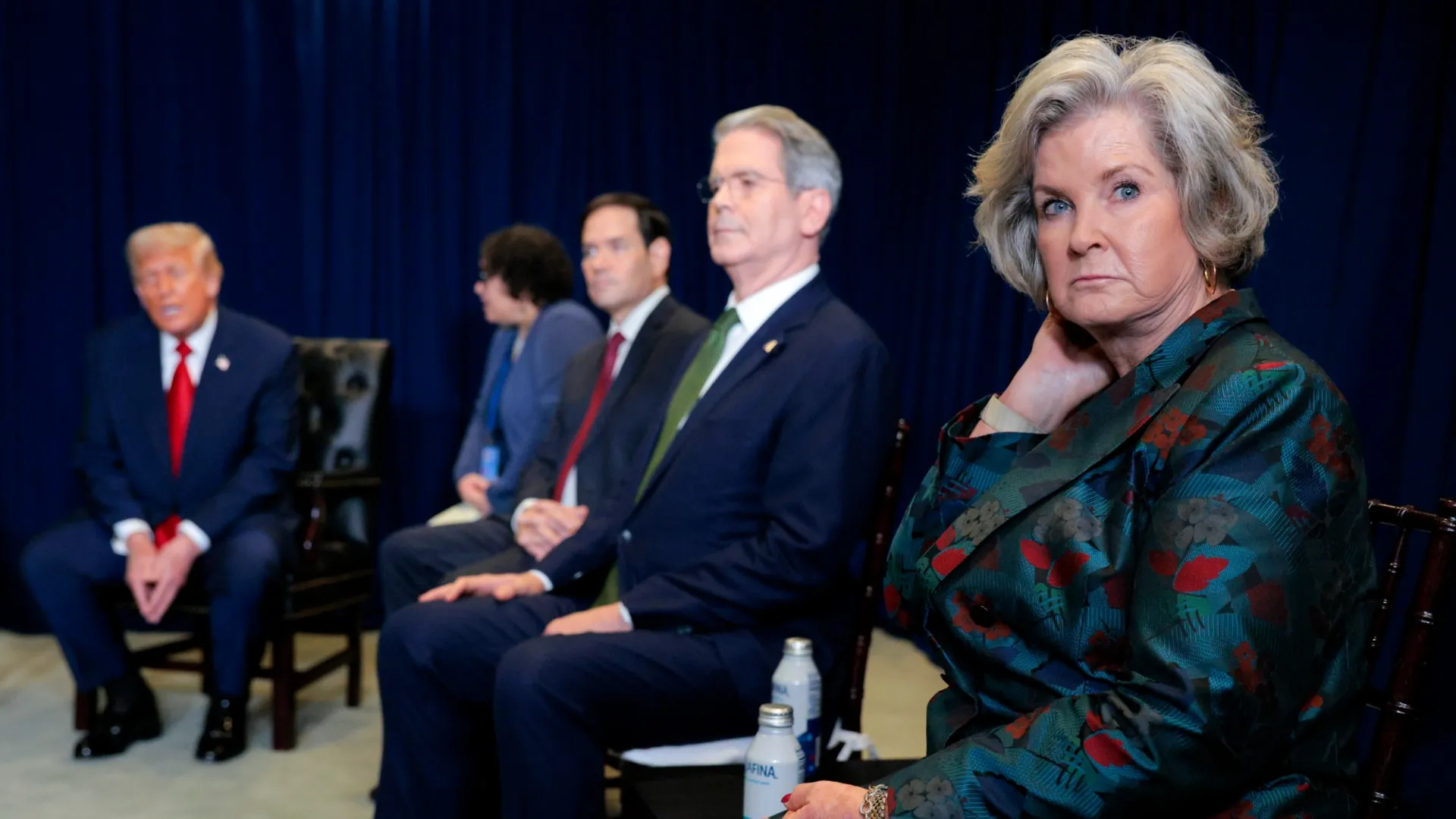
    “These days,” Trump has also been looking to place blame on Susie Wiles (pictured above), his “once-unassailable” White House chief of staff, for the midterms, said Politico. The president is “musing about replacements for his top aide” while getting “plenty of encouragement from rivals to Wiles” and those settling scores.

    Trump’s “ice maiden is melting,” said The New Republic of Wiles. She’s in “some deep sh-t,” said one Trump adviser to Zeteo. At the same time, the president has “tried to pour cold water” on rumors of her fate by “releasing effusively supportive statements” and characteristically condemning the media as “fake news.”


    Statistic of the day

    $25 billion: The amount that Meta has been ordered to pay New Mexico after a court ruled the tech giant misled customers about its data privacy. Judge Francis Mathew wrote in his order that a $219 billion penalty was justified, but the final figure was reduced to $25 billion.


    THE EXPLAINER

    West Bank olive harvest: a flashpoint for violence

    Israeli police arrested 10 suspects this week in the occupied West Bank following attacks by masked Jewish settlers in Palestinian villages: one on Friday of Washington Post photojournalist Heidi Levine as she covered an olive harvest in Abu Falah and another on Saturday of Belgian, French and Polish diplomats and Catholic Church representatives in Taybeh. The assaults underscore how picking the crop has become connected to larger questions about territory and identity. For many olive-growing Palestinian communities, the harvest represents not just livelihoods but also culture, family heritage and attachment to the land.

    How big is the harvest?
    Between 80,000 and 100,000 Palestinian families depend on the olive harvest for at least part of their income, according to the United Nations Office for the Coordination of Humanitarian Affairs. Every autumn, thousands of families handpick olives as part of an industry that has sustained communities for generations. 

    Palestine’s Ministry of Agriculture estimates that olive oil production in the occupied West Bank and Gaza Strip will reach approximately 21,000 tonnes this year. About a quarter of that would be surplus to domestic need and could be exported. But that yield projection is based on farmers being able to access and harvest their groves.

    Settler attacks during the current olive harvest season have already surpassed the total for 2025. The U.N. has documented 199 such attacks in the West Bank so far this year, with one death, 124 injuries and damage to more than 2,500 trees and saplings.

    What are the attackers’ motives?
    These attacks in the West Bank are “not new,” said Al Jazeera. Every year, “Israeli settlers and hardline groups use the olive harvest period to assert control over valuable agricultural lands,” including by “stealing crops or building illegal settlement outposts and roads on private Palestinian property.”

    This annual ritual of “assaulting farmers, burning or uprooting trees and stealing crops” is “making it increasingly dangerous for Palestinians to reach and remain on their own land,” said Ahmed Najar, a Palestinian political analyst and playwright, to Al Jazeera. The attacks are also designed to “deter international campaigners from accompanying Palestinian farmers, standing with them against settler violence and documenting the atrocities being committed.” The “objective is not only to dispossess Palestinians” but also to “ensure that their dispossession happens without witnesses.”


    Good day 🦧

    … for good vibes. Orangutans choose food based on whether they are enjoying themselves, according to Indiana University research. When the great apes hear a recording of orangutans playing and laughing, they value a bowl of treats hidden beneath the sounds more highly. “Emotion has important effects on rational thought,” said study author Erica Cartmill to The Guardian.


    Bad day 🎮

    … for gaming employees. Video game publisher Electronic Arts is laying off about 400 employees — 3% of its global workforce, according to a company memo. And BioWare, its popular development studio behind classic titles like Baldur’s Gate, Dragon Age and Mass Effect, is being shuttered entirely after more than three decades. 


    Picture of the day

    With flying colors 

    Visitors explore the “Spinning Ghost Colors” exhibition, including an installation of hundreds of colorful hula hoops suspended in the air, at the Japan Foundation Center for Cultural Exchange in Hanoi, Vietnam. Japanese artist Kengo Kito is known for “transforming familiar, everyday materials into immersive spatial experiences,” said the center.
    Luong Thai Linh / EPA / Shutterstock


    Puzzles

    Daily sudoku

    Challenge yourself with The Week’s daily sudoku, part of our puzzles section, which also includes guess the number

    Play here


    The Week recommends

    The best Halloween movies ever made

    A film doesn’t have to be set on Halloween to be scary, but it doesn’t hurt. The holiday atmosphere can provide an extra element of suspense when done right, as in these four notable films.

    ‘Halloween’ (1978)
    Horror legend John Carpenter’s lean franchise-launching slasher deftly adds a supernatural aspect to his unkillable knife-wielding mental institution escapee, Michael Myers (pictured above). The classic puts viewers through a “troubled nightmare of suspense and uncertain dread,” said Brian Eggert at Deep Focus Review. (AMC+)

    ‘Ginger Snaps’ (2000)
    In this Canadian cult classic that doubles as a coming-of-age story, a sardonic goth transforms into a werewolf in the days leading up to Halloween and terrifies her younger sister. Through character-building and atmosphere, the movie “has fun with its own premises without turning into an empty camp exercise,” said Dave Kehr at The New York Times. (Peacock)

    ‘Trick ’r Treat’ (2007)
    Arguably the best horror anthology ever, the film features four intersecting segments centered around a demonic pumpkin-headed trick-or-treater seeking to avenge the sins of the town’s past. It’s a movie that “feels less like it was merely set on the holiday and more like it was built out of everything people love about it,” said Arleigh at Through the Shattered Lens. (HBO Max)

    ‘Hell House LLC’ (2015)
    In this found-footage gem, a documentary team seeks the truth about a massacre in a haunted house by tracking down its sole survivor who has tapes. With a slow-burn buildup, this “genuinely suspenseful” movie “carefully sets up its scares in a way that actually contributes to the story,” said Luiz H.C. at Bloody Disgusting. (AMC+)


    Poll watch

    About half of Americans are afraid of artificial intelligence harming the political process (51.9%) and hurting the economy (49.7%), according to a Chapman University survey of 1,221 adults. This is the first time AI has appeared in Chapman’s annual survey, which measures Americans’ top 10 fears. 


    WORD OF THE DAY

    Shamonda

    A virus affecting cattle and other animals that’s primarily spread by infected insects. The first known human case has been detected in a patient in France, though it was previously considered nontransmissible to people. It’s believed that the patient, who later died, contracted the disease through a midge bite.


    INSTANT OPINION

    Today’s best commentary

    ‘The West has a crisis of hope’
    Kersti Kaljulaid at Foreign Policy
    As “young people take to the streets in countries across Europe, it’s important to bluntly name the crisis that afflicts rich Western societies: hopelessness,” says former Estonian President Kersti Kaljulaid. “Every nation has its own unique problems, and particular issues such as immigration or inflation can spark a broader protest.” But it’s “becoming clear that growing numbers of people feel society is not organized to serve their interests.” The “social contract has been eroding.”

    ‘RFK Jr.’s push for experiment on African babies was never a good idea’
    Ja’han Jones at MS NOW
    Robert F. Kennedy Jr.’s “push to test dangerous anti-vaccine conspiracy theories on African babies appears to be in doubt,” says Ja’han Jones. Kennedy has been a “staunch supporter of and has allocated federal funds for a controversial experiment that Dutch scientists have been trying to conduct, denying thousands of babies in Guinea-Bissau doses of the hepatitis B vaccine.” When it “comes to its relations with Africa, the Trump administration has taken a fundamentally racist approach.”

    ‘Pope Leo has support for his lung cancer care and recovery. Every patient deserves the same.’
    John Matthews at The Philadelphia Inquirer
    Pope Leo XIV’s “lung cancer diagnosis has brought international attention to this disease,” and “I keep thinking about the support available to someone in his position: medical care, help with daily needs, and people making sure he can focus on recovery,” says John Matthews. But “what happens when you have lung cancer and don’t have that support”? As people “wish Pope Leo well, let’s also think about the patients whose diagnoses will never make the news.”


    Evening Review was written and edited by Nadia Croes, David Faris, Scott Hocker, Anya Jaremko-Greenwold, Justin Klawans, Chas Newkey-Burden and Rafi Schwartz, with illustrations by Stephen Kelly.

    Image credits, from top: Illustration by Stephen P. Kelly / Getty Images; Chip Somodevilla / Getty Images; Illustration by Stephen P. Kelly / Shutterstock / Getty Images; Compass International Pictures / Sunset Boulevard / Corbis / Getty Images
     

    Recent editions

    • Morning Report

      Russian attack hits Kyiv amid renewed peace push

    • Evening Review

      The future of Pope Leo’s papacy

    • Morning Report

      Two men re-arrested over RAF Fairford incident

    VIEW ALL
    TheWeek
    • About Us
    • Contact Future's experts
    • Terms and Conditions
    • Privacy Policy
    • Cookie Policy
    • Advertise With Us
    • FAQ
    Add as a preferred source on Google Add as a preferred source on Google

    The Week UK is part of Future plc, an international media group and leading digital publisher. Visit our corporate site.

    © Future Publishing Limited Quay House, The Ambury, Bath BA1 1UA. All rights reserved. England and Wales company registration number 2008885.