The Week UK
flag of US
US
flag of UK
UK
https://cdn.mos.cms.futurecdn.net/flexiimages/jzblygzdxr1769609154.gif

SUBSCRIBE

Start your trial today

Sign in
  • View Profile
  • Sign out
  • The Explainer
  • Talking Points
  • The Week Recommends
  • Podcasts
  • Newsletters
  • From the Magazine
  • The Week Junior
  • More
    • Politics
    • World News
    • Business
    • Health
    • Science
    • Food & Drink
    • Travel
    • Culture
    • History
    • Personal Finance
    • Puzzles
    • Photos
    • The Blend
    • All Categories
  • Newsletter sign up Newsletter
  • The Week Evening Review
    Vance’s political future, Nvidia’s spy scandal, and AI’s open-source alternatives

     
    TODAY’S BIG QUESTION

    Is Vance 2028 over before it started? 

    Few Republicans have been as reactive to the party’s electoral drubbing this month as Vice President JD Vance. From releasing a personal midterms post-mortem to signaling support toward MAGA’s more isolationist wing, Vance has made the moves a sitting vice president might make ahead of a presidential run of their own. But given the GOP’s midterm losses and subsequent Republican frustrations, Vance’s nascent 2028 momentum may have already stalled.

    What did the commentators say?
    As vice president, Vance occupies the “unenviable position of being the presumptive favorite” for the GOP’s 2028 presidential nomination, said Moira Donegan at The Guardian. With Democrats about to assume a congressional majority, Vance is “trying to spin the catastrophic results for his party into a beneficial outcome for him personally.” 

    Unfortunately for the veep, his electoral diagnosis “reveals his profound weakness as a candidate,” said Donegan. The midterm results are “scrambling Vance’s political future,” said The Wall Street Journal, with his camp “privately grappling with hard questions” about running in 2028 at all.

    A bloc of Republican voters wants candidates willing to “distance their campaign from the current administration’s failures,” said Jonathan Chait at The Atlantic. To accomplish that “without forfeiting Trump’s support,” Vance has “shrewdly, if disingenuously,” blamed everything on the Iran war. Doing so — while at the same time “subtly pointing the finger” at Israeli leader Benjamin Netanyahu for “tricking the president”— offers Vance the “shortest and straightest path to holding together the MAGA coalition and his place within it.”

    But Vance’s brand “did not emerge from the midterms unscathed,” said Jacob Bogage at Reuters. Not only did Republicans lose states in which he campaigned, but also certain strategies he “endorsed” (including Ohio GOP gubernatorial nominee Vivek Ramaswamy’s campaign ad casting doubt on Democrat Amy Acton’s childhood sexual abuse) may have “swung races away from Republicans” overall.

    What next?
    That members of Vance’s camp “feel comfortable raising unconventional alternatives to his White House ambitions underscores just how much his future is now in flux,” said the Journal. At the same time, some “longtime Trump donors” have begun looking “outside the administration for the Republican Party’s future.”


    QUOTE OF THE DAY

    ‘Notwithstanding the fact that there wasn’t another debate, it didn’t disturb me because it wasn’t consequential.’

    Former President Joe Biden to People about his 2024 debate with Trump. While Biden “thought there would be another debate,” his poor performance against Trump led to Biden’s withdrawal from the presidential race.


    IN THE SPOTLIGHT

    Alice Huang: the woman at the center of Nvidia’s scandal

    After chip conglomerate Nvidia was enveloped by a spy scandal rocking its now-former CEO, Jensen Huang, who resigned today, all eyes are on the person allegedly at the center of the probe: Alice Huang. U.S. intelligence believes the woman is a Chinese government asset, and many are concerned given her apparent closeness to Nvidia.

    ‘Connections at the highest levels’
    Alice Huang, a 43-year-old Chinese citizen, previously worked as a “journalist for Chinese state television before pivoting to a career in finance,” said CNN. She also has at least “four years of experience in the media and eight in the securities industry.”

    For a short period in 2023, she worked in a high-status position for Megaspeed International, a Singaporean computing and data center organization. The company eventually became a “member of an Nvidia partnership program, a status that typically grants priority access to the latest chips,” said The Wall Street Journal. 

    While it’s unclear where she met Jensen Huang, she has become a “regular fixture” in his “business circles, appearing at the side of the Nvidia CEO at private and corporate events,” said the Journal. (Despite sharing the same last name, the two are not related.)

    ‘Longstanding industrial espionage efforts’
    At some point, Alice Huang allegedly began working for the Chinese government and began having an extramarital affair with Jensen Huang. Last spring, a memo circulated within the Trump administration with intelligence that a “Chinese businesswoman who had a close relationship with Nvidia’s chief executive was a spy for China’s Ministry of State Security,” said The New York Times. She was reportedly recruited by China as part of a “drive by Beijing’s top spy agency to learn more about American AI chips and potentially influence” Nvidia to “push for its most advanced chips to be made available to China.”

    It seems this may have worked. She has reportedly helped to facilitate at least $7 billion in Nvidia chip sales to China since 2023, according to The Information. 

    The “sudden emergence” of Jensen Huang’s infidelity has “rocked the political class and America’s tech sector,” said The Associated Press, and while he has resigned after admitting to a second extramarital affair — with reports of a third affair circulating today — the scandal has created “new concerns” about China’s access to Nvidia.


    Statistic of the day

    7,000: The number of schools across Italy, Scotland and Northern Ireland that received bomb threats yesterday, causing widespread evacuations. The threats are thought to be connected to a cyberattack and are a “strategy intended to cause alarm and concern,” said Italian Prime Minister Giorgia Meloni on Facebook.


    THE EXPLAINER

    AI is fomenting an open-source retaliation

    Subscription-based software tools may soon become a thing of the past. Exploitative pricing and practices from Adobe have led software developers to generate vibe-coded, open-source imitations of the company’s creative software. And other companies’ software may be next in line.

    What has been created?
    Software developer Brandon Thomas used “AI-powered reverse engineering to mimic the look, feel and functionality of Adobe’s well-known software,” said Ars Technica. ArtCraft, made using Claude, is a suite of open-source tools “recreating the user interface and tools found in Adobe’s Photoshop, Illustrator, Premiere, Lightroom, After Effects, InDesign and Acrobat Pro.”

    While the tools are still in a development phase, “we were shocked by how well they actually worked internally, so [we] decided to open-source them,” said ArtCraft co-founder Michael Caffrey to Futurism. There have been other free alternatives to the Adobe products, but many have a learning curve with different layouts and workflows.

    ArtCraft does have some “caveats,” said Futurism. Namely, the apps are “packed with various AI offerings, so anybody seeking the manual Creative Suite experience of yesteryear will probably have to dodge some prompt windows.”

    Is open source the future?
    The open-source alternative is a form of “cosmic karma,” as the tech industry has “relied on the open-source community for decades to keep their companies running,” said Caffrey to Futurism. Adobe has been “notoriously scummy in the past.”

    Adobe’s Creative Cloud has “long dogged creatives with its incredibly high subscription fees, representing an ironclad grip on the world of artists,” said Futurism. Thomas admitted to creating ArtCraft after “feeling the sting of Adobe’s predatory cancellation fees one too many times,” said Vice.

    Despite fatigue with Adobe’s practices, the project has garnered “mixed reactions,” with “some saying it’s stealing from Adobe and warning the developer of a lawsuit,” said Tom’s Hardware (a sister site of The Week). But vibe-coded, open-source resources are not going away just yet. Thomas recently announced apps to replace Microsoft Office tools, including Excel, PowerPoint and Word. Microsoft has also been criticized for its business practices and pricing.


    Good day 😷

    … for fighting diseases. The last patient from Kenya’s Ebola outbreak that began in early October is out of the hospital, according to the country’s cabinet secretary for health, Aden Duale. The final 11 people monitored for symptoms were also discharged after strict quarantine. Kenya now begins a 42-day countdown to be officially declared Ebola-free.


    Bad day 🧱

    … for collecting Lego. BrickLink, a secondary online marketplace used by Lego collectors worldwide, remains offline following three days of “unusual activity,” said the company’s website. Acquired by Lego in 2019, the platform is having issues with online payments, according to the BBC.


    Picture of the day

    Picking up the pieces

    Recovery operations continue at the site where a three-story apartment building in the Flatbush neighborhood of Brooklyn collapsed late yesterday afternoon, killing at least eight people and injuring 18 others. The cause is attributed to unsafe construction operations at the adjacent property, according to New York City officials.
    Lokman Vural Elibol / Anadolu / Getty Images


    Puzzles

    Daily sudoku

    Challenge yourself with The Week’s daily sudoku, part of our puzzles section, which also includes guess the number

    Play here


    The Week recommends

    The most dystopian movies of all time

    In a time of great upheaval, audiences love imagining how things could be worse. These films are among the most memorable depictions of such would-be dystopias.

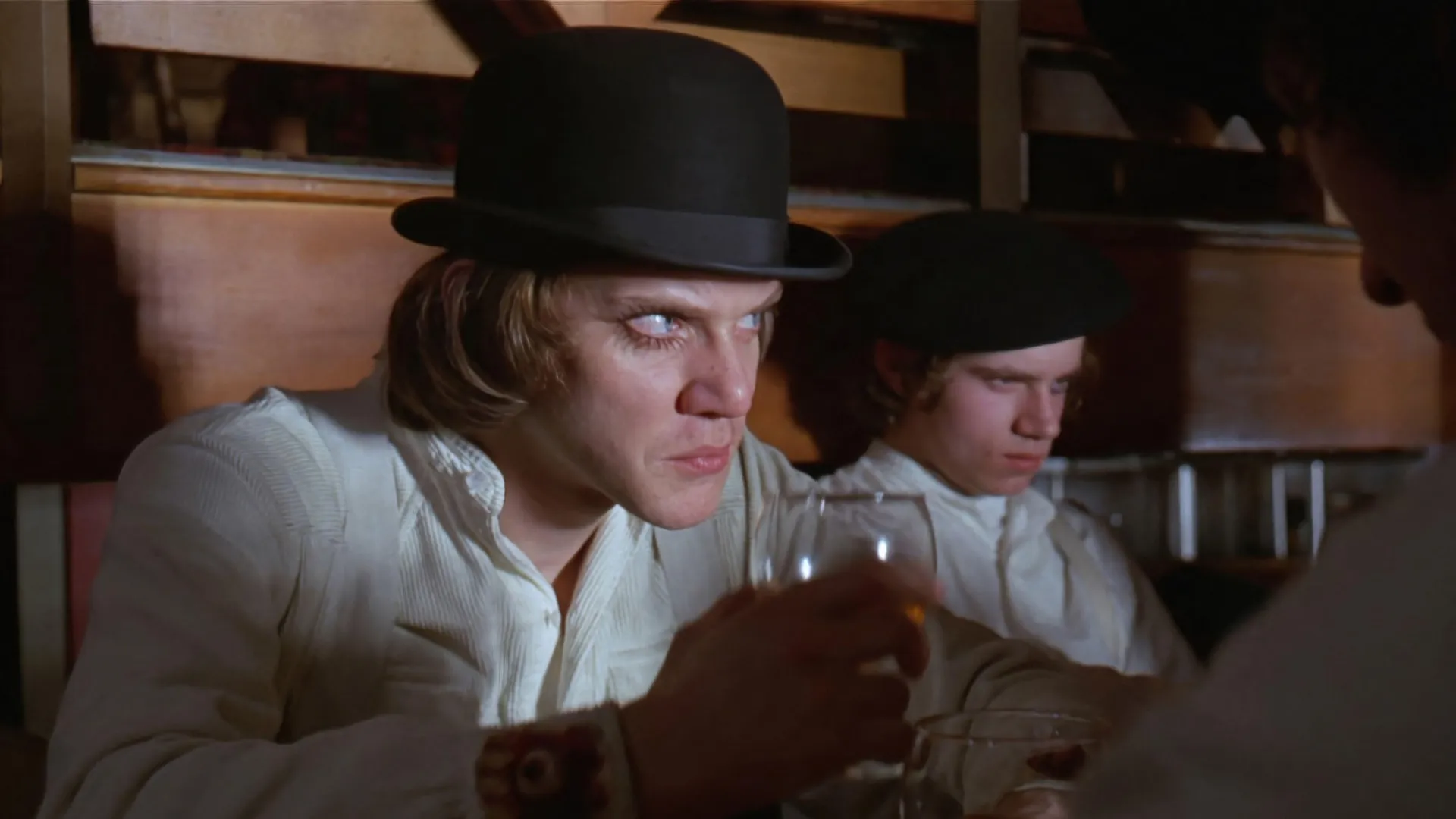
    ‘A Clockwork Orange’ (1971)
    An ultraviolent vision of an authoritarian near-future England that uses experimental brainwashing techniques on criminals still inspires heated debate. The movie (pictured above) is “astute and unsparing” in “putting the bleakest parts of human behavior under the microscope and laughing in disgust,” said Jeremiah Kipp at Slant Magazine. (HBO Max)

    ‘Gattaca’ (1997)
    A prescient neo-noir warning about a society bifurcated between a genetically engineered ruling caste and a natural-born underclass is wrapped in a murder mystery. The superb thriller offers “sharp commentary” about how “human culture finds new and interesting ways to split itself into upper and lower classes,” said Tim Brayton at Alternate Ending. (Prime Video)

    ‘The Road’ (2009)
    A father and son walk through a lifeless landscape and dodge bloodthirsty cannibals in this take on Cormac McCarthy’s celebrated novel. The bleak adaptation “demands effort and patience from the viewer,” providing an “experience both rewarding and haunting,” said Brian Eggert at Deep Focus Review. (Prime Video)

    ‘Blade Runner 2049’ (2017)
    Set in a postcollapse Los Angeles 30 years after the events of the 1982 classic, this gorgeous film revolves around the shocking discovery that “replicants” can now reproduce. With its “breathtaking” cinematography, the sequel is a “fantastic follow-up, as well as a fully engaging, impossibly gorgeous standalone entity,” said Vivian Kane at The Mary Sue. (Prime Video)


    Poll watch

    About half of Americans (52%) think it’s “very” or “somewhat” likely that the new Congress will impeach Trump, according to an Economist/YouGov survey of 3,166 adults. More Republicans (57%) than Democrats (47%) believe this, though 85% of Republicans don’t want his impeachment.


    INSTANT OPINION

    Today’s best commentary

    ‘The political center of gravity isn’t Trump. It’s Obama.’
    David Wallace-Wells at The New York Times
    You can’t win “liberal majorities” in Congress in a “libertarian nation,” a center-right country or, “more recently, a MAGA majority,” says David Wallace-Wells. You win only if the “country itself” is actually “left of center.” Maybe conservatives are “onto something” when they insist on describing themselves as “embattled insurgents” fighting an “entrenched liberal elite.” The “political landscape” resembles that of 12 years ago — “Obamaism” with a “new Zohran twist.” The map looks like a “delayed prophecy from the Obama years.”

    ‘Witkoff and Kushner get played yet again in Abu Dhabi’ 
    Mark Toth and Jonathan Sweet at The Hill
    Russian President Vladimir Putin saw an opening, “gullibly handed to him” by U.S. envoys Steve Witkoff and Jared Kushner, to “undermine European unity” and “lay the groundwork” to “reshape NATO,” say Mark Toth and Jonathan Sweet. Putin’s war against Ukraine is actually a “war against the West” and “NATO in particular.” The envoys fell into his trap when they “strong-armed European NATO allies” into agreeing to discuss Europe’s “security architecture” after the war in Ukraine ends.

    ‘Men are ready to be normal again’
    Luke Winkie at Slate
    Trump cultivated a “coalition of disaffected bros,” whom he “expertly managed” both “at the ballot box” and “in the zeitgeist.” MAGAdom “enthralled all avenues of male interest and culture,” infusing them with the president’s “unique brand of grievance politics.” Trump alone did not “engineer the rot eating away” at “American manhood,” but he “capitalized on it with aplomb.” Then came the midterm “rebuke” in which men moved “further left than any other demographic,” signaling a “new political dawn” is coming.


    WORD OF THE DAY

    TESS

    The acronym for NASA’s Transiting Exoplanet Survey Satellite. TESS has just solved the mystery of an exoplanet 1,000 light-years from Earth that seemingly disappeared: It was “dragged off its orbit by an unseen planet,” said Space.com (a sister site of The Week). Scientists hope to “decode what this extreme wobbling exoplanet system says about how it formed.”


    Evening Review was written and edited by Theara Coleman, Nadia Croes, David Faris, Scott Hocker, Anya Jaremko-Greenwold, Justin Klawans, Joel Mathis, Summer Meza, Devika Rao and Rafi Schwartz, with illustrations by Stephen Kelly and Julia Wytrazek.

    Image credits, from top: Illustration by Stephen P. Kelly / Getty Images; TVBS / AP Photo; vitapix / Getty Images; cineclassico / Alamy
     

    Recent editions

    • Morning Report

      Clashes erupt after millions join Spanish general strike

    • Evening Review

      Cyberattack threats: the new normal?

    • Morning Report

      Police may probe Walliams over teenage girl allegations

    VIEW ALL
    TheWeek
    • About Us
    • Contact Future's experts
    • Terms and Conditions
    • Privacy Policy
    • Cookie Policy
    • Advertise With Us
    • FAQ
    Add as a preferred source on Google Add as a preferred source on Google

    The Week UK is part of Future plc, an international media group and leading digital publisher. Visit our corporate site.

    © Future Publishing Limited Quay House, The Ambury, Bath BA1 1UA. All rights reserved. England and Wales company registration number 2008885.