What happened
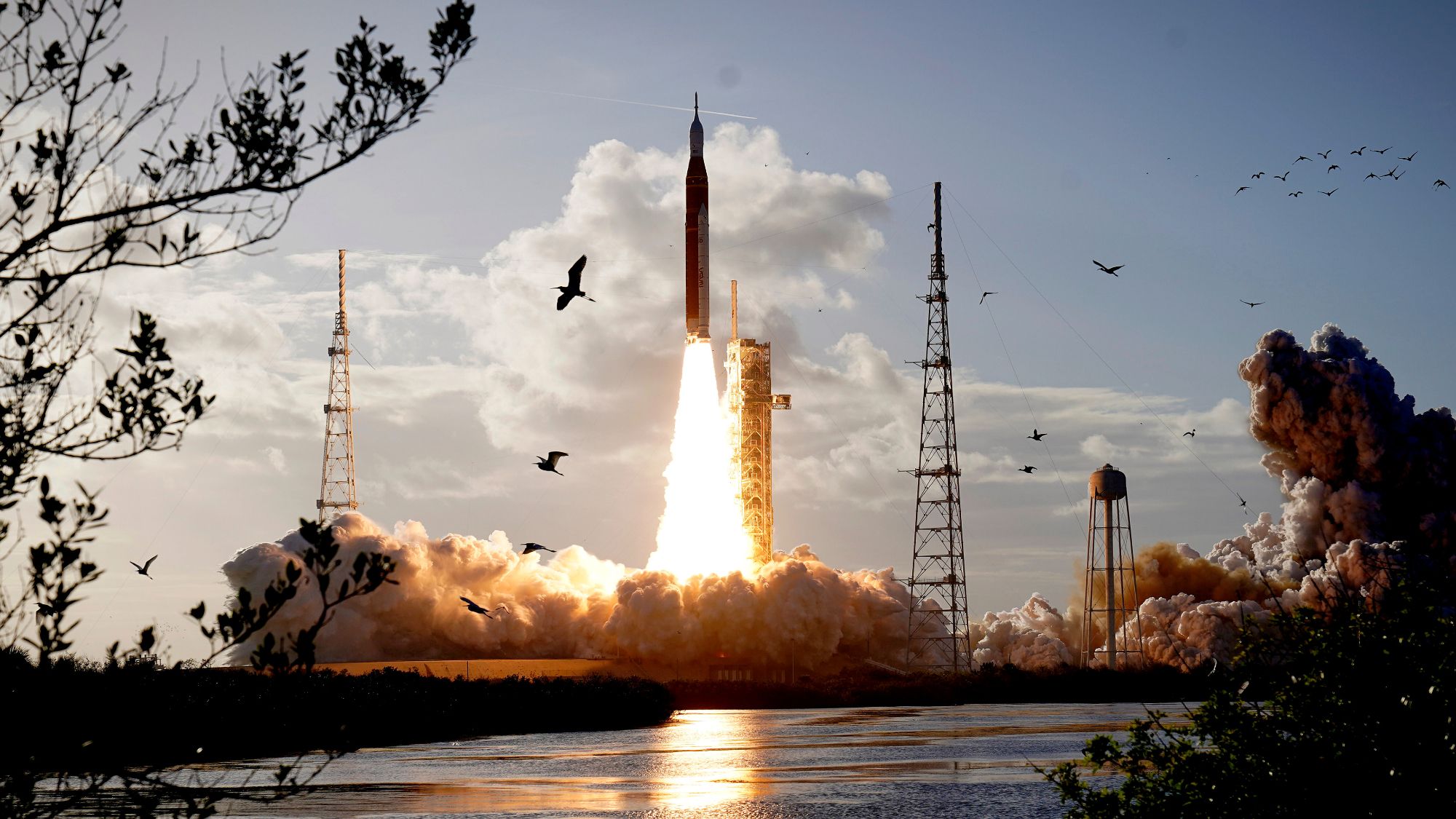
The four astronauts of NASA’s Artemis II mission blasted off from Florida’s Kennedy Space Center shortly before sunset yesterday, aiming to become the first humans to reach the moon in 54 years. The near-perfect launch sent NASA’s Reid Wiseman, Victor Glover and Christina Koch and Canadian astronaut Jeremy Hansen into Earth orbit, where Glover manually maneuvered their Orion crew capsule around the detached second stage of the SLS rocket, the first task on their historic 10-day journey into deep space.
Who said what
“We are going for all humanity,” Hansen, poised to be the first non-American in deep space, said before liftoff. “We have a beautiful moonrise,” Wiseman said five minutes into the flight, “and we’re headed right at it.”
Human spaceflight “may almost seem familiar and humdrum these days,” The Washington Post said. But Artemis II is a “crucial first chapter” in a “risky, expensive, technically challenging” and ambitious effort to “eventually return people to the lunar surface, build a base there and use it as a stepping stone to push deeper into the solar system.” All these plans “hinge on Artemis II going well,” The Associated Press said. The “biggest goal for the astronauts on this mission is to not die,” New York Times science reporter Kenneth Chang said on “The Daily” podcast.
What next?
Today, Orion “will fire its engines to push it on a path toward the moon,” which it will reach Monday, the Times said. After traveling 4,144 miles further from Earth than any humans before them and observing “portions of the far side that have never been seen by human eyes before,” the astronauts are scheduled to splash down in the Pacific Ocean on April 10. |