The Week The Week
flag of US
US
flag of UK
UK
https://cdn.mos.cms.futurecdn.net/flexiimages/jzblygzdxr1769609154.gif

SUBSCRIBE

Try 6 weeks free

Sign in
  • View Profile
  • Sign out
  • The Explainer
  • Talking Points
  • The Week Recommends
  • Podcasts
  • Newsletters
  • From the Magazine
  • The Week Junior
  • More
    • Politics
    • World News
    • Business
    • Health
    • Science
    • Food & Drink
    • Travel
    • Culture
    • History
    • Personal Finance
    • Puzzles
    • Photos
    • The Blend
    • All Categories
  • Newsletter sign up Newsletter
  • Brand Logo
    Trump empowered, deportee earthquake deaths and Guo sentence

     
    TODAY’S SUPREME COURT story

    Supreme Court lets Trump fire officials, except at Fed

    What happened
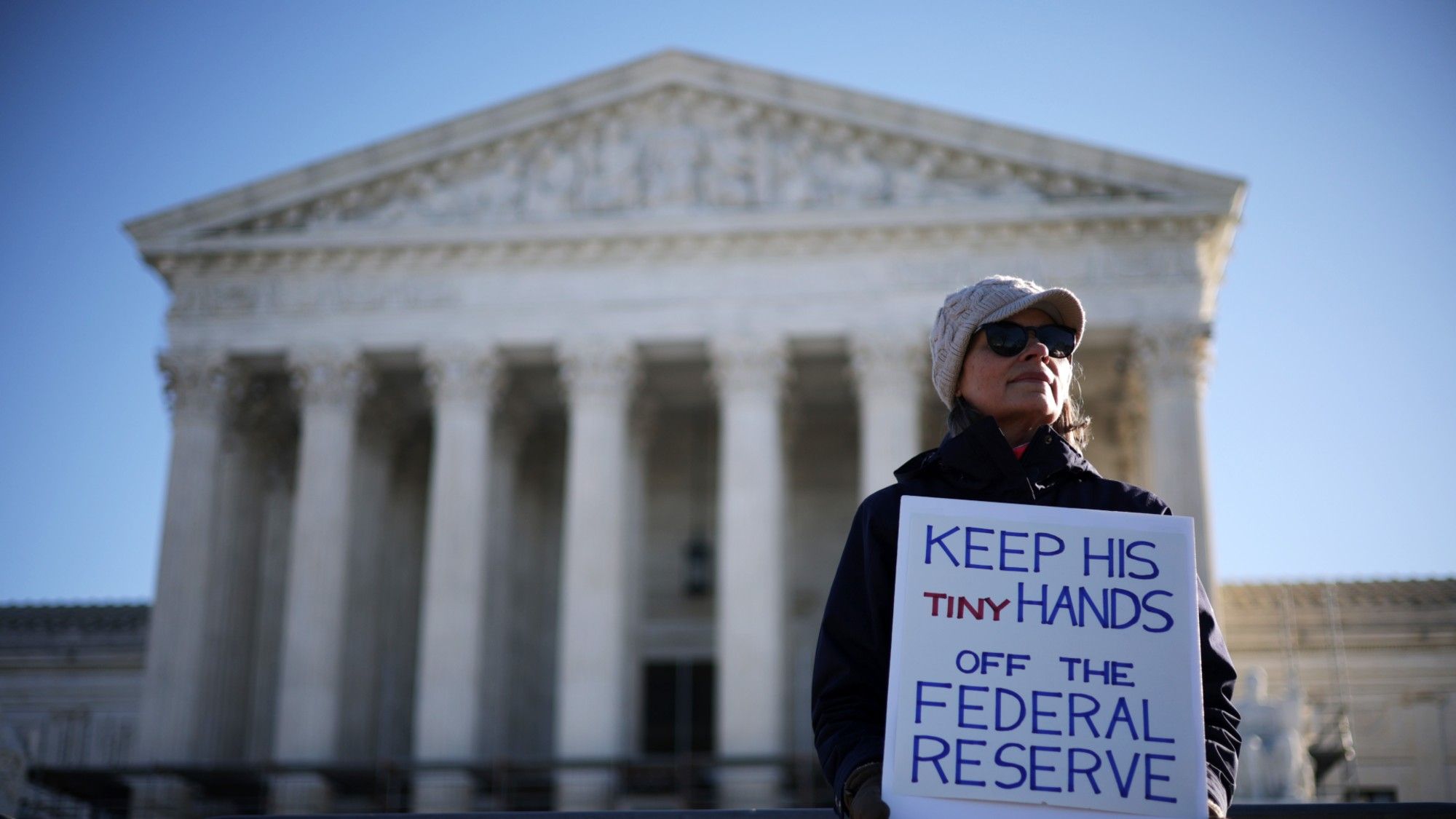
    A pair of landmark Supreme Court decisions yesterday gave presidents broad authority to fire the heads of previously independent federal agencies while appearing to carve out an exception for the Federal Reserve. Both rulings were written by Chief Justice John Roberts. In the “more significant decision,” CNN said, the court’s 6-3 conservative majority allowed President Donald Trump to fire Federal Trade Commission member Rebecca Kelly Slaughter at will “despite a federal law that requires presidents to show cause — such as malfeasance.” In the other, a 5-4 court said Trump can’t fire Fed Governor Lisa Cook, for now. 

    Who said what
    Yesterday’s rulings “took a sledgehammer to much of the federal government’s regulatory structure,” Nina Totenberg said at NPR, with the court’s conservatives “striking down almost all the limits that Congress — and the courts — had previously established to protect the independence of regulatory agencies.” Slaughter said the decision allowed Trump to “fire watchdogs who won’t put politics over principle” and “replace them with lap dogs.” 

    Cook celebrated her narrow victory as a win for “the American people, whose economic well-being depends on a central bank that answers to its mission, not political intimidation.” But the ruling gave Trump “an opening to keep fighting,” and he signaled he would, The New York Times said. The decision was “procedural,” Trump said, and he would “take appropriate action immediately.”

    What next?
    The court’s massive “expansion of presidential power” could “open the door to allowing presidents to fire at will not just agency leaders, but potentially lower-level government experts who have been protected by the Civil Service Reform Act since 1883,” Totenberg said.


    TODAY’S INTERNATIONAL story

    100 US deportees feared dead in Venezuela quake

    What happened
    Venezuela yesterday raised the death toll from last week’s powerful earthquakes to 1,719 people, with another 5,034 injured and 15,866 displaced. The numbers are expected to keep rising. Among the missing are more than 100 Venezuelans who arrived in La Guaira on a U.S. deportation flight hours before the back-to-back quakes struck, The Associated Press said. The government-run hotel where they were brought for medical screenings and ID cards collapsed. 

    Who said what
    The 146 Venezuelans on the deportation flight from Miami included 19 women and seven children, according to Human Rights First’s ICE Flight Monitor. Venezuela’s repatriation agency showed one family a list of 32 survivors from the flight, but most are believed to have died, Reuters said. Relatives “have questioned why deportees were taken there and why their phones and documents were withheld, complicating efforts to find and identify them.”

    What next?
    The search for survivors “was growing increasingly desperate” yesterday, five days after the quakes, The New York Times said. “Frustration is growing” with Venezuela’s “U.S.-backed government” and what critics call its “slow and inept” response, NPR said. Venezuela’s “thousands of police and army troops” have been “slow to arrive” and hindered rescue efforts by “demanding government permits from doctors and rescue workers.”


    TODAY’S CRIME Story

    Rich Chinese Bannon ally given 30 years for fraud

    What happened
    A federal judge in Manhattan yesterday sentenced self-exiled Chinese billionaire Guo Wengui to 30 years in prison for financial fraud. Guo was convicted in 2024 after transforming himself from wealthy Beijing insider to U.S.-based anti-Communist crusader with prominent conservative allies and a luxury lifestyle. U.S. District Judge Analisa Torres said he had “preyed on people seeking to bring democracy to China,” causing more than 1,000 supporters “substantial financial and emotional harm.”

    Who said what
    “The reason I came to the U.S. is to destroy” the Chinese Communist Party, Guo said in court yesterday. “Guo did not lead a movement; he led a criminal enterprise,” Assistant U.S. Attorney Ryan Finkel countered. 

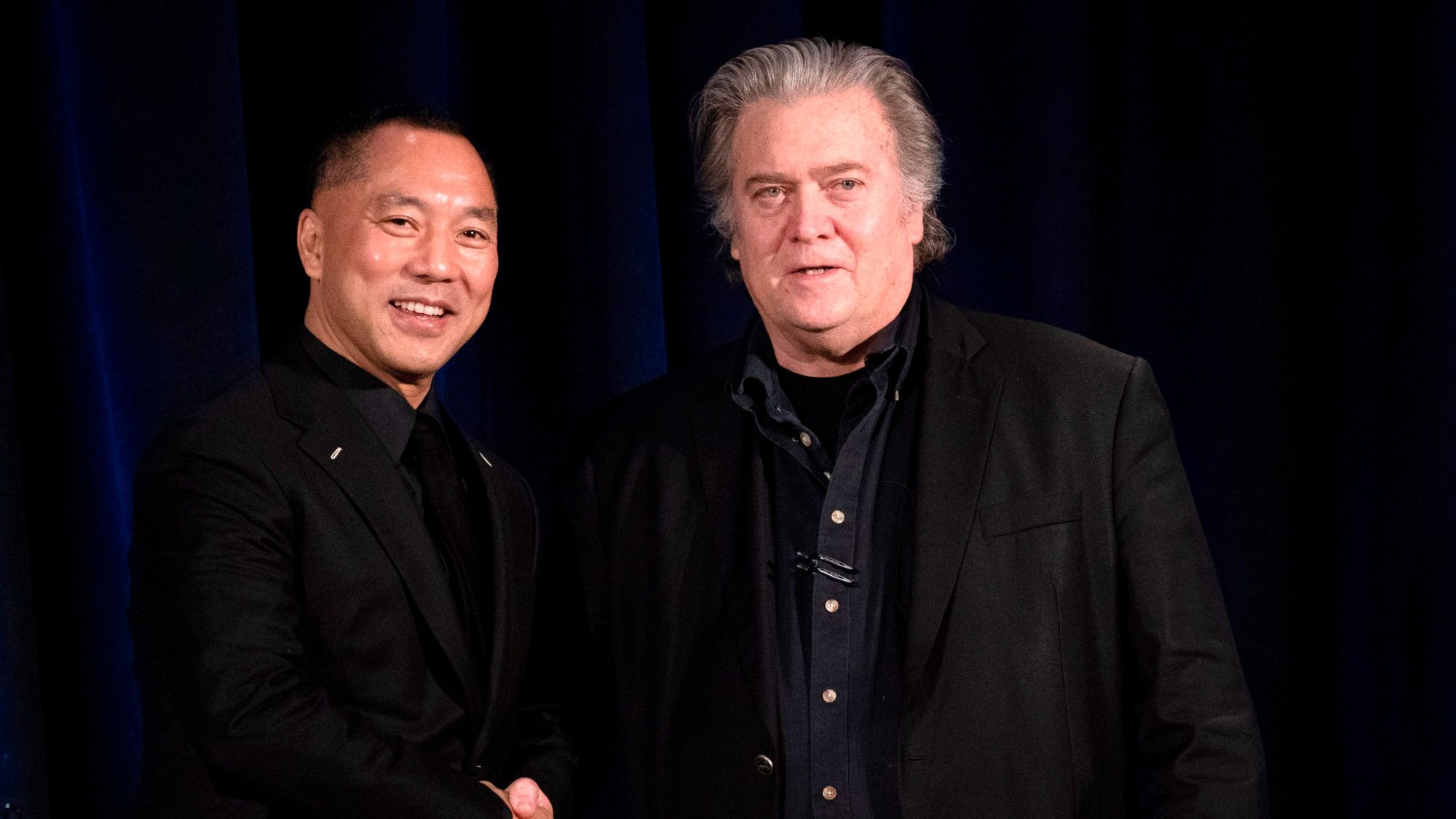
    Guo fled China in 2015 amid an anti-corruption crackdown. “By 2017, he was a member of Mar-a-Lago” and quickly “built political and business connections with some powerful people” in President Donald Trump’s orbit, notably Steve Bannon, The New York Times said. Bannon (pictured above with Guo) was arrested aboard Guo’s yacht in 2020 for allegedly defrauding investors, though “Trump eventually pardoned him.” Bannon “has repeatedly called for Guo’s freedom,” The Wall Street Journal said.

    What next?
    Trump faces “calls from Guo’s supporters to pardon him” but also “Beijing’s long-running demand to hand him over,” the Journal said. Despite “Guo’s political alliances, a presidential pardon appears unlikely,” the Times said. 


    It’s not all bad

    France’s Musée d’Orsay has opened a permanent exhibition called “Who Owns These Works,” seeking to return art looted by the Nazis to its rightful heirs. The museum has 225 artworks taken during World War II whose owners’ descendants haven’t been found. “Who Owns These Works” will display 13 pieces at a time, with both the front and back visible so visitors can look for identifying clues. In the last 30 years, the museum has returned 15 stolen works.


    Under the radar

    Eye spies: the push to protect biometric data

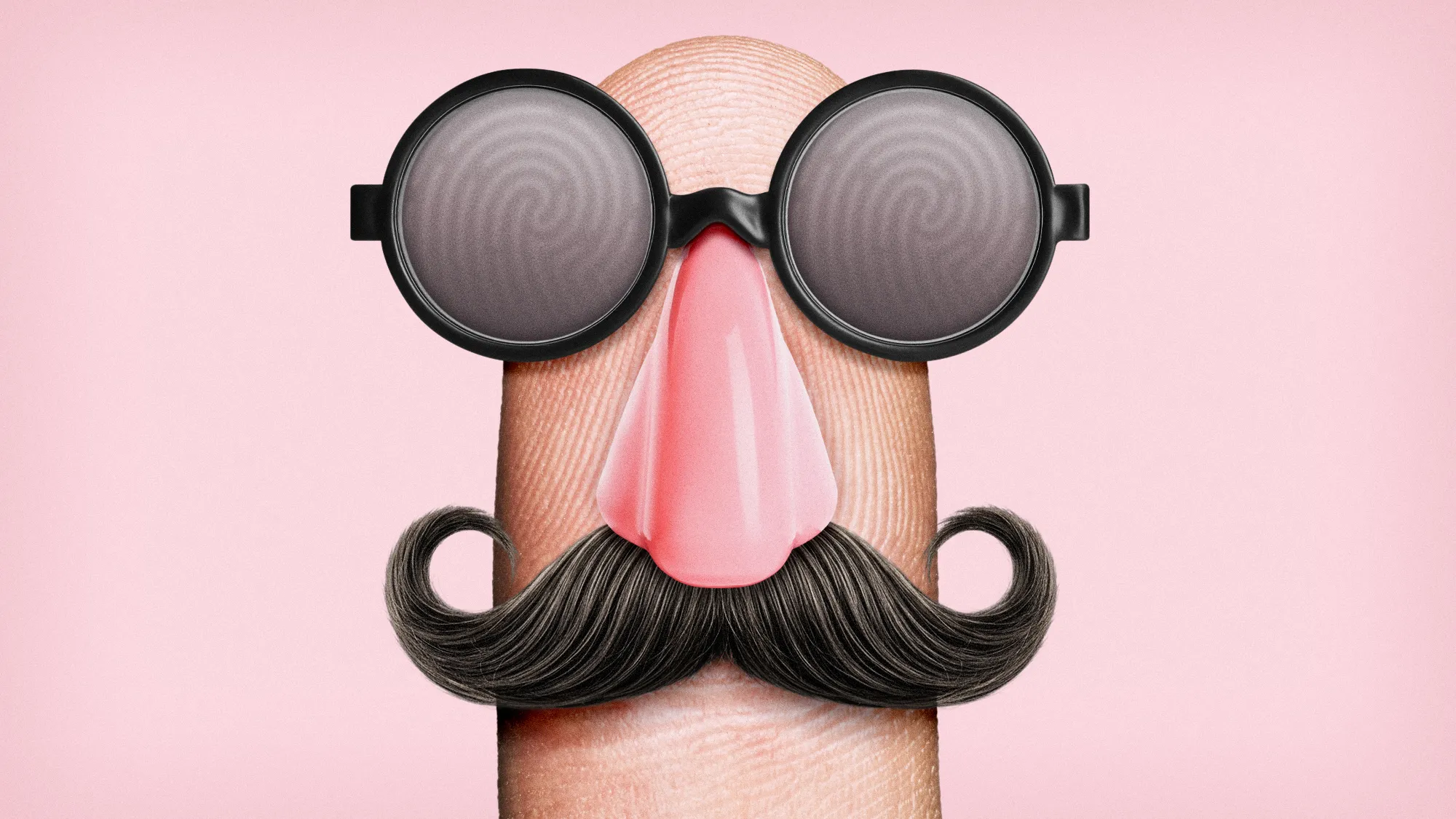
    If a hacker steals your password, you can create a new one, but if someone gains access to your fingerprint or iris data, you can hardly replace your fingers or eyes. A new study has offered a technique that would allow users to “update” their biometric information, potentially improving online safety.

    Concern about the security of using biometrics instead of passwords has grown this month amid reports that scammers could extract close-ups of fingerprints from social media photos, “enhance them with AI” and use them to gain access to accounts or commit other cybercrimes, said Moneywise. It “sounds like the stuff out of spy novels or ‘Mission Impossible,’” said Vyas Sekar, a professor at Carnegie Mellon University, to CBS News. But in “theory, it’s possible, especially if people are posting high-resolution images.”

    According to a study in the International Journal of Computational Vision and Robotics, “irreversible identity theft” can be “largely avoided” by allowing users to “reset” their biometrics, said TechXplore. The method is “similar to changing a password,” said Knowridge Science Report. Rather than storing a person’s original fingerprint or other biometric information directly, it transforms their data into a protected version “difficult to reverse-engineer.” The data is then “further scrambled and compressed” into a secure digital version.

    In this form, a person’s identity can be verified, but the original biometric data is hidden. If the protected version is ever compromised, it can be “cancelled and replaced,” said Knowridge Science Report. Even if hackers gained access to the stored information, the user would not be permanently exposed.


    On this day

    June 30, 1905

    Albert Einstein published the groundbreaking scientific paper in which he outlined his theory of special relativity. Several months later, he published an addendum describing his now-famous mass-energy formula, E=mc². Einstein’s theories fundamentally reshaped human understanding of space, time and energy, making him one of the 20th century’s most influential scientists.


    TODAY’S newspaperS

    ‘Pony up’

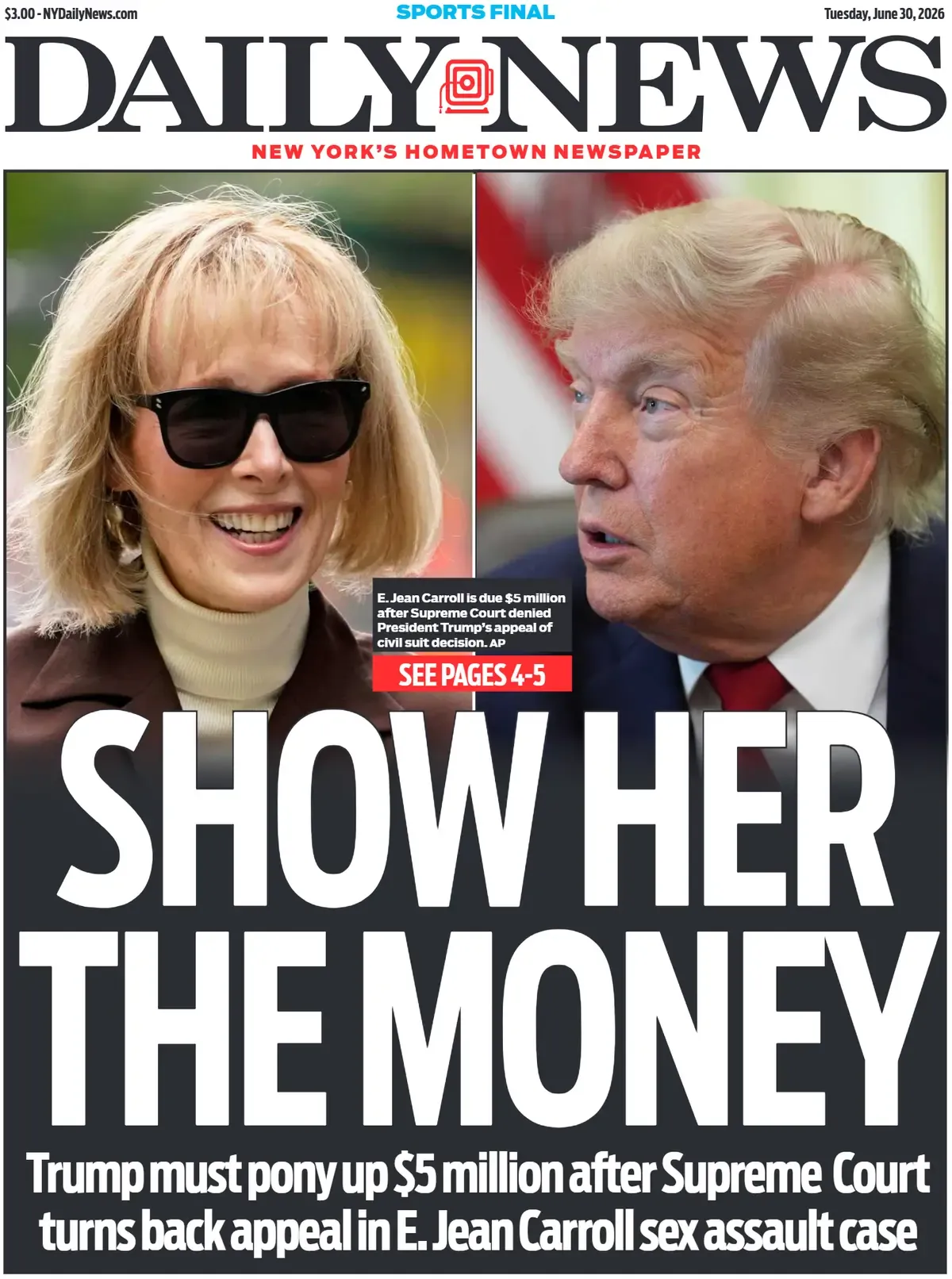
    “Supreme Court expands Trump’s power to fire agency heads at will,” The Philadelphia Inquirer says on Tuesday’s front page. Ruling “overturns precedent of 90 years,” the Miami Herald says. “Justices say late ballots are valid” in “a defeat for Trump,” says USA Today. “Sexual-abuse verdict against Trump stands,” The Wall Street Journal says. “Trump must pony up $5 million” for E. Jean Carroll, the New York Daily News says. “Show her the money.” “Black Democrats in South are galvanized for midterms,” The Washington Post says. “Comcast is spinning off assets of NBCUniversal,” the Los Angeles Times says. “Agencies balk at master list of every spy,” says The New York Times. 

    ► See the newspaper front pages


    Tall tale

    Divine intervention

    A software engineer in North Carolina was able to opt out of using artificial intelligence at work through a religious exemption. Erin Maus was granted the accommodation last month after telling her tech firm that AI violates the environmental and ethical beliefs of her Unitarian Universalist church. Catholic employees could soon start requesting similar exemptions — in a recent encyclical, Pope Leo XIV warned that if left unchecked, AI could put people out of work and undermine human dignity.


    Morning Report was written and edited by Nadia Croes, Catherine Garcia, Scott Hocker, Anya Jaremko-Greenwold, Justin Klawans, Chas Newkey-Burden, Rafi Schwartz, Peter Weber and Kari Wilkin, with illustrations by Stephen Kelly and Julia Wytrazek.

    Image credits, from top: Alex Wong / Getty Images; Miguel Medina / Pool / AFP via Getty Images; Don Emmert / AFP via Getty Images; Illustration by Stephen P. Kelly / Shutterstock / Getty Images
     

    Recent editions

    • Evening Review

      Mind the white working-class gap

    • Morning Report

      Russia experiencing ‘problems’ in war, Putin concedes

    • Sunday Shortlist

      A charming ‘summer blockbuster’ at the Globe

    VIEW ALL
    TheWeek
    • About Us
    • Contact Future's experts
    • Terms and Conditions
    • Privacy Policy
    • Cookie Policy
    • Advertise With Us
    • FAQ
    Add as a preferred source on Google Add as a preferred source on Google

    The Week UK is part of Future plc, an international media group and leading digital publisher. Visit our corporate site.

    © Future Publishing Limited Quay House, The Ambury, Bath BA1 1UA. All rights reserved. England and Wales company registration number 2008885.