What happened
President Donald Trump yesterday signed proclamations imposing 50% tariffs on a wide range of Canadian imports, claiming that America’s second-largest trading partner has unfairly discriminated against U.S. autos, alcohol and dairy products. The tariffs, set to take effect in 30 days, rely on Section 338 of the Tariff Act of 1930, which has never been used to levy import duties and is untested in court. Some products, like energy, would be exempt, but the new tax will apply to goods that comply with the U.S.-Mexico-Canada free trade agreement, the White House said.
Who said what
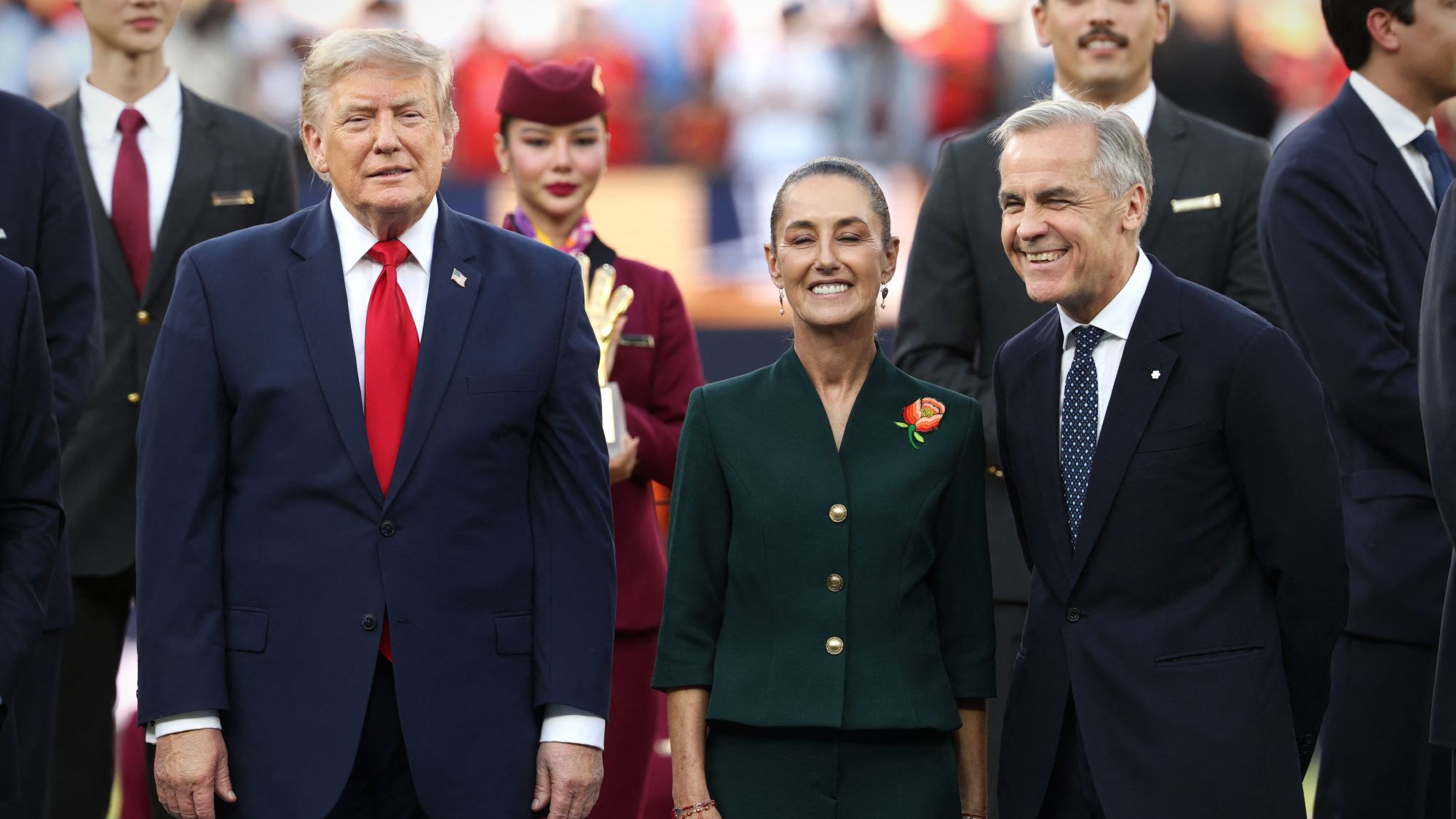
The new tariffs “could unleash a new wave of economic chaos, with risks of higher inflation and further fraying of relations” with Canada, The Associated Press said. A senior administration official “said that Canada was one of the only nations other than China that retaliated against Trump’s previous tariffs and must be held accountable.” Canadian Prime Minister Mark Carney (pictured above with Trump and Mexico’s Claudia Sheinbaum) said that “Canada, as is its right,” had “merely matched” Trump’s tariffs, but his country “stands ready to engage intensively” to address a “trade dispute” that “has raised costs for families, particularly in the U.S.”
What next?
The new tariffs would apply to nearly $20 billion of Canadian goods, the White House said, or roughly 5.2% of Canadian imports last year. But Trump’s “invocation of 338 is the nuclear option,” threatening all U.S. trading partners and injecting “massive uncertainty” into the global economy, Cato Institute economist Scott Lincicome said to the AP. “We crossed the Rubicon.” |