The Week UK
flag of US
US
flag of UK
UK
https://cdn.mos.cms.futurecdn.net/flexiimages/jzblygzdxr1769609154.gif

SUBSCRIBE

Start your trial today

Sign in
  • View Profile
  • Sign out
  • The Explainer
  • Talking Points
  • The Week Recommends
  • Podcasts
  • Newsletters
  • From the Magazine
  • The Week Junior
  • More
    • Politics
    • World News
    • Business
    • Health
    • Science
    • Food & Drink
    • Travel
    • Culture
    • History
    • Personal Finance
    • Puzzles
    • Photos
    • The Blend
    • All Categories
  • Newsletter sign up Newsletter
  • Brand Logo
    Israeli deadlock, another DOJ loss and CDC exit

     
    TODAY’S INTERNATIONAL story

    Netanyahu loses majority in unsettled Israeli election

    What happened
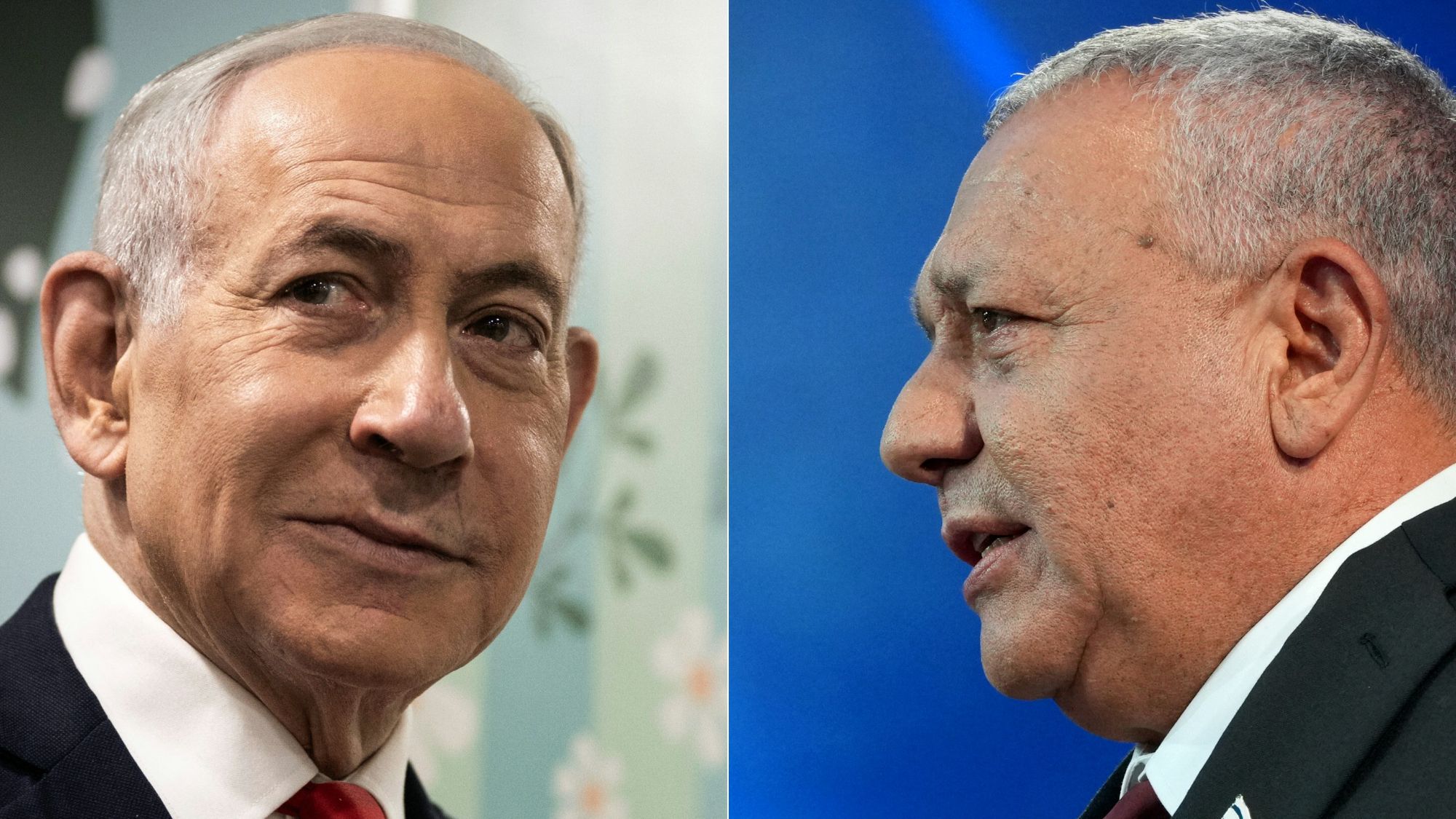
    Israeli Prime Minister Benjamin Netanyahu lost his governing majority in yesterday’s national elections, according to early results and exit polls. But the opposition bloc, led by Gadi Eisenkot (pictured above right), was also far short of the 61 Knesset seats needed to form a government. Turnout, at 77.7%, was the highest since 1999. 

    With 77% of votes counted, Netanyahu’s far-right coalition had 44.2% while Eisenkot’s centrist bloc had 38.3% and Arab parties, in a historically strong showing, held 13.8%. According to Israeli news networks, Netanyahu will control 54 seats, Eisenkot 47 and the Arab parties 19.

    Who said what
    Netanyahu’s Likud looks set to remain the “largest single party” in Israel’s parliament, CNN said, but his “bloc of ultra-Orthodox and far-right allies” will “collapse” from their current 68 seats, signaling a “crash in public support.” Exit polls, “which have a spotty record in Israel,” point to “weeks of political gridlock,” The New York Times said, but that didn’t stop Netanyahu and Eisenkot from “making triumphant late-night speeches to their supporters.” 

    Israel “has voted for change,” Eisenkot said. And a “worthy leader would acknowledge this lack of public confidence” and retire “from political life today.” Netanyahu claimed a “clear, decisive majority among the Zionist public” and “Jewish population” and called for a “strong, right-wing, nationalist government.”

    What next?
    After all votes are counted, which could take until Friday, Israeli President Isaac Herzog will invite either Eisenkot or Netanyahu to try to form a government. Many experts see the most likely scenario being a “hung parliament that ultimately heads to another round of elections” early next year, The Wall Street Journal said, “with Netanyahu hanging on as a caretaker premier.” 


    TODAY’S POLITICS story

    Grand jury rejects DOJ’s Cassidy Hutchinson charges

    What happened
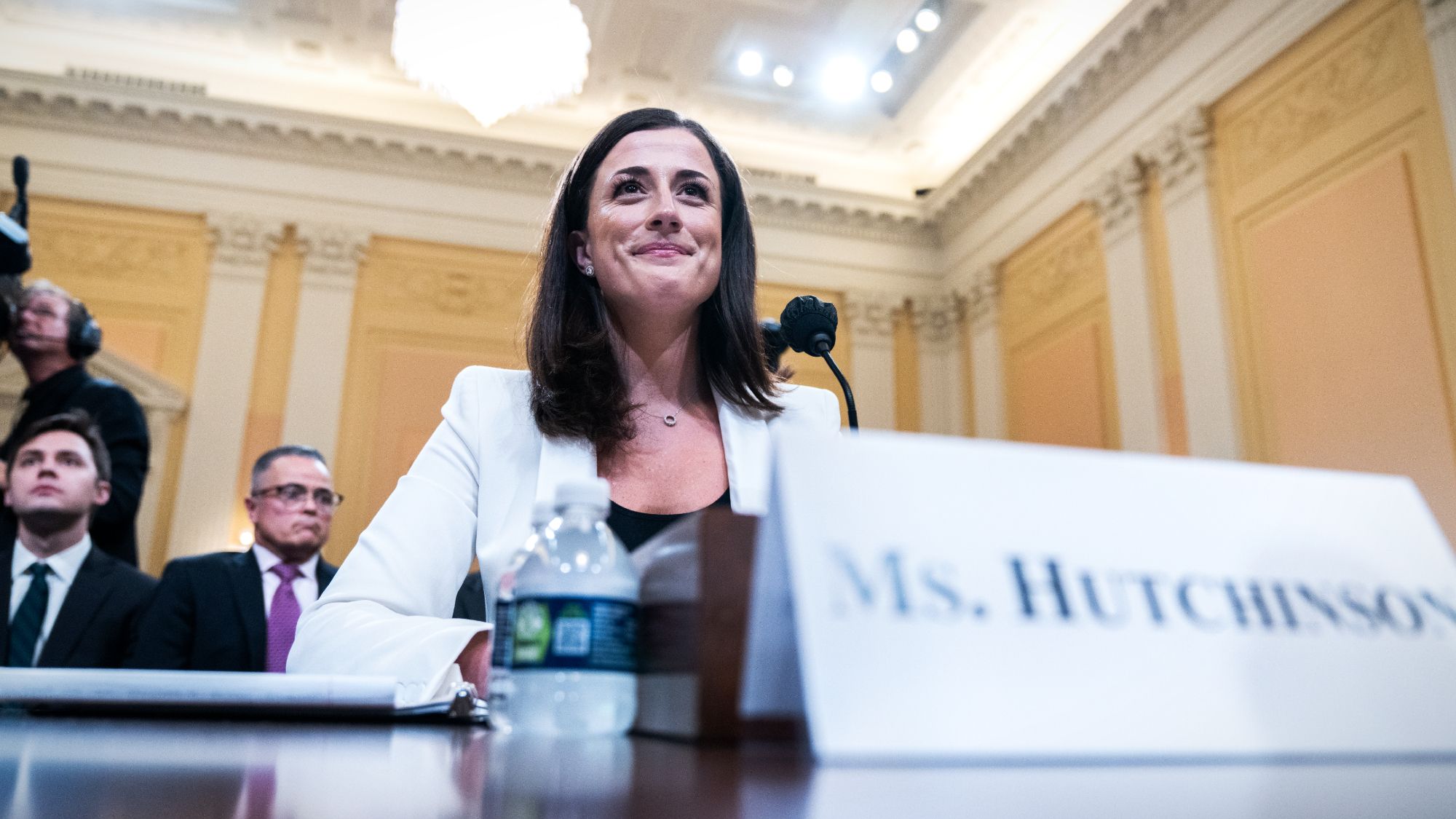
    Justice Department prosecutors yesterday tried and failed to convince a federal grand jury to indict Cassidy Hutchinson, the former White House aide whose dramatic 2022 testimony before the House Jan. 6 committee made her a target of President Donald Trump, news organizations reported. Previously “seen as a Trump loyalist,” her “damning testimony” portrayed a president “willing to do almost anything to cling to power” as his supporters raided the Capitol, The New York Times said.

    Who said what
    Yesterday’s failed indictment was the “latest extraordinary setback” in Trump’s “wide-ranging campaign to go after his political opponents,” the Times said. Prosecutors face a “relatively low threshold” to secure indictments, The Washington Post said, and it’s “exceedingly rare” for grand juries to reject them. But such repudiations have “piled up in the past year,” The Wall Street Journal said. Nonetheless, DOJ officials, “under pressure from the president ahead of Election Day, have been pressing to show progress” on Trump’s “plan to even the score.”

    What next?
    A DOJ official’s announcement of the unspecified failed indictment “interrupted a daylong hearing in the case of two former FBI officials charged with lying to Congress” about the Hunter Biden laptop probe, the Post said. In that hearing, U.S. Magistrate Judge Zia Faruqui rejected the DOJ’s “11th-hour attempt to file new criminal charges” against the officials through an “unsworn and unsigned superseding complaint,” CBS News said, and criticized prosecutors for failing to seek indictments. “This has to get to a grand jury,” he said.


    TODAY’S PUBLIC HEALTH Story

    Trump’s CDC deputy director quits after 4 months

    What happened
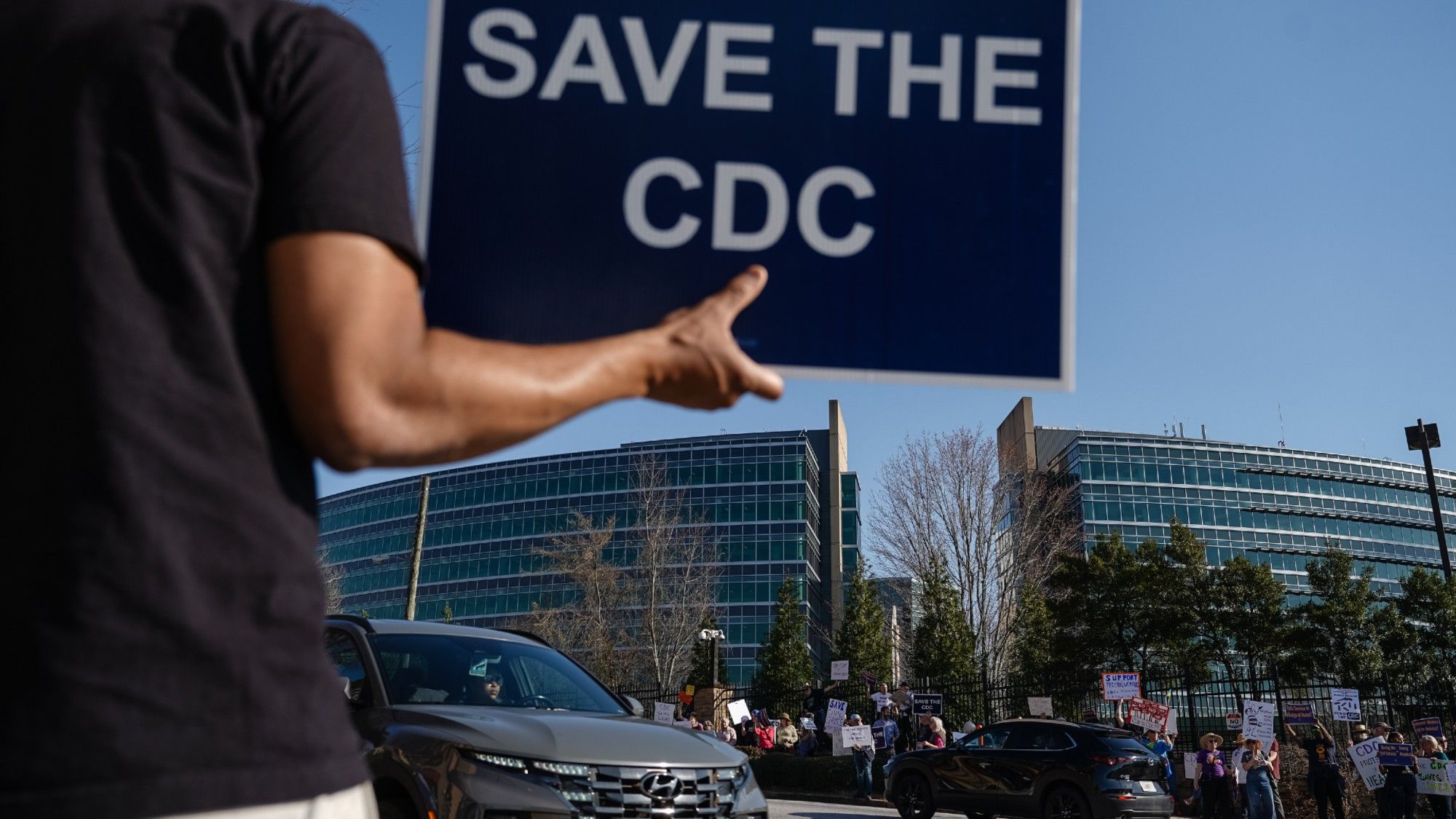
    The Centers for Disease Control and Prevention announced yesterday that its deputy director and chief medical officer, Dr. Jennifer Shuford, is stepping down after just four months on the job. “I am leaving to spend more time with my family,” Shuford said in a statement, thanking President Donald Trump and Health Secretary Robert F. Kennedy Jr. for the “amazing experience” of helping lead the CDC. 

    Who said what
    Shuford “earned respect” as a “data-driven epidemiologist” while serving as Texas health commissioner, and Trump hired her to “help steady the agency” after a turbulent year, The New York Times said. Her abrupt resignation comes as the CDC “faces criticism over its response to unrelenting measles outbreaks.” Shuford “disagreed with the administration’s approach to vaccine policy,” The Washington Post said, and according to two sources, that “was a factor in her decision to leave.” When taking these jobs, “we all have to know our red line and when it is important to walk away,” Dr. Anne Zink, a former Alaska chief medical officer, told the Times.

    What next?
    The CDC said Shuford plans to depart Nov. 12. As the administration searches for a replacement, her roles will be covered by career CDC official Satish Pillai.


    It’s not all bad

    Scientists have developed a way to use carbon monoxide to destroy cancer cells, according to a proof-of-concept study published in the journal Nature Communications. Many tumor cells produce high amounts of carbon monoxide, and injectable compounds developed by Japanese researchers react with that toxic gas to produce tumor-killing chemicals inside the cancer cells themselves. This approach could target tumors while leaving healthy cells undamaged. The researchers hope to test on animals in the near future.


    Under the radar

    Road to nowhere: Malawi’s deepening fuel crisis

    Across Malawi, filling up your gas tank has become an endurance test. In the past four weeks, fuel shortages have become a national emergency in the southeast African country.

    Drivers wait for hours at empty gas stations for deliveries, with one fuel stop morphing into a “makeshift village” where some motorists camp out for days, said The Guardian. At Mount Meru station in Zomba, the former capital and Malawi’s fourth-largest city, drivers sleep “under the bellies of trucks” and “aggressively block any queue jumpers” as the situation pushes “patience into hostility.”

    Fuel shortages have been a “recurring problem” in Malawi for years and were a “major issue” in last year’s general election, said Reuters. There had been a temporary improvement in supplies, but the onset of the Iran war has plunged the country back into crisis.

    Despite being one of the poorest countries in the world, Malawi has one of the “highest fuel pump prices” in Africa, at more than $11 a gallon, said Semafor. The recent crisis has sparked a “nationwide crackdown” on stockpiling and “black market sellers,” with gas stations “caught hoarding” at risk of losing their license and unauthorized sellers facing arrest.

    In a bid to solve the crisis, the government is being pressured to “change its importation policies” and open the fuel market to more suppliers, said Malawi24. The Consumers Association of Malawi argues that licensing more operators to import fuel and sell it at prices that “reflect the cost of securing supplies under the current market conditions” will ease the situation, “even if consumers have to pay higher prices.”


    On this day

    October 28, 1919

    The U.S. Senate voted 65-20 to overturn President Woodrow Wilson’s veto of the Volstead Act, thereby establishing Prohibition nationwide under the 18th Amendment. The alcohol ban ended in 1933 with ratification of the 21st Amendment. According to an August Gallup poll, 54% of Americans consume alcohol today. 


    TODAY’S newspaperS

    ‘US meddling’

    “U.S. meddling worries states ahead of vote,” as “flurry of moves by Justice Dept. shows urgency,” The New York Times says on Wednesday’s front page. “So far, little interference with voting,” The Boston Globe says, but “concerns remain about what Trump might do afterward.” Trump’s “‘little detour’ to Iran turned into a roadblock” politically, the Austin American-Statesman says. “U.S. plans to resume striking Iran after midterms,” The Wall Street Journal says. “Fraying showing in MAHA-Trump alliance,” says USA Today. “Bolsonaro flees to U.S. after loss at ballot box,” The Washington Post says. “After Machado’s return, Rubio warns Venezuela against delaying elections,” says the Miami Herald. 

    ► See the newspaper front pages


    Tall tale

    Be our guest

    A San Diego couple has started a company that lets future newlyweds sell unused seats at their weddings. Jeff and Karina Besen’s business, Not a Wedding Crasher, helps couples meet wedding vendors’ minimum headcount requirements, selling seats for $25 to $150. Couples are “spending thousands of dollars on weddings only to have seats go empty,” when many people “would love to attend,” Jeff Besen told Inc. That opened an “opportunity to ‘marry’ the two and create something that didn’t exist before.”


    Morning Report was written and edited by Nadia Croes, Rebekah Evans, Scott Hocker, Anya Jaremko-Greenwold, Justin Klawans, Devika Rao, Rafi Schwartz, Peter Weber and Kari Wilkin, with illustrations by Stephen Kelly and Julia Wytrazek.

    Image credits, from top: Jewel Samad and Maya Levin / various sources / AFP via Getty Images; Tom Williams / CQ-Roll Call Inc. via Getty Images; Elijah Nouvelage / Getty Images; Amos Gumulira / AFP / Getty Images
     

    Recent editions

    • Evening Review

      Israel’s ‘most consequential’ election

    • Morning Report

      Netanyahu urged Iran strike before election

    • Evening Review

      Talkin’ ‘bout my generation

    VIEW ALL
    TheWeek
    • About Us
    • Contact Future's experts
    • Terms and Conditions
    • Privacy Policy
    • Cookie Policy
    • Advertise With Us
    • FAQ
    Add as a preferred source on Google Add as a preferred source on Google

    The Week UK is part of Future plc, an international media group and leading digital publisher. Visit our corporate site.

    © Future Publishing Limited Quay House, The Ambury, Bath BA1 1UA. All rights reserved. England and Wales company registration number 2008885.