What happened
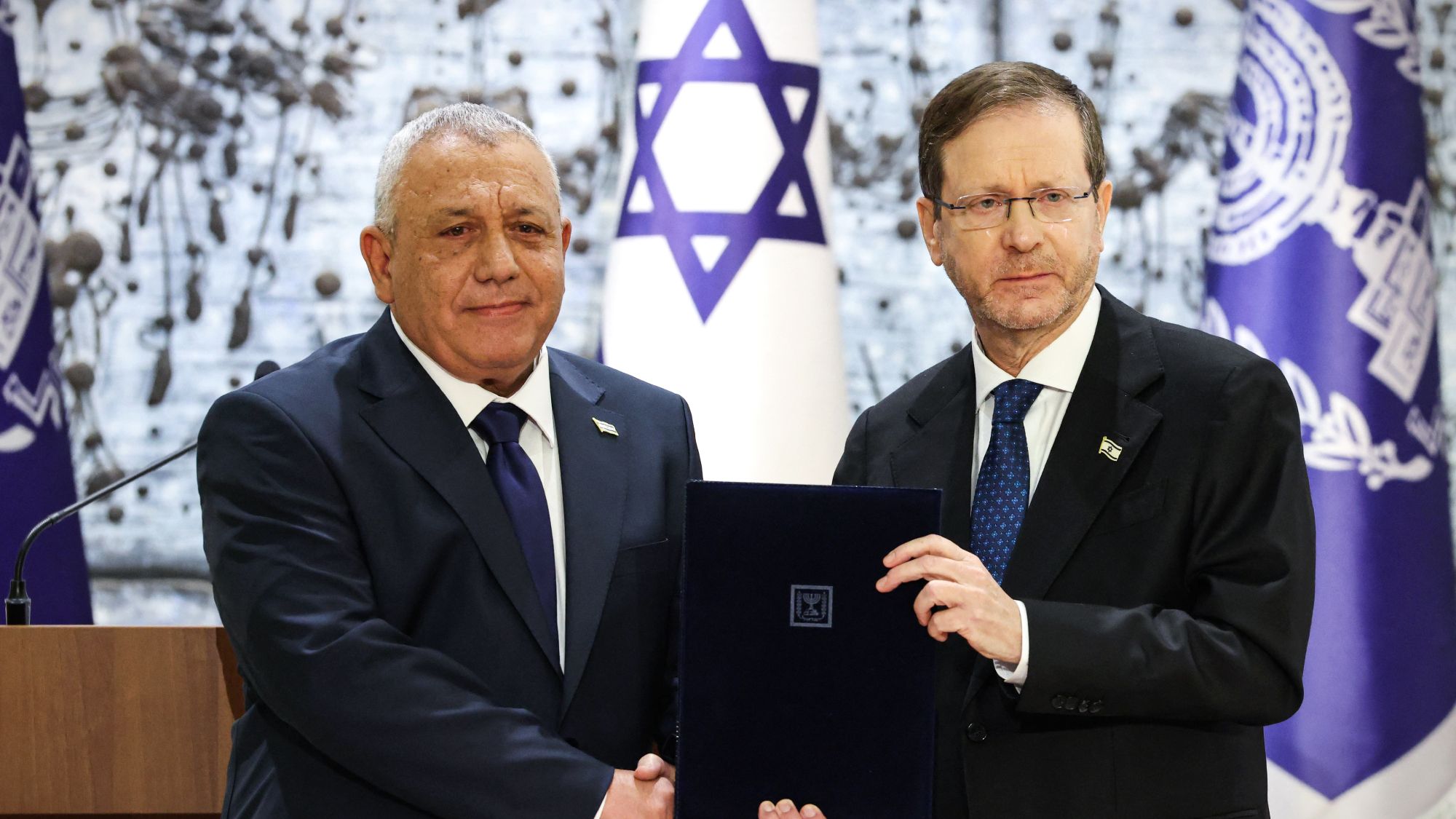
Israeli President Isaac Herzog last night formally invited opposition leader Gadi Eisenkot to try to form a government after last month’s inconclusive elections, dealing a blow to Prime Minister Benjamin Netanyahu. In consultations last week, Eisenkot secured the “clear and unequivocal support” of a majority of lawmakers to get first shot at building a governing coalition, Herzog said.
Who said what
Eisenkot’s “potential pathways to power” include joining with Arab-led parties, “forming a coalition with ultra-Orthodox parties” and “forging a unity government with Netanyahu,” Reuters said. Each “likely scenario appears to entail compromises or broken promises,” The Associated Press said.
Israel is facing a “devastating” loss of confidence among its “closest friends and strategic allies,” Eisenkot said yesterday. This “state of emergency, approaching a point of no return for the State of Israel,” requires a “national emergency government” formed through “creative and unconventional political steps.”
What next?
Eisenkot has 28 days to form a coalition, with a possible two-week extension. Knesset members will be sworn in tomorrow, and Netanyahu will remain caretaker prime minister, with limited powers, until a governing coalition is formed. If Eisenkot fails, Netanyahu will likely get a chance, and if he comes up short, Israel will hold new elections in the spring. Political analysts say “remaining in power by forcing a new round of elections would be a victory” for Netanyahu, The New York Times said. |