President Trump’s unprecedented use of pardons has turned clemency into a big business.
How many people has Trump pardoned?
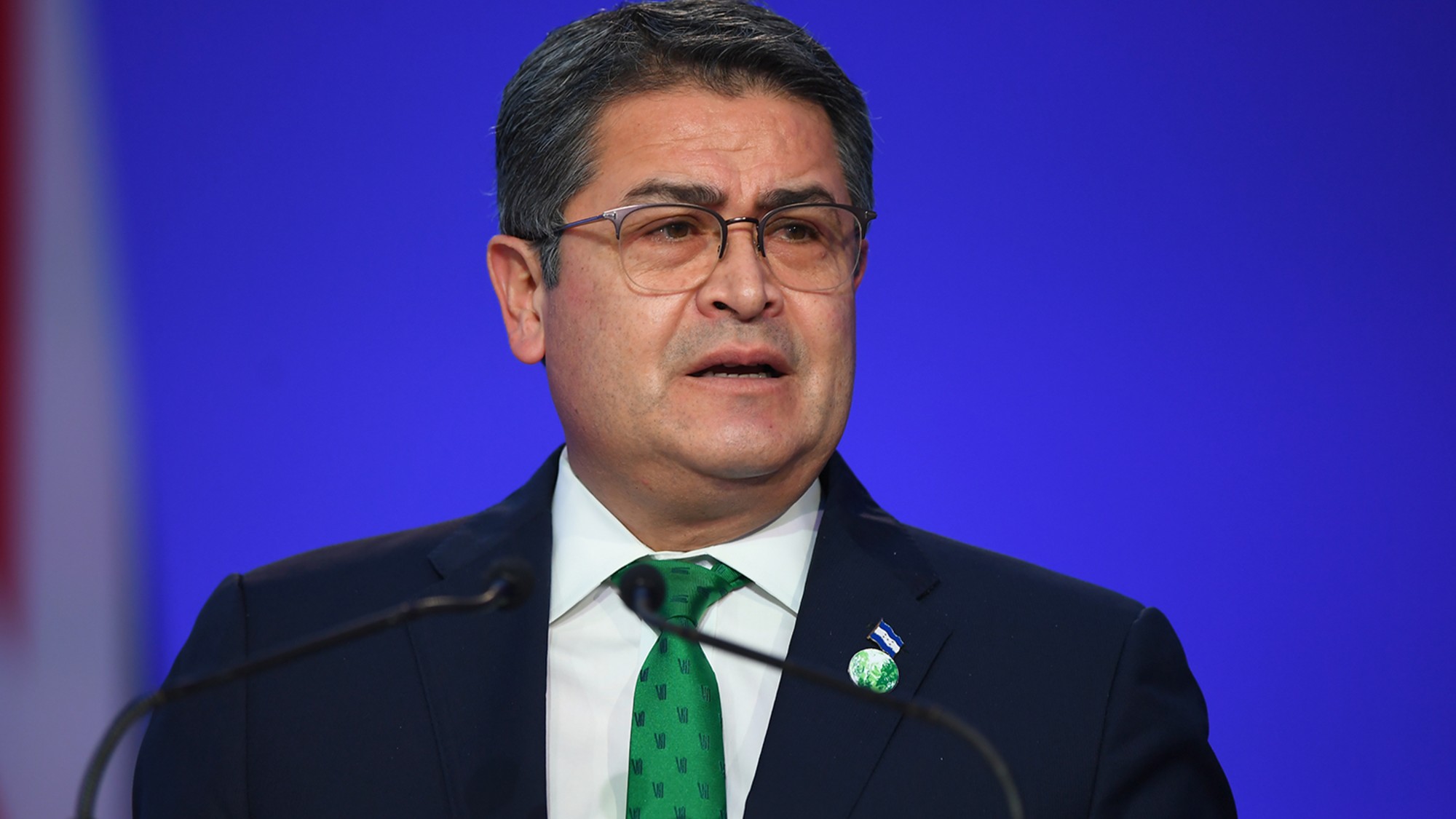
A year into his second term, President Trump has issued more than 1,700 acts of clemency— both pardons that fully erase federal convictions and commutations that lessen sentences. In his entire first term, he issued 238. Trump’s clemency spree began on his first day back in office, when he granted clemency to nearly 1,600 people convicted or charged in connection with the Jan. 6, 2021, attack on the U.S. Capitol—including rioters who assaulted police with flagpoles and bear spray. Since then, he has issued clemency at an unprecedented clip, forgiving fraudsters, donors, drug lords, and minor celebrities. They include former Honduran president Juan Orlando Hernández, convicted of conspiring to traffic more than 400 tons of cocaine to the U.S.; Ross Ulbricht, founder of the dark web drug bazaar Silk Road; private equity exec David Gentile, who ran a $1.6 billion Ponzi scheme; and Adriana Camberos, a California fraudster who received clemency in Trump’s first term for a separate financial crime. Most recipients have styled themselves as victims of lawfare and a “weaponized” Biden-era Justice Department. Some have paid Trump-world insiders and consultants to campaign for clemency and have invested in Trump family businesses. Justice Department pardon attorney Ed Martin, a vocal defender of Trump’s bogus claims of fraud in the 2020 election, says a common philosophy guides all decisions: “No MAGA left behind.”
Is this how the process is supposed to work?
Not according to the Founders. The president’s pardon power, enshrined in the Constitution and rooted in English kings’ ancient “prerogative of mercy,” was initially conceived as a relief valve in cases of unjust prosecution or convictions. A president needed the power to make exceptions to the law for “unfortunate guilt,” Alexander Hamilton wrote in 1788, lest the justice system become “too sanguinary and cruel.” Hamilton thought the power was especially useful “in seasons of insurrection or rebellion,” when the speedy granting of mercy by the president—without the need for debate in Congress—would help “restore the tranquility of the commonwealth.” President George Washington issued the first pardons in 1795, saving two men sentenced to hang for treason over their involvement in the Whiskey Rebellion. “The misled,” Washington said, “have abandoned their errors.”
What did other presidents do?
Most used the power sparingly, and typically issued grants at the end of their term, to avoid controversies that could swamp the day-to-day business of governance. There have been exceptions. Andrew Johnson issued blanket pardons for all Confederate soldiers and officials in 1868, in an attempt to heal the wounds of the Civil War. Other presidents deployed clemency as a corrective for crimes no longer considered serious, such as Jimmy Carter granting amnesty to 200,000 Vietnam draft dodgers and Joe Biden to thousands of people convicted of marijuana possession. But the use of clemency for political and seemingly personal reasons increased sharply in the past half-century, with the turning point being the 1974 pardon of former president Richard Nixon by his successor and former vice president, Gerald Ford, a month after Nixon resigned over the Watergate scandal. In 2001, Bill Clinton pardoned Democratic donor and fugitive financier Marc Rich; in 2007, George W. Bush commuted the sentence of vice-presidential aide Scooter Libby; and in his final weeks in office, President Biden pardoned his son Hunter for gun and tax evasion charges and issued a string of pre-emptive pardons to protect family members and officials from retribution by the incoming Trump administration. Those decisions “smacked of nepotism and favoritism,” said Kimberly Wehle, a law professor at the University of Baltimore. But clemency under Trump has become an “instrument of corruption.”
Is there evidence of corruption?
A new pardon-shopping industry has emerged, with lobbyists telling The Wall Street Journal that their going rate is $1 million. Crypto exchange Binance paid about $800,000 to lobbyists to secure clemency for its founder, Changpeng Zhao, who pleaded guilty in 2023 to enabling money laundering. Trump pardoned him in October, saying he had “no idea” who Zhao was; he didn’t mention that Binance has done billions of dollars in business with World Liberty Financial, the Trump family’s main crypto firm. Paul Walczak, convicted of evading more than $10.9 million in federal taxes while running a health-care empire, was pardoned in April just a month after his mother attended a $1 million fundraiser for Trump. Other pardons have been issued to political allies, such as Trump’s former personal lawyer Rudy Giuliani and others accused of trying to overturn the 2020 election, and to reality-TV couple Julie and Todd Chrisley, whose daughter Savannah is a vocal presence in the MAGA-sphere. The power to pardon is “being totally and thoroughly politicized,” said Liz Oyer, who was fired as U.S. pardon attorney last year after she refused to reinstate the gun rights of Trump-backing actor Mel Gibson. It’s turning into a benefit for “those who are supporters of the president and not for those who do not express political loyalty.”
What are the consequences of that change?
Victims of those granted clemency by Trump say they are being denied justice—and often financial compensation. When Trump commuted the sentence of Ponzi schemer Gentile, he also declared that the fraudster will not have to pay the $15.5 million in restitution associated with his conviction. “It is disgusting,” said CarolAnn Tutera, 70, who invested more than $400,000 with Gentile’s company. “I have to keep working to make up for what I was owed.” Many other victims will likely never see a cent: The criminals pardoned by Trump in his first year owed more than $298 million in fines and restitution. This degradation of the pardon system will incentivize and entrench both political and corporate corruption, warns Casey Michel, a kleptocracy specialist at the Human Rights Foundation. “How stupid a corporate leader do you have to be,” he said, “to continue complying with rules and regulations that are no longer even enforced?”