The Week The Week
flag of US
US
flag of UK
UK
https://cdn.mos.cms.futurecdn.net/flexiimages/jzblygzdxr1769609154.gif

SUBSCRIBE

Try 6 weeks free

Sign in
  • View Profile
  • Sign out
  • The Explainer
  • Talking Points
  • The Week Recommends
  • Podcasts
  • Newsletters
  • From the Magazine
  • The Week Junior
  • More
    • Politics
    • World News
    • Business
    • Health
    • Science
    • Food & Drink
    • Travel
    • Culture
    • History
    • Personal Finance
    • Puzzles
    • Photos
    • The Blend
    • All Categories
  • Newsletter sign up Newsletter
  • The Week’s Saturday Wrap
    A growing energy crisis, Marco Rubio’s rebound, and a split in MAGA

     
    controversy of the week

    Energy shock: How bad could it get?

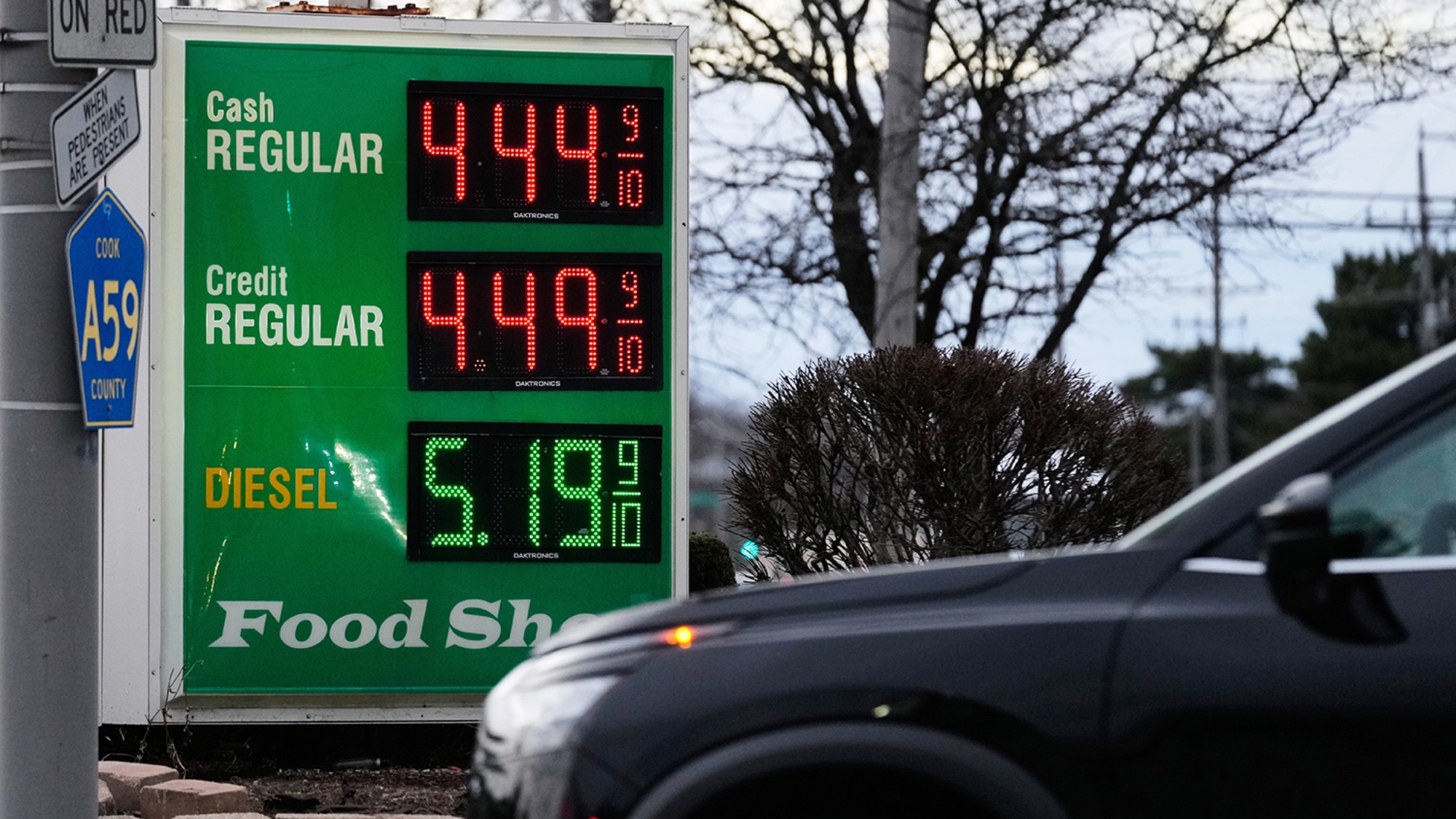
    “It’s not easy to topple a $30 trillion economy,” said Alicia Wallace in CNN.com. But if the war in Iran keeps driving fuel prices higher, things will soon “start getting dodgy” for America. With Iran’s blockade of the Strait of Hormuz stopping the export of oil from many Gulf Arab states, and missiles and drones raining down on oil and natural gas facilities across the Middle East, the International Energy Agency warned last week that the world is facing the biggest energy crisis in history. The U.S. is already feeling the shock waves. Oil has rocketed by roughly 30% to about $100 a barrel. Gasoline has hit a national average of $3.98 a gallon—up by a dollar since February—and is over $5 in California, Washington, and Hawaii. Understandably, some 45% of Americans say they are “extremely” or “very” concerned about gas prices, according to an Associated Press poll. For a “first glimpse” of where we may be headed, “look at Asia,” said Alexandra Stevenson in The New York Times. In a region that relies on Middle Eastern energy, gas stations in Thailand and Vietnam are posting “Sold Out” signs. People in India are hoarding cooking gas. Asian airlines have canceled thousands of flights, after the price of jet fuel more than  doubled—and all this after only one month of a conflict “with no clear end in sight.”

    The war is also “driving the world toward a food crisis,” said Heather Stewart in The Guardian. Hormuz is a “key choke point” in the global supply of urea, a nitrogen-based fertilizer that’s made using natural gas, and sulfur, “a by- product of oil and gas refining and another critical fertilizer ingredient.” Once farmers get hit by the “double whammy of higher energy bills and more costly fertilizer,” it could push some 45 million people around the planet into “acute hunger,” according to a U.N. estimate. Americans won’t starve, said Max Zahn in ABCNews.com, but they will pay more for everything “from groceries to smartphones.” A third of the world’s helium travels through the strait; that gas is essential for the production of microchips used in phones, AI servers, and almost all electronics. The chaos in the Middle East is also pushing up the cost of plastics, which are made of petrochemicals, and aluminum, because the region is home to several key smelters.

    There is some “good news” for Americans, said John Cassidy in The New Yorker. Thanks to decades of tightened emissions  standards—so detested by President Trump—our economy is “far less  energy- intensive” than it used to be, with “every dollar of GDP created” requiring only half the energy it needed back in 1980. As long as the war ends soon, many economists think the U.S. can probably “scrape through this year without a recession.” 

    It’s already too late, said The Economist in an editorial. Even if fighting stopped today, it would take at least four months for oil facilities in the Middle East to restart production and process backlogged crude into usable fuel, and for markets and prices to regain “some semblance of normality.” And that’s a best-case scenario, said Rogé Karma in The Atlantic. If fighting escalates instead, Iran could reach for the “doomsday option” it previewed last week, when it responded to an Israeli strike on its largest natural gas field by attacking a Qatari facility that produces 20% of the world’s supply of liquified natural gas— causing natural gas prices to spike 35% in Europe. If there are more such attacks on energy infrastructure in the  target-rich Middle East, our current energy crisis may become a global “economic catastrophe” that we’ll be living with for years.


    VIEWPOINT

    The show that never ends

    “While the president has little regard for the freedom of the press, he craves its ceaseless attention. His need has the quality of addiction. In Washington these days, there is hardly a reporter who does not have the president’s cellphone number. It is said that the best time to call is late at night while he is watching himself on TV and shitposting in his pajamas. He loves to muse aloud, then watch as those musings register in foreign capitals, and in the markets. Lately, he has been willing to say anything. The war will be over soon. Or maybe not. Whatever. Each pseudo-scoop is as ephemeral as a mayfly. But who can resist? Are you not entertained?”

    David Remnick in The New Yorker


    briefing

    Rubio’s rise

    Once derided as ‘Little Marco,’ Trump’s 2016 primary rival is now a power player in his administration.

    How influential is Rubio? 
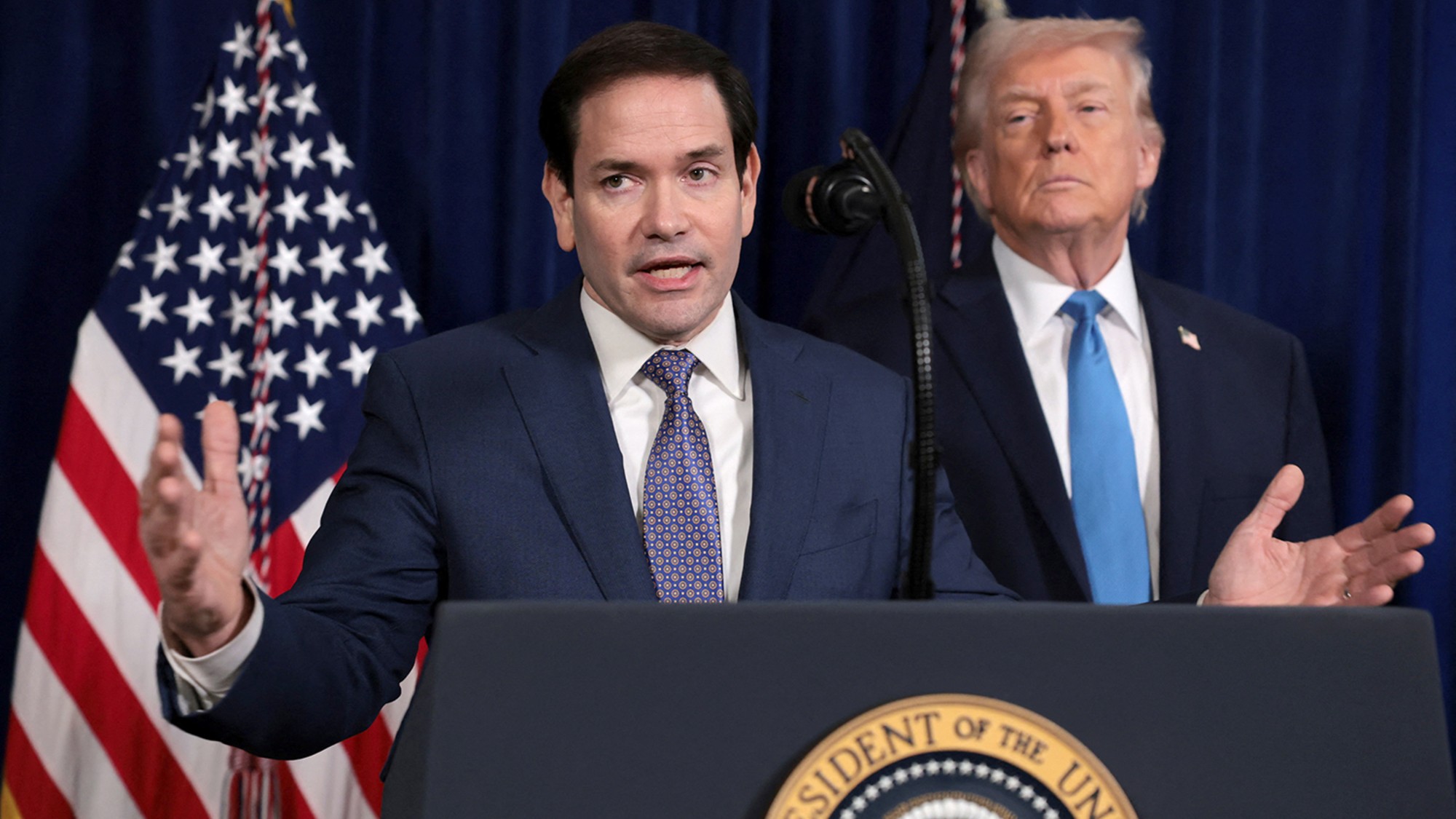
    As the first official since Henry Kissinger to serve as both secretary of state and national security adviser, the 54-year-old former senator is the most powerful foreign policy voice in the White House in decades. An executor of President Trump’s “America first” doctrine, he has presided over the dismantling of the U.S. Agency for International Development, fired hundreds of foreign service officers, and revoked more than 80,000 visas, many belonging to foreign students in the U.S. who had criticized Israel’s war in Gaza. He played a key role in planning the January raid that captured Venezuelan strongman Nicolás Maduro and was later tasked by Trump with helping to “run” the country. Rubio’s MAGA ascendance is in many ways unlikely. Battling Trump for the Republican presidential nomination in 2016, Rubio savaged his current boss as a “con artist” and made insinuations about Trump’s manhood by referencing his “small hands.” A skilled political operator, the man Trump once dismissively nicknamed “Little Marco” has since ingratiated himself with Trump, who regularly lauds him in public. “When I have a problem, I call up Marco,” Trump said in May. “He gets it solved.”

    What is his background? 
    He was born in Miami to Cuban immigrant parents, whom he for years described as “exiles,” suggesting they arrived in the U.S. after Fidel Castro seized power in 1959. In 2011, multiple outlets uncovered records showing his father, a bartender, and mother, a hotel maid, arrived in the U.S. three years before the Castro- led revolution. Still, his family’s immigrant story and staunch anti- communist beliefs became a key theme in his political career. Elected as a city commissioner in West Miami in 1998, the University of Miami Law School graduate won a seat in the Florida House two years later. Rubio impressed GOP colleagues with his drive and became the chamber’s first Cuban American speaker in 2006. Elected to the U.S. Senate on a Tea Party platform in 2010, he focused on national security; while running for president, he vowed to spread “economic and political freedom,” bolster alliances, and resist despots who “subjugate their smaller neighbors.” He ended his presidential campaign in 2016 after Trump crushed him in the Florida primary. 

    How did he become a Trump ally? 
    Reuters When Trump retreated to Mar-a-Lago following his 2020 defeat, then-senator Rubio began building bridges with his former foe. The pair spoke regularly on the phone, and as Trump prosecutions and scandals mounted, Rubio “went out of his way never to criticize the president publicly,” said one Rubio associate. When Trump ran for president again in 2024, Rubio gave an early endorsement and began wooing Trump’s children. Since becoming secretary of state, he has loudly defended the president’s policies and lauded his boss. Trump is “standing up for America in a way that no president has ever had the courage to do before,” Rubio wrote on X after Trump lashed out at Ukrainian President Volodymyr Zelensky in an explosive 2025 White House meeting. The administration is “a snake pit, but Rubio just seemed to be a little better at navigating it,” a former administration official told  Politico. He’s also proved remarkably malleable in adapting his views to the MAGA agenda. 

    How has he changed? 
    Having demanded in 2022 that President Joe Biden boost funding for USAID to counter China’s rising global influence, Rubio last year oversaw its dismantling, calling it “an agency that long ago went off the rails.” A onetime champion of immigration reform and human rights, Rubio brokered a deal to send 250 Venezuelan migrants to El Salvador’s brutal CECOT prison, where inmates have reported torture. Some former colleagues are appalled by the shift. “Rubio’s MAGA brain transplant is complete,” said Sen. Chris Van Hollen (D-Md.). But some lawmakers and diplomats insist that, behind the scenes, Rubio acts as a restraining force.

    Is there evidence of that?
    Rubio intervened on Ukraine’s behalf last November when White House special envoy Steve Witkoff was pushing a ceasefire deal that Rubio reportedly condemned as a Kremlin “wish list.” After Rubio inserted himself into U.S.-Ukrainian negotiations, the deal was revised to account for Ukraine’s red lines. And when Trump threatened to grab Greenland from Denmark this year, Rubio quietly reassured European leaders. “He’s doing his best to moderate Trump’s worst impulses,” a European foreign minister told The New Yorker. But in other instances, he’s fueled Trump’s aggression—pushing for the removal of Venezuelan strongman Maduro, whom he’d long denounced as a “narco-dictator,” and for an almost total embargo of Cuba (see box). The “stunning 10-out-of-10 success” of the Maduro capture lifted his capital with Trump, said University of Florida foreign policy professor Patrick Hulme—and boosted Trump’s confidence in his ability to impose his will abroad. “You could draw a direct line from the Maduro raid to the Iran attack.” 

    What does Rubio’s future hold? 
    Another White House bid is near certain, say observers. The question is when. Vice President JD Vance is MAGA’s heir apparent, and he dominates Rubio in early 2028 polling. The secretary of state has pledged to back Vance if he runs, and associates say he might hold his fire for a later run. But ABC News recently reported that a group of Republican donors is quietly exploring ways to boost him as a 2028 contender, and Trump has repeatedly floated Rubio as a possible successor. He has been privately polling advisers and friends about the relative merits of Vance and Rubio, according to media reports, and shown increasing fondness for the secretary of state. At a recent dinner for 25 donors at Mar-a-Lago, he asked the crowd whom they wanted: Vance or Rubio. The verdict, one attendee told NBC News, “was almost unanimous for Marco.”


    Only in America

    A Michigan school district has hired a gun-sniffing dog that doubles as an emotional support animal. Ginny, a Labrador retriever who works with a human handler, is certified in firearms detection, her primary responsibility. But Greg Guidice, CEO of Zebra K9, said Ginny is also “highly socialized” and can supply the “social, emotional component” to struggling students—while at the same time sniffing for the telltale scent of unspent shell casings.


    talking points

    MAGA: Is Trump losing control of his base?

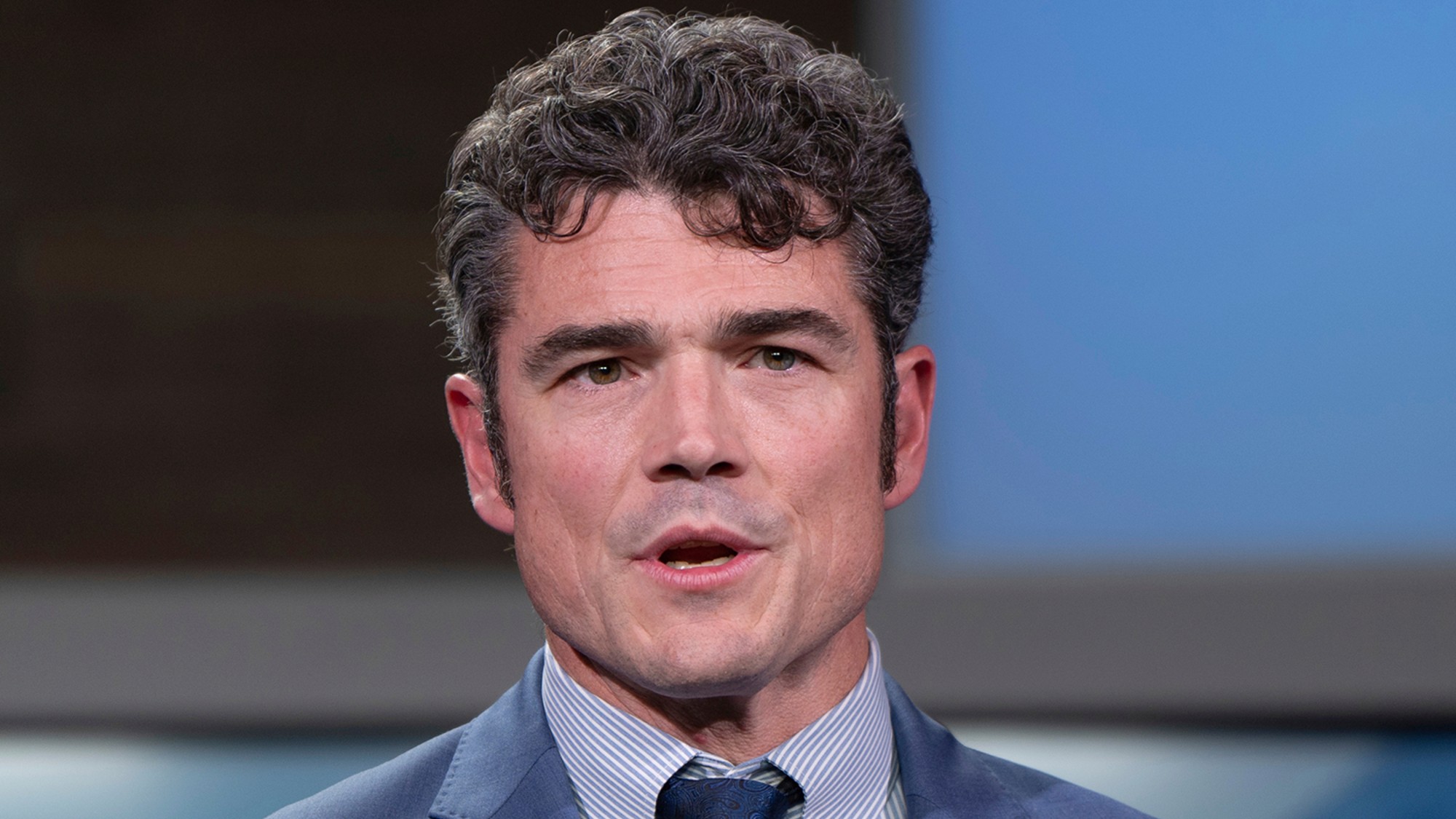
    The cracks in MAGA are getting “harder to paper over,” said Megan Messerly in Politico. When Joe Kent resigned in protest as the nation’s top counterterrorism official last week, claiming President Trump had been hoodwinked into the Iran war by “Israel and its powerful American lobby,” he revealed the “deepening battle for the soul of the Republican Party.” Many mainstream conservatives condemned the former Green Beret as a conspiracy theorist and raging antisemite “who was probably better off gone.” But among the “antiwar populist right,” Kent was hailed as a true “America first” hero. Podcasters Tucker Carlson and Candace Owens—“whose average viewership rivals CNN’s prime-time lineup”—praised him for taking a stand against a conflict that they too consider to be in Israel’s interest, not America’s. And a day after Kent’s resignation, two leading MAGA-aligned intellectuals, Sohrab Ahmari and Christopher Caldwell, declared that the war had irreparably broken a movement that was supposed to end America’s forever wars. “The attack on Iran is so wildly inconsistent with the wishes of his own base,” wrote Caldwell, “that it is likely to mark the end of Trumpism as a project.”

    Forget the “right-wing iconoclasts and dissidents,” said Noah Rothman in National Review, because MAGA remains “whatever Trump says it is.” A Politico poll this week found that 81% of self- identified MAGA voters and 70% of Trump’s 2024 voters support the war in Iran, likely because they understand that Iran is “an avowed and blood-soaked enemy of the U.S.” Trump has not alienated himself from his base; “rather, critics of the war seem to be eagerly marginalizing themselves.” The president’s real problem is not with the MAGA faithful but with independents who swung for him in 2024, said Damon Linker in his Substack newsletter. Every poll shows those voters are “deeply disenchanted with the Trump administration on nearly every front,” from the economy to foreign policy. If Trump were allowed to run again in 2028, he’d struggle to overcome “the departure of those indie voters from his electoral coalition.”

    That’s just one of the problems that will face Trump’s GOP successor, said Will Sommer in The Bulwark. In a few years, the Iran war could be as unpopular on the Right as the Iraq War is today, especially if American casualties climb higher and an energy shock shakes the economy. Vice President JD Vance and Secretary of State Marco Rubio, Trump’s heirs apparent, will “likely be stuck on the wrong side of that debate in 2028.” But America-first true believers, such as Kent and Carlson, won’t be. 


    people

    Kudrow’s comedic evolution

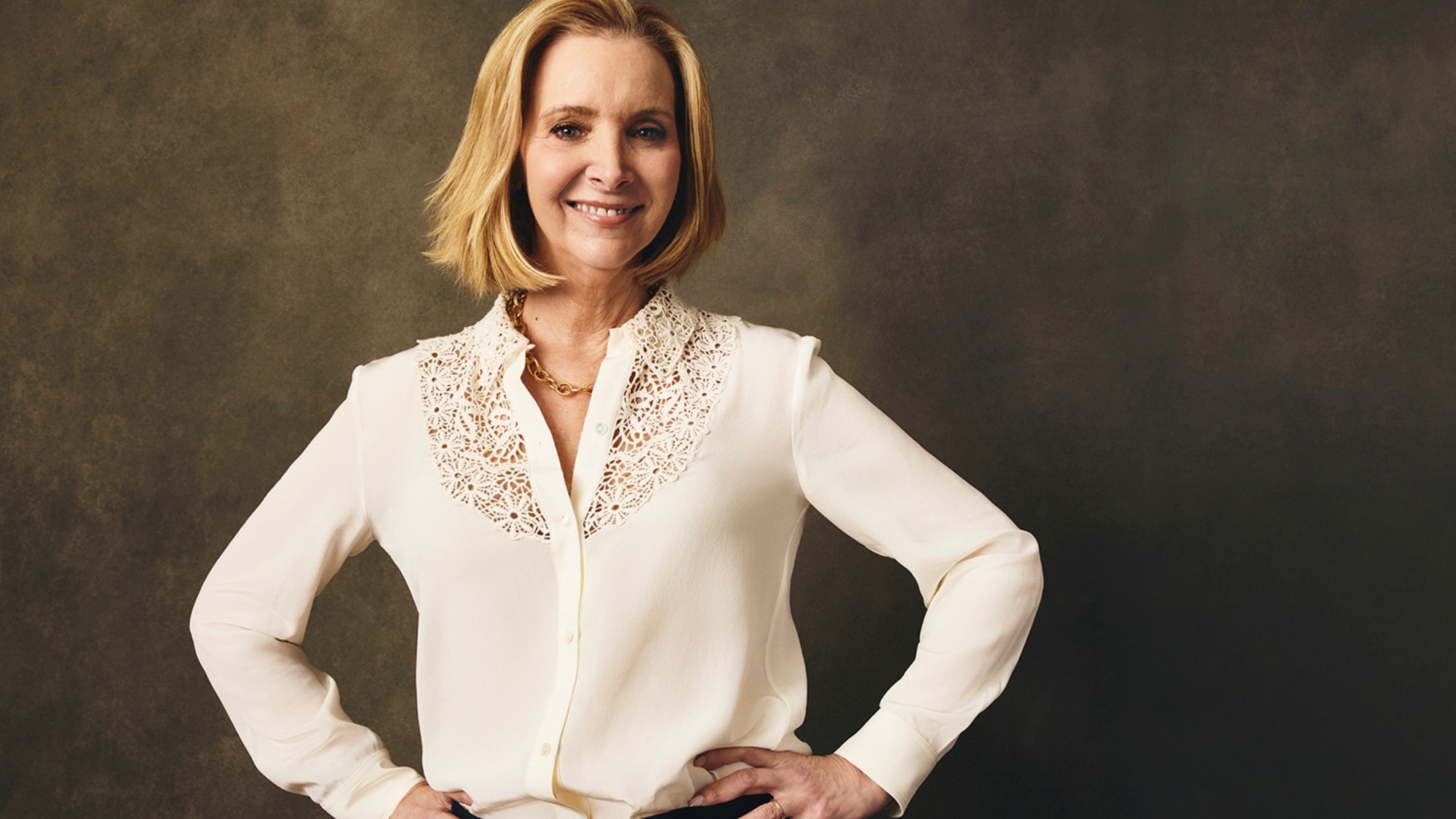
    Lisa Kudrow could have spent her career in a laboratory, said Michael Schulman in The New Yorker. Growing up in the San Fernando Valley, she showed a natural talent for comedy and acting, entertaining her friends with impersonations and bonding with her older brother’s best friend, Jon Lovitz, over a love of performing. But in high school, she gave up theater for biology, thinking she’d become a doctor like her father—a leading authority on cluster  headaches—and brother. When she arrived at Vassar College in the 1980s, she was thrilled to be among East Coast intellectuals. “Everyone thought I was an idiot, because I was smiling all the time like a California ditz,” says Kudrow, 62. In college, her focus shifted to evolutionary biology. Still, whenever she’d watch the Late Show With David Letterman, she’d note how phony his celebrity guests sounded. “All of a sudden, the thought was, ‘OK, Lisa, when you’re on Letterman, just be yourself.’ Then I’d think, ‘Wait, why would I be on Letterman? For an evolutionary-theory idea?’” After graduating in 1985, she worked at her father’s California clinic, assisting in headache research. But when Lovitz was cast on Saturday Night Live that same year, she realized she didn’t “want to have any regrets later” and decided to join the Groundlings, a comedy improv troupe. Her parents were delighted. “They went, ‘Thank God! Maybe this’ll lighten you up, and then you can meet someone.’”


    Saturday Wrap was written and edited by Theunis Bates, Conor Devlin, Chris Erikson, Bill Falk, Bruno Maddox, and Tim O’Donnell.

    Image credits, from top: AP, Reuters, AP, Getty
     

    Recent editions

    • Evening Review

      Big Tech’s ‘Big Tobacco’ moment

    • Morning Report

      Trump delays Iran strike deadline again

    • Evening Review

      The end of warfare as we know it?

    VIEW ALL
    TheWeek
    • About Us
    • Contact Future's experts
    • Terms and Conditions
    • Privacy Policy
    • Cookie Policy
    • Advertise With Us
    • FAQ
    Add as a preferred source on Google Add as a preferred source on Google

    The Week UK is part of Future plc, an international media group and leading digital publisher. Visit our corporate site.

    © Future Publishing Limited Quay House, The Ambury, Bath BA1 1UA. All rights reserved. England and Wales company registration number 2008885.