The Week The Week
flag of US
US
flag of UK
UK
https://cdn.mos.cms.futurecdn.net/flexiimages/jzblygzdxr1769609154.gif

SUBSCRIBE

Try 6 weeks free

Sign in
  • View Profile
  • Sign out
  • The Explainer
  • Talking Points
  • The Week Recommends
  • Podcasts
  • Newsletters
  • From the Magazine
  • The Week Junior
  • More
    • Politics
    • World News
    • Business
    • Health
    • Science
    • Food & Drink
    • Travel
    • Culture
    • History
    • Personal Finance
    • Puzzles
    • Photos
    • The Blend
    • All Categories
  • Newsletter sign up Newsletter
  • The Week’s Saturday Wrap
    A wartime purge, the spike in capital punishment, and Pam Bondi’s exit

     
    controversy of the week

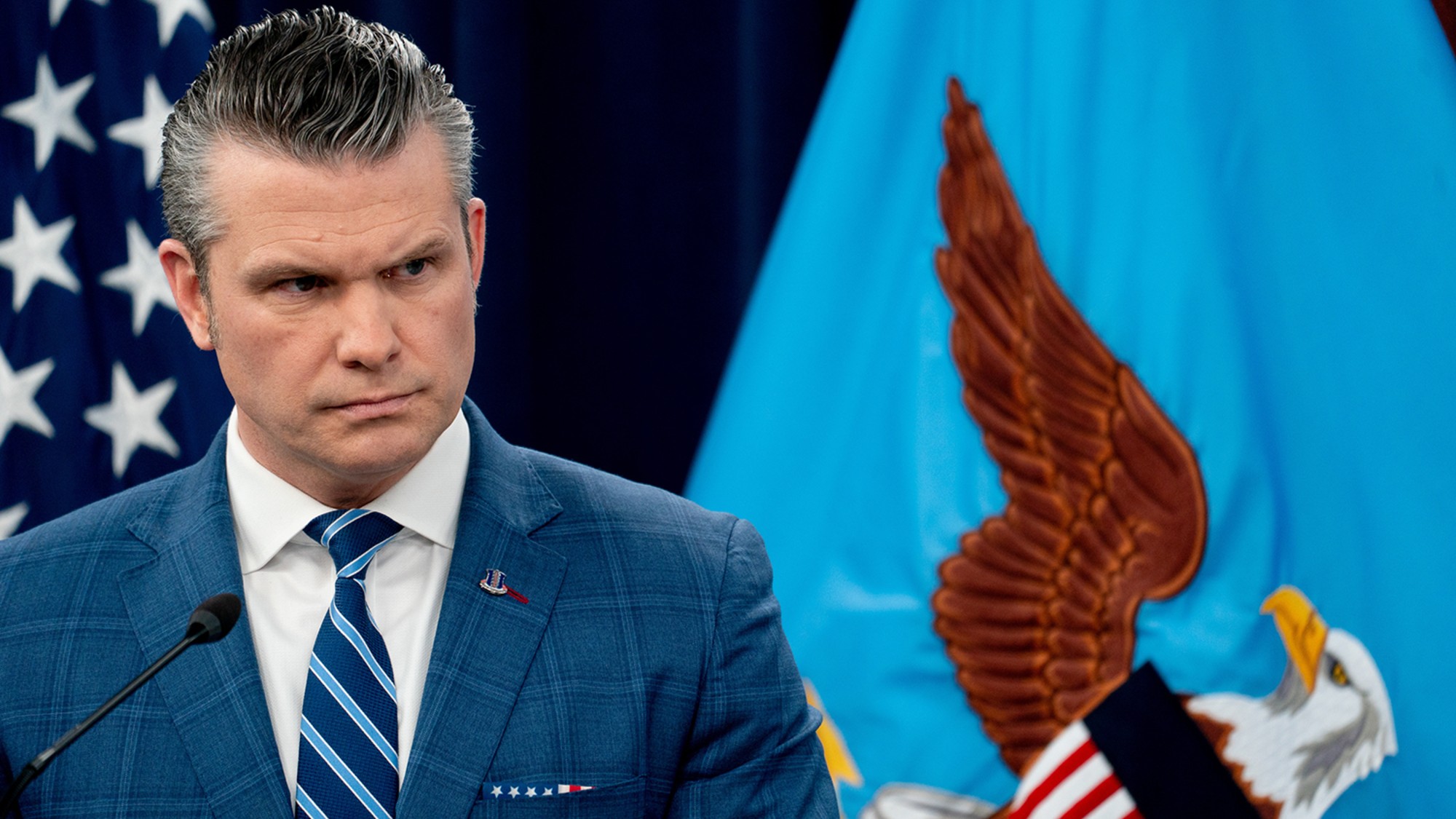
    Hegseth: Why is he purging the Pentagon?

    For the past month, the American military has been focused on the war in Iran, said Tom Nichols in The Atlantic. At no point, however, did Defense Secretary Pete Hegseth let that distract him from his true passion: the “culture war.” Last week, after quashing an investigation of the two Army Apache helicopter crews who gave a private fly-by at the Tennessee home of MAGA rapper Kid Rock, Hegseth abruptly demanded the resignation of Gen. Randy George, the Army’s chief of staff and highest-ranking officer. The Pentagon gave no explanation for his de facto firing, or the simultaneous dismissal of Maj. Gen. William Green Jr., the top Army chaplain. But reportedly it came after George requested a meeting to protest Hegseth’s decision to remove two women and two black men from a list of colonels due to be promoted to general. The former Fox News host has been conducting a “rolling purge” of women and minorities over the past year, ending dozens of distinguished careers. But to fire a leader of George’s caliber when more than 50,000 U.S. troops are deployed in harm’s way in the Middle East was “a reckless move even by Hegseth’s standards.” We’ve long known about Hegseth’s “virulent racism and repugnant sexism,” said David Rothkopf in the Daily Beast. We did not know he was so committed to those prejudices that he would fire the Army chief of staff “in the middle of a war.”

    Charges of racism and sexism miss the point, said Garrett M. Graff in his newsletter. Hegseth sees the expanded visibility of blacks and women in the military as proof of “institutional rot,” a product of the same enfeebling “woke” mindset that imposes rules of engagement and prosecutes soldiers for war crimes. An unapologetic Christian nationalist, Hegseth imagines himself a holy “warrior saving ‘Western civilization’ from ruinous barbarism” in all its forms, said Greg Sargent in New Republic. When he recently implored God at a Pentagon worship session to “break the teeth of the ungodly” and deliver their “wicked” souls “to the eternal damnation prepared for them,” he could as easily have been referring to the architects of U.S. DEI initiatives as to the mullahs in Iran.

    None of that is why George was fired, said Steven Nelson in the New York Post. Pentagon insiders say Hegseth has lately grown “paranoid” that President Trump might replace him with Army Secretary Daniel Driscoll, with whom Hegseth has often clashed. Hegseth can’t fire Driscoll because he’s a close friend of Vice President JD Vance. So instead, he fired Driscoll’s top aide—George— in hopes that the Army secretary would resign. It didn’t work, said Dan Lamothe in The Washington Post. In an unusual statement to this outlet, a defiant Driscoll said this week that “serving under President Trump has been the honor of a lifetime,” and “I have no plans to depart or resign as the Secretary of the Army.”

    Hegseth needn’t worry…yet, said Nick Catoggio in The Dispatch. For Trump to fire him now would seem like an admission that the Iran war didn’t go to plan. But as the unpopular conflict winds down, Trump will need scapegoats, and this “preposterous he-man try-hard” could quickly find himself back on the couch at Fox News, “hawking ED pills or whatever.” That would be a better fit for a man more adept at “fighting culture wars than actual wars,” said Max Boot in The Washington Post. But America will be dealing with the “damage Hegseth has done,” to the military’s morale, reputation, and the caliber of its leadership, “long after he’s gone.”


    VIEWPOINT

    Institutions must rebuild trust

    “The electoral success of populists, autocrats, and demagogues from Donald Trump to Alternative für Deutschland is the result of collapsing trust, not the cause of it. The great  institutions—the churches, the government, the press, the universities, the professional communities and organizations at the commanding heights of business and culture—have given many people substantial reasons to doubt them. The great demagogues have encouraged that doubt, often inflaming it beyond what is reasonable. Social capital accumulated over decades and centuries is not easily replenished. If you think this problem is going to resolve itself by some mysterious self-actuating means at noon on Jan. 20, 2029, then you are going to be disappointed.”

    Kevin D. Williamson in The Dispatch


    briefing

    The return of executions

    States put to death 47 people last year, double the recent norm. What’s behind the rise?

    How common is execution? 
    It has varied over the decades, as public opinion sways for and against it. Hangings were frequent in colonial times, but by the mid-1800s some states had abolished the death penalty altogether. In 1972, the Supreme Court ruled that Georgia’s death penalty as then applied was arbitrary and discriminatory, forcing all states to rewrite their laws and beef up their systems to provide for death row defense lawyers. Executions then resumed in 1977, when double murderer Gary Gilmore was put to death by firing squad. A steady rise in state-level executions followed, reaching a peak of 98 in 1999 and then declining again. In recent years, the number of states abolishing the death penalty has grown, yet executions have surged in a handful of the 27 states where it remains legal. Last year, 11 states carried out 47 executions, the most since 2009. At the federal level, President Trump broke a 17-year moratorium in the final months of his first term, when he approved 13 executions in rapid succession. “We owe it to the victims and their families,” said then-attorney general Bill Barr, “to carry forward the sentence imposed by our justice system.” 

    Why did Trump bring it back? 
    He’s always been in favor of the ultimate punishment. In 1989, long before he entered politics, Trump bought full-page newspaper ads calling for New York to “bring back the death penalty” after five Black and Latino teenagers—all of whom were later exonerated—were arrested on suspicion of raping a woman in Central Park. During his 2024 presidential campaign, he promised to “vigorously pursue the death penalty to protect American families and children from violent rapists, murderers, and monsters.” Last year, he instructed the Justice Department to pursue federal death sentences when possible and to assist states in carrying out executions. After Iryna Zarutska, a 23-year-old Ukrainian refugee, was stabbed to death on public transit in Charlotte last August, Trump called for her killer to be quickly sentenced to death. “There can be no other option,” he said. 

    How have states responded?
    North Carolina, which has not carried out an execution since 2006, swiftly passed what legislators called “Iryna’s Law,” expediting the execution process and broadening available execution methods. Ron DeSantis, Florida’s Republican governor, has been in “lockstep” with Trump’s pro-death-penalty agenda, said Maria DeLiberato of Floridians for Alternatives to the Death Penalty. Last year, Florida overtook Texas in carrying out the most executions, accounting for 19 of the 47 state-level executions in 2025. So far this year, Florida has executed four death row inmates; a fifth is scheduled for execution later this month. 

    Is Florida an outlier? 
    Pretty much. Upset after three jurors voted to spare the life of the Parkland school shooter, who had killed 17 people in 2018, state legislators passed a new law requiring only eight of 12 jurors to authorize a death sentence. That’s the lowest bar for execution of any state. Florida also passed the TRUMP Act, which mandates a death sentence for undocumented immigrants who commit capital crimes. Yet outside of Florida, the death penalty has been “losing its legitimacy,” says the American Civil Liberties Union’s Cassandra Stubbs. Last year, juries returned 23 death sentences nationwide; 30 years ago, the figure was over 300. While capital punishment is practiced by fewer jurisdictions, those that do it use it often. Just 2% of U.S. counties, most of them in the Southeast, account for 60% of America’s death row inmates.  

    What do Americans believe?
    Public opinion is currently split, but support for capital punishment is waning. Some 52% of American adults back the death penalty for convicted murderers, according to a 2025 Gallup poll, down from 80% in 1994. But younger Americans are markedly less supportive than older ones, and the share of adults who believe the death penalty is applied unfairly has risen steadily and is now also right around 50%. Kirk Bloodsworth, a former death row inmate exonerated by DNA evidence in 1993, told National Geographic that people often rethink their stance on criminal penalties when they learn “how easy it is” to be convicted of a crime you didn’t commit. Still, pro-execution sentiment remains strong for particularly heinous crimes with clear perpetrators. “How much worse would the crime have to be to warrant the death penalty?” said Annika Dworet, whose son Nicholas was killed in the Parkland shooting at age 17. 

    Why is support declining? 
    Because faith in the system is, too. More than 200 death row inmates have been exonerated since 1973, thanks to DNA analysis and other investigative advancements. Blacks and Latinos make up 34% of the U.S. population but account for 53% of death row, which suggests there is racial bias in sentencing. The cost of maintaining death row prisoners and a number of botched executions in recent years—lethal injections or gas administrations that take far too long to work, for example—have also undermined confidence. Meanwhile, the U.S. rate of homicide, the crime most likely to engender a death sentence, is at its lowest level in at least 125 years, according to the Council on Criminal Justice, a nonpartisan think tank. And despite the upsurge in executions in a few jurisdictions, juries across the U.S. are returning fewer new death sentences. “Today’s death sentences are tomorrow’s executions,” says Corinna Barrett Lain of the University of Richmond School of Law. “If you don’t have new death sentences feeding the machinery of death, the death penalty will die on the vine.” 



    Only in America

    Some high schools in Florida and Georgia are deploying swarms of security drones to take down active shooters. The drones, from Texas-based Mithril Defense, lie dormant in ceiling- mounted boxes until activated, then can fly down hallways at up to 100 mph to engage shooters with strobe lights and pepper gel. “We don’t care if we get shot,” said Mithril chief drone pilot Christian Van Sloun. “We’re metal and plastic.”


    It wasn’t all bad

    Deaf 7-year-old Ben O’Reilly no longer feels lonely, after his entire elementary school decided to learn sign language. When the first  grader started at Campton Elementary in Campton, N.H., he could only communicate with his aide, Cheryl Ulicny, and had trouble forming relationships with his teacher or the other kids. But after classmate Reid Spring picked up a few signs so he could play with Ben, the rest of the class followed, and then the whole school. “His world opened up,” said Ulicny. “It was amazing.”


    talking points

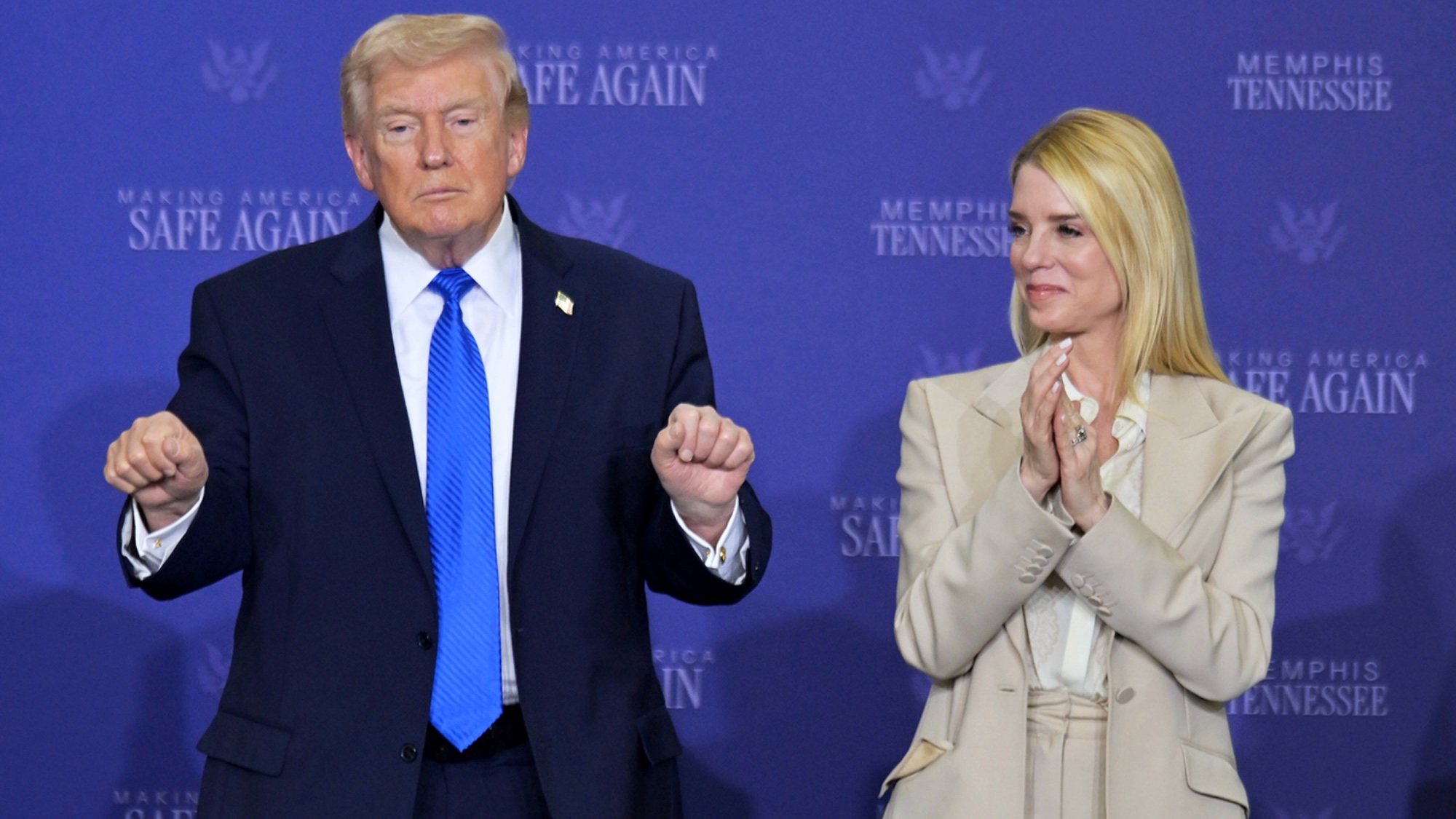
    Bondi: The firing of an attack dog

    Pam Bondi has discovered that “loyalty can get you a job with President Trump,” said Lindsey Granger in The Hill, “but it certainly won’t help you keep it.” The attorney general was fired last week despite trying to do everything the president wanted. Over her 14-month tenure she purged scores of career prosecutors perceived as insufficiently MAGA, shuttered Justice Department offices that had probed Trump and his pals, and conducted lawfare against his political opponents. “But in the end, that just wasn’t enough.” Sources said the president was especially frustrated that Bondi hadn’t been more successful in prosecuting foes like former FBI boss James Comey and New York Attorney General Letitia James. Never mind that those cases “didn’t fail for lack of effort—they failed because they were weak.” With Bondi ousted just weeks after Homeland Security Secretary Kristi Noem, other top administration officials are now wondering if they’ll be next to hear “You’re fired,” said Matt Dixon and Peter Nicholas in NBCNews.com. Trump advisers say National Intelligence Director Tulsi Gabbard, Labor Secretary Lori Chavez-DeRemer, and Commerce Secretary Howard Lutnick are all at risk of being booted. 

    Bondi’s real sin in Trump’s eyes was that “she couldn’t make ‘it’ go away,” said LZ Granderson in the Los Angeles Times. “And you know what I mean about ‘it.’” She fueled the public obsession with Jeffrey Epstein by telling Fox News in early 2025 that the sex trafficker’s “client list” was “sitting on my desk right now.” There was no client list, and the resulting furor led to a bipartisan law that forced the release of the DOJ’s Epstein files—which contain hundreds of references to the financier’s former friend, Donald Trump. Bondi was an incompetent lackey, said the New York Daily News in an editorial. But “her firing bodes ill for the state of our democracy” because whoever comes next could be even worse. Acting DOJ boss and former Trump lawyer Todd Blanche has already declared his hostility to the rule of law, saying this week that it’s the president’s “duty” to influence investigations against his political opponents. 

    Can anyone succeed at the Justice Department “given Trump’s expectations?” asked The Wall Street Journal. The president wants an AG who’ll twist the law to his whims, but judges and juries will still refuse to play along. Trump needs an attorney general who will give sound legal advice, and— as then-AG Bill Barr did in 2020 when Trump demanded the Justice Department unearth nonexistent evidence of election fraud—say no. But that’s a word the “boss doesn’t want to hear.”


    people

    Hall’s magic journey

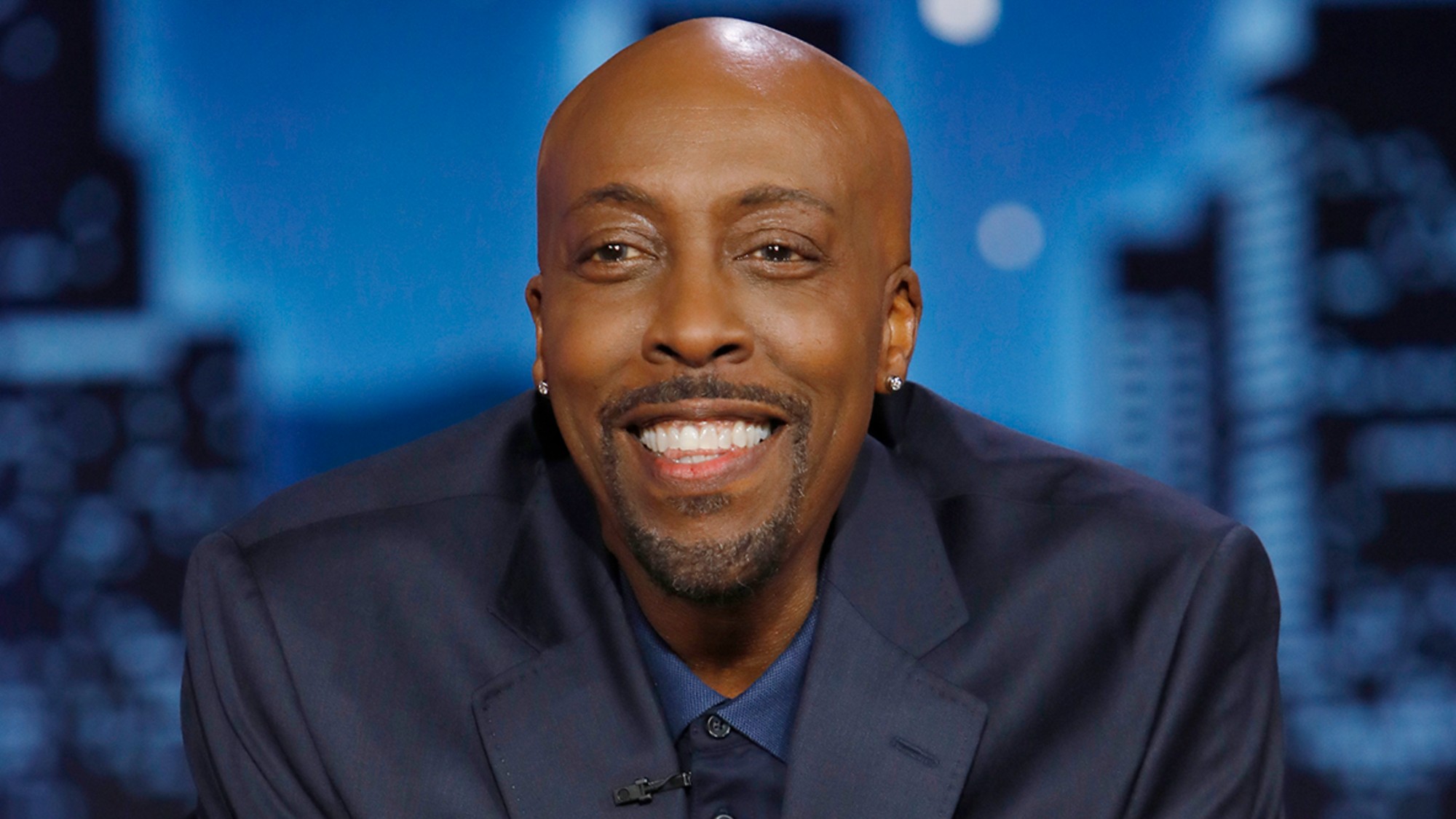
    Arsenio Hall has been in show business his whole life, said Vinson Cunningham in The New Yorker. Long before he starred alongside Eddie Murphy in 1988’s Coming to America or interviewed celebrities on his late-night show in the 1990s, the Cleveland native started out as a child magician performing for other kids in his neighborhood. Later he traveled to magic conventions and secured gigs at ritzy parties. “I was my own publicist,” says Hall, 70. “I was my own manager, even though I didn’t know what those words meant. I’m a kid who discovered the business through the need for things versus an education in Hollywood.” Then, a fire at his grandmother’s house destroyed most of his magic act. He thought, “God was telling me no,” until one night when Hall took his mother to see Al Green. A stand-up comic opened the show, and Hall—who always loved telling jokes between his tricks—was inspired to become a comedian. “As a magician, I had big boxes and live doves. But this dude walked onstage with a glass of juice, and he had a towel on the stool. And I’m, like, post-fire, ‘That’s my calling.’ It’s a quick moment, but you say, ‘That’s what I’m going to do next. I don’t have to carry a lot of stuff. All I need is a towel and a glass of juice.’”


    Saturday Wrap was written and edited by Theunis Bates, Susan Caskie, Conor Devlin, Bill Falk, Bruno Maddox, and Tim O’Donnell.

    Image credits, from top: Getty, AP, Getty
     

    Recent editions

    • Evening Review

      Irish fuel protests spark chaos

    • Morning Report

      Israel agrees Lebanon talks but continues strikes

    • Evening Review

      Has China won the war in Iran?

    VIEW ALL
    TheWeek
    • About Us
    • Contact Future's experts
    • Terms and Conditions
    • Privacy Policy
    • Cookie Policy
    • Advertise With Us
    • FAQ
    Add as a preferred source on Google Add as a preferred source on Google

    The Week UK is part of Future plc, an international media group and leading digital publisher. Visit our corporate site.

    © Future Publishing Limited Quay House, The Ambury, Bath BA1 1UA. All rights reserved. England and Wales company registration number 2008885.