The Week The Week
flag of US
US
flag of UK
UK
https://cdn.mos.cms.futurecdn.net/flexiimages/jzblygzdxr1769609154.gif

SUBSCRIBE

Try 6 weeks free

Sign in
  • View Profile
  • Sign out
  • The Explainer
  • Talking Points
  • The Week Recommends
  • Podcasts
  • Newsletters
  • From the Magazine
  • The Week Junior
  • More
    • Politics
    • World News
    • Business
    • Health
    • Science
    • Food & Drink
    • Travel
    • Culture
    • History
    • Personal Finance
    • Puzzles
    • Photos
    • The Blend
    • All Categories
  • Newsletter sign up Newsletter
  • The Week’s Saturday Wrap
    The hantavirus threat, a plea to ignore the trolls, and a disappointing UFO file dump

     
    controversy of the week

    Hantavirus: Are we ready for another pandemic?

    No one should panic, but this is “certainly a worrying chain of events,” said Tara C. Smith in MS.now. Last week, news broke that three people aboard the Dutch cruise ship MV Hondius had died of suspected hantavirus, a respiratory disease with no cure or vaccine. The Hondius was eventually allowed to dock in Tenerife, Spain. But before the pathogen was identified, some 30 passengers had disembarked and flown home to 12 countries, potentially seeding the planet with a virus that kills 38% of its victims. A six-week incubation period means we don’t yet know the extent of the outbreak. But at least eight other Hondius-linked infections have been confirmed, and 18 Americans are being monitored, two at containment facilities in Atlanta—one of those passengers is symptomatic—and 16 in Nebraska. “I hope it’s fine,” said President Trump. But Trump also hoped it would be fine in February 2020, when passengers on another ship, the Diamond Princess, started dying from Covid-19. And back then, we were still part of the World Health Organization—Trump ordered the U.S. out last year—and conspiracy theorist Robert F. Kennedy Jr. wasn’t our health secretary. “We are in the hands of the madmen now,” said Charles P. Pierce in Esquire. “An outbreak of any disease more serious than Covid, and this country is in a world of hurt.”

    This story is certainly “tragic,” said Lisa Jarvis in Bloomberg. The first two fatalities, a Dutch couple, were probably infected through exposure to rat droppings while bird-watching in Argentina. But “this likely isn’t the opening scene for a bigger, scarier movie.” The human-transmissible strain of hantavirus is not very infectious, requiring prolonged contact with someone already suffering symptoms. Standard public health measures have contained previous outbreaks, the worst being a 2018 outbreak in Epuyén, Argentina, in which 11 died. Experts say there’s little reason to fear the new cluster will “turn into anything bigger.”

    Which experts? asked Zeynep Tufekci in The New York Times. Microbiologist Gustavo Palacios, who studied the Epuyén outbreak, is “baffled” by these reassurances. In Epuyén, a single guest at a birthday party infected five others in 90 minutes, and the widow of one victim infected 10 more people at his wake. These “super-spreader” events suggest the virus could spark a pandemic. We may have been spared in 2018 because Epuyén is an “isolated rural village in Patagonia.” The 2026 Hondius outbreak, by contrast, has already gone global and, as with the early days of Covid, global health leaders are erring on the side of reassurance rather than sharing, “accurately and loudly,” what little we know about this terrifying virus.

    In the U.S., the response has been “sluggish,” said Apoorva Mandavilli, also in the Times. It took a week after WHO formally confirmed the hantavirus infections for the administration to hold its first briefing, and a month after the first death to set up a CDC task force. Hollowed out by Trump and Kennedy, our health agencies aren’t remotely ready for another pandemic, said Katrine Wallace in StatNews. Not so our post-Covid infrastructure of misinformation, that “network of influencers, conspiracy accounts, and partisan personalities.” They’re already spinning this outbreak as further proof that “scientists are corrupt, vaccines are the real threat” and hawking ivermectin from “the link in their bio.” It’s this new infrastructure, along with Trump’s vandalism of the old one, that will hurt us the most should another pandemic arrive. “And one will.” 


    VIEWPOINT

    Ignore the trolls and feel better

    “You may have noticed that social media and comment sections [on online articles] tend to become more toxic over time. This is because well-adjusted people are not interested in interacting with psychopathic sadists, and go silent, leading online forums to become dominated by trolls trolling one another. Staying silent is smart, for the sake of your mental health. No one’s opinions are changed by your snark. Even if your motivation is truly to convince someone, the more you abuse them, the stronger their views become; this is known as the ‘boomerang effect.’ You must neither feed nor read the trolls.”

    Arthur Brooks in The Free Press


    briefing

    A dangerous high

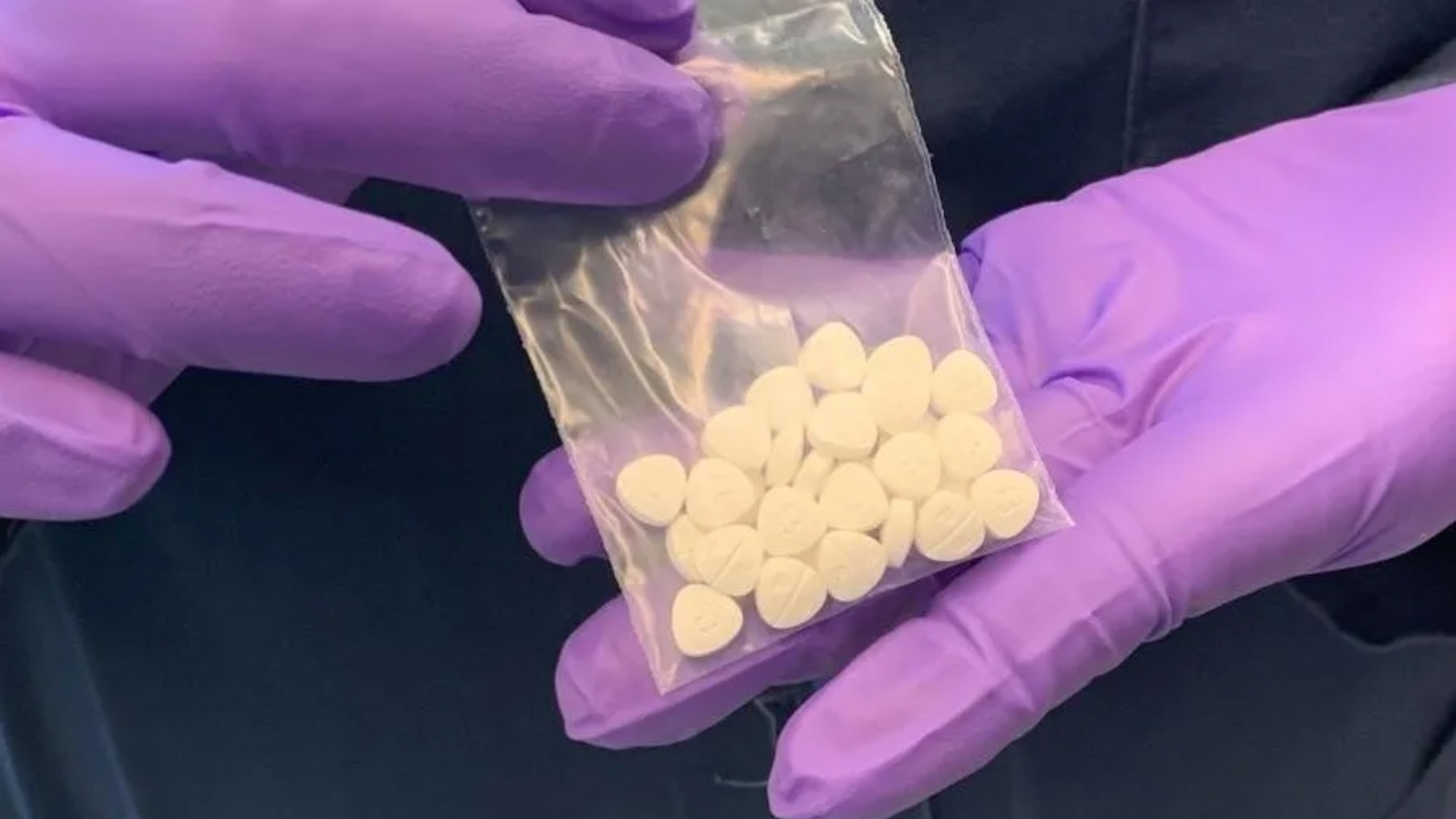
    The U.S. is being flooded with synthetic drugs that are cheap to make, hard to track, and fraught with risk.

    Are synthetic drugs new? 
    Lab-made or “designer” drugs have been around for decades. LSD is synthetic, and so is methamphetamine. But what’s new is the dizzying scale and variety of synthetic intoxicants and their increasing dominance of the drug market. Traditionally, most illicit drugs have come from plants that are cultivated on a large scale, such as marijuana, opium and heroin from poppies, and cocaine from coca leaves. But those plant-based drugs are being supplanted—or adulterated—by synthetic stimulants, opioids, and cannabinoids made in clandestine labs that are far cheaper and easier for traffickers to produce and transport. They’re also far deadlier. Some 80,400 Americans died of drug overdoses in 2024, nearly 70% more than a decade earlier; synthetic opioids, mainly fentanyl, accounted for nearly 68% of those deaths. Fentanyl, which is 50 to 100 times more potent than heroin, is now giving way to even deadlier compounds such as the 10-times more powerful cychlorphine. In Knoxville, Tenn., a national cychlorphine hot spot, at least 50 overdoses involving the drug have been confirmed in the past six months. “This is the modern drug epidemic,” said Bob DuPont, U.S. drug czar under presidents Richard Nixon and Gerald Ford. “It’s like nothing that’s happened in the world before—anywhere.”

    How many synthetic drugs are there?
    More than 1,460 new psychoactive substances have been recorded by the U.N. Office on Drugs and Crime since 2013, tripling in just over a decade. And new compounds are popping up with staggering speed, leaving law enforcement scrambling to keep up. “Once a month or every other month, we’re encountering something that we’ve never seen before,” said Ed Sisco, a research chemist who tracks street drugs for the federal government. One reason traffickers keep inventing new drugs is to stay ahead of the law: the moment a compound is identified and made illegal, narcochemists—sometimes aided by artificial intelligence—tweak its molecular structure to get around the law. “Each time we get rid of one substance,” said forensic scientist Alex Krotulski, “they come up with something more potent.”

    What are these new drugs?
    They run the gamut. There are sedatives such as xylazine, street-named Tranq, an animal tranquilizer that can cause fleshrotting skin lesions and is frequently mixed with fentanyl. Last month, the CDC warned about the rise of medetomidine, or “Rhino tranq,” which is up to 200 times more potent and doesn’t respond to conventional overdose-reversal treatments like naloxone. There are hundreds of synthetic cannabinoids, such as K2 and Spice, sold at smoke shops and convenience stores across the U.S.; they can yield a weed-like high and can also cause agitation, delusions, seizures, kidney damage, and, in extreme cases, death. There are cathinones, stimulants modeled on MDMA that “hijack the dopamine system in the brain” and thus are “extremely addictive,” said Michael Baumann of the National Institute on Drug Abuse. “There’s a reason why chemists would design these.” Nitazenes are an even bigger category.

    What are nitazenes?
    Developed as painkillers in the 1950s, this family of synthetic opioids was never approved for clinical use because of its staggering potency. Some nitazenes are so powerful that under 2 milligrams—the equivalent of a few grains of sand—can kill a person by shutting down breathing. Since they surfaced in the U.S. in 2019, the drugs have caused at least 2,000 overdose deaths. The newest worry is a different class of synthetic opioids called orphines, which include cychlorphine. Joe Guy, sheriff in McMinn County, Tennessee, an hour south of Knoxville, notes one issue common among synthetic drugs: wildly varying potency that makes ingestion a crapshoot. “One pill, one hit, can literally end your life,” said Guy. And because traffickers often use cheap new synthetics to boost narcotics such as fentanyl and heroin, or even substitute them for various pills, drug consumers very often don’t even know what they are taking. Authorities in Arkansas last week confirmed the state’s first known cychlorphine death: an unidentified man who took what he thought was an oxycodone pill, which was actually laced with the more powerful orphine. “This is mass-produced deception,” said Ted Brown, head of the Arkansas Crime Laboratory. 

    Where are these drugs coming from?
    The federal government pegs the primary source as Mexican cartels using chemicals sourced from China. Other synthetic drugs come directly from China and sometimes India, and are cut and sold by small domestic operators. Efforts have been made to stem the flow of raw materials, but with unintended consequences. When China tightened controls on chemicals used in fentanyl in 2019, narcochemists researched alternatives and revived production of nitazenes. Last summer, China banned nitazenes—which may have led to the sudden rise of cychlorphine. 

    Is there a better way to respond?
    On the street level, there are calls for wider distribution of naloxone, and for educating young people about the dangers that may lurk inside a pain pill or a bag of synthetic cannabinoids. On the enforcement front, there are moves to increase global cooperation to disrupt supply chains, stem trafficking, and identify emerging threats. To that end, the Biden administration in July 2023 launched the 160-nation Global Coalition to Address Synthetic Drug Threats; China has not yet joined the group. But some experts emphasize that the era of synthetic drugs underlines the need to address the root factors that make users seek out drugs, given the futility of targeting a supply that’s constantly expanding and shifting. “Today is the most dangerous time in the history of the world to be using drugs,” said Andrew Monte, who runs the Rocky Mountain Poison Center. “That’s until tomorrow, when there’s a new drug.”




    Only in America

    Americans can now sign up for a “Jesus-centric” nationwide phone network that will block pornography and LGBTQ-related content. Radiant Mobile founder Paul Fisher says God personally ordered him to launch the $30-a-month service, while chief operating officer Chris Klimis says he joined Radiant in part to protect his six children from online porn. “We’ve got to figure out some way to close the door to the digital space,” said Klimis. 


    It wasn’t all bad

    After a lifetime of delays, Dawn Zuidgeest-Craft fulfilled one of her bucket list priorities: She became a doctor. The 72-year-old grandmother of three had a long career as a nurse practitioner. But after her husband nearly died in 2020, Zuidgeest-Craft decided to live without regrets and enrolled at St. James School of Medicine in the Caribbean. She will become the school’s oldest-ever graduate this month and begin a three-year residency in family medicine at a Michigan hospital in July. Her motto? “Never say never.”


    talking points

    UFOs: The Pentagon’s dud disclosure

    White spots on the moon. Black dots on an infrared sensor. A collection of eyewitness statements. “Congratulations,” said Newsweek in an editorial, “you’re pretty much caught up on the first batch of UFO files released by the Pentagon.” For months, President Trump has been teasing that the Defense Department holds “very interesting documents” on UFOs that would be released “very, very soon.” And last week, the Pentagon made good on that pledge, declassifying 162 documents, videos, and photos from “unresolved cases” in which the government couldn’t “make a definitive determination on the nature of the observed phenomena.” Those files, which date from 1947 to 2023, include dozens of testimonials from astronauts, federal agents, and civilians who claim to have seen strange objects in the sky— Gemini VII astronaut Frank Borman said he saw a “bogey” containing “hundreds of little particles” after reaching orbit in 1965. There’s also low-resolution images of flying blobs that could be balloons, drones, or other non-extraterrestrial objects. So does any of this prove aliens have been visiting Earth? “As things stand, the files say implicitly what officials won’t explicitly: No.”

    This was always going to be anticlimactic, said astrophysicist Neil deGrasse Tyson in The New York Times. For decades, we’ve had to listen to supposed whistleblowers tell us about “the crashed flying saucers, extraterrestrial bodies, and alien technology in our possession”—but always “hidden in undisclosed places.” And after a succession of ex-military pilots and government officials testified about their close encounters to Congress in 2023, 2024, and 2025, “what’s left to learn?” At this point, I just want one of these “alien insiders” to show me “an actual alien. Alive or dead or undead. Preferably alive. Is that too much to ask for?” The Pentagon has promised new document dumps on a rolling basis, and perhaps those releases will confirm “we are not alone,” said Will Rahn in The Free Press. But for now, we’re where we’ve always been: “guessing and groping for answers in the dark of the cosmos.”

    Maybe we’re looking for answers in the wrong places, said astrophysicist Adam Frank in The Atlantic. Instead of hoping for great revelations from the government, we should consult the astrobiologists who right now are using powerful telescopes to search “for alien life where it lives, on alien worlds.” One day, “perhaps long after the current UFO-disclosure frenzy is over,” astronomers might present us with “hard evidence that life is either common or rare in the galaxy. That will be the only disclosure day history remembers.”


    people

    The fans who really get Odenkirk

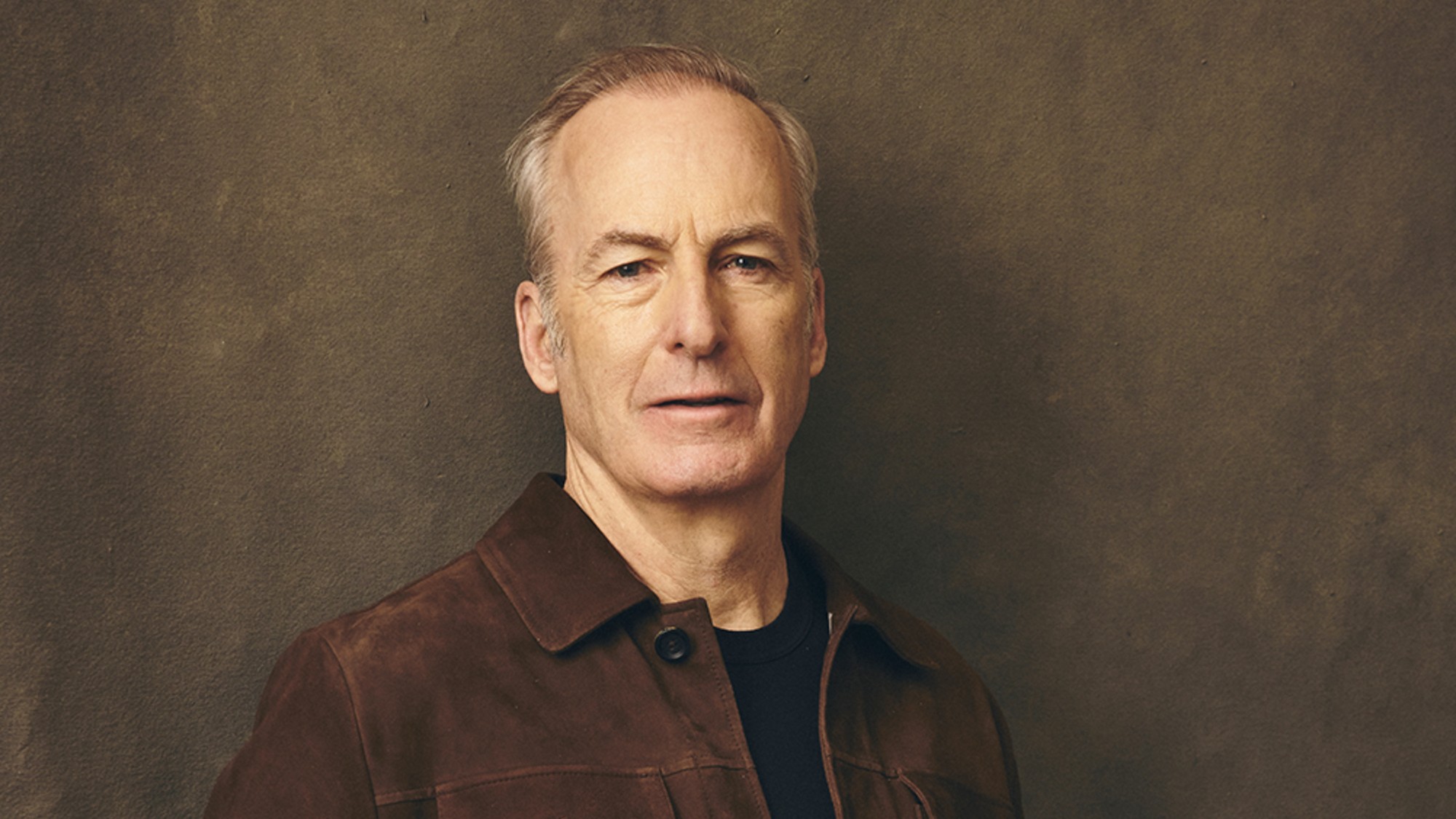
    For a brief time, Bob Odenkirk enjoyed just the right amount of fame, said David Marchese in The New York Times. Before breaking out as crooked lawyer Saul Goodman in Breaking Bad and Better Call Saul, he was best known for co-creating and co-starring in HBO’s cult 1990s sketch comedy series Mr. Show With Bob and David. At the time, “I thought this is the perfect level of success. If there’s a person in the room who knows who I am, I can tell you who they are,” says Odenkirk, 63. “They will have a tattoo from one of my shows. They will love me a lot. And everyone else in the room will not know me at all and I can just be myself.” Now if he steps into an elevator there’s a good chance everyone will recognize him. “But how they know me is wildly varied. The person who knows me from Better Call Saul, they don’t know me. They know this character I played that is not me at all.” While Odenkirk is today more famous for his dramatic acting, he still believes sketch comedy “is the most profound expression of human existence there is. I wish that we were worthy of being taken apart and observed in subtle and complex ways. But people are sadly limited, so limited that you can share everything that’s important about them in four minutes.”


    Saturday Wrap was written and edited by Theunis Bates, Chris Erikson, Bill Falk, Bruno Maddox, Scott Meslow, and Tim O’Donnell.

    Image credits, from top: Getty, DEA, FBI, Getty
     

    Recent editions

    • Evening Review

      Can Andy Burnham win Makerfield?

    • Morning Report

      Labour turmoil deepens as Burnham eyes Commons return

    • Evening Review

      Labour leadership: who can stop Wes?

    VIEW ALL
    TheWeek
    • About Us
    • Contact Future's experts
    • Terms and Conditions
    • Privacy Policy
    • Cookie Policy
    • Advertise With Us
    • FAQ
    Add as a preferred source on Google Add as a preferred source on Google

    The Week UK is part of Future plc, an international media group and leading digital publisher. Visit our corporate site.

    © Future Publishing Limited Quay House, The Ambury, Bath BA1 1UA. All rights reserved. England and Wales company registration number 2008885.