Republicans tightened access to SNAP benefits. Millions more Americans are now going hungry.
How big a problem is hunger in the U.S.?
The nonpartisan Urban Institute reports that nearly 1 in 4 adults last year experienced household food insecurity, defined as not having enough to eat or knowing where the next meal may come from. That’s up from 1 in 5 in 2020. (The Trump administration stopped collecting data on food insecurity in 2025, saying the information was used to “fearmonger.”) For nearly 40 million low-income Americans, the Supplemental Nutrition Assistance Program—commonly known as food stamps—serves as a lifeline. The 62-year-old program gives recipients an average of $187 a month to spend on groceries. Qualifying households must have an annual income below 130% of the poverty line, which this year is $15,960 for a single person and $38,680 for a family of five. Nearly 80% of households receiving SNAP benefits have members who are over 60, disabled, or under 18. But more than 4 million people—including at least 776,000 children—have been dropped from the program’s rolls over the past year, largely because of changes to SNAP included in the One Big Beautiful Bill (OBBB) passed by the Republican-led Congress last summer. With grocery prices up by nearly a third since 2020, a growing number of Americans are now struggling to put food on the table. “I go to sleep thinking about what are we going to [eat],” said Dee McDonald, a 65-year-old cancer survivor raising three grandsons in Mesa, Ariz., and who last year lost her SNAP benefits. “I’m exhausted.”
What did the OBBB do?
To reduce SNAP’s costs by $187 billion over the next decade, the package tightened eligibility requirements and shifted more financial responsibility to state governments. States became responsible for 75% of SNAP’s administrative costs, up from 50%. The OBBB also mandated states cover up to 15% of SNAP benefits if their error rate—mistakes that lead to under- or overpayment of benefits—exceeds 6%. Error rates nationally sit above 10%, and only nine states are below that threshold; those above will face billions of dollars in new costs unless they can bring their error rates down. The OBBB also removed work exemptions from groups including adults ages 54 to 64, veterans, and parents of teenagers, all of whom must now prove they spend at least 20 hours a week working or volunteering to get benefits. Refugees were made almost completely ineligible.
What’s the justification for those cuts?
The Republicans who passed the OBBB say the program had become bloated and strayed from its goal of helping society’s most vulnerable; they also saw SNAP cuts as a means to finance the law’s tax reductions. SNAP has expanded substantially in recent years: The number of recipients has more than doubled since the early 2000s, and the Biden administration lifted average benefits by more than 25% during the pandemic. Agriculture Secretary Brooke Rollins said the recent drop in SNAP enrollees is a result of a better economy, which means “people don’t need food stamps,” and measures in the OBBB that removed “fraudulent” claimants.
Is there much fraud in the program?
While error rates seem high, that’s mostly due to unintentional mistakes—often made by caseworkers—in calculating how much an applicant should receive based on their income and expenses. And most recipients are not avoiding work to claim benefits: 89% of SNAP households with children and a working-age, nondisabled adult have at least one working member. But the OBBB is making it harder for them to get on SNAP. States are scrambling to find ways to lower error rates: more paperwork to prove eligibility, phone interviews, and AI-run wage checks. That extra workload is swamping state SNAP agencies, many of which were already understaffed. In Massachusetts, over 80% of calls to the agency that administers SNAP are now being dropped; disconnections happen automatically when there aren’t enough agents to answer. Arizona has dropped nearly half of all state SNAP recipients, including Tiffany Hudson, a single mother of two who had been receiving $600 a month in food assistance to supplement her earnings as a part-time caretaker. After her benefits were cut off, she was told to provide more documentation, including a written statement that a monetary birthday gift from her father was not a recurring payment. “We’ve been going to food banks every week,” Hudson said. “We’re eating less.”
Can charities make up the difference?
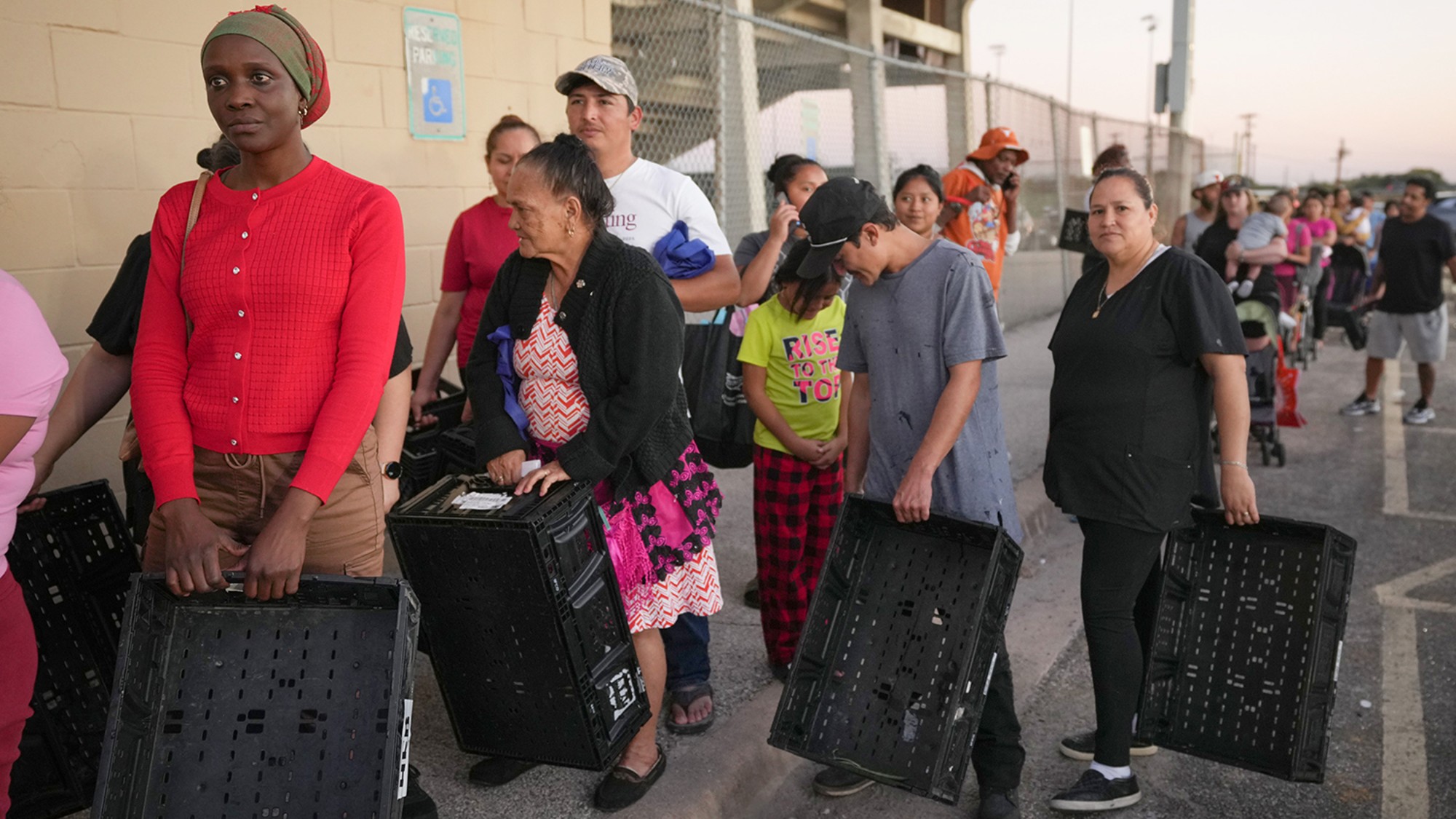
They’re trying, amid a surge in demand. A New York Fed report in February revealed that nearly 16% of Americans now rely at least partly on donated food. Sometimes “people are sitting in a 2-to-3-mile line the night before a distribution starts,” said Amy Breitmann, director of a food bank in Augusta, Ga. Beth Fiorenza’s food bank in Phoenix has been receiving more than 200 people a day—up from 150 to 175—about 40% of them newcomers. “Charities do not have the capacity to make up for the shortfall,” said Harvard health policy professor Sara Bleich. “For every meal that food banks provide, SNAP provides nine.”
Are there more changes ahead?
An appropriations bill recently passed by the House would cut $141 million for fruit and vegetable benefits from the Special Supplemental Nutrition Program for Women, Infants and Children, or WIC. The program, in which nearly 5.4 million children and pregnant and postpartum women are enrolled, has historically enjoyed bipartisan support, and the bill’s Republican backers argue the cuts won’t limit access. But Trump’s own 2027 budget proposal, submitted in April, would reduce WIC’s monthly fruit and vegetable allowance for children under 5 from $26 to $10. “They just don’t care what they’re cutting,” said Myriah Hamilton, 35, a Philadelphia-area mother who receives WIC for her infant son and is struggling with the rising cost of food. “How much more do you think I can bear?”