The Week The Week
flag of US
US
flag of UK
UK
https://cdn.mos.cms.futurecdn.net/flexiimages/jzblygzdxr1769609154.gif

SUBSCRIBE

Try 6 weeks free

Sign in
  • View Profile
  • Sign out
  • The Explainer
  • Talking Points
  • The Week Recommends
  • Podcasts
  • Newsletters
  • From the Magazine
  • The Week Junior
  • More
    • Politics
    • World News
    • Business
    • Health
    • Science
    • Food & Drink
    • Travel
    • Culture
    • History
    • Personal Finance
    • Puzzles
    • Photos
    • The Blend
    • All Categories
  • Newsletter sign up Newsletter
  • The Week’s Saturday Wrap
    An American missile crisis, AI’s threat to authors, and RFK Jr.’s cooking show

     
    controversy of the week

    Iran: The dangerous U.S. missile shortage

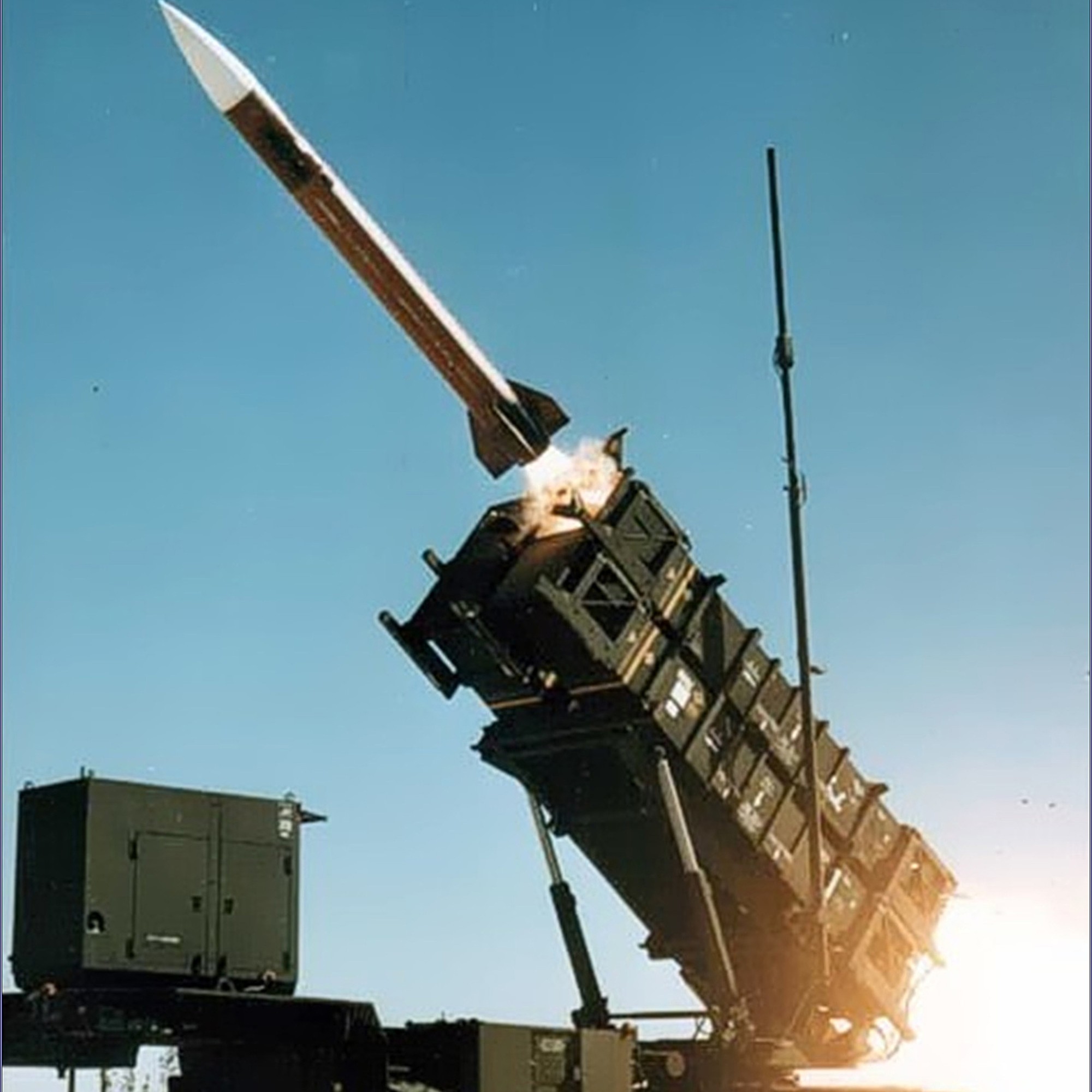
    The U.S. is clearly “out of ideas” for how to end the war in Iran, said Hafiz Rashid in The New Republic, and now we’re “out of longrange missiles,” too. The New York Times reported last week that the five-month-old war has burned through “virtually all” of the U.S.’s long-range surface-to-surface missiles, and roughly half of our ship-launched Tomahawk cruise missiles and THAAD interceptors. There are only 800 Patriot interceptors left to defend U.S. bases and allies in the region from Iranian drones and missiles, from a prewar stockpile of more than 2,300. President Trump, “as is his wont,” is simply denying reality, said Andreas Kluth in Bloomberg. He bragged that the U.S. still has “far more munitions than anyone in the world” and “far more than we need.” But in private he’s reportedly livid, both at Defense Secretary Pete Hegseth for hiding the shortage and at whoever leaked the story to the Times. The reality is that “the U.S. ammo crunch is a global disaster.” First to suffer will be the people of Ukraine, who had hoped to buy American interceptors through European intermediaries to withstand Russia’s stepped-up bombardment. With estimates that it will take at least three years to replenish our stockpiles of the intricate, sophisticated weapons, Trump has also let the world know we’re too “exhausted militarily” to defend Taiwan from China, or South Korea from North Korea, or Europe’s Baltic states from Vladimir Putin. 

    The origin of this shortage “predates the Trump administration,” said Nancy A. Youssef and Jonathan Lemire in The Atlantic. After the Cold War ended, successive Pentagons scaled back munitions spending, assuming the new cadence of engagement—“long bouts of peace between short, conclusive wars”—would allow plenty of time to maintain supplies. We also prioritized the development of high-tech, high-cost missiles like the Patriot and the THAAD, which are ill-suited to the age of drone warfare. Firing a $4 million Patriot—of which we make only 600 a year—to take down a $40,000 drone that Iran can manufacture in near-limitless quantity, is how a superpower ends up “running out of missiles.” 

    The munitions “shortage is real,” said Park MacDougald in The Free Press, but it’s being “overstated” by Trump administration factions who want to de-escalate in Iran and cut off weapons to Ukraine. Does the U.S. have enough missiles to deter China from taking Taiwan? No. But we never did. We do have all the conventional bombs and weapons needed to pulverize Iran, although delivering them would require warplanes to make bombing raids and “raise the risk” of U.S. casualties. 

    If U.S. planes and pilots are shot down over Iran, it would make this war even more disastrous, said Mark Hertling in The Bulwark. The purpose of all military technology, from the longbow to the ICBM, is to maximize “the distance between friendly forces and the enemy” and minimize your own casualties. Without missiles, that distance collapses, along with the military advantage that has made America a superpower. A competent president might rise to the challenge of regaining military advantage over Iran, said Noah Berlatsky in Public Notice. But Trump is instead focusing on finding the “treasonous” leakers who dared expose his ineptitude, while insisting the missile shortage isn’t real. Trump’s lies won’t fool anyone in Tehran, or Beijing, or Moscow, and they won’t “bring back the missiles spent on his useless war of choice.”


    VIEWPOINT

    Capitalism run amok

    “Most of the causes of America’s economic dysfunction are the result of a capitalism that has mutated into a system run by and for large corporate interests. If you look at America today and see a perfectly functioning free-market economy, a ‘neoliberal’ utopia guided by the invisible hand of Adam Smith, then you need to take off those rose-tinted spectacles and take a closer look: oligopoly-level industrial concentration in almost every sector; endemic cronyism; the application of regulation, legislation, and policy for the benefit of big companies; a ruinously expensive health-care system run principally for the benefit of insurers and pharmaceutical companies.” 

    Gerard Baker in The Wall Street Journal


    briefing

    When bots write books

    Artificial intelligence is transforming the publishing industry. What does that mean for human authors?

    How widespread is AI use in publishing? 
    It’s almost impossible to gauge how many authors are using tools like ChatGPT. But it appears that generative AI, which can churn out a novel-length work with a few simple prompts, is driving a boom in book publishing. More than 4 million books were released in the U.S. in 2025, up a whopping 33% from the previous year. That jump was largely due to a spike in new self-published works, which rocketed 39% year on year to 3.5 million. While it is easier than ever to self-publish, research suggests many of those books were not written by humans. A National Bureau of Economic Research study found that about half the books published in 2025 and sold on Amazon contained AI-generated text, up from 23% in 2023. (ChatGPT was released in late 2022.) AI writing is most common in popular genres such as romance fiction, which tends toward formulaic plots, and in nonfiction, where major news events can trigger a flood of AI books within hours. Online influencers “have been spreading the word for some time: Use AI to write a book. If it sells, it’s free money,” said tech journalist Kashmir Hill, who recently discovered an AI-generated, error-riddled biography of herself on Amazon. The “author” of Hill’s biography published nine other books the same week. But AI writing is not just confined to the self-publishing world: In recent months, at least two major publishing houses have withdrawn books over suspicions of AI use. 

    Which books were pulled? 
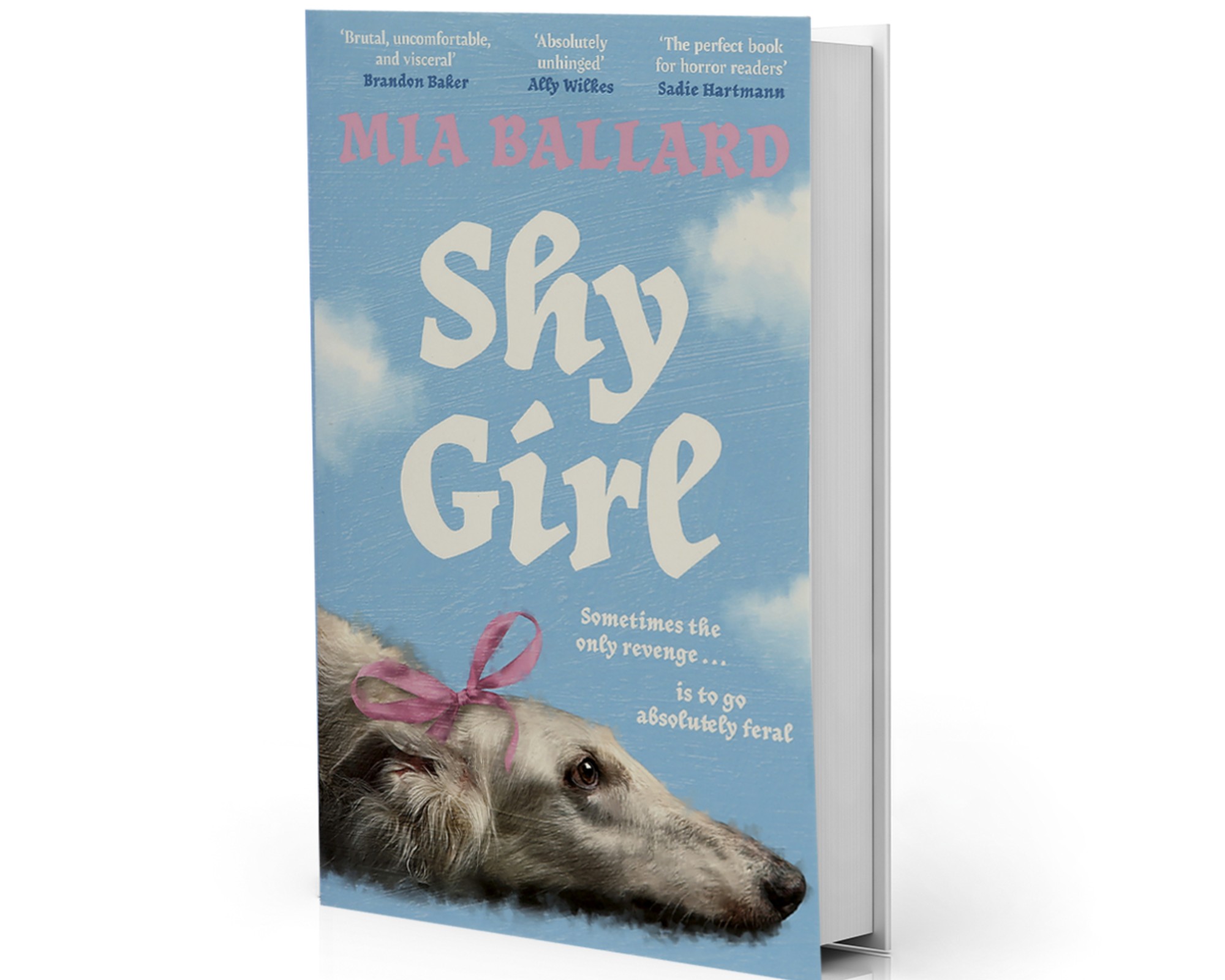
    Most recently, the hotly anticipated debut novel from Nigerian-born Jerry Falade. Fourteen publishers bid for the U.S. rights to Call Me, I’ll Hide the Body; Falade, a grad student at Southern Methodist University, signed with a Macmillan imprint for more than $2 million. But the deal collapsed last month after Falade’s agents told the publisher they could no longer support the “stunningly good” crime novel because of AI concerns. Falade says he used AI only for research “and not for writing the book itself” and argues the deal’s cancellation was racially motivated. A few months earlier, Hachette nixed the U.S. release of Mia Ballard’s horror novel Shy Girl over suspicions it was largely AI-generated. After the book was published in the U.K., readers pointed to linguistic tells of AI, including word repetition (“sharp” or “sharply” appears 159 times in 247 pages); the grouping of adjectives, phrases, and ideas into threes; and the frequency of “something x, something y” sentence construction, such as, “In his hands is a cake, gleaming, its pink frosting too smooth, like plastic dipped in sugar, like something that belongs on a screen.” Ballard claims that an acquaintance who edited the book used AI, not her. “Everyone liked” the book, one publishing exec told the Financial Times. “After Shy Girl, every editor is nervous.” 

    Are publishers trying to weed out AI? 
    Most publishers require writers to affirm that their work is “original,” which is increasingly being interpreted as a ban on AI-created text and images. That’s a sensible safeguard because AI-generated works are not protected by copyright, the foundation of the $140 billion global publishing industry. But publishing houses are loath to entirely bar authors from using AI, because there are other ways it can usefully be deployed, such as to check grammar and conduct research—although there are risks in handing that latter job to a chatbot. 

    What kind of risks? 
    Media entrepreneur Steven Rosenbaum used AI tools to research and organize The Future of Truth, a nonfiction book about how AI reshapes reality. In May, The New York Times revealed the book contained numerous fabricated and misattributed quotations dreamed up by AI. Rosenbaum said that if the episode “serves as a warning about the risks of AI-assisted research and verification, that is why I wrote the book.” To avoid such embarrassments, a growing number of publishers are turning to AI detectors: software that promises to scan a text and accurately reveal how much of it was likely AI-generated. 

    Does the technology work? 
    That depends on whom you ask. One popular detector, GPTZero, claims to be 99% accurate. Pangram, another favored detector, claims a false positive rate of only 1 in 10,000. But critics argue that AI detectors are deeply flawed. After his sci-fi manuscript was rejected by numerous publishers, Antonio Bricio, an engineering consultant and aspiring author, ran the text through the AI detector Originality.ai. The program was 100% certain he’d used AI, but when he deleted just a few sentences, it declared the manuscript to be 100% human. “What if publishers or agents start running these AI tools on everybody?” asks Bricio. Thriller writer Andrea Bartz— a lead plaintiff in a copyright lawsuit against Anthropic that secured a $1.5 billion settlement for authors over the firm’s use of pirated books to train its models—was enraged when a detector labeled her writing as 82% AI-generated. “I guess that’s what happens when your books were stolen to program AI,” said fellow novelist Rene Denfeld, whose own work was also flagged as AI. 

    What do readers think of AI books? 
    Most want books “to come from the author’s brain and heart and not a computer that’s robbed the writer’s brain,” said author Laura Taylor Namey. And that argument is supported by the fact that book charts are still dominated by human authors. But the flood of AI works is making it harder for flesh-and-blood writers like Jess Michaels to grab attention and make a living in an increasingly crowded market. A historical romance author, Michaels has released 117 novels since 1999— most of them self-published—and has notched 10 USA Today best sellers. But she has recently seen sales drop so drastically, and the number of AI-powered imitators rise so rapidly, that she’s considering giving up publishing. “You’re talking about directly pirating my work, putting it into an engine so that you can produce a ‘Jess Michaels–type book,’ and then glutting the market with it,” she said. “I cannot tell you how soul-crushing it is.”



    Only in America

    Immigration and Customs Enforcement plans to spend $20 million on electric gloves that can deliver painful shocks to uncooperative civilians. According to its manufacturer, Kentucky’s Compliant Technologies, the G.L.O.V.E. (Generated Low Output Voltage Emitter) is a “humane, low-optics, de-escalation” tool. As a bonus, Compliant says the G.L.O.V.E. leaves behind no inconvenient “burns, marks, or scars.”


    It wasn’t all bad

    Anita LeBrun last week celebrated the first happy hour at her senior living center in Champlin, Minn., less than a month after her efforts helped overturn a state law restricting alcohol at retirement homes. For months, the 82-year-old had been the face of an anti-prohibition movement. She testified before the state legislature that she and her late husband of 59 years loved to share a glass of white wine and beer, and she simply wanted the same opportunity with her friends at their retirement home. Her hard work paid off after Gov. Tim Walz signed the “Grandparents’ Happy Hour” bill into law in July. “You got to keep plugging along,” she said, enjoying a long-awaited pinot grigio, “even if you’re old.”


    talking points

    RFK Jr.: Let them eat fish cakes

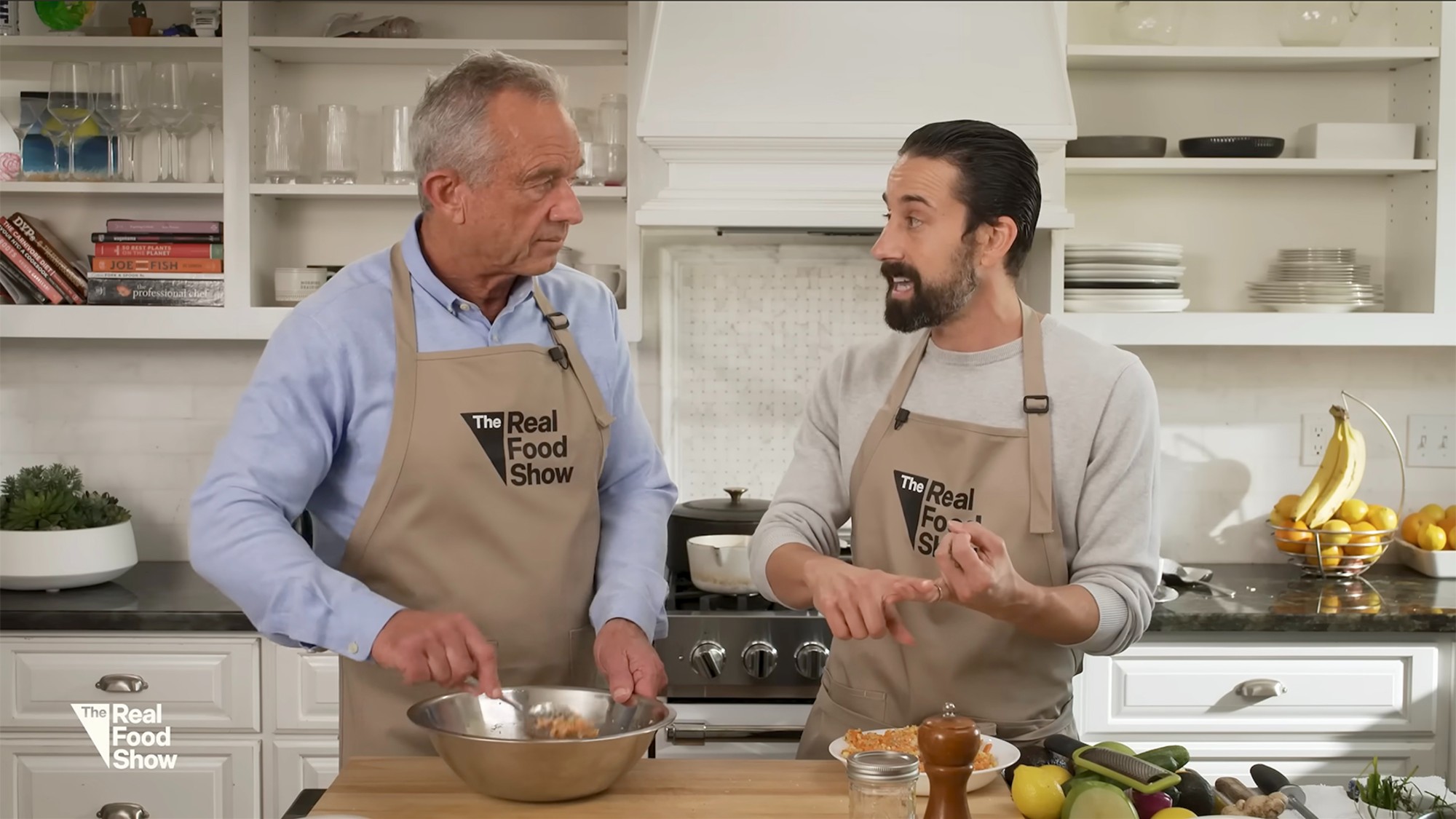
    The man whose “best-known culinary accomplishment is maintaining ‘a freezer full’ of roadkill” wants to teach you to cook, said Emily Heil in The Washington Post. Health Secretary Robert F. Kennedy Jr. recently debuted The Real Food Show, a government-funded YouTube series intended to help Americans “make healthful meals at home on a modest budget.” In the first episode, Kennedy and celebrity chef Andrew Gruel whip up crispy salmon cakes with a white bean, apple, and arugula salad. I followed the recipe and the dish was “quite good.” But actual cooking is not the main focus of the show. Kennedy and Gruel spend far more time ranting about the evils of seed oils and the Biden administration’s “war” on saturated fats than providing “meaningful culinary instruction.” Under Kennedy’s “grim glare,” making a meal becomes “an exercise in airing grievances against the government and a food system hell-bent on keeping people addicted to processed foods.” When he finally samples the finished meal, all he can muster is a muttered “amazing,” a politician’s thumbs-up, and a “pained grimace.” 

    Kennedy’s fish cakes are supposed to be budget-friendly, said River Page in The Free Press, but it’s clear he has no idea “what it is like to go grocery shopping as a broke person.” I spent nearly $100 buying the ingredients for four servings—including such luxuries as avocado mayo and nutritional yeast—that RFK Jr. claimed would cost a mere $20. This show is less concerned with delivering affordable meals than advancing conservative ideology, said Ashlie D. Stevens in Salon. Underpinning everything is the idea that “if Americans can be taught to eat correctly, perhaps they will require less care”—freeing the government to cut the safety net. Republicans already did that last year, slashing projected federal spending on Medicaid over the next decade by nearly $1 trillion and food benefits by $187 billion. 

    Of all the terrible things Kennedy is doing, hosting this show is “probably the least offensive,” said Arwa Mahdawi in The Guardian. But shouldn’t he be busy tackling the nation’s more pressing health problems, like the more than 22,000 cases of explosive diarrhea caused by the parasite cyclospora? RFK Jr. is supposed to be heading the response to that lettuce-linked outbreak. Or perhaps he could focus on the raging measles crisis— this is the worst year for the disease in the U.S. since 1991—which he has fueled as the country’s top anti-vaxxer. But that would mean doing the hard work of being a government official. He’d rather just “play one on TV.”


    people

    Collins’ lonely life

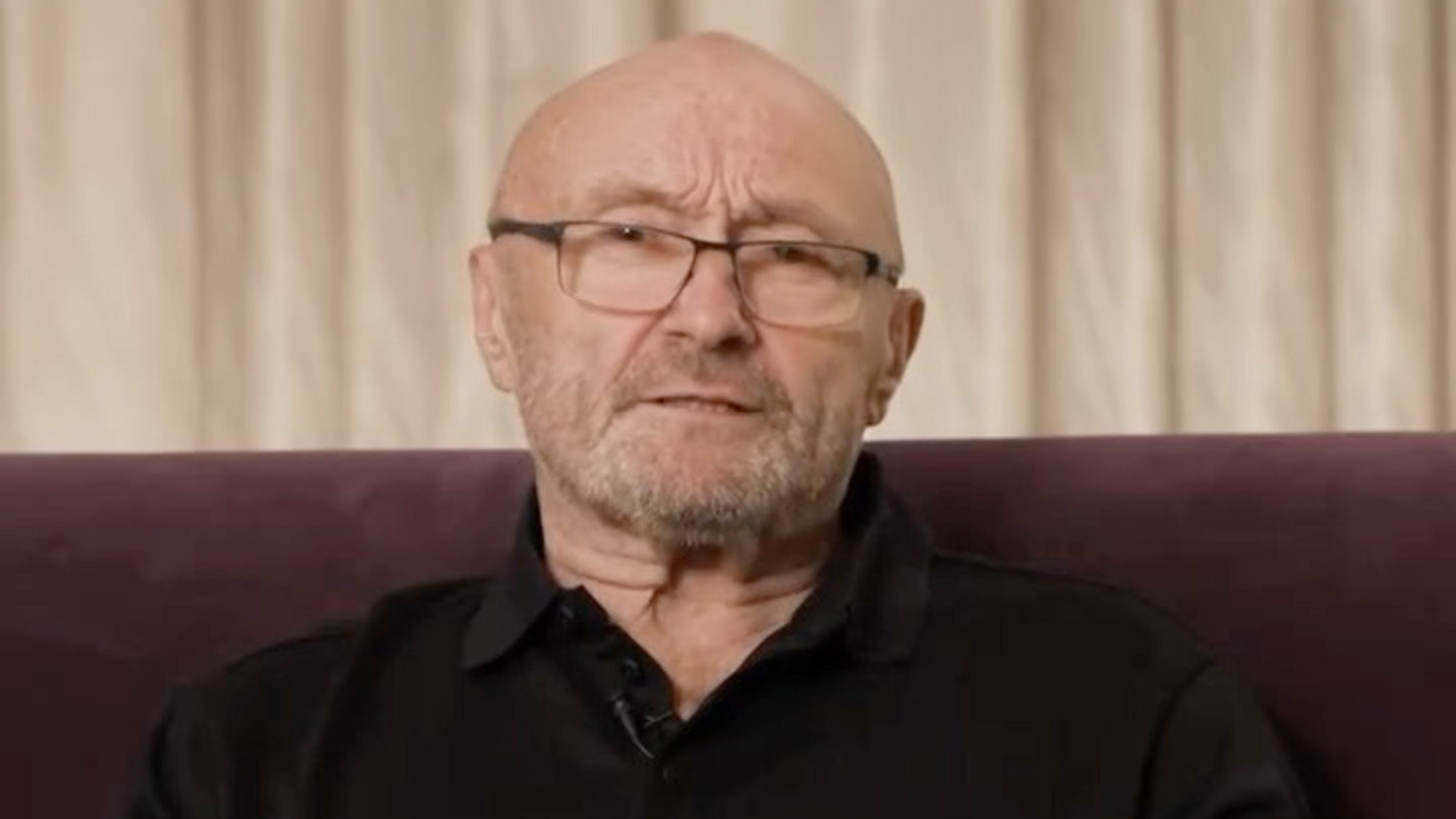
    Phil Collins is single for the first time in his life, said Decca Aitkenhead in The Sunday Times (U.K.). Even as a kid growing up in suburban London, the drummer turned singer had plenty of girlfriends. He married one of them, Andrea Bertorelli, in his early 20s. They divorced in 1980, their marriage strained by his touring with Genesis. “I felt I had a duty to the guys not to be the one to say, I’m sorry, I can’t go to America three times this year and Europe twice and Japan,” says Collins, 75. He left his second wife, Jill Tavelman, in 1994, for a 21-year-old Swiss translator, Orianne Cevey. They married in 1999 but divorced seven years later; Cevey got a $46 million settlement and Collins descended into alcoholism. After getting sober, Collins reunited with Cevey in 2016. That romance ended after four years when it was revealed she’d secretly married another man. How did he find out about Cevey’s new husband? “Because she introduced me to him. She’s not in my best books.” Collins now lives in Switzerland, alone but for a live-in nurse. He has type 2 diabetes, can walk only with crutches, and is unable to hold a drumstick because of nerve damage. Collins spends most of his time watching TV or YouTube videos about serial killers. “I’d love to be in love again. Kissing somebody. You know, pretty basic stuff.” Could another relationship happen? “I think it’s probably too late for that. I’m not a very social person. I don’t, you know, I don’t go out.”


    Saturday Wrap was written and edited by Theunis Bates, Bill Falk, Bruno Maddox, Scott Meslow, and Tim O’Donnell.

    Image credits, from top: Alamy; HHS; Instagram
     

    Recent editions

    • Evening Review

      Did Farage’s ploy pay off?

    • Morning Report

      Farage beats Binface in 'empty victory'

    • Evening Review

      Will the UK ever run out of water?

    VIEW ALL
    TheWeek
    • About Us
    • Contact Future's experts
    • Terms and Conditions
    • Privacy Policy
    • Cookie Policy
    • Advertise With Us
    • FAQ
    Add as a preferred source on Google Add as a preferred source on Google

    The Week UK is part of Future plc, an international media group and leading digital publisher. Visit our corporate site.

    © Future Publishing Limited Quay House, The Ambury, Bath BA1 1UA. All rights reserved. England and Wales company registration number 2008885.