The Week The Week
flag of US
US
flag of UK
UK
https://cdn.mos.cms.futurecdn.net/flexiimages/jzblygzdxr1769609154.gif

SUBSCRIBE

Try 6 weeks free

Sign in
  • View Profile
  • Sign out
  • The Explainer
  • Talking Points
  • The Week Recommends
  • Podcasts
  • Newsletters
  • From the Magazine
  • The Week Junior
  • More
    • Politics
    • World News
    • Business
    • Health
    • Science
    • Food & Drink
    • Travel
    • Culture
    • History
    • Personal Finance
    • Puzzles
    • Photos
    • The Blend
    • All Categories
  • Newsletter sign up Newsletter
  • Sunday Shortlist, from The Week
    Stormy D-Day retelling and a ‘bloody good’ play

     
    Theatre Review

    Bloodsport: After Helen of Troy 

    Michelle Dockery brings ‘hire-wire intensity’ to Ava Pickett’s new play

    Thanks to the smash hit success of “1536”, her “coruscating” play about three young women in Tudor England, the English writer Ava Pickett is flavour of the month, said Sarah Crompton on WhatsOnStage. Now, she has produced a new play – “Bloodsport: After Helen of Troy” – which is so powerful she might well prove to “be flavour of the year and of many years to come”. The drama, in which Helen (played with “high-wire intensity” by Michelle Dockery) is brought back to modern-day Essex after a civil war in England, is “full of spit, fire and brilliance”. It’s like “Sarah Kane crossed with ‘The Only Way Is Essex’ – devastatingly funny but utterly furious about the state of the world and the way that women within it are treated”.

    Years ago, Helen left her husband Marcus (Menelaus) for a “foreigner”, prompting hordes of angry men to wreak havoc for a decade in her name, said Emma John in The Guardian. In a Towie-style home, her former close friend Cee, who is married to Marcus’ brother Mario (Agamemnon), hosts a tense event to mark her return – blood-spattered and still in shock. Given the recent scenes of masked men protesting in Dover and Portsmouth, Pickett’s dystopia feels “uncomfortably close, albeit infused with a Martin McDonagh-esque black wit”.

    There are “tremendous” performances across the board, said Andrzej Lukowski on Time Out, and the pacey, emphatic direction from Lisa Spirling is “spot on”. I was almost alone among critics in not taking to “1536”, said Clive Davis in The Times – and I didn’t much care for this play either. It’s “vivid”, and features “vivacious performances”. But its “erratic mix of myth and modern-day melodrama” leads from one “overwrought standoff to another” – while the characters “never come fully into focus”. It’s not a “perfect” play, said Sarah Hemming in the Financial Times, but it’s “bloody good”. It is true that the “bigger political picture remains peculiarly hazy for a country mired in civil war”. Even so, the “audacity of the narrative keeps you pinned to the action”. This is “bracing, provocative and scintillatingly written” drama, laced with “needle-sharp humour”.

    Hampstead Theatre, London NW3. Until 7 November


    Film REVIEW

    Pressure  

    Andrew Scott excels in tense D-Day drama 

    “There’s no shortage of worthy films about D-Day,” said David Sexton in The New Statesman. To name just a few, there is “The Longest Day”, “Saving Private Ryan”, “Overlord”, “The Big Red One” – and, of course, we also have TV’s “Band of Brothers”. Yet “Pressure”, from the producers of “Darkest Hour” and based on a play by the actor and writer David Haig, “finds a niche not yet occupied”. Uniquely, the drama focuses on the days immediately before the Normandy landings of 6 June 1944, and the “momentous” weather forecasts made by the Scottish meteorologist James Stagg.

    Eisenhower had decided that Operation Overlord should go ahead on 5 June. Stagg, however, became convinced that the day would be stormy – bringing swell and poor visibility that would spell disaster. But on 4 June, Stagg forecast a calm interlude for 6 June. In “Pressure”, Stagg, played by Andrew Scott (“the film’s main attraction”), must persuade Eisenhower (Brendan Fraser), the “irascible” General Bernard Montgomery (Damian Lewis), and Stagg’s US counterpart, Irving P. Krick (Chris Messina) to trust the data he has gathered, and delay the seaborne invasion by 24 hours.

    “Dramatically speaking, this is all a bit more interesting in theory than in practice,” said Adam White in The Independent. The film is “largely confined to a series of identikit studies and war rooms”, and the eventual recreation of the landings sparks “unflattering comparisons to ‘Saving Private Ryan’, budget constraints on full display”. Thank goodness, then, for Scott, said Danny Leigh in the Financial Times, in whose “every pained expression, we see the gravity of the situation – and an allergic inability to simply smile and nod”. His performance “really is superb”.


    ALBUM REVIEW

    Sairie: Beneath the Spreading Tree

    Singer Emma Morton brings an “indie-girl chorister’s brightness” to the Brighton band’s “captivating” debut album of psych-folk songs that “exquisitely mix sweetness and doom”. With “ancient balladry tightly coiled in their DNA”, they arrive as though “they’ve lived rich, long lives already”, said The Guardian. 


    BOOK OF THE WEEK

    Anita Brookner 

    by Hermione Lee 

    Anita Brookner was in her early 50s when she began writing fiction. She was a respected art critic, and unmarried. Anthony Blunt, her boss and mentor at the Courtauld Institute (where she was a lecturer), had just been exposed as a Soviet spy. “Reeling”, depressed and lonely, she found herself writing what would become “A Start in Life” (1981), said Lucy Atkins in The Guardian. It established a “process” that she stuck to religiously over the next two decades.

    “Each novel took only three months from start to finish. She’d roam London forming sentences in her head, then simply write them down, at speed.” The novels sold well, and her fourth, “Hotel du Lac”, won the 1984 Booker Prize. But there was also much carping from male critics about how they were all about “sad spinsters” pining for love. (Private Eye called it “Hotel du Lac of Interest”.) Ten years on from Brookner’s death, aged 87, Hermione Lee has written an “astute and tireless” biography bringing this “intriguing, contradictory” figure to life.

    Brookner was extraordinarily private, and did her best, as she put it, to “leave no trace”, said Johanna Thomas-Corr in The Times. She destroyed all her private papers. With “heroic” scholarly devotion, Lee pieces her life together from the scraps of evidence that remain: her alienating upbringing, an only child in a large extended family of Polish-Jewish émigrés in south London; a few “intoxicating years” in post-war Paris ; an unwanted return to London to care for her “increasingly demanding, ailing mother”. Lee scours Brookner’s “few appointment diaries” for liaisons with possible lovers – such as the art historian Michael Jaffé and the publisher Christopher MacLehose. And while the “narrative suffers in the second half”, with “dutiful summaries of Brookner’s 25 novels”, overall it displays the “rigour and authority” that made Lee’s previous lives – of Penelope Fitzgerald and Tom Stoppard, among others – so “indispensable”.

    This is indeed a “tremendous” biography, full of striking details about Brookner’s quirks, said Laura Cumming in The Observer. (She often lied about her age, was a “slavish” fan of Philip Roth, and “never missed” “The Archers” or “The Bill”.) Lee describes her appearance brilliantly: “When she was young, she looked old and, when old, she became ageless.”

    Lee’s portrait of this “recalcitrant” subject is “gripping and illuminating”, said Lucy Scholes in the Financial Times. “One likes to think that, while she might not have fully approved, Brookner would nevertheless admire the result.”


    OBITUARY

    Richard O’Sullivan 

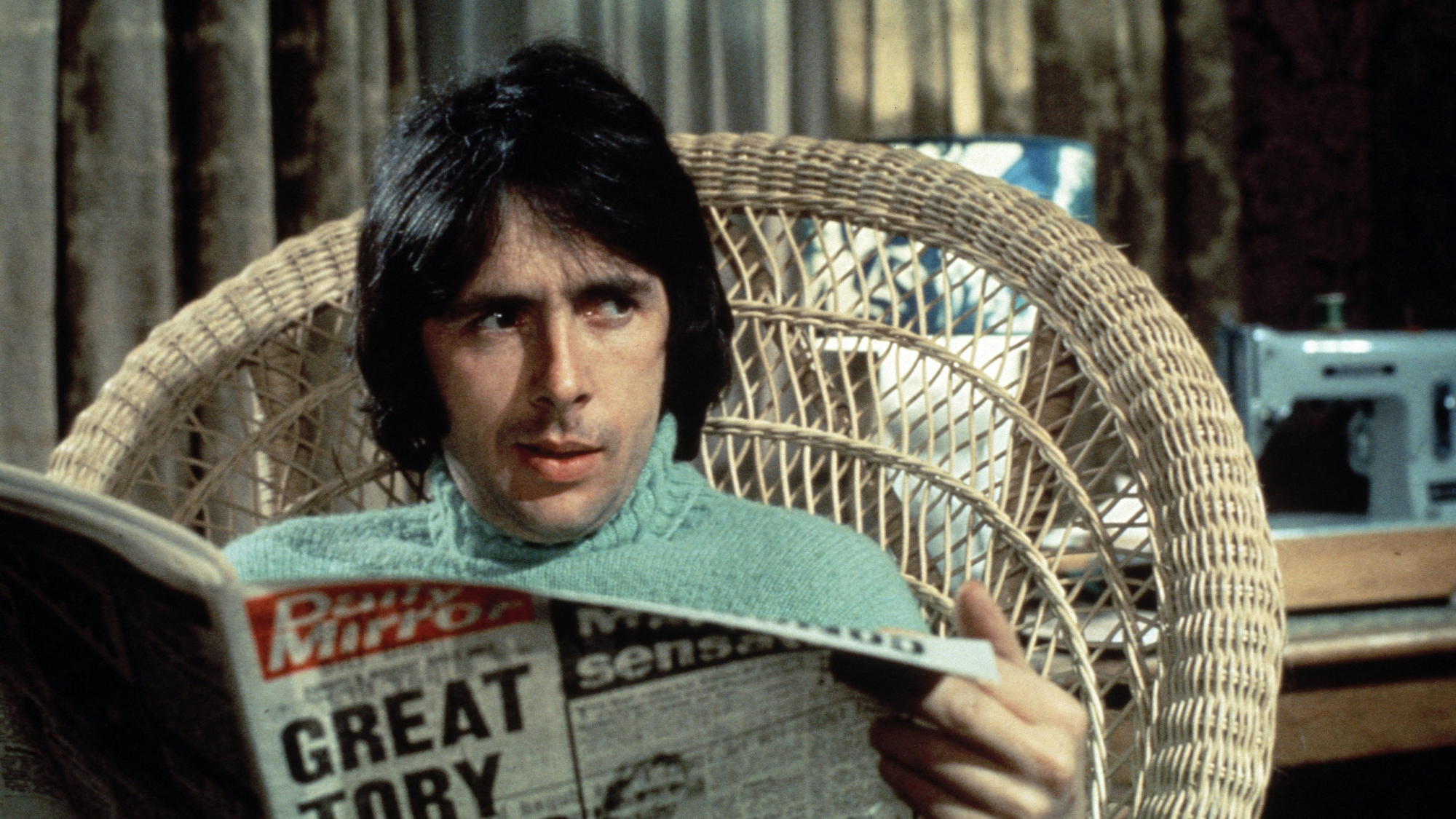
    Comedy actor who starred in Man About the House

    With “his fashionable mop of dark hair” and mischievous smile, Richard O’Sullivan, who has died aged 82, was one of the most familiar faces on British TV in the 1970s and 1980s, said The Times. In his youth, he’d been in films with Audrey Hepburn and Elizabeth Taylor. But it was his role in ITV’s “Man About the House” that made his name. In the sitcom, he played Robin Tripp – a trainee chef who is invited to move into a flat with two single women (Paula Wilcox and Sally Thomsett) because he can cook. The scenario, groundbreaking at the time, was “ripe with sexual possibilities”, and the network said the show would have to go out after the 9pm watershed. But its writers – Brian Cooke and Johnnie Mortimer – insisted that it was about flat-sharing, not sex, and executives eventually agreed to let it air at 8.30pm, on condition that the scripts were “naughty rather than dirty”. A huge hit, it ran for six series between 1973 and 1976, and attracted a peak audience of 16 million.

    The show spawned two spin-offs – “George and Mildred”, about the trio’s landlords (Yootha Joyce and Brian Murphy), and “Robin’s Nest”. In the latter, Tripp ran a restaurant – and moved in with his girlfriend Vicky (Tessa Wyatt), making it the first British sitcom to feature a couple “living in sin”. To the delight of O’Sullivan’s fans, he and Wyatt were for seven years a couple in real life, said Zoe Williams in The Guardian. He had also dated Thomsett. The “ultimate new man”, Robin was dishy but not macho, handy in the kitchen and able to laugh at himself. It was taken as given in the 1970s “that all women, given the chance, would go out with him”.

    Richard O’Sullivan was born in 1944 and brought up in west London, said The Telegraph. His father was a mechanic. Acting came about by accident: his parents enrolled him in a theatre school because they wanted him to lose an Irish accent he’d picked up on holiday in Cork. He ended up thriving there, and made his film debut aged eight. In 1954, he was in “Make Me an Offer”, playing Peter Finch’s character as a boy. It was being hit in the face by a cricket ball at school that left him with the lopsided grin that became his trademark. He appeared in about 20 films before he turned 20, including “The Nun’s Story” (1959), “Carry On Teacher” (1959), “The Young Ones” (1961) and “Cleopatra” (1963).

    In the mid-1960s the parts started to dry up. But after a few lean years, his adult career was kickstarted by his role in TV’s “Doctor at Large” (1971), said The Guardian. When “Robin’s Nest” finished, he played Dick Turpin in a Saturday-evening TV show that ran for three years. He then returned to situation comedy with “Me and My Girl” (1984-88). Having had a short-lived marriage to the model Diana Terry in 1971, he married again in 1988 to Christine Smart (of the circus family). But by then, he had become, as he put it, a “hard-drinking depressive”, and they divorced in 1994. He was rarely seen on TV after that. In 2003 he suffered a stroke, and moved into Brinsworth House, a retirement home for entertainers in Twickenham. He is survived by Jamie, his son by Tessa Wyatt.

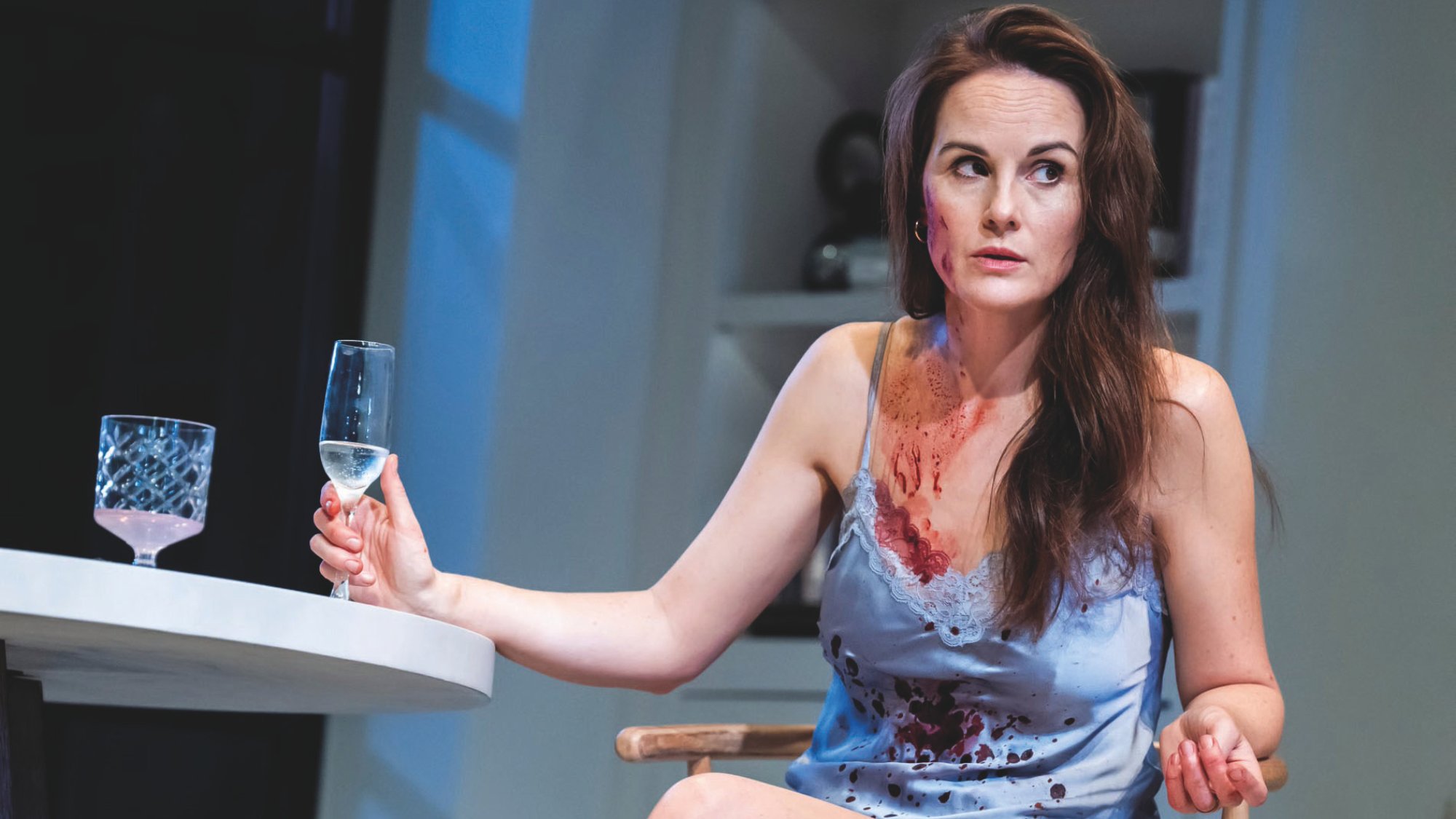


    Image credits, from top: FlixPix / Alamy; Tristram Kenton; Chatto & Windus; StudioCanal Films / Alamy 
     

    Recent editions

    • Saturday Wrap

      ‘The Iran war is metastasising’

    • Evening Review

      Canada and the EU: an ever-closer union?

    • Morning Report

      Clashes intensify across Yemen

    VIEW ALL
    TheWeek
    • About Us
    • Contact Future's experts
    • Terms and Conditions
    • Privacy Policy
    • Cookie Policy
    • Advertise With Us
    • FAQ
    Add as a preferred source on Google Add as a preferred source on Google

    The Week UK is part of Future plc, an international media group and leading digital publisher. Visit our corporate site.

    © Future Publishing Limited Quay House, The Ambury, Bath BA1 1UA. All rights reserved. England and Wales company registration number 2008885.