The Week UK
https://cdn.mos.cms.futurecdn.net/flexiimages/jzblygzdxr1769609154.gif

SUBSCRIBE

Start your trial today

flag of US
US
flag of UK
UK
Sign in
  • View Profile
  • Sign out
  • Newsletter sign up Newsletter
    • The Explainer
    • Talking Points
    • The Week Recommends
    • Podcasts
    • Newsletters
    • From the Magazine
    • The Week Junior
    • More
      • Politics
      • World News
      • Business
      • Health
      • Science
      • Food & Drink
      • Travel
      • Culture
      • History
      • Personal Finance
      • Puzzles
      • Photos
      • The Blend
      • All Categories
    The Week’s Saturday Wrap
    A Southern shift, Trump vs. the ICC, and Democrats’ leadership debate

     
    controversy of the week

    The South: How the GOP lost its red wall

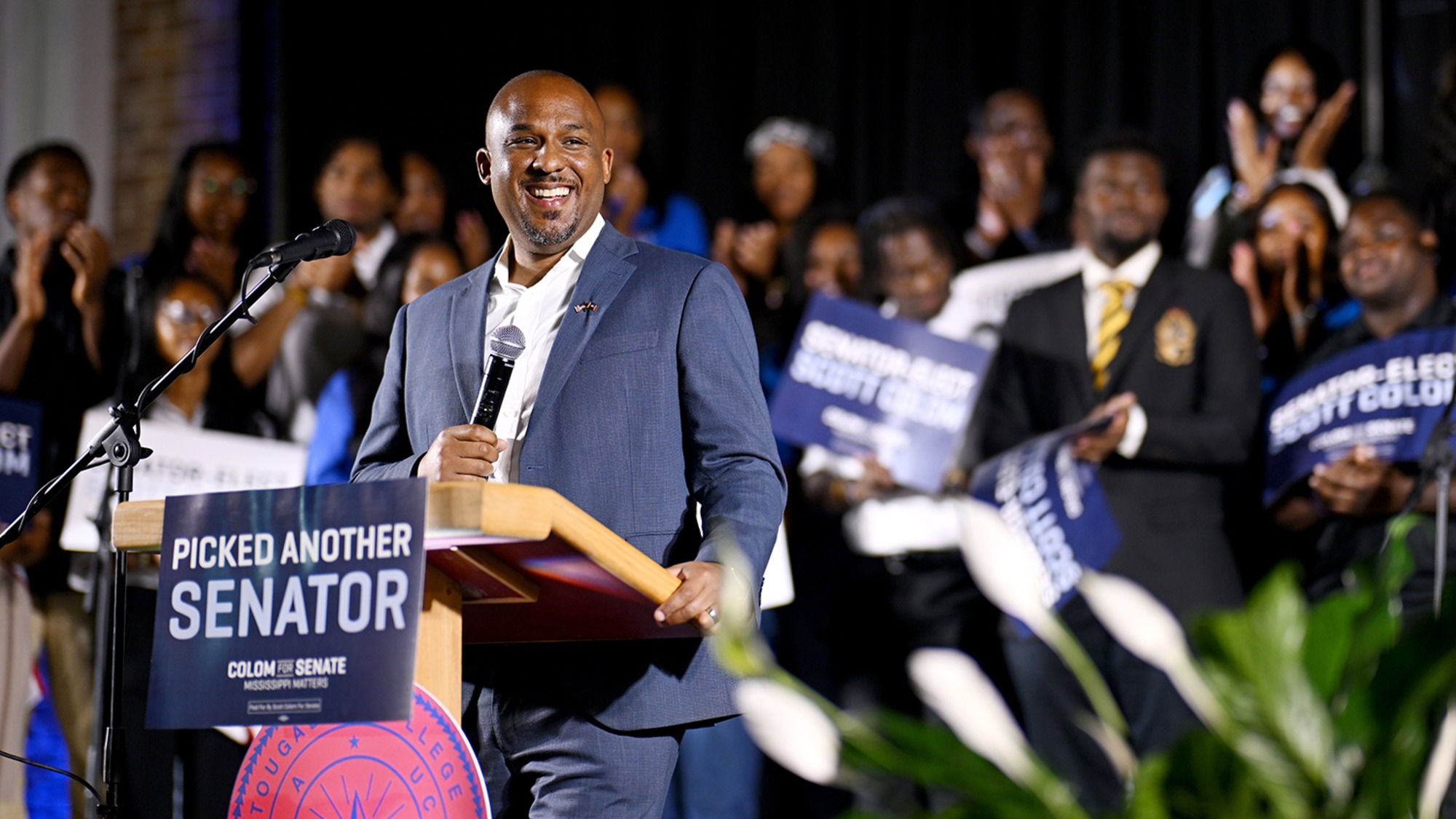
    “Look who has a Southern strategy” now, said Jamelle Bouie in The New York Times. Since 1964, when President Lyndon Johnson signed the Civil Rights Act, the South has been a stronghold for the GOP, which embraced a “Southern strategy” of exploiting racial division in the old Confederacy. But that stronghold collapsed on Nov. 3. The midterms saw “explosive turnout” from Black voters, venting their rage over the affordability crisis, the Supreme Court’s gutting of the Voting Rights Act, and the ensuing orgy of racial gerrymandering by Southern Republican legislatures. In the blue wave, Democrats swept statewide races in Georgia, Texas, and North Carolina, and won a Senate seat in South Carolina. Last week, they picked up another in Mississippi, where Scott Colom became the state’s first Black senator-elect since 1875 and the first Democrat to win a Senate seat there since 1982. Nothing is permanent in politics, but if Democrats can deliver for their new Southern constituents, it’s hard “to overstate the extent of the opportunity here.” The midterms delivered Democrats 56 Senate seats and a House majority north of 85, said Gabby Birenbaum and Kayla Guo in The Texas Tribune, but Texas is “the big kahuna.” Democrat James Talarico won his Senate race by 12 percentage points and Gina Hinojosa the governor’s race by 7 points. Without Texas’s 40 Electoral College votes, it will be “near impossible” for a Republican to win the presidency in 2028, or ever. 

    The midterms were a “national repudiation of the Trump administration,” said Daniel Foster in National Review, not a sign that the South’s “GOP bastions” have turned blue. When Republicans move on from President Trump, they’ll regain their advantage in Southern states, whose cultural and “political disposition” remains “recognizably Republican.” Nor can Democrats “necessarily count on Black voters to stay energized,” said Adam Harris in The Atlantic. Before this year’s “blacklash” against Republicans trying to “gerrymander them out of a voice,” the share of Blacks who identify as Democratic was in decline, dropping from 65% in 2013 to 49% in 2025. 

    That moment has passed, said John Judis in the Financial Times. The Black and Hispanic men who voted Republican in 2024—24% and 53%, respectively—came flocking back to Democrats in the midterms, with 89% and 64% voting blue. So did young men generally, and then there’s urbanization. Always strong in cities, Democrats have now also built “center-left majorities” in the suburbs—and urban-suburban residents account for an astonishing 73% of voters in an “erstwhile red state” like Texas. Southern cities are filling up with young, “affluent Northern suburbanites,” said Erik Wasson in Bloomberg. They’re coming to work in the South’s booming tech and finance sectors, and they’re bringing their politics with them. 

    It isn’t just the South, said Jonathan Martin in Politico. Democrats are “squeezing Republicans from either coast inward,” and consolidating power in the North. The GOP will have no senators from New England for the first time in its history, and Democrat Mary Peltola this week finally clinched the Senate race in Alaska. Republicans face a simple choice: “Find a way to appeal to educated and more diverse voters,” or become a permanent minority. Democrats got the message—they won the South with candidates like Colom, a gun-rights supporter who says he’s “personally” pro-life. If both parties embrace these pragmatic, post-tribal identities, said E.J. Dionne Jr. in The New York Times, the midterms will have given America “not only a genuinely New South, but also a new politics.”


    VIEWPOINT

    Hope and change

    “Former president Barack Obama remains the most popular political figure in the country. It should come as no surprise, then, that returning to his rhetoric and issue profile gave the Democrats their largest congressional and state-level majorities since his time in office. No president since Obama has had higher than 50% approval for longer than six months. Perhaps that’s less because the country is rife with division and more because voters have yet to have another president who has been able to communicate unity effectively. Perhaps, in other words, ‘hope and change’ isn’t so out of style after all.” 

    Gabe Fleisher in The Washington Post


    briefing

    The war on the ICC

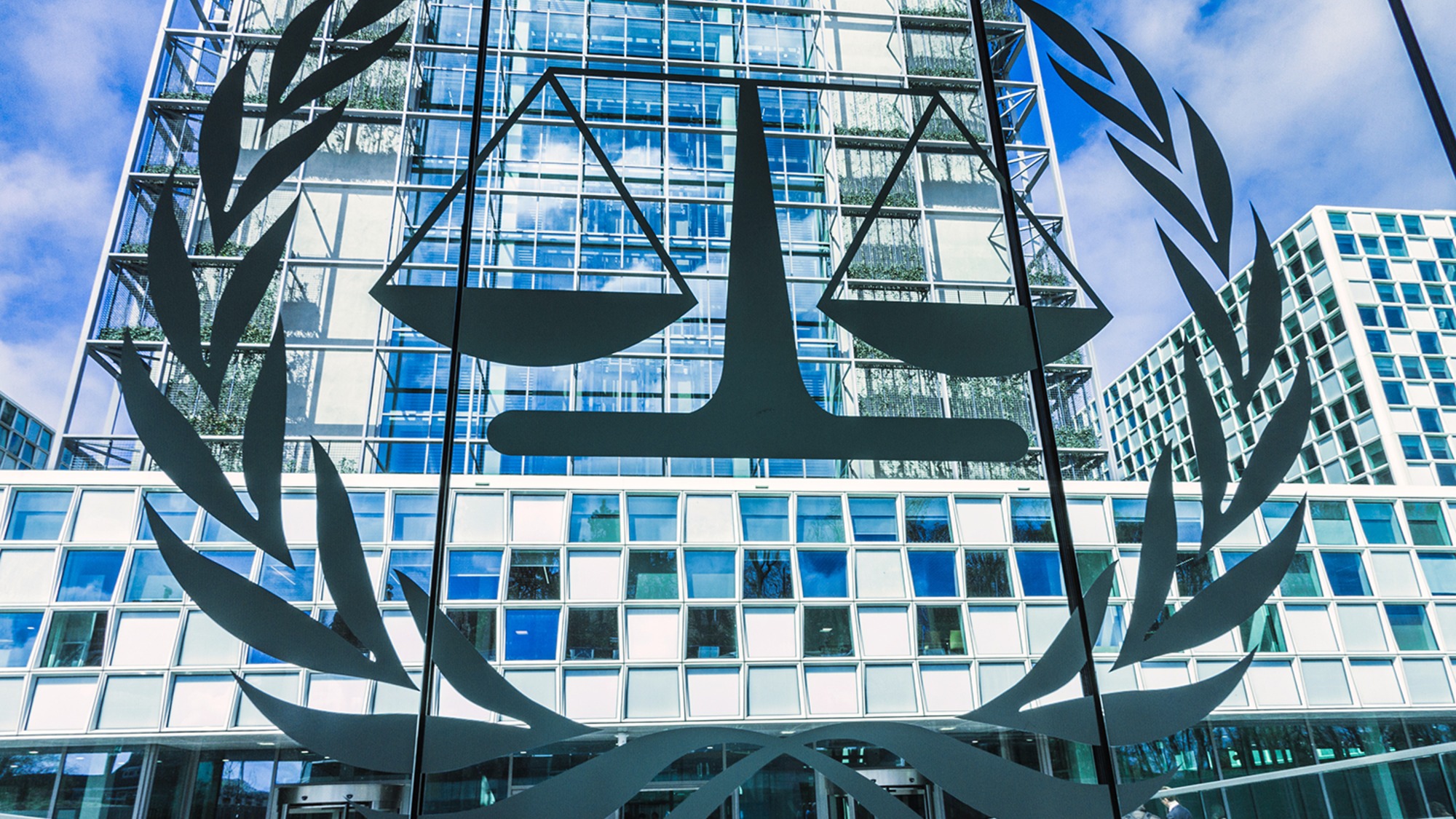
    The U.S. is trying to strangle the International Criminal Court. Why?

    Is the U.S. part of the ICC? 
    The U.S. has never joined the International Criminal Court, which was created to bring the world’s worst war criminals to justice. No president fully embraced the idea that international law should supplant American justice, and President Trump has been the most overtly hostile to it. In his first term, after the ICC started investigating alleged abuses by U.S. soldiers in Afghanistan, Trump imposed travel restrictions on ICC officials. In his second term, after the court had issued arrest warrants for Israeli Prime Minister Benjamin Netanyahu and former Israeli defense minister Yoav Gallant over suspected war crimes in Gaza, he added tough financial sanctions, and in recent months his administration has all but declared war on the ICC. Calling it a “rogue court,” Secretary of State Marco Rubio said the U.S. would dismantle it “brick by brick” if other member states did not rein it in. “Either the ICC will end its threats, or we will end the ICC.” 

    What exactly is the ICC? 
    Describing itself as the “court of last resort,” the ICC, based in The Hague in the Netherlands, steps in only when states are “unwilling or unable” to investigate their citizens for serious crimes including genocide and war crimes. (The court can also hold defendants liable for offense against its proceedings, such as perjury or witness tampering.) Modeled after the ad hoc tribunals set up in the 1990s to prosecute crimes of the Yugoslav wars and the Rwandan genocide, the ICC was created by the United Nations through the 1998 Statute of Rome. It claims authority not only over citizens of its member states but also when a crime has been committed on member-state soil. So, for example, while Russia and Israel are not members, Vladimir Putin and Benjamin Netanyahu have been indicted for alleged crimes in Ukraine and Palestine, which are. There are 125 member countries, but dozens of others either never signed or, like the U.S., never ratified the treaty. 

    Why isn’t the U.S. a member? 
    President Clinton signed the Rome Statute in 2000 but did not submit it to the Senate for ratification. Given the global deployment of U.S. troops, the fear was that member countries would accuse American soldiers of war crimes and try to claim jurisdiction over them. In 2002, President George W. Bush signed the American Service-Members’ Protection Act to protect military personnel and officials. The U.S. has occasionally assisted in certain ICC investigations, such as those into war crimes in Darfur and during the Syrian civil war, and—under President Biden but no longer—into Russian atrocities in Ukraine. But after the court indicted Netanyahu in 2024, many U.S. officials supported the Trump administration’s tough approach. This is “lawfare illegitimately waged by radical anti-Americans at what’s become an international kangaroo court,” said Richard Goldberg, a former National Security Council official. “Israel may be in the news today, but tomorrow it will be the Americans.” 

    Do other countries criticize the ICC? 
    Plenty do. Its proceedings are slow: In the nearly 20 years since its first trial, it has tried just 34 cases and won 15 convictions. And it tends to target the less powerful: All 15 people convicted were Africans—10 of them found guilty of war crimes or crimes against humanity and five of tampering with ICC proceedings. Because of this, the court has been painted as the enforcer of “white man’s justice.” Human rights lawyer Reed Brody complained in 2024 that it had “never indicted a Western official,” preferring to focus on “enemies and outcasts.” While the ICC has investigated U.S. military actions in Afghanistan, it has brought no indictments—and it’s unclear whether it legally could, since the U.S. has a robust military justice system that prosecutes accused U.S. soldiers. The ICC, meanwhile, has no police or army, meaning its rulings must be enforced by other members that are willing to arrest the accused and send them to The Hague. Given that the world’s three most militarily powerful nations— the U.S., China, and Russia—are not members, its power is limited. 

    So why is Trump so opposed to the court? 
    He’s averse to multilateral institutions in general: In January, he pulled out of 66 international groups with one executive order. But the newest sanctions on the ICC, the ones imposed last month, had a particular trigger: They came hours after one of the ICC’s former judges won the Nobel Peace Prize. South African judge Navi Pillay, currently at the UN’s International Court of Justice in The Hague, was given the prize for her lifelong contributions to international justice—and possibly for her chairing of the U.N. inquiry that concluded Israel had committed genocide in Gaza. Trump had been openly lobbying to win the prize himself, and his response was furious. His new sanctions impose ruinous penalties on any company doing business in the U.S. that provides services to certain ICC officials, which means those officials can no longer use U.S. software, insurance, or banking, or even iPhones (see box). 

    Where does this leave the ICC? 
    Staff say that the sanctions have not hindered the court’s work, but that seems improbable. The European Union, whose member states are strongly committed to the ICC, is trying to help the sanctioned ICC members cope. As a rebuke to the Trump administration, the EU last month awarded the court the Sakharov Prize for Freedom of Thought, commending its “important work in upholding international law and justice.” Trump’s revenge campaign may simply “further cement the reputation of the United States as an unhinged, domineering hegemon,” said Stewart Patrick of the Carnegie Endowment for International Peace. And it’s not clear what the U.S. proposes to replace the court with, beyond a philosophy of might makes right. “The ICC is indisputably a flawed and politicized institution,” said John B. Bellinger III of the U.S.-based Council on Foreign Relations, but it’s also “the only venue for seeking justice for the worst international crimes.”



    Only in America

    Miami hotels are demanding extra deposits from guests recovering from “Brazilian butt lifts.” Because BBL patients tend to ooze blood and other fluids into hotel bedding, some hotels are now asking for a $500 deposit to cover housekeeping costs, while one has banned stays for surgical recovery altogether. After BBLs, “the sheets get bloody, there’s no way around it,” said aftercare provider Tom Bugansky. “The recovery bed is just as bad as the operating bed.”


    talking points

    Democrats: A need for new Senate leadership?

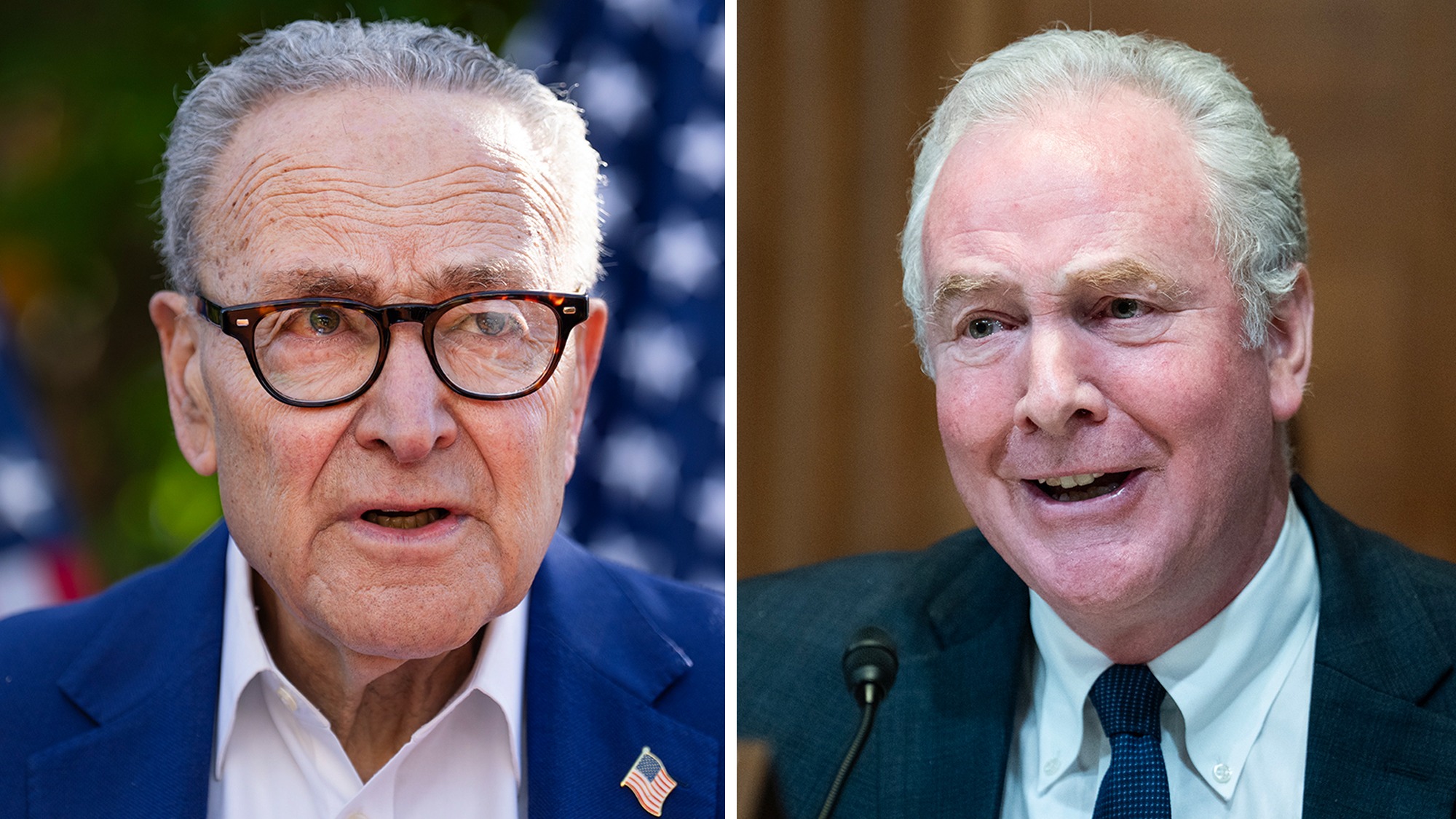
    Sen. Chuck Schumer helped engineer a “massive midterms triumph” for his party, said Stephen Collinson in CNN.com. His reward is a challenge to his decade-long leadership of Senate Democrats. Sen. Chris Van Hollen, a progressive from Maryland, announced last week that he would stand against Schumer in a Dec. 1 vote to decide the next Senate majority leader. A fierce critic of Israel’s war in Gaza, Van Hollen accuses Schumer, 75, of being “too cautious” in fighting Trump and too close to pro-Israel groups and donors. He cast Democrats’ massive wins on Election Day as a call “to reject business as usual. And to do that, I think we need new leadership.” Schumer insists he has the votes to prevail, and his supporters argue that the New York senator’s success in recruiting and backing winning candidates—Democrats will hold up to 56 seats in the next Senate, the largest majority for either party since the 2008 Obama wave—make his reinstatement a no-brainer. “When the manager takes you to the World Series,” said Arizona Sen. Ruben Gallego, “you give him another contract.” 

    That Senate Democrats are having their first contested leadership vote in three decades “is a good development,” said Nia-Malika Henderson in Bloomberg, “a sign of a healthy, big-tent party.” And managing such a party, which includes coastal leftists and Midwestern centrists, is not a job for a “strident ideologue” but a skilled, patient horse trader like Schumer. As for the talk of a needed generational change—which the 67-year-old Van Hollen wouldn’t provide—Schumer should “promise to step down as leader in two years, when his term ends, as proof that he is listening.” The best case against Schumer “is geography, not ideology,” said Michael Tomasky in The New Republic. If he wins, and Rep. Hakeem Jeffries becomes House speaker as expected, congressional Democrats will be led by two longtime Brooklynites. The party’s new senator-elects from Michigan, Kansas, and South Carolina have all publicly opposed Schumer’s continued leadership. Democrats should start visibly representing all of America. 

    The leadership vote will coincide with another “big postelection fight,” said Ed Kilgore in New York. A stopgap budget measure will expire on Dec. 11, and Van Hollen is leading a progressive faction that’s demanding funds for the Iran war be stripped from any new spending deal. Should Schumer join them, virtually ensuring that the government shuts down just before the holidays? Or should he oppose them, triggering a bitter intraparty schism that may shut down the government anyway? Regardless of what he does, “all hell could break out.”


    people

    Lange’s accidental career

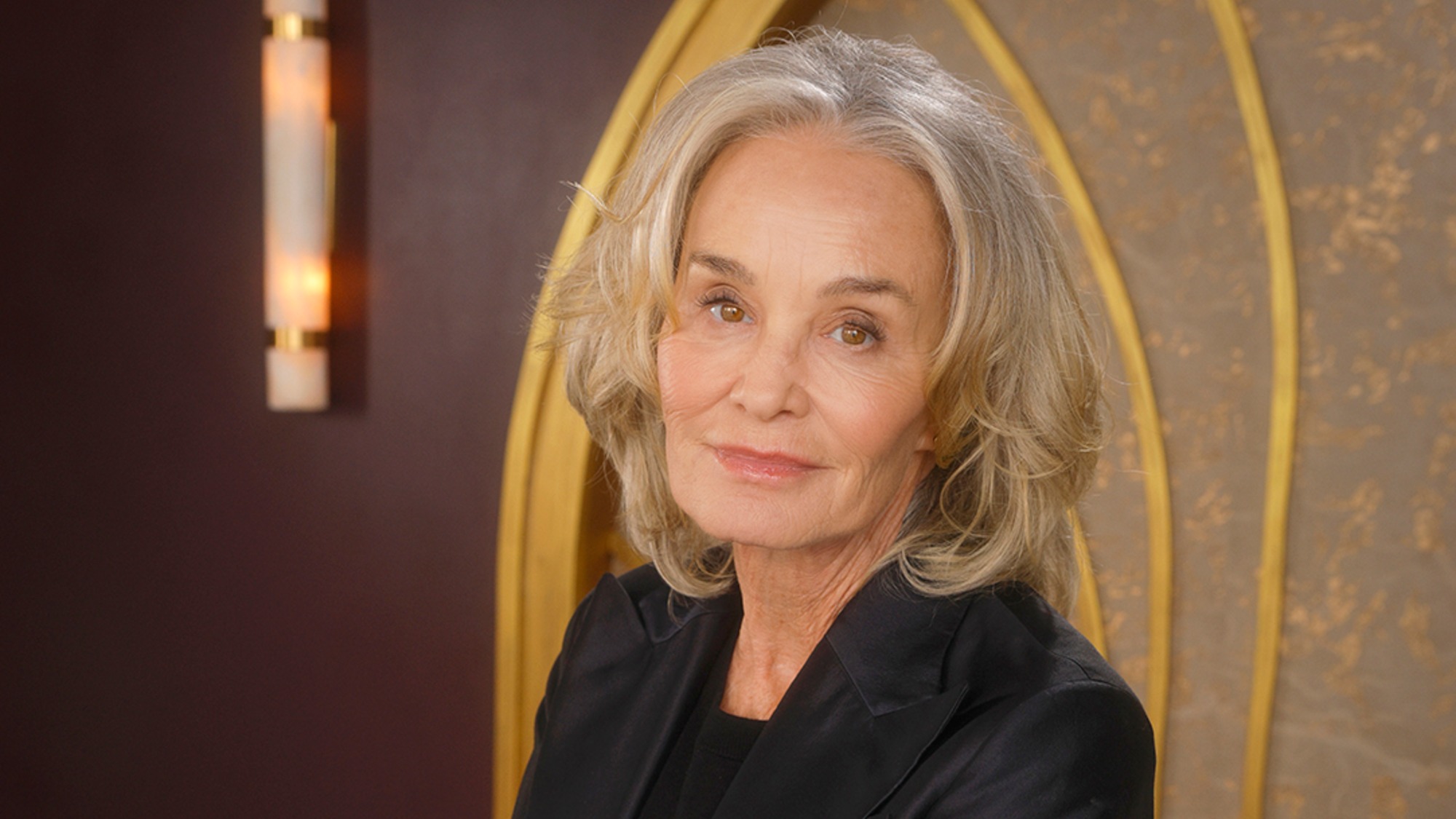
    Jessica Lange never aspired to movie stardom, said CT Jones in Rolling Stone. After dropping out of the University of Minnesota at 19 to travel around Europe with a bohemian group of friends, she settled in Paris in 1971 and studied mime. She returned to the U.S. in 1973, she says, “because I thought I should find something to do that has a future. Maybe mime might not be it.” Lange was working as a waitress in New York City and trying to get modeling gigs when she was asked to audition for King Kong (1976). “Well, I’m not that stupid. ‘Yeah, I’ll go. Why not? This might be a lark.’” She won the part and found herself acting alongside a 40-foot-tall mechanical gorilla. “They would have me sitting in this hydraulic hand that could have gone wrong at any moment. It could have killed me.” Lange, now 77, says she was too naive to worry—or to anticipate the shock of fame after the blockbuster’s 1976 release. She cried on a flight home for Christmas after seeing a fellow passenger reading a copy of Time with her on the cover. “I thought, ‘Oh, my God, my life is ruined.’ Suddenly, I’m this public thing.” Critics dismissed her as a “dumb blonde,”but she went on to win an Oscar for 1982’s Tootsie, and another for 1994’s Blue Sky. Acting “has been a joy for me. Difficult at times. But it all was a great adventure.”


    Saturday Wrap was written and edited by Theunis Bates, Susan Caskie, Bruno Maddox, Rebecca Nathanson, and Hallie Stiller.

    Image credits, from top:  Getty; Getty; Getty; Getty
     

    Recent editions

    • Evening Review

      Will the polar vortex bring snow?

    • Morning Report

      Trump urges Ukraine funding cuts after Putin talks

    • Evening Review

      GTA VI: a new frontier in gaming?

    VIEW ALL
    TheWeek
    • About Us
    • Contact Future's experts
    • Terms and Conditions
    • Privacy Policy
    • Cookie Policy
    • Advertise With Us
    • FAQ
    Add as a preferred source on Google Add as a preferred source on Google

    The Week UK is part of Future plc, an international media group and leading digital publisher. Visit our corporate site.

    © Future Publishing Limited Quay House, The Ambury, Bath BA1 1UA. All rights reserved. England and Wales company registration number 2008885.