The Week The Week
flag of US
US
flag of UK
UK
https://cdn.mos.cms.futurecdn.net/skoGBi9qKFoUtnNWkovjJQ.jpg

SUBSCRIBE

Try 6 Free Issues

Sign in
  • View Profile
  • Sign out
  • The Explainer
  • Talking Points
  • The Week Recommends
  • Podcasts
  • Newsletters
  • From the Magazine
  • The Week Junior
  • More
    • Politics
    • World News
    • Business
    • Health
    • Science
    • Food & Drink
    • Travel
    • Culture
    • History
    • Personal Finance
    • Puzzles
    • Photos
    • The Blend
    • All Categories
  • Newsletter sign up Newsletter
  • The Week’s Saturday Wrap
    Rachel McAdams gets gory, Lindsey Vonn goes for gold, and George Saunders returns to the afterlife

     
    FILM review

    Send Help

    An office doormat is stranded alone with her awful boss

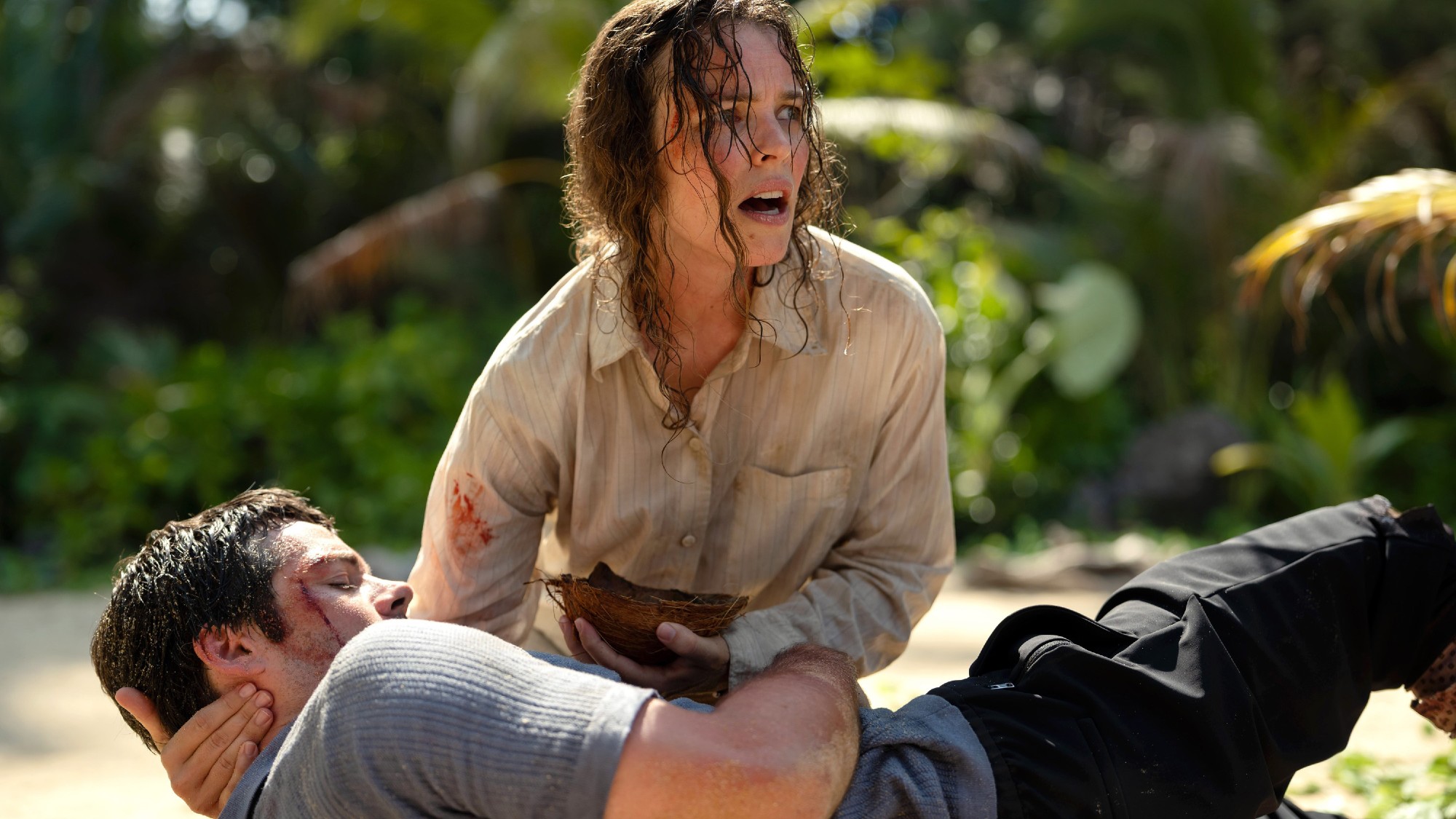
    “The most purely enjoyable Sam Raimi film in years,” Send Help is a horror-comedy that has “the potential to be timeless,” said Alison Foreman in IndieWire. A “rigorously committed” Rachel McAdams stars as a corporate underling who becomes marooned on a deserted island with her company’s new CEO shortly after the pampered young exec, played by Dylan O’Brien, denied her a promotion. Because O’Brien’s Brady is injured and McAdams’ Linda is far more resourceful, the power balance flips, throwing the pair into a survival drama that’s “ghastly without being grim and morally queasy without being mean.” But Raimi undermines the movie’s “shrewd satire” because he chooses to “juice everything up with spurious horror flourishes,” said Peter Bradshaw in The Guardian. Apparently, he’s still playing to fans of his 1981 breakthrough, The Evil Dead, and the eruptions of gore “undermine the film’s believability, turning everything into silliness.” Still, McAdams shines as a dweeb who transforms into a badass survivalist, and “seeing the actress let her freak flag fly is a delight,” said Frank Scheck in The Hollywood Reporter. O’Brien “matches her step for step” as he transforms from “enjoyably hissable” to possibly humbled. Meanwhile, Raimi “attacks the material with a joyous ferocity,” getting gruesome when needed and relishing every plot twist. Send Help does lose steam toward the end. “But the surprising climax, plus an amusing coda, brings it all home.”


    tv review

    The 2026 Winter Olympics

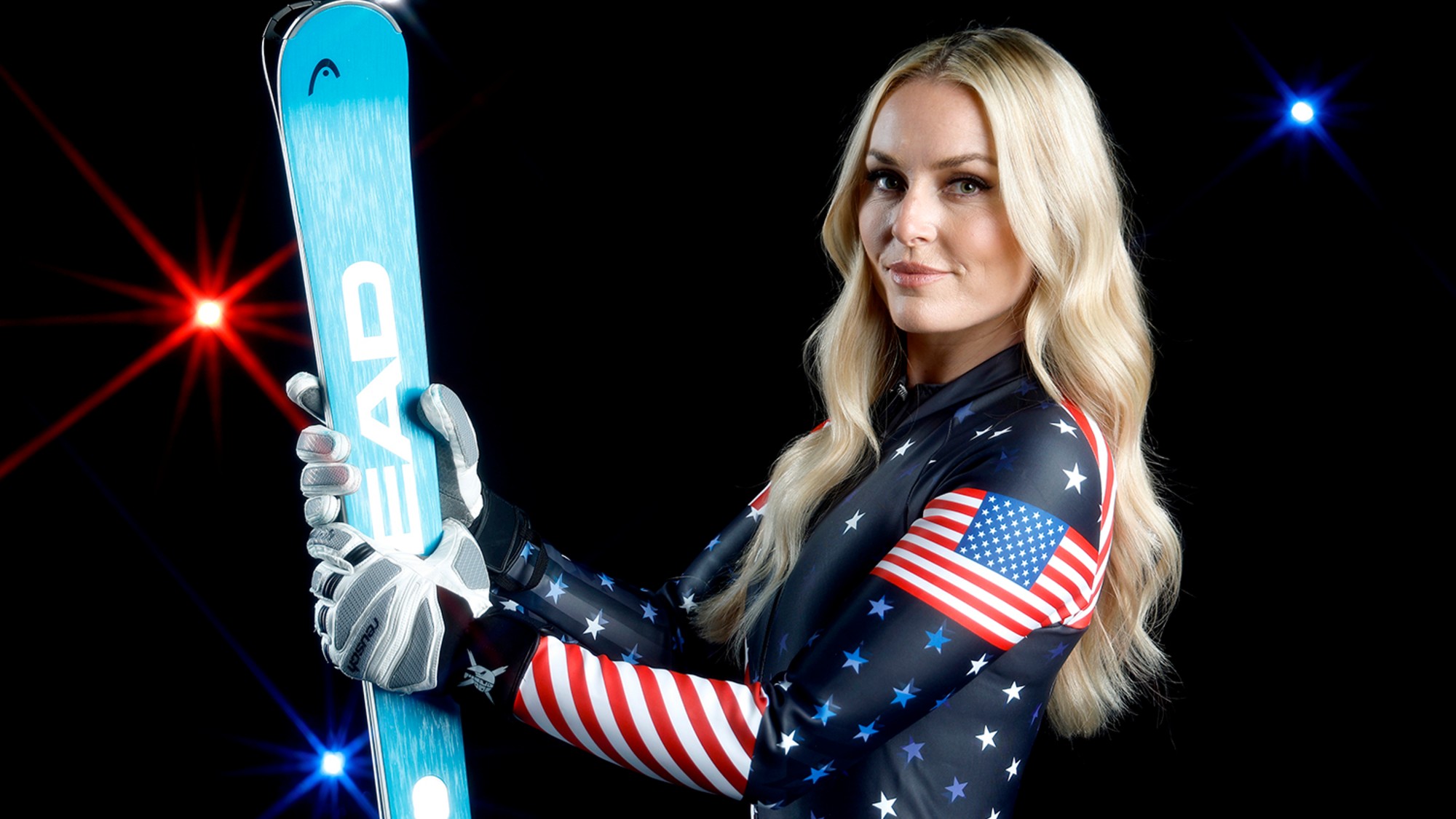
    There’s nothing like the Winter Olympics to take your mind off the world’s craziness. This year’s games, in snowy Milan and Cortina d’Ampezzo, Italy, will often be appointment television when athletes in red, white, and blue compete. Skiing superstars Mikaela Shiffrin and Ryan CochranSiegle return with expectations to medal, joined by all-time great Lindsey Vonn, who at 41 is still skiing strong. Snowboarding savant Chloe Kim is a go despite suffering a shoulder injury, and all eyes will be on the rink when U.S. skaters Alysa Liu and “Quad God” Ilia Malinin hit the ice. Friday, Feb. 6, at 2 p.m., NBC and Peacock 


    FOOD & DRINK

    Coffee liqueur: Italian classics

    Thanks to the ongoing espresso martini craze, the number of excellent coffee liqueurs on the U.S. market keeps multiplying, said Brad Thomas Parsons in Punch. While many Americans lean on Kahlúa or Mr. Black, these options “play well in old standards like the White Russian” and are also “delicious on their own over ice.” 

    Caffè Borghetti Espresso Liqueur ($27)
    Produced in Milan since 1860 and “a national favorite” in Italy, Borghetti outclasses Kahlúa by delivering “a richer, luxurious, more vibrant espresso flavor profile.” 

    Varnelli Caffè Moka ($50)
    Produced since 1868 by a family-owned distillery in the Sibillini Mountains, this elevated liqueur combines Italian espresso with honey, herbs, and other botanicals. 

    Santa Maria Al Monte Caffè Ligure ($36)
    The espresso truly shines in this liqueur, which is also flavored with vanilla and cocoa. It makes a nice amaro because “it has all the properties of a fernet, without actually calling itself one.”


    BOOK OF THE WEEK

    Vigil: A Novel

    by George Saunders

    George Saunders’ slim new novel is “a strikingly weird work of modern fiction,” said Ron Charles in The Washington Post. Like Lincoln in the Bardo, the author’s 2017 Booker Prize winner, Vigil concerns the liminal space between life and death, yet this story “seems to have risen up from the loamy soil of medieval allegory.” As K.J. Boone, former CEO of the world’s largest oil company, lies on his deathbed, he’s visited by various ghosts, including two who initiate a debate about whether to comfort Boone as his end nears or confront him with the enormous damage he’s done. Though Saunders’ language here is “rarely specifically Christian,” the story is “explicitly moral.” And because it’s a George Saunders book, Vigil is “full of philosophical musings, corny antics, and plaintive yearnings set down in lines as surprising and agile as deer.” 

    Given that Boone is depicted as indisputably guilty of and unrepentant about a world-wrecking career, “there is little moral work to do here,” said Beejay Silcox in The Guardian. Fortunately, the story’s narrator, a ghost whose name in life was Jill “Doll” Blaine, is a “far more interesting creature.” Since her death in early adulthood in the 1960s, she has felt obliged to ease other souls from life into death. As she wrestles with whether Boone merits her usual kindnesses, Jill also suffers reminders of her previous life as a mortal, and it’s as unfinished souls that she and Saunders’ other ghosts are most compelling. Still, Saunders, a short story master, has now written two consecutive novels about final reckonings watched over by comically argumentative spirits. “What once felt anarchic has hardened into habit, a repertoire of tricks and tics.” A self-help book disguised as literature, said Dwight Garner in The New York Times, “it’s going to be an enormous best seller for depressing reasons.” 

    Vigil, because it wrestles with today’s world in a way Lincoln in the Bardo did not, proves the “more morally gripping” novel, said Gary Sernovitz in Bloomberg. The 87-year-old Boone is clearly modeled on former ExxonMobil CEO Lee Raymond, who during his 1993–2005 reign aggressively championed fossil fuel production and fought the findings of climate change science. Saunders, “just by being a master of American fiction,” makes us see such corporate leaders in a different light. “Which of us, Saunders might be asking, will not have regrets on our deathbed, and which of us will not wish to keep them at bay?” said Pico Iyer in Air Mail. Yes, he is less storyteller here than moral instructor, but he has cooked up “a jaunty, irreverent, and constantly surprising sermon on forgiveness.” With the possible exception of Bardo, “I’ve never read anything like this before,” and “if I’m lucky, I’ll never forget it.” 

     
     
    OBITUARY

    William H. Foege

    The intrepid doctor who defeated smallpox

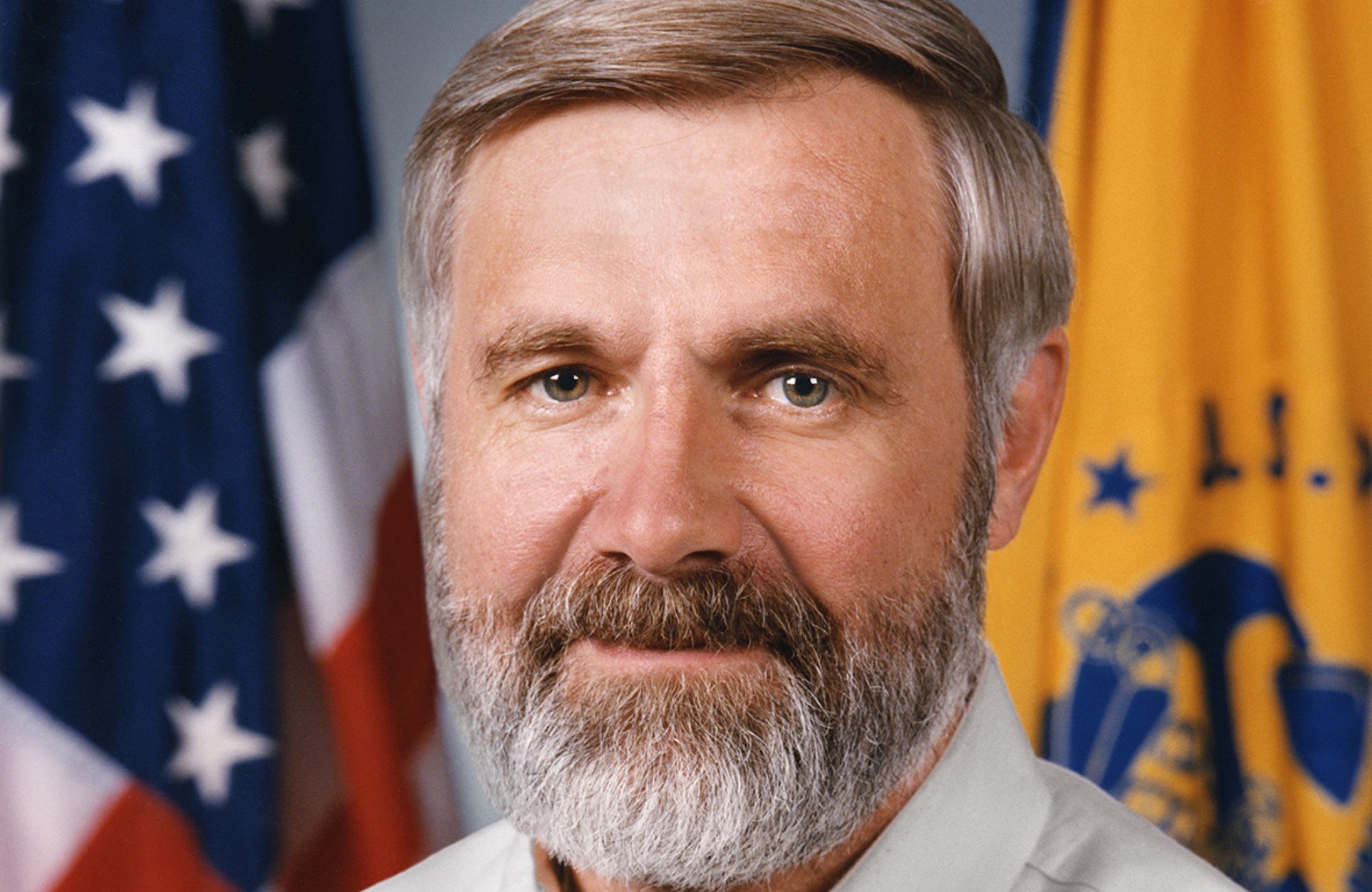
    William Foege banished one of the world’s most feared diseases to history. Over the centuries, as many as 500 million people have died of smallpox, but thanks in large part to Foege’s global eradication campaign, no one has contracted the dreaded disease since 1978. The epidemiologist realized that it was not necessary to achieve universal smallpox vaccination; instead, he and his team of doctors created a more efficient system of “surveillance-containment” by going door-todoor in Nigeria and Sierra Leone to identify people with smallpox, isolating them, and then vaccinating people they had contact with. As CDC director from 1977 through 1983, Foege also led the nation’s early response to the HIV/AIDS pandemic, and his work with the Carter Center has brought the parasitic guinea worm close to eradication. “Bet on the optimists,” he said. “You need the optimist to say, ‘We’re going to try to do it.’” 

    The son of a Lutheran pastor, Foege was born in Decorah, Iowa, said The Telegraph (U.K.). The accomplishments of humanitarian physician Albert Schweitzer inspired him to pursue medicine. After completing his studies, Foege traveled to rural eastern Nigeria as a Lutheran missionary doctor in 1966 and soon joined the CDC’s worldwide smallpox eradication campaign. The job required “considerable charisma and no small degree of cunning.” One village chief who worked with the 6-foot-7-inch Foege “coaxed out thousands of people to be vaccinated” by inviting them to see “the world’s tallest man.” By 1967, eastern Nigeria was “free of smallpox.” 

    “India remained a problem,” though, said The Washington Post, and in 1973 he brought his vaccination strategy there. He initially faced a backlash, as improved surveillance made it seem as if smallpox cases had increased, but by 1975 India too had eradicated the disease. Back in the U.S., Foege often found his work hampered by politics, said The New York Times. “Budget cuts and an indifferent Reagan White House” stymied his efforts to fight the AIDS epidemic. More recently, he was furious when President Trump made antivaxxer Robert F. Kennedy Jr. his health secretary. “Kennedy would be less hazardous if he decided to do cardiac surgery,” Foege wrote. “Then he would kill people only one at a time rather than his current ability to kill by the thousands.” 


    Sunday Shortlist was written and edited by Ryan Devlin, Bill Falk, Chris Mitchell, Tim O'Donnell, Matt Prigge, and Hallie Stiller.

    Image credits, from top: 20th Century Studios; Getty; Shutterstock; Getty
     

    Recent editions

    • Saturday Wrap

      Has Trump finally lost it?

    • Evening Review

      Soaring student debt

    • Morning Report

      Starmer opens door to UK visit for Xi

    VIEW ALL
    TheWeek
    • About Us
    • Contact Future's experts
    • Terms and Conditions
    • Privacy Policy
    • Cookie Policy
    • Advertise With Us
    • FAQ
    Add as a preferred source on Google

    The Week UK is part of Future plc, an international media group and leading digital publisher. Visit our corporate site.

    © Future Publishing Limited Quay House, The Ambury, Bath BA1 1UA. All rights reserved. England and Wales company registration number 2008885.