The civil rights icon who was a groundbreaker and peacemaker
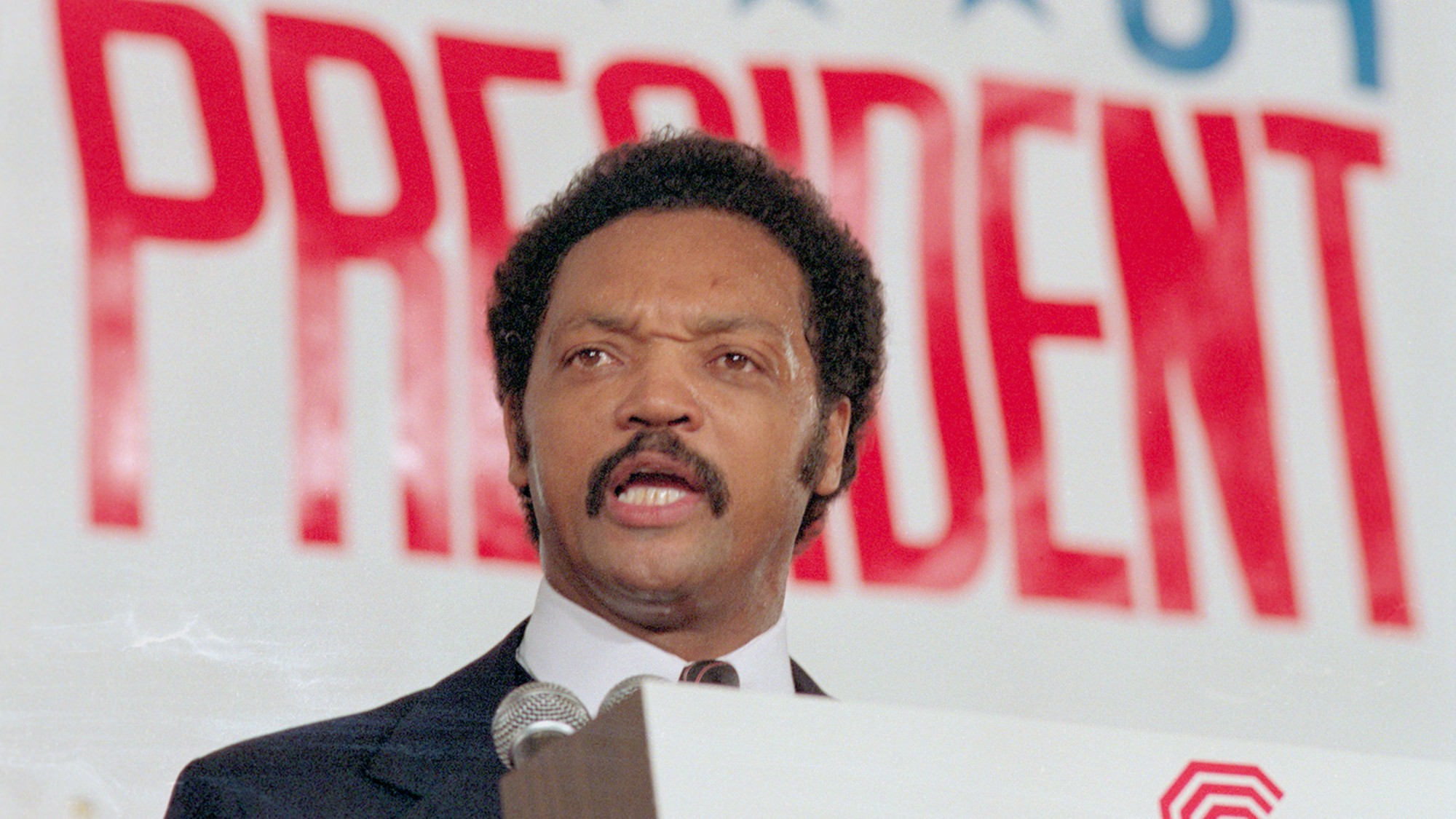
The son of an unmarried teen mother raised in the Jim Crow South, Rev. Jesse Jackson rose to become a political trailblazer and the most prominent civil rights leader of his generation. A protégé of Martin Luther King Jr. with a gift for electrifying oratory, Jackson claimed the mantle of successor after King was assassinated in 1968. In the following years, he worked for Black empowerment, leading social-justice protests, pushing companies to hire Black workers, and inspiring Black youth with his mantra “I am somebody!” Running for president in 1984 and 1988, he was the first Black candidate to make meaningful headway, finishing second in the 1988 Democratic primary. Often polarizing, Jackson alienated many with his relentless self-promotion and occasional offensive remarks, although even his detractors never questioned his gifts as a mobilizer. “My constituency is the desperate, the damned, the disinherited, the disrespected, and the despised,” he said in 1984. “They are restless and seek relief.”
He was born in Greenville, S.C., “under highly unpromising circumstances,” said the Chicago Sun-Times. His 16-year-old mother lived in a house with no plumbing; his father, a married neighbor, shunned him. “Taunted for his stammer,” he nonetheless excelled as a student and athlete and won a football scholarship to the University of Illinois. During a summer break he made his first foray into activism, leading a sit-in at Greenville’s whites-only library. The experience lit a fire in him, and he transferred to a Black college in North Carolina, where he became class president and met his wife, Jacqueline. After graduation, they moved to Chicago and Jackson attended seminary. By that point he had “immersed himself in the blossoming civil rights movement,” said the Associated Press. In 1965, he met King at a march in Selma, Ala. Struck by Jackson’s drive, King made him Chicago organizer of the Southern Christian Leadership Conference (SCLC).
Jackson “went home transformed,” said The New York Times. He became the leader of Operation Breadbasket, which used boycotts to pressure companies to hire and promote Black workers. By 1967, he “was gaining a national reputation” and was ensconced in “King’s inner circle,” and the following year he was ordained as a minister. As his profile grew, so did tensions with those who accused him of grandstanding—particularly after King was killed in Memphis. Jackson, who was there, “appeared on the Today show” in a bloodstained sweater, claiming to have cradled King’s head as he died, a detail others refuted. The bad blood grew, and in 1971, Jackson resigned from the SCLC to start his own organization, People United to Save Humanity.
Over the next decade Jackson “became a household name,” said The Telegraph (U.K.). He “crisscrossed the country, speaking out against racism, militarism, and class divisions.” In forays abroad, he denounced South African apartheid and backed Palestinian statehood. While sometimes controversial, the trips boosted his profile and set the stage for his presidential runs. During his “chaotic” 1984 bid, said The Washington Post, Jackson “was widely viewed as a gadfly with no chance of winning,” and he caused an uproar over an offensive reference to Jews as “Hymies.” Still, with his boldly progressive campaign and calls for a multiracial “rainbow coalition,” he defied expectations, finishing third. In 1988, he “was better financed and organized,” and he pulled some 7 million votes, ending second behind Michael Dukakis and setting a new bar for a “Black person in American presidential politics.”
“Jackson continued to travel, agitate, and protest” in later years, said the Los Angeles Times, “but the spotlight had moved on.” He worked as a kind of freelance diplomat, helping to free hostages in Syria, Cuba, and Iraq, and was awarded the Presidential Medal of Freedom in 2000. When Barack Obama won the Democratic nomination in 2008, it was a bittersweet moment for Jackson, who had accused Obama of talking down to Black voters, but on election night he wept with joy. “Sometimes when you tear down walls, you’re scarred by falling debris,” he said, “but your mission is to open up holes so others behind you can run through.”