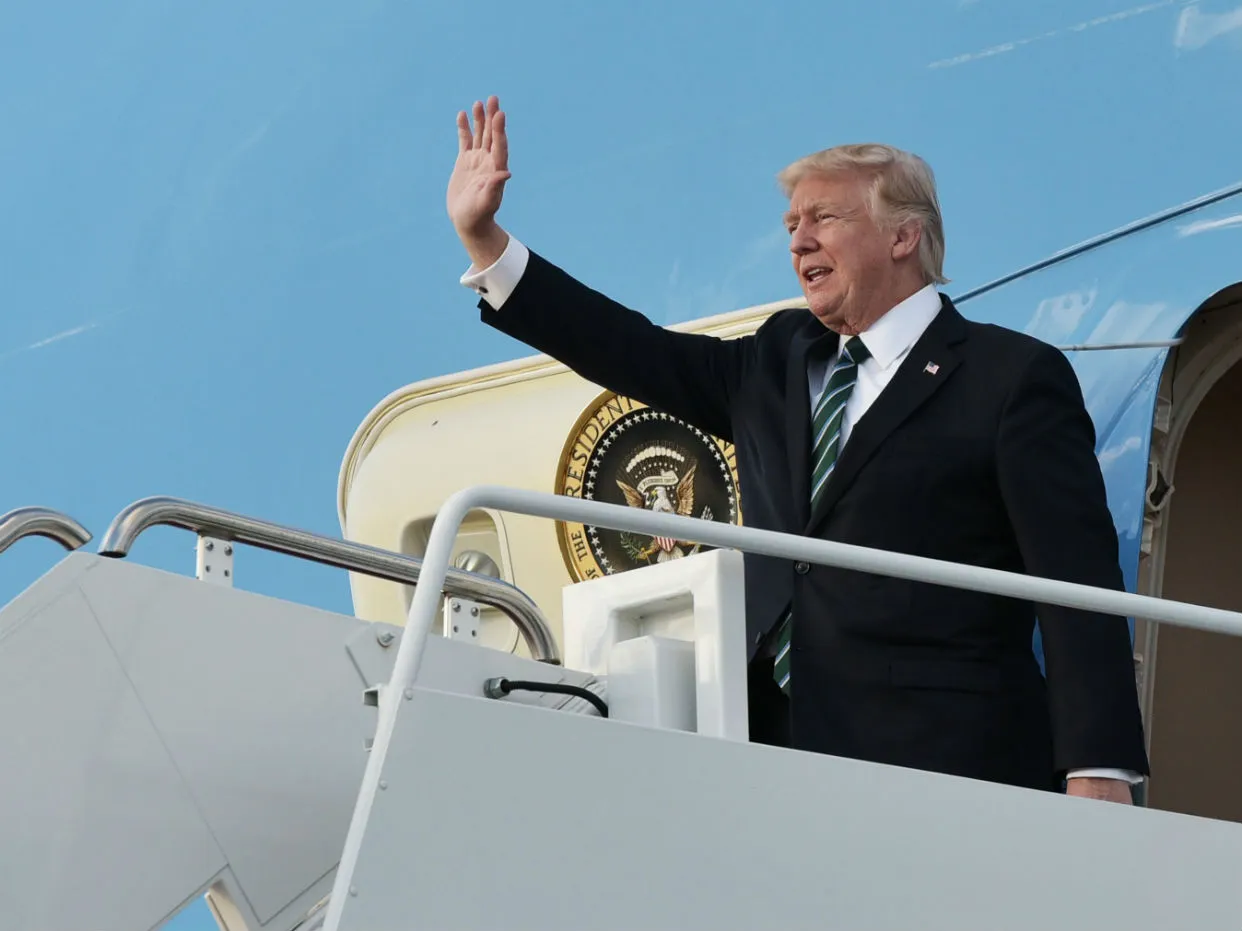
Donald Trump's state visit to the UK has reportedly been "put on hold" after he called Theresa May to say he does not want to come if there are likely to be large-scale protests.
According to a Downing Street adviser said to be in the room at the time of the call, the conversation took place several weeks ago and "surprised May", says The Guardian.
Downing Street refused to comment on "speculation about the contents of private phone conversations", but insisted there has been no change to the plans and the Queen's invitation still stands.
The Week
Escape your echo chamber. Get the facts behind the news, plus analysis from multiple perspectives.
SUBSCRIBE & SAVE
Sign up for The Week's Free Newsletters
Join more than 350,000 subscribers and keep yourself informed with a selection of The Week’s most interesting, enlightening and entertaining stories - plus daily puzzles.
Join more than 350,000 subscribers and keep yourself informed with a selection of The Week’s most interesting, enlightening and entertaining stories - plus daily puzzles.
Latest Videos FromThe Week US
Lib Dem leader Tim Farron said Trump was "clearly terrified of the British public".
He added: "He knows that the British people find his politics appalling and that they won't be scared to make their views known.
"May should be embarrassed that she was so quick to offer Trump a state visit. Now neither of them want to be seen with the other."
Labour leader Jeremy Corbyn called for the cancellation of the visit altogether, joining MPs from across the political spectrum in citing disagreements over the Paris climate accord and the US President's criticism of London Mayor Sadiq Khan following the London Bridge terror attacks.
May, the first foreign leader to visit Trump in the White House, issued the invitation seven days after the President's inauguration in January. Many senior diplomats, including Lord Ricketts, a former national security adviser, said the invitation was premature but impossible to rescind once made.