Sign up to get Today’s Best Articles in your inbox
Join 350,000+ subscribers and keep yourself informed with a selection of
The Week’s most interesting, enlightening and entertaining stories - plus daily puzzles.
You are now subscribed
Your newsletter sign-up was successful
Want to add more newsletters?
An account already exists for this email address, please log in.
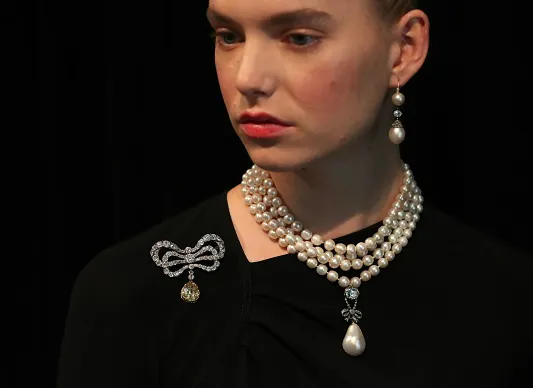
Marie Antoinette’s pearl necklace sells for £28m
Historic pendant made more than 15 times its reserve price at Sotheby’s auction house in Geneva
Owned by the Bourbon-Parma family for generations, some of the pieces in the collction hadn’t been seen in public for more than 200 years, according to BBC. They were collectively sold for £53m.
The Week
Escape your echo chamber. Get the facts behind the news, plus analysis from multiple perspectives.
Join more than 350,000 subscribers and keep yourself informed with a selection of The Week’s most interesting, enlightening and entertaining stories - plus daily puzzles.
Join more than 350,000 subscribers and keep yourself informed with a selection of The Week’s most interesting, enlightening and entertaining stories - plus daily puzzles.
Of the 100 pieces auctioned, ten belonged to Antoinette.
Sotheby’s called the Geneva auction “one of the most important royal jewellery collections ever to appear on the market”.
“This extraordinary group of jewels offers a captivating insight into the lives of its owners going back hundreds of years,” Sotheby’s deputy chair Daniela Mascetti said. “The precious gems they are adorned with and the exceptional craftsmanship they display are stunning in their own right.”
The wife of the French King Louis XVI, Antoinette was widely reviled by the French people, who resented her luxurious lifestyle while they lived in abject poverty. She was executed during the French Revolution, but managed to have her jewels smuggled to her relatives abroad before being guillotined in 1793.
Sign up to get Today’s Best Articles in your inbox
A free daily email with the day’s biggest news and analysis – and the best features from TheWeek.com
“This is about far more than the gems themselves - Marie Antoinette’s jewellery is inextricably linked to the cause of the French Revolution,” Eddie LeVian, chief executive of jewellers Le Vian, told The Guardian.
In addition to the pearl necklace, the sale included a diamond ring containing a lock of Antoinette’s hair, and a pair of diamond and pearl earrings that belonged to her. Pieces from King Charles X, the Archdukes of Austria and the Dukes of Parma were also up for auction.
The previous record for a pearl sold at an auction was set in 2011, when a necklace owned by the late Dame Elizabeth Taylor fetched $11.8m (£9.2m).