Sign up to get Today’s Best Articles in your inbox
Join 350,000+ subscribers and keep yourself informed with a selection of
The Week’s most interesting, enlightening and entertaining stories - plus daily puzzles.
You are now subscribed
Your newsletter sign-up was successful
Want to add more newsletters?
An account already exists for this email address, please log in.
Sanae Takaichi: Japan’s Iron Lady set to be the country’s first woman prime minister
Takaichi is a member of Japan’s conservative, nationalist Liberal Democratic Party
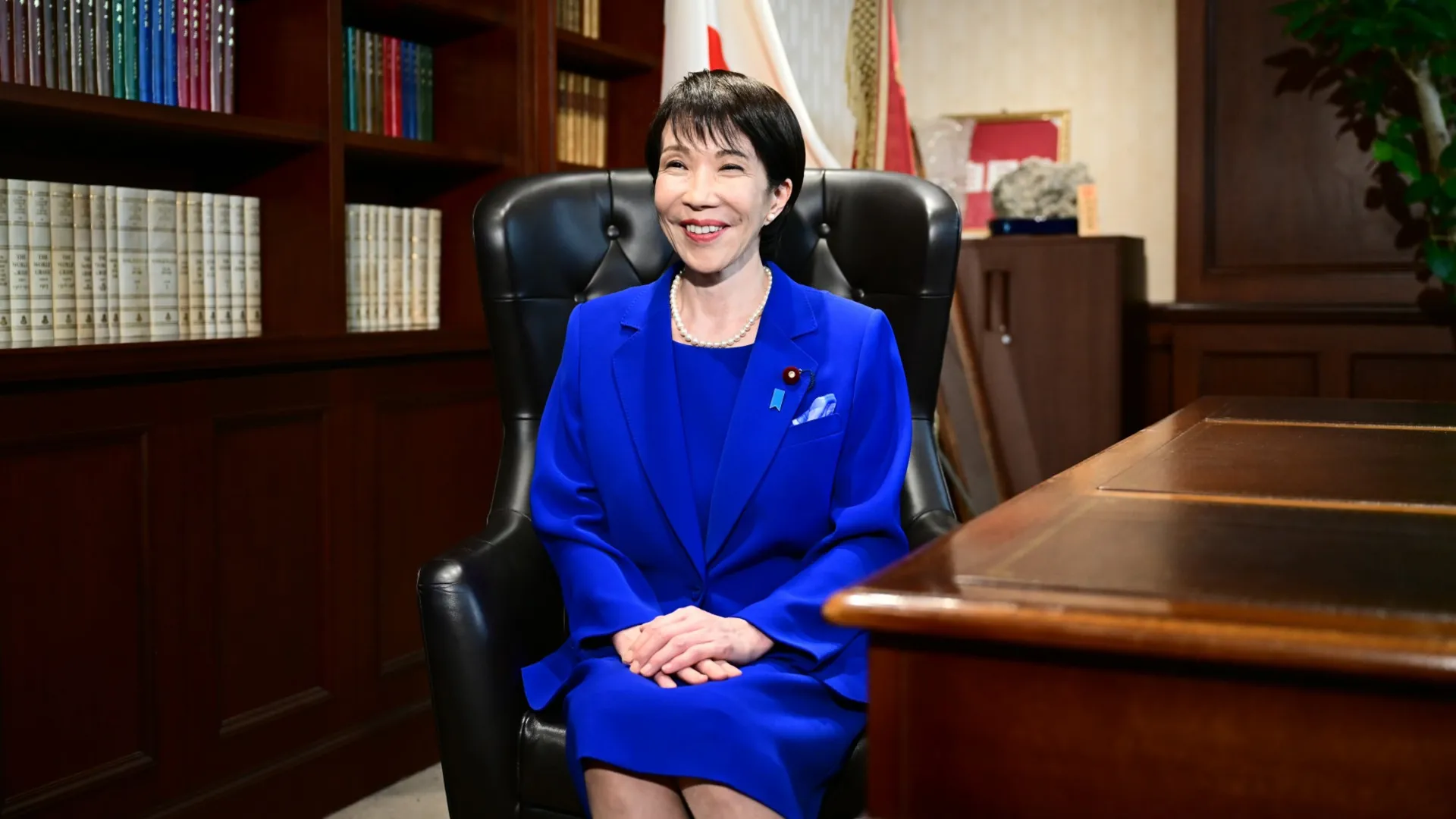
Japan appears poised to select a new leader, and this will likely shatter the country’s longstanding glass ceiling: Sanae Takaichi is all but guaranteed to be chosen as Japan’s next prime minister, making her the first woman to hold the office. Takaichi, recently elected as head of Japan’s ruling Liberal Democratic Party (LDP), is a conservative nationalist whose policies align with prior Japanese leaders on the right, most notably former Prime Minister Shinzo Abe. But while Takaichi might make history, she will also face challenges as she takes control of the Japanese government.
From heavy metal to politics
Takaichi, 64, was born in the city of Yamatokoriyama in Japan’s Nara Prefecture. As a child, she was an “avid heavy metal drummer” from a family in which “politics was far removed,” said the BBC. She graduated from Japan’s Kobe University, briefly becoming a television host before moving to the United States in the 1980s during the “height of U.S.-Japan trade friction.”
During her time in the U.S., Takaichi “worked briefly in Washington for Patricia Schroeder, a feminist congresswoman from the Democratic Party,” said The Economist. She eventually won a seat in Japan’s legislature, the Diet, in 1993, and “found common cause with Shinzo Abe, the late prime minister, on the LDP’s right wing.”
The Week
Escape your echo chamber. Get the facts behind the news, plus analysis from multiple perspectives.
Join more than 350,000 subscribers and keep yourself informed with a selection of The Week’s most interesting, enlightening and entertaining stories - plus daily puzzles.
Join more than 350,000 subscribers and keep yourself informed with a selection of The Week’s most interesting, enlightening and entertaining stories - plus daily puzzles.
Takaichi has since become a staple in Japanese politics; since her first victory, she has been “elected as a [member of parliament] 10 times, losing only once, and built a reputation as one of the party's most outspoken conservative voices,” said the BBC. In addition, Takaichi has held other government roles, including “minister for economic security, state minister for trade and industry and a record-breaking tenure as minister for internal affairs and communications.”
Next prime minister
Given that the LDP has selected Takaichi as its head, she is “likely to be Japan’s leader because the LDP, even without a majority in either house of parliament following consecutive election losses, is still by far the largest in the lower house,” which selects the prime minister, said The Associated Press. But while the LDP has long controlled most facets of the Japanese government, Takaichi “will need to address rising prices to restore support for the struggling party.”
As someone known for her staunch conservatism, Takaichi has often been compared to former British Prime Minister Margaret Thatcher and is known as Japan’s Iron Lady. Takaichi has “vowed to ensure strengthening of the Japan-U.S. alliance as essential to her country’s diplomacy and security,” said the AP, and also said she was looking forward to working with President Donald Trump. But the LDP has been losing its grasp as younger voters leave its ranks, and the party is “essentially betting on a swing back to the right to attract the younger voters who have flocked to smaller populist outfits,” said Fortune.
This may controversially include forming a coalition with Sanseito, a far-right populist party influenced by the MAGA movement, which won 14 new seats in a recent election. But that “could backfire if the party is seen simply reverting to the easy money and hawkish diplomacy” of prior years, said Fortune. And Takaichi has also been criticized for her conservatism, particularly on women’s rights. She won’t have “much success at healing the internal party rift,” Jeff Kingston, a professor of Asian Studies at Tokyo’s Temple University, told the BBC. “She’s not much of a healer. I don't think she’s done much to empower women.”
Sign up to get Today’s Best Articles in your inbox
A free daily email with the day’s biggest news and analysis – and the best features from TheWeek.com
Justin Klawans has worked as a staff writer at The Week since 2022. He began his career covering local news before joining Newsweek as a breaking news reporter, where he wrote about politics, national and global affairs, business, crime, sports, film, television and other news. Justin has also freelanced for outlets including Collider and United Press International.