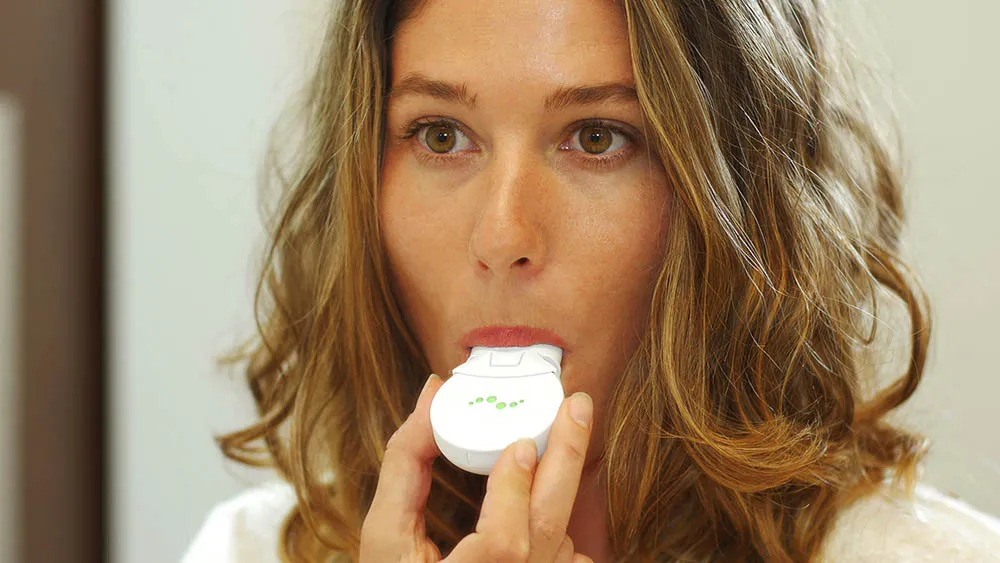
This gadget will tell you if your breath stinks — and if you need to see a dentist
It'll cost you $100
A free daily email with the biggest news stories of the day – and the best features from TheWeek.com
You are now subscribed
Your newsletter sign-up was successful
"The human mouth is a disgusting place, capable of emitting awful smells," said Rachel Becker at The Verge. Trouble is, "smelling your own breath is anatomically challenging." But Mint, a smart mouthpiece built by a Silicon Valley–based startup called Breathometer, will do it for you, sniffing your mouth for signs of bad oral health. Users bite down on the Mint mouthpiece for 30 seconds, while it sucks in a bit of air for analysis.
The device uses electrochemical sensors to check for sulfur-containing molecules, which are associated with periodontal disease, a serious condition that can destroy bone and gum tissue and eventually lead to lost teeth. Mint, which sells for $100, connects to an app that helps users track their oral hygiene and assigns grades for oral health: An 'A' means all is well. "An 'F' means make an appointment with your dentist. Like, now."
A free daily email with the biggest news stories of the day – and the best features from TheWeek.com
The Week
Escape your echo chamber. Get the facts behind the news, plus analysis from multiple perspectives.
Sign up for The Week's Free Newsletters
From our morning news briefing to a weekly Good News Newsletter, get the best of The Week delivered directly to your inbox.
-
Film reviews: ‘Send Help’ and ‘Private Life’Feature An office doormat is stranded alone with her awful boss and a frazzled therapist turns amateur murder investigator
-
Movies to watch in Februarythe week recommends Time travelers, multiverse hoppers and an Iraqi parable highlight this month’s offerings during the depths of winter
-
ICE’s facial scanning is the tip of the surveillance icebergIN THE SPOTLIGHT Federal troops are increasingly turning to high-tech tracking tools that push the boundaries of personal privacy