Sign up to get Today’s Best Articles in your inbox
Join 350,000+ subscribers and keep yourself informed with a selection of
The Week’s most interesting, enlightening and entertaining stories - plus daily puzzles.
You are now subscribed
Your newsletter sign-up was successful
Want to add more newsletters?
An account already exists for this email address, please log in.
Louisville Police had 'practice' of abuses, 'aggressive' enforcement against Black people, DOJ investigation finds
Nearly five years after plainclothes officers shot and killed Breonna Taylor, an unarmed Black woman, during a botched search warrant raid in her Louisville home, the Justice Department found the Louisville Metro Police Department broadly "engage[d] in a pattern or practice of conduct that deprives people of their rights under the Constitution and federal law."
That conclusion, published Wednesday, comes after two years of DOJ investigations into the LMPD, prompted by Taylor's death and the broad social and racial justice protests it sparked. The 90-page document covers a number of ways the department, and the Louisville government at large, allowed unlawful conduct to "continue unchecked," writing that for years, "LMPD has practiced an aggressive style of policing that it deploys selectively, especially against Black people, but also against vulnerable people throughout the city."
Join more than 350,000 subscribers and keep yourself informed with a selection of The Week’s most interesting, enlightening and entertaining stories - plus daily puzzles.
Join more than 350,000 subscribers and keep yourself informed with a selection of The Week’s most interesting, enlightening and entertaining stories - plus daily puzzles.
LMPD uses excessive force, including unjustified neck restraints and the unreasonable use of police dogs and tasers.
LMPD conducts searches based on invalid warrants.
LMPD unlawfully executes search warrants without knocking and announcing.
LMPD unlawfully stops, searches, detains, and arrests people during street enforcement activities, including traffic and pedestrian stops.
LMPD unlawfully discriminates against Black people in its enforcement activities.
LMPD violates the rights of people engaged in protected speech critical of policing.
Louisville Metro and LMPD discriminate against people with behavioral health disabilities when responding to them in crisis.
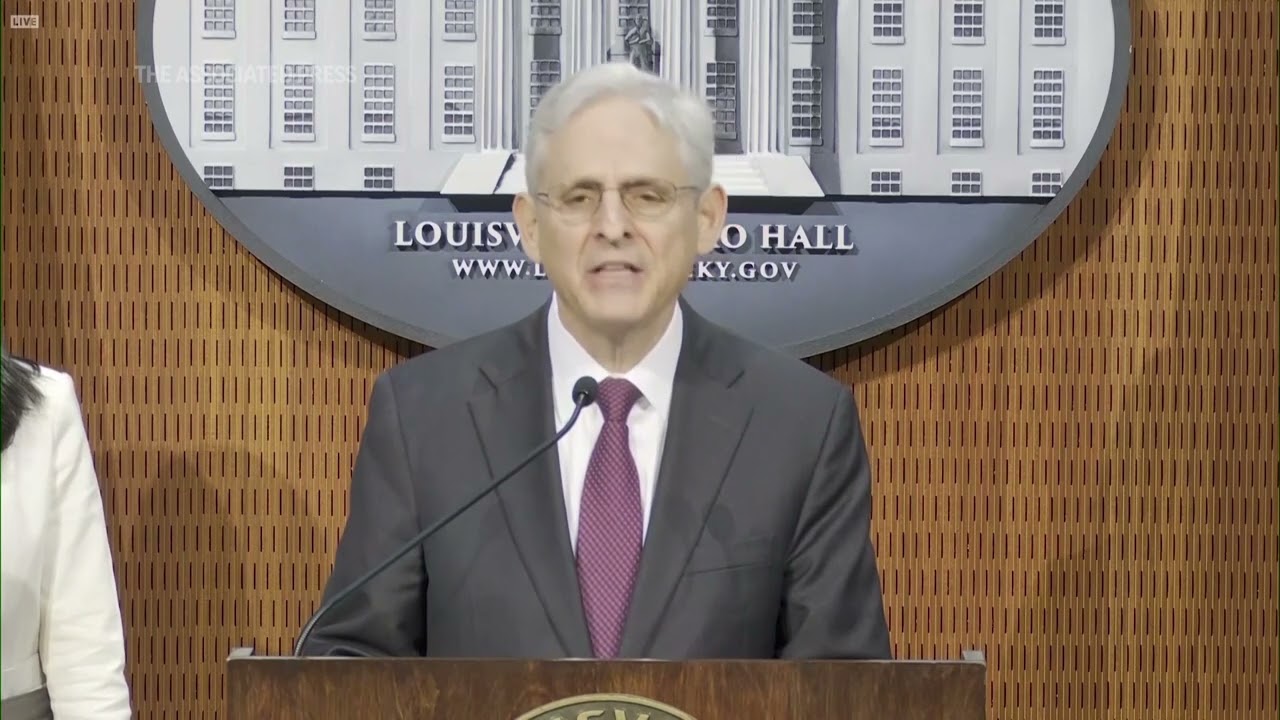
Calling his department's findings "unacceptable and unconstitutional," Attorney General Merrick Garland said the behavior "erodes the community trust necessary for effective policing" in a brief statement.
"To those people who have been harmed: on behalf of our city government, I'm sorry," newly elected Louisville Mayor Craig Greenberg said, following the release of the investigation report. "You deserved better."
As the Justice Department noted, Louisville has spent more than $40 million to resolve police misconduct claims over the past six years, although it has also "not waited to make changes" such as banning the controversial "no-knock" warrants that were used at Taylor's home, and dispatching mental health professionals on certain 911 calls. However, the department concluded, "much work remains to ensure that the city and its police department comply with federal law." To that end, the DOJ has recommended several steps the department can take to stem its pattern of violations, including revising its use-of-force policies and training, and adjusting its methods for obtaining and executing search warrants.
Sign up to get Today’s Best Articles in your inbox
A free daily email with the day’s biggest news and analysis – and the best features from TheWeek.com
On Twitter, Rep. Cori Bush (D-Mo.) reacted to the department's findings, saying the report only confirmed "what we already know about too many police departments: they unlawfully discriminate against Black people and people with disabilities."
"I'm thinking of Breonna Taylor now," Bush added. "She should be alive today."
Rafi Schwartz has worked as a politics writer at The Week since 2022, where he covers elections, Congress and the White House. He was previously a contributing writer with Mic focusing largely on politics, a senior writer with Splinter News, a staff writer for Fusion's news lab, and the managing editor of Heeb Magazine, a Jewish life and culture publication. Rafi's work has appeared in Rolling Stone, GOOD and The Forward, among others.