The Week The Week
flag of US
US
flag of UK
UK
https://cdn.mos.cms.futurecdn.net/flexiimages/jacafc5zvs1692883516.jpg

SUBSCRIBE & SAVE

Less than $3 per week

Sign in
  • View Profile
  • Sign out
  • The Explainer
  • The Week Recommends
  • Newsletters
  • Cartoons
  • From the Magazine
  • The Week Junior
  • Student Offers
  • More
    • Politics
    • World News
    • Business
    • Health
    • Science
    • Food & Drink
    • Travel
    • Culture
    • History
    • Personal Finance
    • Puzzles
    • Photos
    • The Blend
    • All Categories
  • Newsletter sign up Newsletter
  • The Week Evening Review
    The unstoppable president, zero-bills homes, and the Iran protest death toll

     
    TODAY’s BIG QUESTION

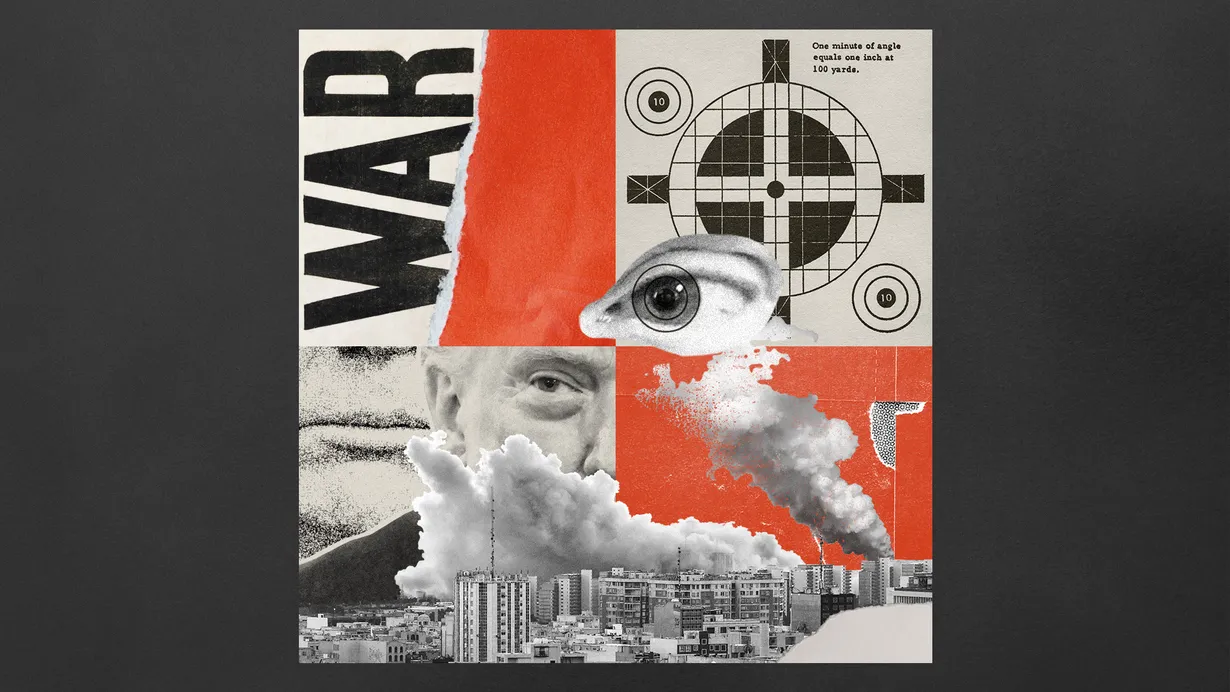
    Can anyone stop Donald Trump?

    “The only thing that can stop me” is “my own morality”, Donald Trump told The New York Times earlier this month. It was the “most blunt acknowledgment yet” that the US president believes he has the “freedom to use any instrument of military, economic or political power to cement American supremacy”, said the paper. As Trump holds court in Davos today, Europe should be in no doubt of his conviction that “national strength, rather than laws, treaties and conventions”, will be the decider when “powers collide”.

    What did the commentators say?
    Europe’s leaders have “responded to the latest escalation” in Trump’s bid to take Greenland with “steely unity”, said CNN’s Stephen Collinson. The EU is a “huge trade bloc” and any coordinated retaliation to his threatened tariffs “could hammer US stock markets that Trump touts as a barometer of economic well-being”. Yet “trade reprisals” could “end up damaging” Europe more than America.

    Some may hope that Trump could be prevented from fracturing the Nato alliance by Republican opposition in Congress, or be reined in by plummeting popularity among US voters. “Dream on,” said Sarah Baxter, director of the Marie Colvin Center for International Reporting, in The i Paper. It is unclear whether there are enough Republicans willing to block a Greenland takeover, and whether Trump would change course under pressure. “Trump thinks he is unstoppable, and no longer cares what anybody thinks”, including his Maga movement. With three years left in office, he “is now more fixated on legacy than the needs of the electorate”.

    The US Supreme Court is due to rule on the legality of Trump’s imposition of tariffs. The conservative-majority panel of judges has a mixed record on checking this administration’s executive overreach. But even if they do “attempt to curb Trump’s power”, he’s likely to swerve the move. US trade negotiator Jamieson Greer has already said the administration will simply replace tariffs with other levies.

    That leaves those in Trump’s inner circle. Hopes have so far been dashed that his son-in-law Jared Kushner and Secretary of State Marco Rubio might be moderating forces in the White House. Some view the president’s trusted chief of staff, Susie Wiles, as “the only person capable of tethering Trump to reality”, said Alex Hannaford in The Independent. But “to others, she is the master enabler, standing by in the shadows as the norms of the presidency are dismantled one hand gesture at a time”.

    What next?
    Addressing Davos delegates this afternoon, Trump ruled out military force to acquire Greenland but said he wanted “immediate negotiations” to acquire what he called “a piece of ice”. If Denmark doesn’t give up the territory, he warned, “we will remember”.


    THE EXPLAINER

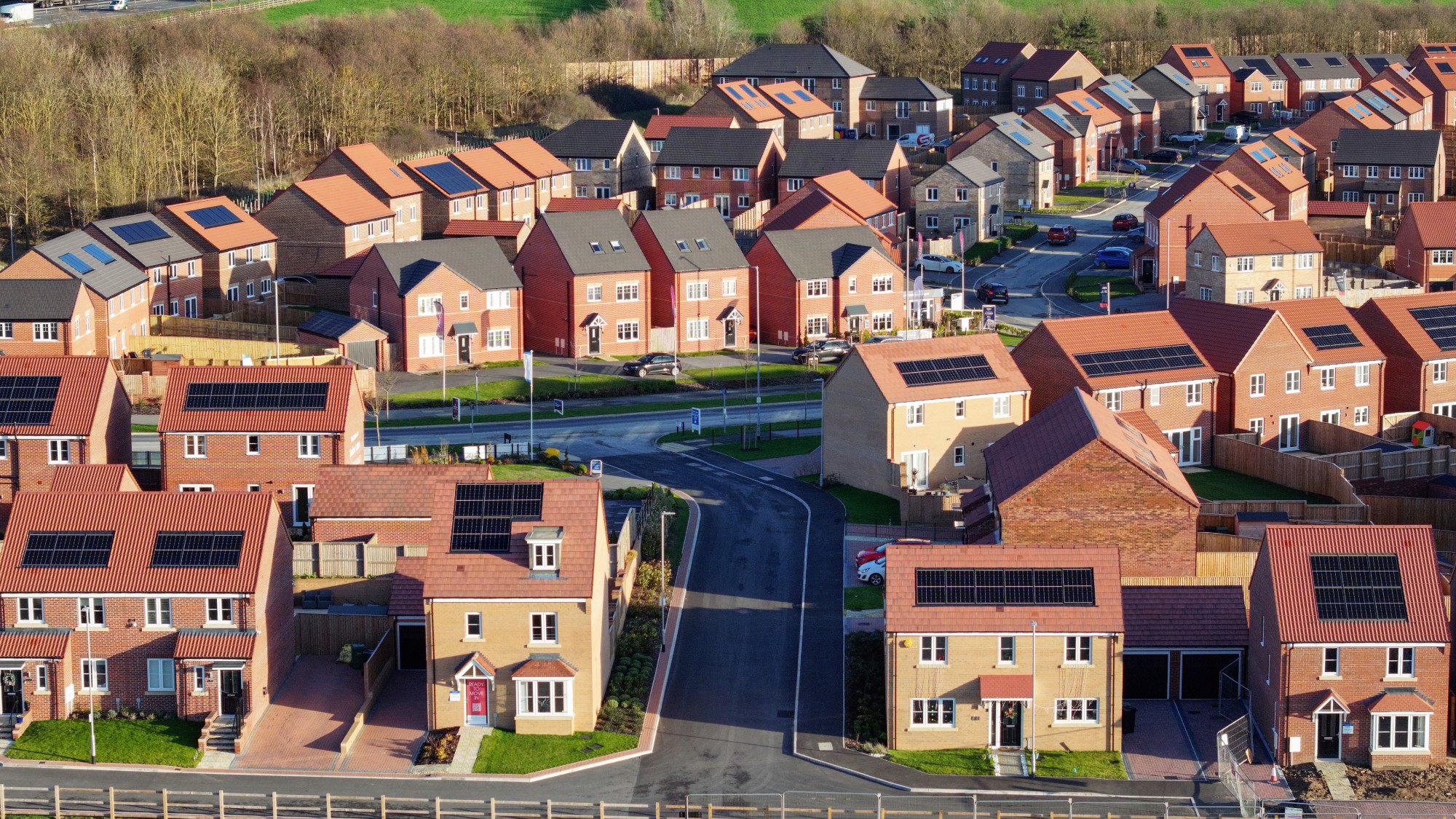
    Britain’s zero-bills homes

    The government today launched its £15 billion “Warm Homes plan” to upgrade Britain’s homes, help families cut their energy bills and tackle fuel poverty. Many people are already using private schemes to reduce their energy bills or remove them entirely.

    What are ‘zero-bills homes’?
    These properties are fitted with solar panels, heat pumps and batteries, which generate more electricity than the residents use. Any excess electricity is then sold back to the national grid, reducing the consumers’ monthly bills to £0. The scheme does not currently include electric vehicle charging and is limited to a fixed-time contract.

    The scheme is being spearheaded by Octopus Energy, which became the UK’s largest energy supplier in 2024. Working alongside developers, the company “guarantees” that each property will “pay nothing for energy, even if it uses more than it generates”, for a fixed period of between five and 10 years, said This Is Money. Octopus makes enough revenue via “exporting excess energy” to the grid to make the scheme commercially viable.

    What are the benefits?
    “If done well, upgrading homes is an effective way to slash bills and reduce damp,” said Sky News. “Campaigners and industry have broadly welcomed the idea.” Octopus estimates that a household in an average two- to three-bedroom property could save nearly £1,800 per year, based on current Ofgem price cap rates.

    Switching has environmental benefits too. Zero-bills homes, built from scratch, can contain “cutting-edge” ventilation systems that bring “fresh air inside while capturing and reusing the heat from stale, outgoing air”, said The i Paper. On a broader scale, as more people shift away from gas, the UK’s reliance on gas imports should decrease.

    The switch to a zero-bills home “doesn’t necessarily come cheap though”, said This is Money. Depending on the size of the house, and if any of the accessories are pre-installed, the average cost of technology and installation can range from £5,000 to £20,000. The new Warm Homes Plan announced today will include providing zero-interest loans to homeowners to fund heat pumps, and a “Netflix-style” subscription for solar panel installation is under consideration.


    QUOTE OF THE DAY

    “I’m not, I’m afraid, computer literate, which makes me yet more an oddball than perhaps I was before.”

    Nigel Farage says he failed to declare £380,000 of outside earnings within the Commons’ 28-day limit because “I don’t do computers”, in a statement to the parliamentary watchdog. The Reform leader apologised for 17 breaches of the MPs’ code of conduct.


    Poll watch

    Scrolling on social media is Britons’ most common pastime – but the least enjoyed. In a poll of 2,182 adults by University of Sussex psychologists, doomscrolling topped a list of 21 leisure pursuits for frequency, despite scoring only 5.18, on average, on a one-to-seven satisfaction scale. Listening to music was ranked the most pleasurable pastime, at 6.16.


    IN THE SPOTLIGHT

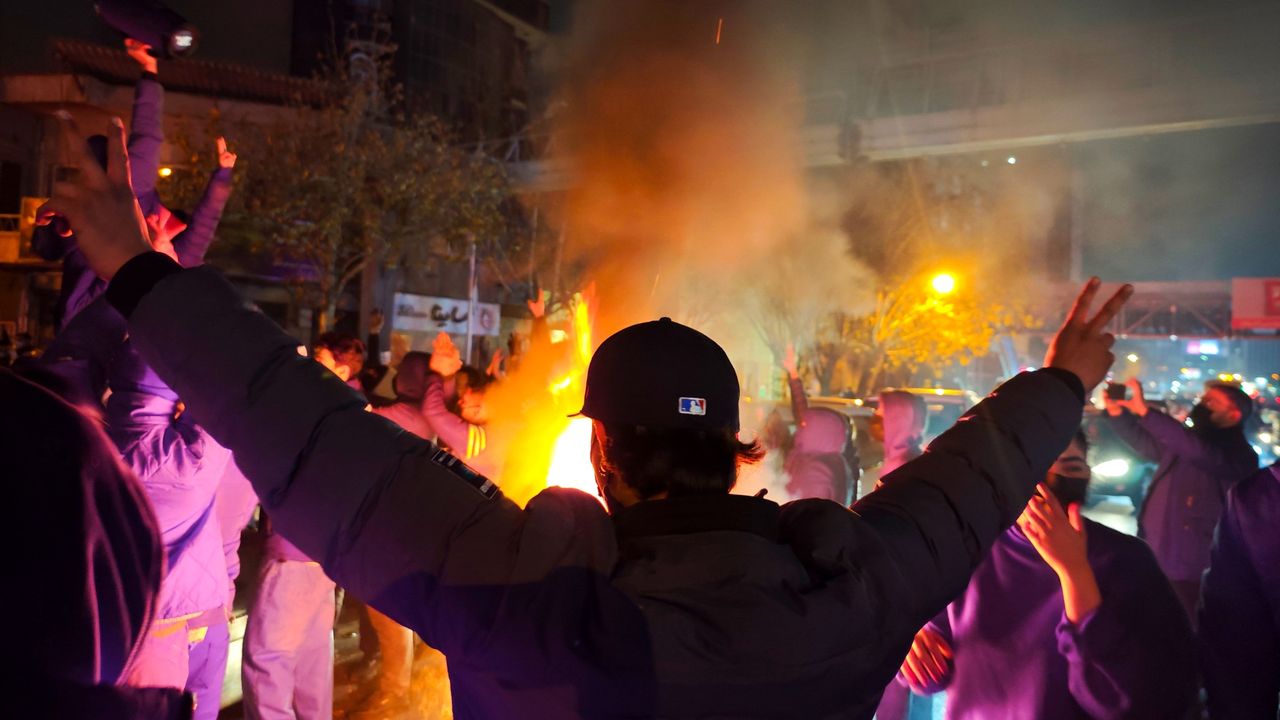
    How Iran protest death tolls have been politicised

    Iran’s supreme leader has blamed foreign actors for anti-government protests that have rocked the regime and left “several thousands” of people dead in recent weeks. Ayatollah Ali Khamenei accused the US and Israel of direct involvement in the violence, following a brutal crackdown on protesters by the government. While his remarks largely reaffirmed Iran’s longstanding position, “what stood out”, said Al Jazeera, “was the scale of the alleged death toll”.

    ‘Wide disparity in death estimates’
    Estimates of how many have died since unrest broke out across Iran on 28 December have ranged from several hundred to more than 20,000. A communications blackout has hindered information flows and independent verification of deaths.

     The Human Rights Activists News Agency, an Iranian outlet based in Washington, puts the number of confirmed fatalities at more than 4,000, with 9,000 further fatalities under review, after analysing reports from the ground and contacting mortuaries and hospitals. A separate report compiled by doctors inside Iran suggests the number of civilians killed could be as high as 20,000.

    The “wide disparity in estimates” from rights groups and independent news agencies “mostly comes down to methodology”, said The Wall Street Journal. But if the figures emerging amid the current violence are “roughly accurate”, the total exceeds those in other major crackdowns worldwide including the killing of demonstrators in Cairo following a military coup in 2013 and the Tiananmen Square massacre in China in 1989.

    ‘Purely psychological warfare’
    As the latest Iran protests spread and Donald Trump threatened to intervene militarily if the killing continued, the regime had an “incentive to under-report the toll and its opposition to exaggerate it”, said The Times. But there has been a noticeable shift in recent days as the immediate threat to the regime appears to have receded. A government official put the toll at 2,000 on 13 January. On Sunday, an Iranian ‌official told Reuters that the authorities ‍had verified that at least 5,000 people had been killed, including about 500 security personnel. The regime blamed “terrorists and armed rioters” ⁠for the death of “innocent Iranians”.

    The regime’s propaganda machine has also been “working to intimidate protesters and break their momentum”, said ABC News. Some of the few videos to emerge amid the communications blackout show long lines of body bags outside morgues in Tehran. “This is purely psychological warfare to scare people”, said human rights journalist Saba Vasef, and “part of a systemic, deliberate, deterrence-based, state-sponsored terrorism”.


    Good day ⚽

    … for aspiring footballers, after a pitch used by Palestinian refugees in the occupied West Bank was saved from demolition. Israeli security forces halted plans to remove the pitch in the Aida camp outside Bethlehem after Fifa and Uefa’s president Aleksander Ceferin intervened.


    Bad day 🐧

    … for Antarctica’s penguins, which are at risk of food shortages as rising temperatures scramble their carefully synchronised breeding seasons. A study in the Journal of Animal Ecology found that three species had shifted their breeding season by an average of 10 to 13 days over ten years, in an apparent response to climate change.


    picture of the day

    Illuminating sight

    A skywatcher looks out over New Zealand’s Lake Ellesmere, on the outskirts of Christchurch, as the largest solar storm in more than 20 years triggers spectacular auroras. The Northern Lights and Southern Lights have been visible from countries worldwide this week.

    Sanka Vidanagama / NurPhoto / Getty Images


    Puzzles

    Guess the number

    Try The Week’s new daily number challenge in our puzzles and quizzes section

    Play here


    THE WEEK RECOMMENDS

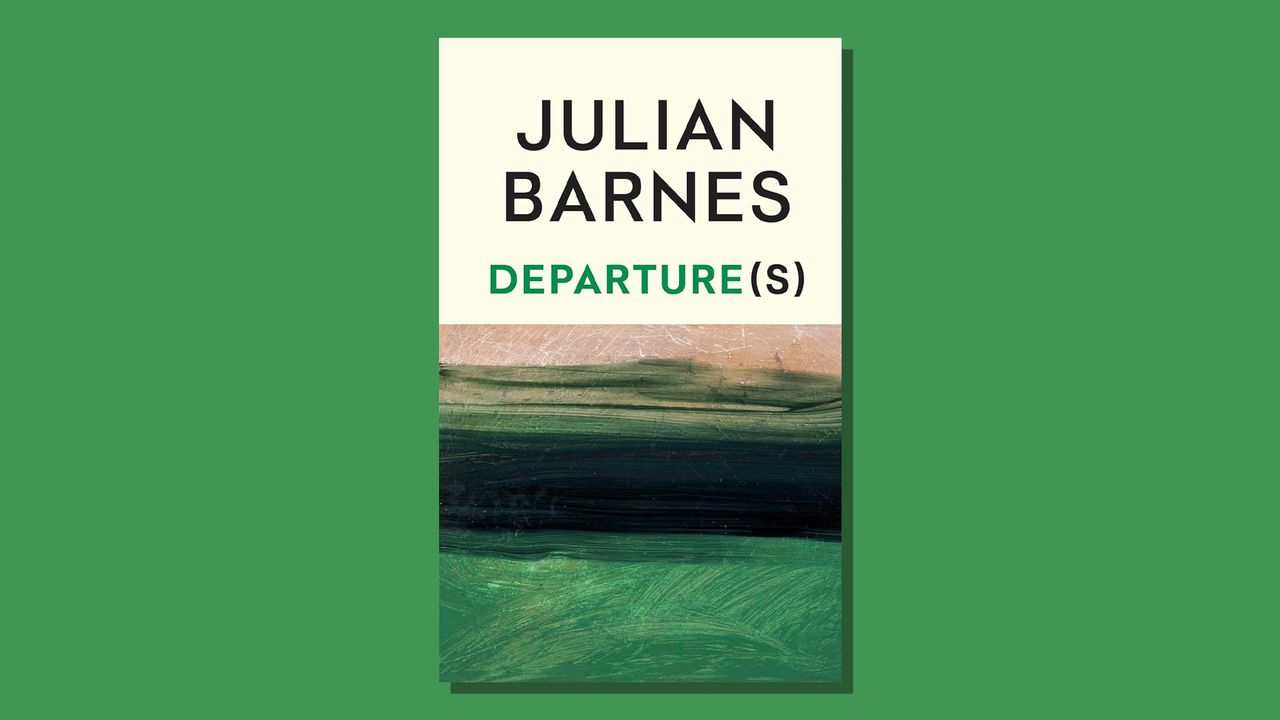
    Departure(s): Julian Barnes’ ‘triumphant’ final book

    Julian Barnes’ latest book is billed as a novel, but it soon becomes clear that the celebrated author – who has just turned 80 – has “not merely blurred the line between fact and fiction”, said Clare McHugh in The Washington Post. “He has expunged it.” “Departure(s)” begins with a “rambling meditation on the nature of memory”, examining the “involuntary” and “sudden recollections” that appear, like the familiar smells that can transport people back to another time.

    Then, in part two, we dive into a “story” that we are told is “true”, said Frances Wilson in The Spectator. We meet Stephen and Jean, a pair of students who are introduced to each other by Barnes during their time at Oxford in the mid 1960s. Their relationship ends after 18 months and they lose touch. But following a “40-year silence”, Barnes receives an email from Stephen out of the blue “to ask if he might reunite him with Jean”. The pair rekindle their relationship and marry – only for things to fall apart again.

    The final section sees Barnes delve into the “struggle to find happiness and accept life’s ending” following his diagnosis with incurable but manageable blood cancer, said Max Liu in the Financial Times. His musings are, at times, “unexpectedly funny” – like when he inherits an elderly Jack Russell that he “sometimes envies for being unaware of his own mortality (he ‘doesn’t even know he’s a dog’)”.

    Barnes tells us this is his “last book”. At just over 150 pages, it’s a slim one, but “each time I read it, I thought about it for days afterwards”. If this really is Barnes’ swansong, “he has given his career a triumphant ending”.


    Statistic of the day

    2,844: The latest annual tally of attempts to cheat in driving tests in England, Scotland and Wales – up by 47% on the previous year. Data from the Driving and Vehicle Standards Agency for the year to September 2025 reveals the surge in students accused of tricks including using hidden phones in theory tests and hiring impersonators to sit practical tests.


    instant opinion

    Today’s best commentary

    There is another war Israel is waging – one that is not making headlines
    Mariam Barghouti on Al Jazeera
    The US focuses on the “theatrics” of the Gaza ceasefire, but “another war” is taking place here in the West Bank, writes Mariam Barghouti. Israel has increased its so-called “counterinsurgency operations” in the region, intensifying “military aggression”, encouraging settlers and making “life for Palestinians impossible”. Infrastructure has been destroyed and 50,000 people “violently kicked out of their homes”. It’s a “coordinated effort” to “re-engineer” the West Bank “environment” to ensure “there can be no dissent or resistance”.

    Manchesterism could revive Britain’s fading grandeur
    Marc Stears in The New Statesman
    Britain’s past global importance was built on the “extraordinary economic success of Manchester” and other northern cities, writes Marc Stears of the UCL Policy Lab think tank. Now, we’re in a “more perilous state”, made vulnerable by “our failure to create an economy that works for us all”. Instead of prioritising the capital and southeast, we must drive growth in the regions. Britain will only “stand tall in the world” when “all parts of the country” succeed.

    Britain’s Mounjaro moment
    Oliver Franklin-Wallis on UnHerd
    Nearly one in 20 British people are now using weight-loss drugs and it’s “creating a cultural shift”, writes Oliver Franklin-Wallis. “If hunger is not a question of willpower” but rather a “function of hormones” that can be “tweaked with a simple injection”, then “moral judgements about obesity” are “outdated”. But with “too many obese people in the UK for the NHS to treat them all”, many are turning to the black market, “where fraud is rife”.


    word of the day

    Fremdscham

    Literally “foreign shame” in German, describing the feeling of second-hand embarrassment. European leaders clearly thought “semi-formal and often mildly sycophantic” text messages were the best way to grab Donald Trump’s “ever-flickering attention”, said The Times’ Oliver Moody. But a “flurry of leaked texts” this week “theatrically smashed” that “mechanism” for reaching the US president, and induced more than a little “fremdscham”.


    Evening Review was written and edited by Hollie Clemence, Jamie Timson, Will Barker, Chas Newkey-Burden, Irenie Forshaw, Helen Brown, Adrienne Wyper and Kari Wilkin, with illustrations from Stephen Kelly.

    Image credits, from top: illustration by Stephen Kelly / Getty Images; Christopher Furlong / Getty Images; Anonymous / Getty Images; Sanka Vidanagama / NurPhoto / Getty Images; Vintage Digital

    Morning Report and Evening Review were named Newsletter of the Year at the Publisher Newsletter Awards 2025
     

    Recent editions

    • Evening Review

      NATO on the edge

    • Morning Report

      Trump’s Greenland and Nobel fixations merge

    • Sunday Shortlist

      British discomfort viewing

    VIEW ALL
    TheWeek
    • About Us
    • Contact Future's experts
    • Terms and Conditions
    • Privacy Policy
    • Cookie Policy
    • Advertise With Us
    • FAQ
    Add as a preferred source on Google

    The Week is part of Future US Inc, an international media group and leading digital publisher. Visit our corporate site.

    © Future US, Inc. Full 7th Floor, 130 West 42nd Street, New York, NY 10036.