The Week The Week
flag of US
US
flag of UK
UK
https://cdn.mos.cms.futurecdn.net/flexiimages/jacafc5zvs1692883516.jpg

SUBSCRIBE & SAVE

Less than $3 per week

Sign in
  • View Profile
  • Sign out
  • The Explainer
  • The Week Recommends
  • Newsletters
  • Cartoons
  • From the Magazine
  • The Week Junior
  • Student Offers
  • More
    • Politics
    • World News
    • Business
    • Health
    • Science
    • Food & Drink
    • Travel
    • Culture
    • History
    • Personal Finance
    • Puzzles
    • Photos
    • The Blend
    • All Categories
  • Newsletter sign up Newsletter
  • The Week Evening Review
    The millennial princes, Bangladesh goes to the polls, and Fennell’s Wuthering Heights

     
    TODAY’S BIG QUESTION

    Why is Prince William in Saudi Arabia?

    The Prince of Wales arrived in Riyadh yesterday, on a three-day visit aimed at strengthening relations with a key allied power in the Middle East, despite its infamously poor human rights record. Kensington Palace said the trip was timed to mark 100 years of diplomatic ties between the UK and Saudi Arabia, and would “celebrate growing trade, energy and investment ties”.

    What did the commentators say?
    William met Crown Prince Mohammed bin Salman, the de facto ruler of the kingdom, when he visited Britain in 2018, and has since seen him fashion himself into a “major geopolitical power player”, said Megan Specia in The New York Times. If William and MBS can “strike up a positive diplomatic rapport, this could lead to a meaningful future relationship between the countries”, royal historian Ed Owens told the paper.

    After all, MBS is 40 and William is 43: the millennial princes will, in all probability, “reign in tandem, on opposite sides of the world, for decades”, said The Telegraph’s royal editor Hannah Furness. If William succeeds in “winning over” the prince, it could have “profound” consequences for the British economy. The Gulf state has invested an estimated £15.3 billion in the UK since 2017, and British politicians have been working to increase that.

    As a monarchy, Saudi Arabia is “instinctively more comfortable dealing with fellow royalty rather than elected politicians”, royal historian Robert Hardman told Politico. A foreign secretary or ambassador “cannot open the sort of doors and generate the sort of mood music that a senior member of the royal family can”.

    William is visiting a Saudi Arabia that “looks very different to the one his grandmother travelled to”, said the BBC’s royal correspondent Daniela Relph. But its criminalisation of same-sex relationships, oppression of dissent, “enormous limitations” on women’s freedom, and the memory of the brutal murder of dissident journalist Jamal Khashoggi mean that images of William with MBS “will be hard to stomach for many”.

    What next?
    This royal visit comes “hot on the heels” of a trip to the Gulf by Trade Minister Chris Bryant, said Politico. He reportedly said a trade deal with the Gulf Cooperation Council, which includes Bahrain, Kuwait, Oman, Qatar and the UAE, as well as Saudi Arabia, was “97.5% done”. William “may now be asked” to “work his royal magic” and “nudge it the remaining few percentage points”.


    THE EXPLAINER

    Why the Bangladesh election is one to watch

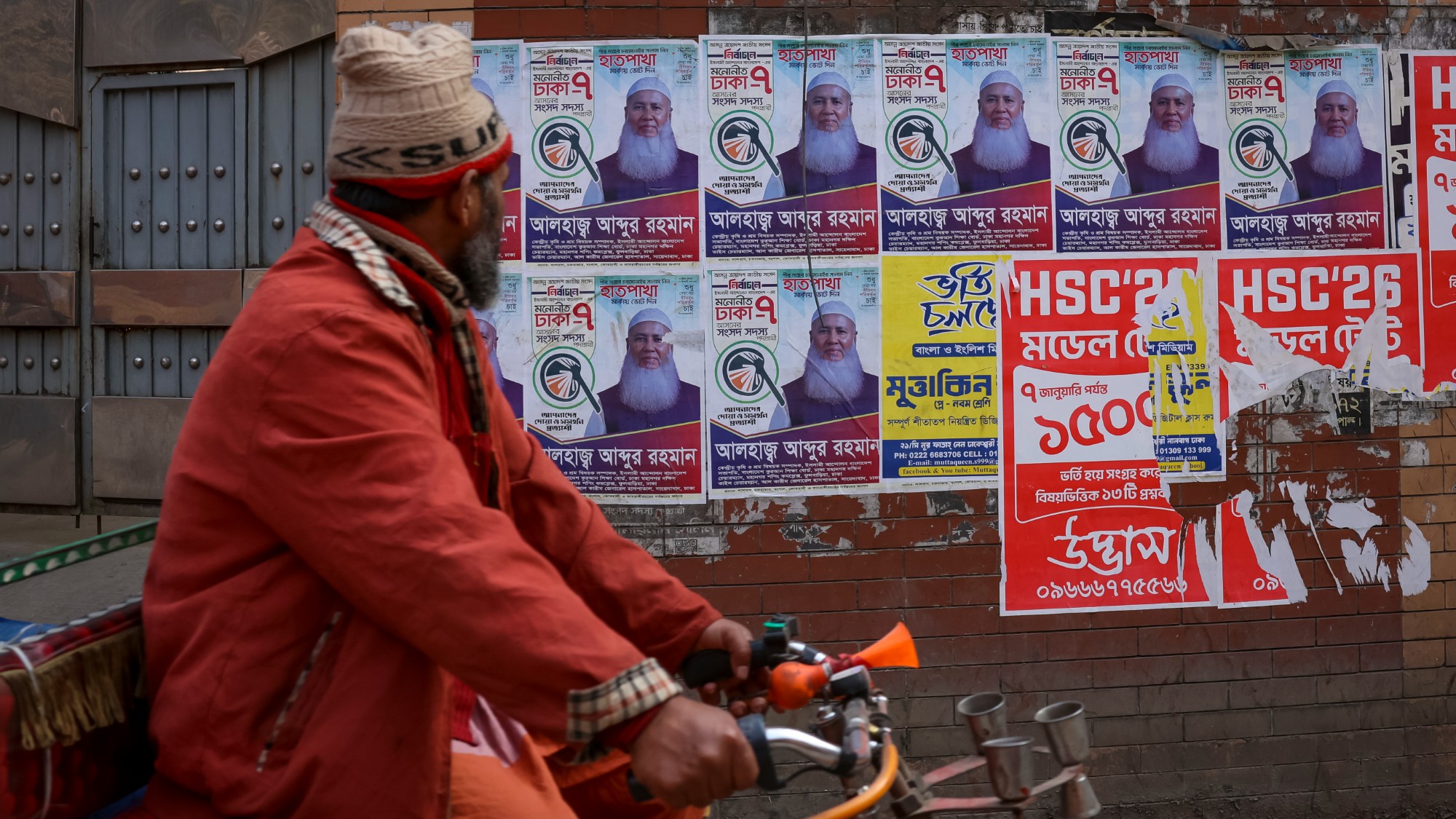
    Bangladesh goes to the polls this week in its first general election since former prime minister Sheikh Hasina was deposed by youth-led protests in 2024.

    Thursday’s poll will be seen as a verdict on that student uprising and also as a signal of the political direction of the subcontinent more broadly. In a country of more than 127 million registered voters, it “will be the biggest democratic process of 2026, anywhere”, said the EU delegation to Bangladesh on X. For “the first free and fair election in more than a decade”, said CNN, “the prevailing mood” on Dhaka’s streets “is one of anticipation”.

    Who is in the running?
    Of the 59 registered political parties in Bangladesh, 51 are taking part, with 1,981 candidates standing, including 249 independents. Hasina’s party, the Awami League, has been banned.

    The contest is expected to be a battle between two rival coalitions. The first is headed by the centre-right Bangladesh Nationalist Party, led by Tarique Rahman, the son of former prime minister Khaleda Zia and a representative of the entrenched political elite. The other coalition is led by Islamist party Jamaat-e-Islami, and includes the National Citizen Party, formed by student leaders of the 2024 uprising.

    What’s at stake? 
    The vote will reflect deep-seated concerns on issues including high inflation (which reached 8.58% in January), economic stagnation, law and order, and endemic corruption. Nearly half of those registered to vote are aged between 18 and 37, and youth unemployment and the lack of opportunities for young Bangladeshis have been key campaign issues. For many, the question of national identity is also at stake, as religious and secular forces vie for power.

    As well as voting for representatives in the national parliament, Bangladeshis will also cast their ballot in a referendum on reforms to restructure state institutions and limit executive power. “Everyone agreed that there must be reform in the system so that no one can become a dictator in the future,” Salman Al-Azami, from Liverpool Hope University, told Anadolu Agency.

    The polling will also be seen as a verdict on the success of the student uprising. As many as 1,400 people died in the protests, the majority of them killed in the security crackdown ordered by Hasina. After the election, said the BBC, “students will learn whether their revolution, and the bloodshed, were worth it”.


    QUOTE OF THE DAY

    “Labour MPs looked over the precipice once Anas Sarwar made his statement, and they didn’t like what they saw.”

    Energy Secretary Ed Miliband explains why cabinet ministers united behind Keir Starmer after the Scottish Labour leader publicly called for him to resign yesterday. The party does not want a “chaotic, disjointed leadership contest”, Miliband told BBC Radio 4’s “Today” programme.


    Poll watch

    Public support for Britain’s monarchy has fallen to 45% as further allegations about Andrew Mountbatten-Windsor and Jeffrey Epstein emerge. A Savanta poll of 2,132 adults, commissioned by Republic, found that a third would rather have an elected head of state. Savanta polling in November 2023 put support for the royals at 52%.


    TALKING POINT

    Wuthering Heights: ‘wildly fun’ reinvention lacks depth

    It was “sensible” of Emerald Fennell to put quotation marks around the title of her film adaptation of “Wuthering Heights”, said Matt Maytum in NME. It’s a “fair warning” that this won’t be a faithful retelling of Emily Brontë’s 1847 novel.

    Instead, the scene is set for something “a little more arch, playful and scandalising” that’s sure to “stir up heated discourse among literary purists”. But if you embrace Fennell’s “bold vision” and accept her film on its own terms, it’s difficult not to get “swept up in this gothic tale of toxic attachment”.

    ‘Resplendently lurid’
    Like the book, the action takes place against the backdrop of the rugged Yorkshire moors. We’re introduced to young Cathy (Charlotte Mellington), living in a “crumbling” old house with her “increasingly drunken, destitute father” Mr Earnshaw (Martin Clunes), said Robbie Collin in The Telegraph. One night, he brings home a young “foundling”, Heathcliff (Owen Cooper), who soon becomes a playmate for his daughter. But the children’s sibling-like relationship develops into “something dark and taboo”.

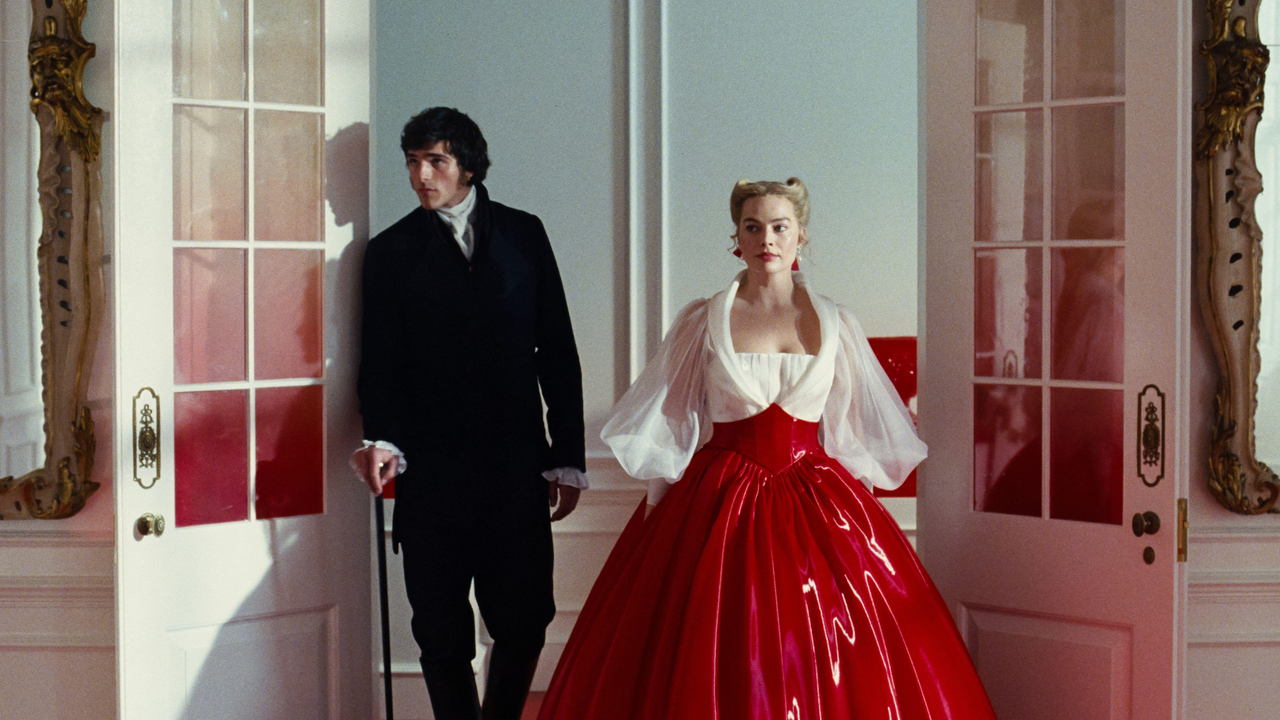
    The narrative jumps forward a decade and the chemistry between Cathy (Margot Robbie) and Heathcliff (Jacob Elordi) is palpable. “Resplendently lurid, oozy and wild”, the “central illicit affair” between the pair (pictured above) begins to unfold, their encounters accompanied by a series of “breathy electro-ballads by Charli XCX”. This is an “obsessive film about obsession, and hungrily embroils the viewer in its own mad compulsions”.

    ‘Mostly strait-laced’
    I found it “whimperingly tame”, compared with Fennell’s earlier films, like “Promising Young Woman” and “Saltburn”, said Clarisse Loughrey in The Independent. She has used the “guise of interpretation to gut one of the most most impassioned, emotionally violent novels” in history.

    Even the “much-vaunted trysts” between Cathy and Heathcliff are short-lived and perfunctory, said Danny Leigh in the Financial Times. “Sorry people, but the kink proves mostly strait-laced, the S&M more M&S.”

    “It’s all wildly fun, a fever dream come to life,” said Vicky Jessop in The Standard. But I was left feeling disappointed. “When the sexy sugar rush passes, what’s left?”


    Good day 🩶

    … for brutalism, after the government finally designated London’s Southbank Centre as Grade-II listed. Voted “Britain’s ugliest building” by Daily Mail readers when it opened in 1967, the Brutalist landmark was hailed as a “concrete masterpiece of post-war architecture” by charity Twentieth Century Society, which has been campaigning for the listing for 35 years.


    Bad day 👗

    … for fashion faux pas, after a Labour peer turned up to an event for the protection of red squirrels wearing a dress covered in grey ones. Wildlife campaigners’ eyebrows were raised when a picture emerged this week of Sue Hayman at the UK Squirrel Accord conference in London wearing the £955 Dolce & Gabbana dress.


    picture of the day

    Winning streak

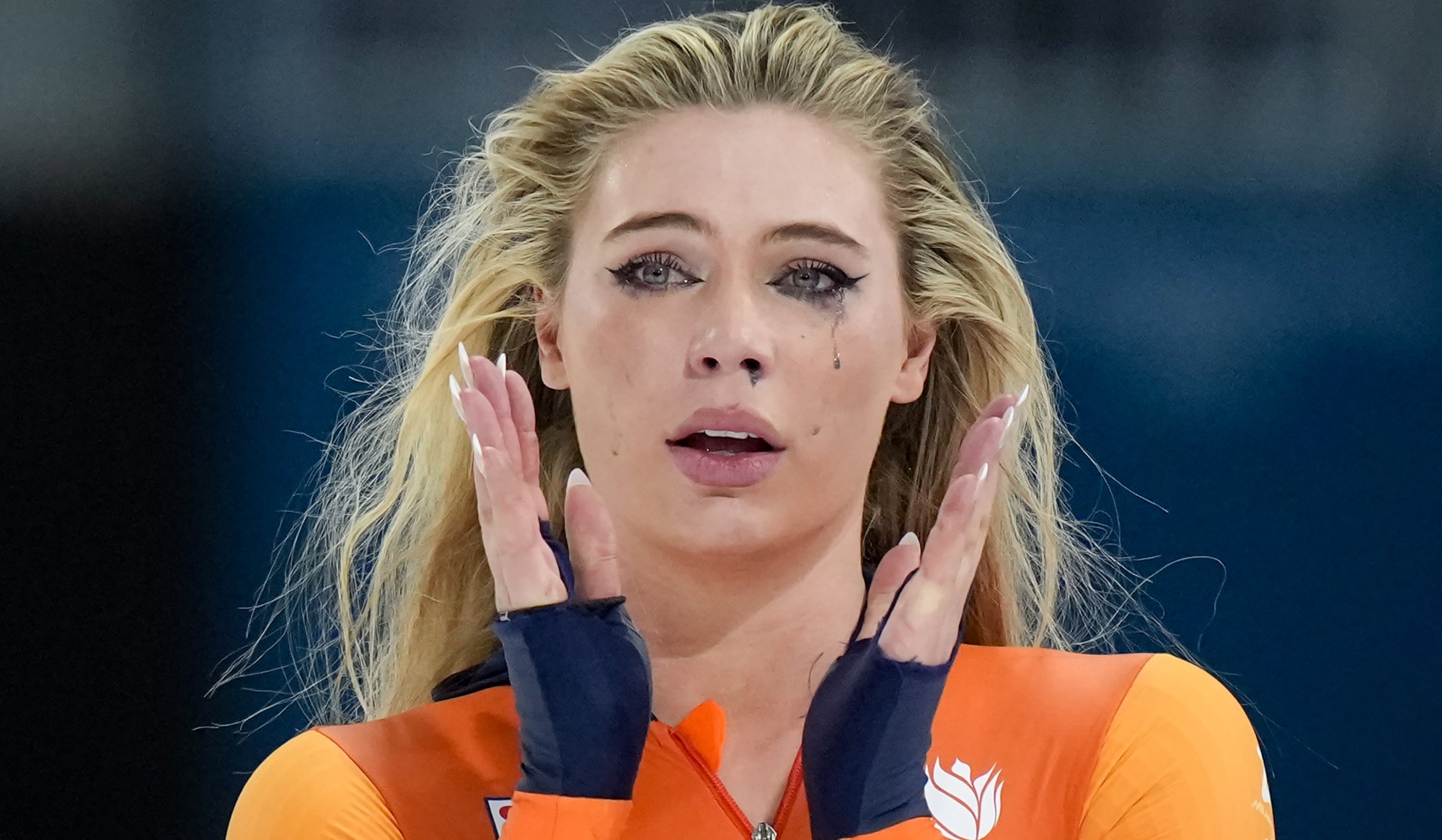
    Jutta Leerdam cries with joy after winning the women’s 1,000m speedskating gold at the Winter Olympics. The Dutch star (and fiancée of influencer Jake Paul) set a new Olympic record of one minute, 12.31 seconds by, she said, telling herself: “You have 80 years to recover from this. You can feel tired after.”

    Canadian Press / Shutterstock


    Puzzles

    Guess the number

    Try The Week’s new daily number challenge in our puzzles and quizzes section

    Play here


    THE WEEK RECOMMENDS

    The world’s most romantic hotels

    For some, romance means rose petals, chilled champagne and magnificent views. Others are content with a no-frills cabin in the woods and a bit of peace and quiet. Whichever you prefer, these romantic hotels are perfect for a Valentine’s Day escape.

    One&Only Aesthesis, Athens
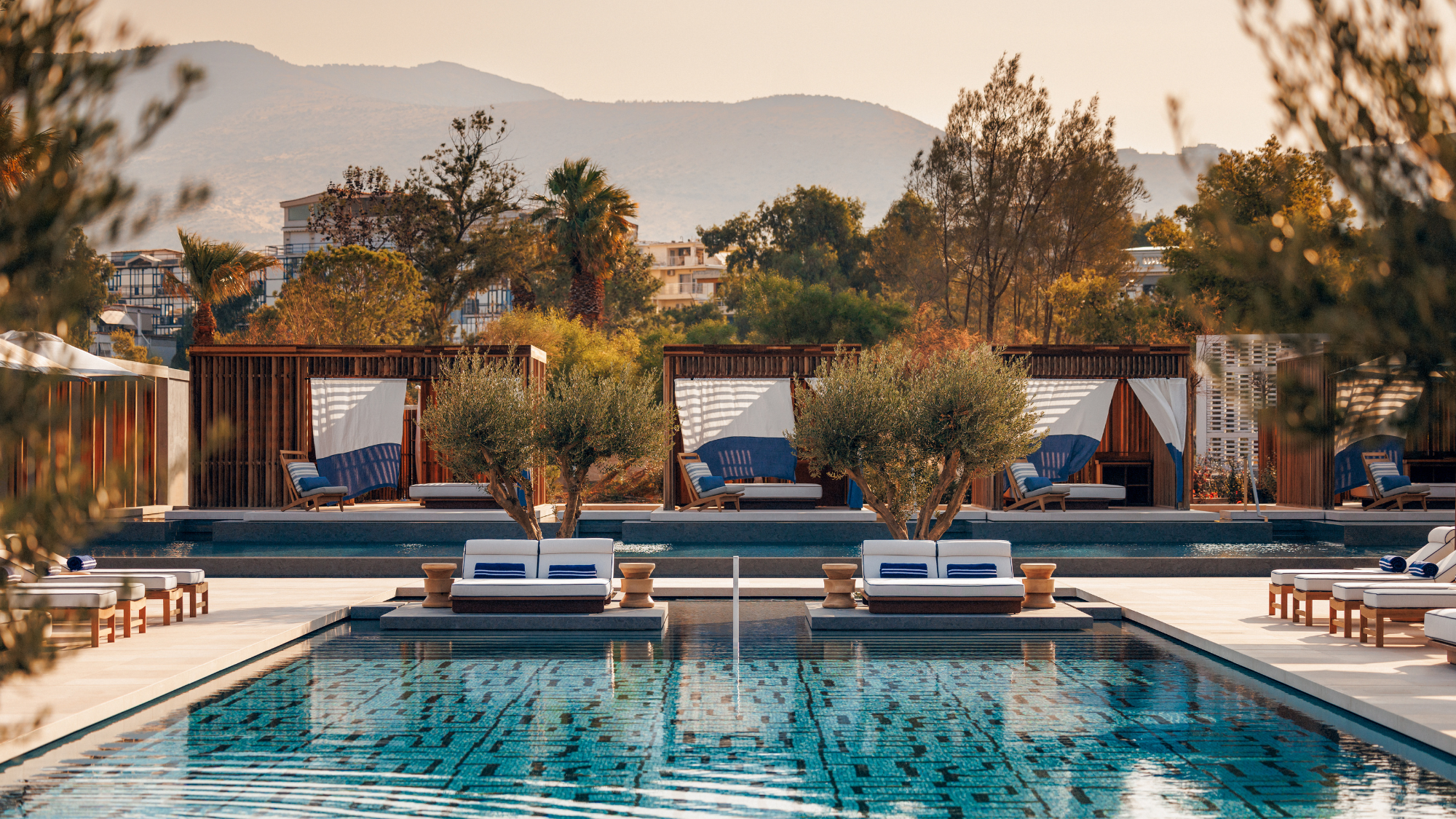
    For “seaside seclusion” and a “sure-fire hit of coastal glamour”, One&Only Aesthesis (pictured above) is a safe bet, said Condé Nast Traveller. The beachfront resort, hidden within a protected forest reserve, has a series of private bungalows and villas. Couples can relax by the pool, take a romantic stroll on the beach or book in for a pampering session at the Guerlain spa.

    The Lake Cabin at Lime Wood Hotel, New Forest
    This “gorgeous” cabin in the heart of the New Forest dials up the romance with its “open fires and a freestanding bathtub”, said The Independent. It also features a “fully stocked larder” and kitchenette, making it ideal for “couples seeking a secluded hideaway”.

    Saint James Paris
    “It’s easy to spark a love affair” in France’s capital, said Vogue. And, for extra romance, consider booking a stay at this “exquisite château hotel in the 16th arrondissement”. Unlike the big, glitzy hotels Paris is famous for, this “neoclassical trophy” offers a “supremely intimate experience in a quiet neighbourhood”.

    Sarara Treehouses, Kenya
    Hidden in a forest in northern Kenya, Sarara Treehouses has “long been popular with honeymooners for its wild location in the Mathews mountain range” and its “infinity pool overlooking a watering hole visited by elephants”, said The Times. Days are easy to fill with horseback safaris, game drives and “dinner out in the bush”.


    Statistic of the day

    95 days: The average length of a romance-scam “relationship”, during which victims typically make 11 payments, according to analysis by TSB. The amount of money extracted from victims jumped by 37% in 2025 year-on-year, with £20.5 million lost in the first six months alone. The bank warned that more than half of the scams began on social media sites.


    instant opinion

    Today’s best commentary

    Everyone in Asia Wants a Stronger Japan. Except China
    Karishma Vaswani on Bloomberg
    The “scale” of “Sanae Takaichi’s election triumph” in Japan “matters far beyond” Tokyo, writes Karishma Vaswani. The Japanese PM insists “she wants stable relations with China”, yet she’s not walking back her comments that a “crisis in the Taiwan Strait” could threaten her country’s security. Beijing’s attempt to apply “pressure” has “backfired”. A “more confident Tokyo” will complicate China’s “preferred regional order”, with South Korea already signalling a “willingness to set aside old hostilities and deepen cooperation” after Takaichi’s diplomatic overtures.

    I’m sleepless, angry and anxious over this – and I know I’m not alone
    Alastair Campbell in The New World
    The revelations in the Epstein files are “disgusting on so many levels”, writes former Labour spin doctor Alastair Campbell. But from a political angle, I’m “angry” about how the Mandelson scandal taints Labour. It all “plays into” Reform’s “narrative that ‘they’re all the same, all in it for themselves’”. I believe “politicians can be a force for good”, but I’m anxious about “what happens next and what it means for politics, and for the country”.

    Men, text us straight after a date
    Olivia Petter in The Times
    “In the past, if someone texted me immediately after a date, I’d write them off as a crazed loser,” writes Olivia Petter. But “according to a new study, this is generally the best approach”, and I’m increasingly inclined to agree. “Frankly, the sooner someone messages, the better.” Playing “hard to get” was “drilled” into us, but “at 31, I no longer have the energy”. After all, “dating is supposed to be fun”, and “gameplay” is “the antithesis of that”.


    word of the day

    Tousiors

    Old French for “always”. The word is engraved on a gold pendant linked to Henry VIII and Katherine of Aragon. The British Museum has now raised enough money to buy the “Tudor Heart”, discovered by a metal detectorist in 2019. The wording suggests a “poignant declaration of an eternal connection”, said the museum, although Henry broke ties with Rome to annul the marriage in 1533, so he could make Anne Boleyn his queen instead.


    Evening Review was written and edited by Hollie Clemence, Rebecca Messina, Harriet Marsden, Chas Newkey-Burden, Irenie Forshaw, Helen Brown, David Edwards and Kari Wilkin, with illustrations from Stephen Kelly.

    Image credits, from top: illustration by Stephen Kelly / Getty Images; Kazi Salahuddin Razu / NurPhoto / Getty Images; BFA / Alamy; Canadian Press / Shutterstock; One&Only

    Morning Report and Evening Review were named Newsletter of the Year at the Publisher Newsletter Awards 2025
     

    Recent editions

    • Evening Review

      A ‘jobless boom’

    • Morning Report

      Seahawks celebrate Super Bowl victory

    • Sunday Shortlist

      The end of an era for Sundance

    VIEW ALL
    TheWeek
    • About Us
    • Contact Future's experts
    • Terms and Conditions
    • Privacy Policy
    • Cookie Policy
    • Advertise With Us
    • FAQ
    Add as a preferred source on Google

    The Week is part of Future US Inc, an international media group and leading digital publisher. Visit our corporate site.

    © Future US, Inc. Full 7th Floor, 130 West 42nd Street, New York, NY 10036.