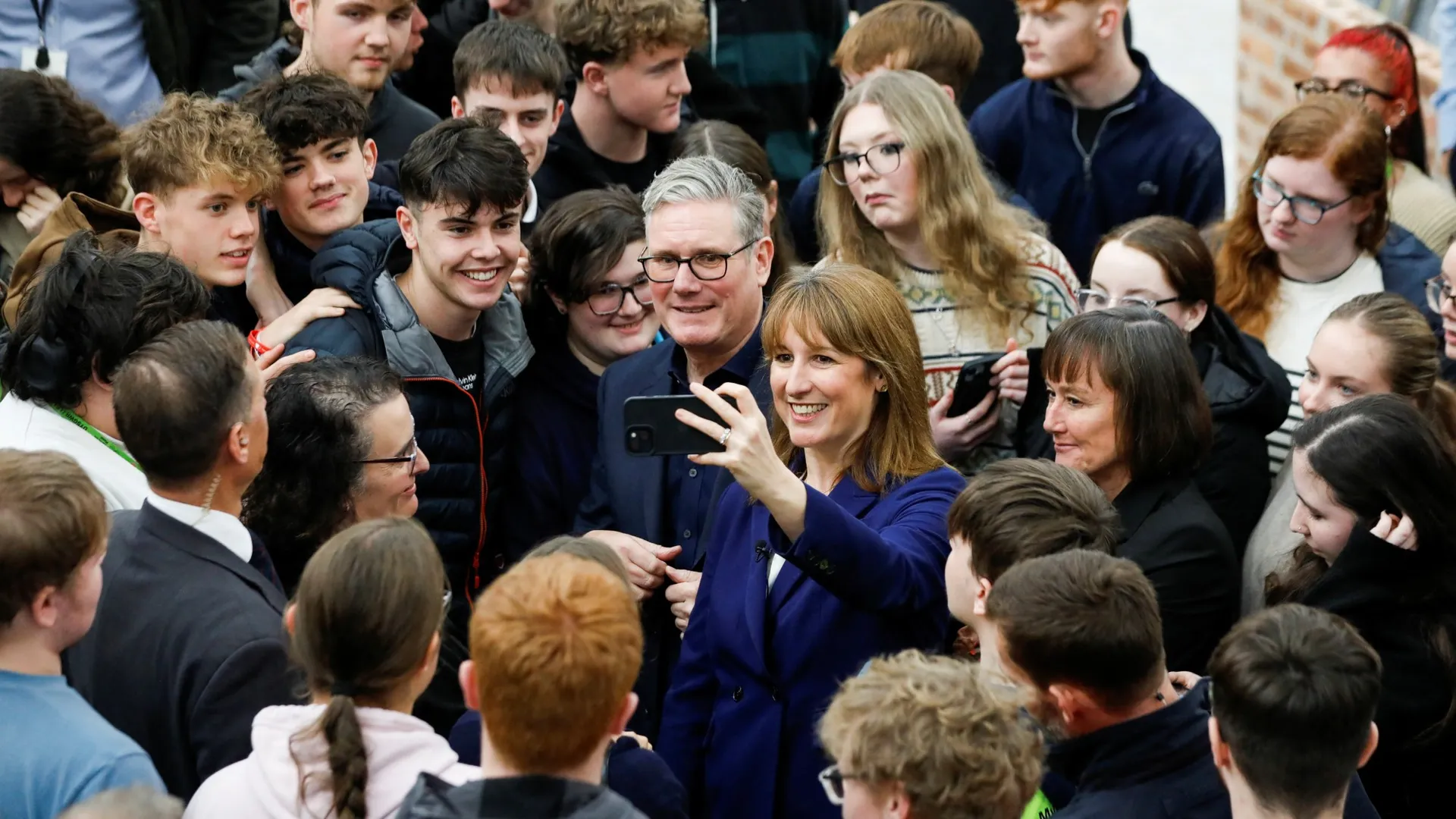
Plans to equalise the minimum wage for all ages are being cast into doubt as youth unemployment rises. Keir Starmer today insisted the government will stick to its manifesto pledge but didn’t commit to a timeline for the change. Chancellor Rachel Reeves said Labour needed to get the “balance right”.
The commitment to raise the minimum wage for 18- to 20-year-olds to the same hourly rate as older people is facing pushback from business groups, who say hiring young people would become too expensive. The unemployment rate for 16- to 24-year-olds is already at the highest level in more than a decade, at 16.1%, according to Office for National Statistics figures released yesterday.
What did the commentators say?
“Labour has been its own worst enemy,” said the Financial Times editorial board. Although global economic uncertainty, advances in AI and higher interest rates have all played a part in cooling the job market, “own goals” by the government, especially on national insurance contributions, are “adding insult to injury”. Britain’s latest jobs numbers, with “losses concentrated” in “sectors that disproportionately employ the young”, look “grim” for a “party that prides itself on serving ‘working people’”.
Let’s not overlook just how much AI is affecting the job market for young people, said City A.M.’s Saskia Koopman. “Hiring freezes” have “overtaken mass layoffs”, making it difficult to get a foot on the employment ladder. If hiring – particularly in “AI-exposed areas” – continues to “stall”, the current “cyclical cooling could turn into something more persistent”.
“The time has come for the brutal truth,” said Chloe Combi in The Independent. “Young people are being, and have been, failed.” Something has gone “profoundly wrong”, and it’s not young people’s fault: that lies “with the generations before them that created this no-hope landscape”.
What next?
Whether the government delays its promised age-band equalisation or not, more action is needed to help young people, said Combi in The Independent. We should be “pooling money into professional training and learning programmes”, which “would be an investment on so many levels”.
|