The Week The Week
flag of US
US
flag of UK
UK
https://cdn.mos.cms.futurecdn.net/flexiimages/jacafc5zvs1692883516.jpg

SUBSCRIBE & SAVE

Less than $3 per week

Sign in
  • View Profile
  • Sign out
  • The Explainer
  • The Week Recommends
  • Newsletters
  • Cartoons
  • From the Magazine
  • The Week Junior
  • Student Offers
  • More
    • Politics
    • World News
    • Business
    • Health
    • Science
    • Food & Drink
    • Travel
    • Culture
    • History
    • Personal Finance
    • Puzzles
    • Photos
    • The Blend
    • All Categories
  • Newsletter sign up Newsletter
  • The Week Evening Review
    The threat of stagflation, Trump’s military might, and trans prisoners denied care

     
    today’s big question

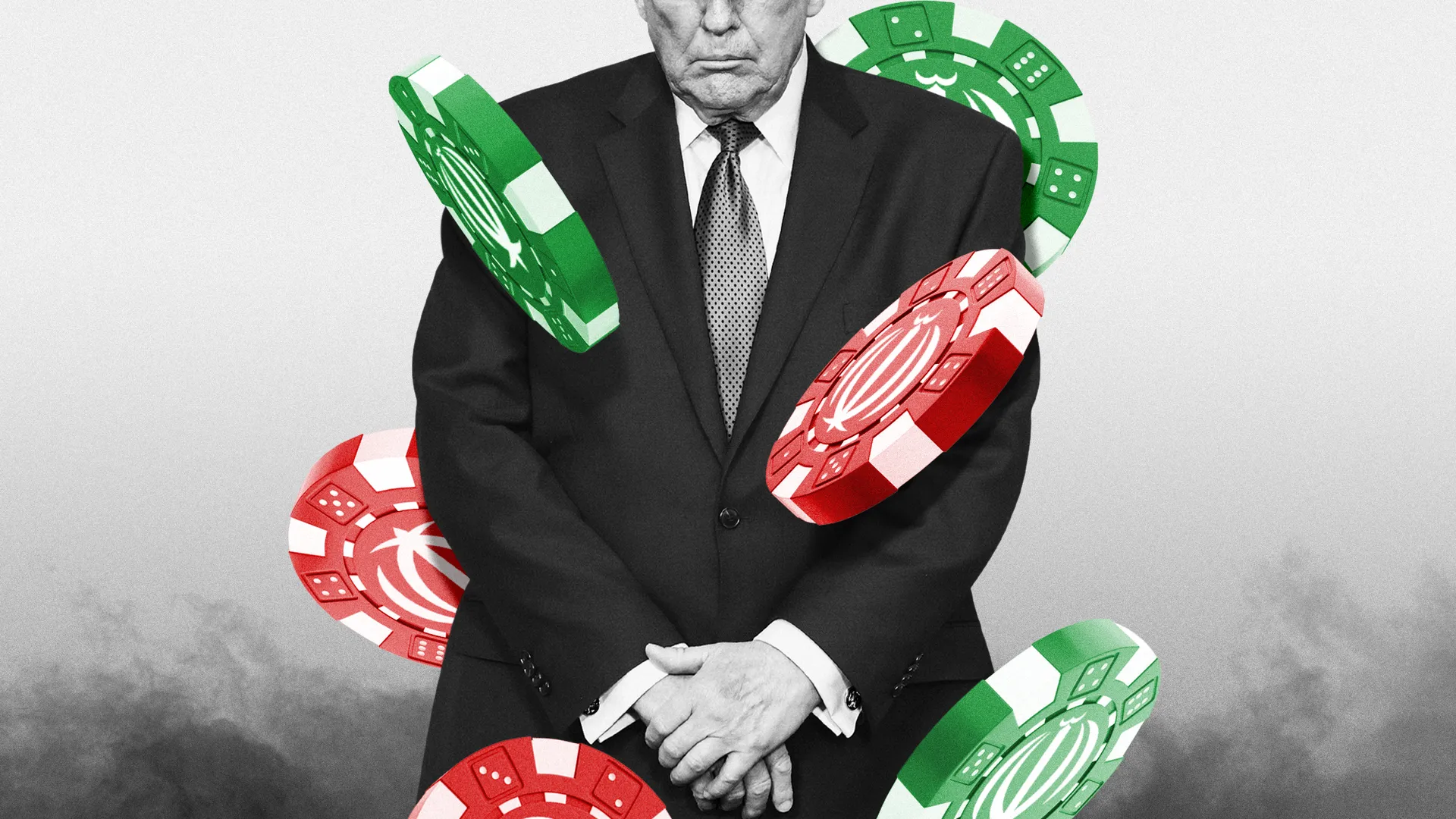
    Is Iran too risky for the Trump economy?

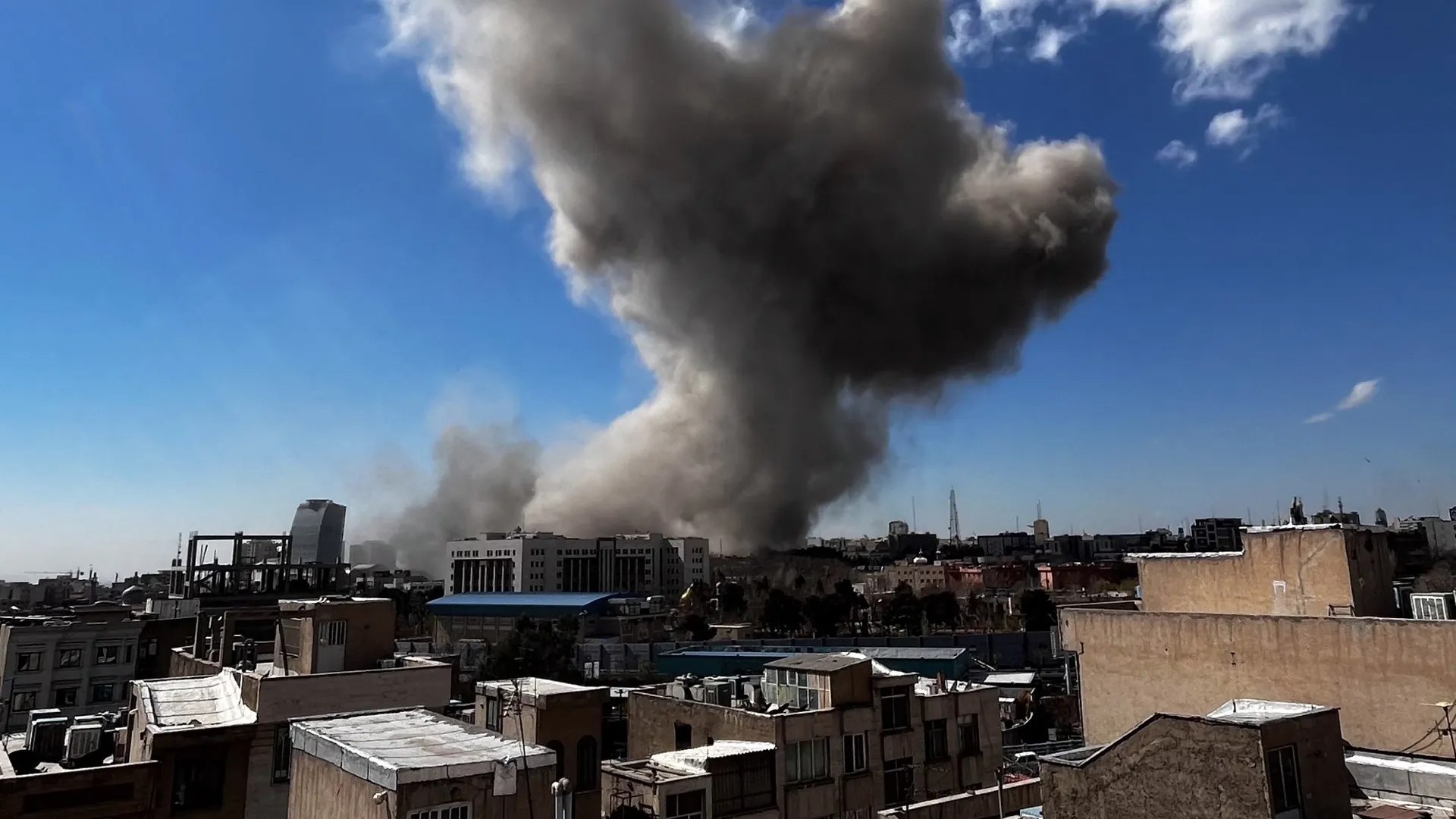
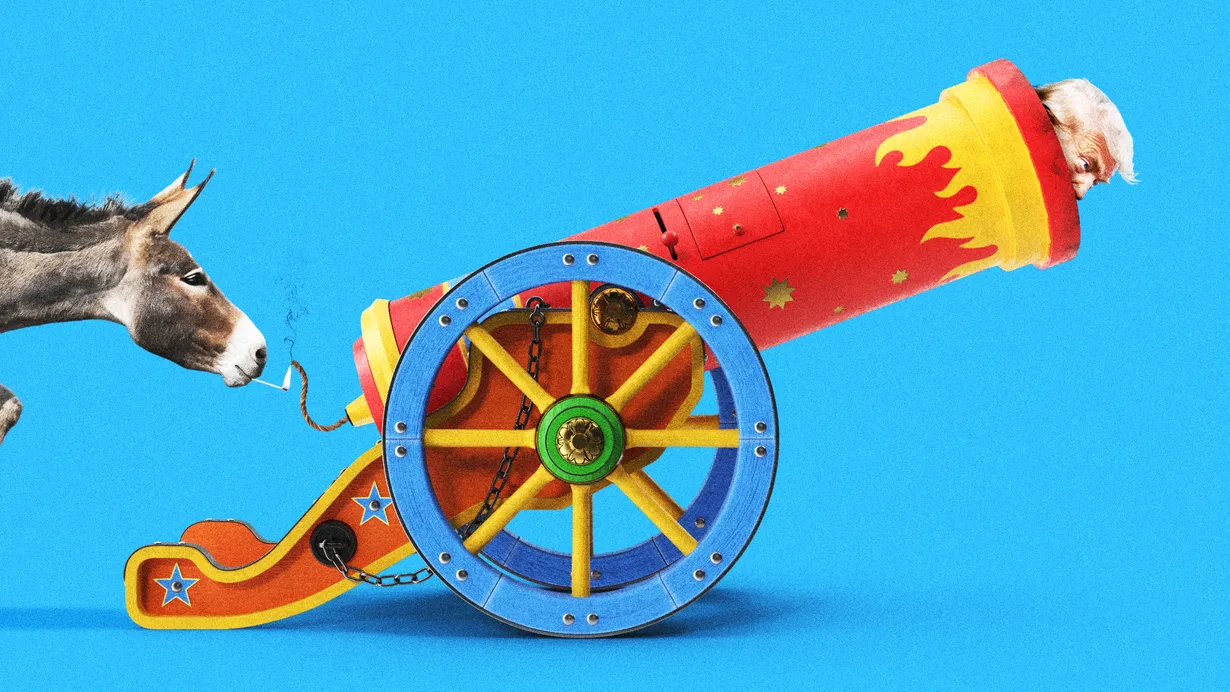
    President Donald Trump spent the last year launching trade wars and pressuring the Federal Reserve to lower interest rates, challenging the resiliency and foundations of the U.S. economic system. And the Iran war is fast becoming another test of America’s economic stability.

    Trump has been making a series of “risky economic gambles” and “mostly getting away with it,” said Politico. That’s because the U.S. economy is a “consumer-driven powerhouse that seems hard to crush.” But the attack on Iran is triggering market jitters.

    Worries about stagflation are “rising on Wall Street,” said Axios. The crisis in the Middle East is “pushing up energy and food costs, lifting inflation and squeezing growth,” said Bloomberg strategist Skylar Montgomery Koning. 

    What did the commentators say?
    “Trump’s ‘warflation’ has just begun,” Catherine Rampell said at The Bulwark. Roughly a “fifth of the world’s oil” passes through the Strait of Hormuz, but “shipping traffic through the strait has virtually stopped.” That’s “turbocharging” gasoline prices, and markets for liquid natural gas, aluminum and fertilizer are also affected. 

    The war-driven oil shock “probably won’t derail the economy,” said Greg Ip at The Wall Street Journal. While those with “long memories smell stagflation” reminiscent of 1970s instability, the U.S. has become “less energy dependent” on foreign oil, consuming less gasoline while becoming a “net exporter” of petroleum and liquid natural gas. 

    Trump’s decision to wage war on Iran is a “military, diplomatic, environmental and humanitarian disaster,” said Jeet Heer at The Nation. Trump may be “indifferent to the human costs of war,” but the “economic shock” is “another matter.” Rising oil prices and leery markets could spook the president into pulling back from the conflict. The “fear of losing money is a powerful incentive.”

    What next?
    World leaders are “scrambling for ways” to limit the damage of the Iran war, considering “tapping their national stores” of oil to increase the available supply and keep prices from rising too high, said The New York Times. Officials say the price pressures should be short-lived, though. Gas prices will “drop dramatically once the objectives of Operation Epic Fury are achieved,” said a White House spokesperson.


    the explainer

    All the countries where Trump has authorized military action

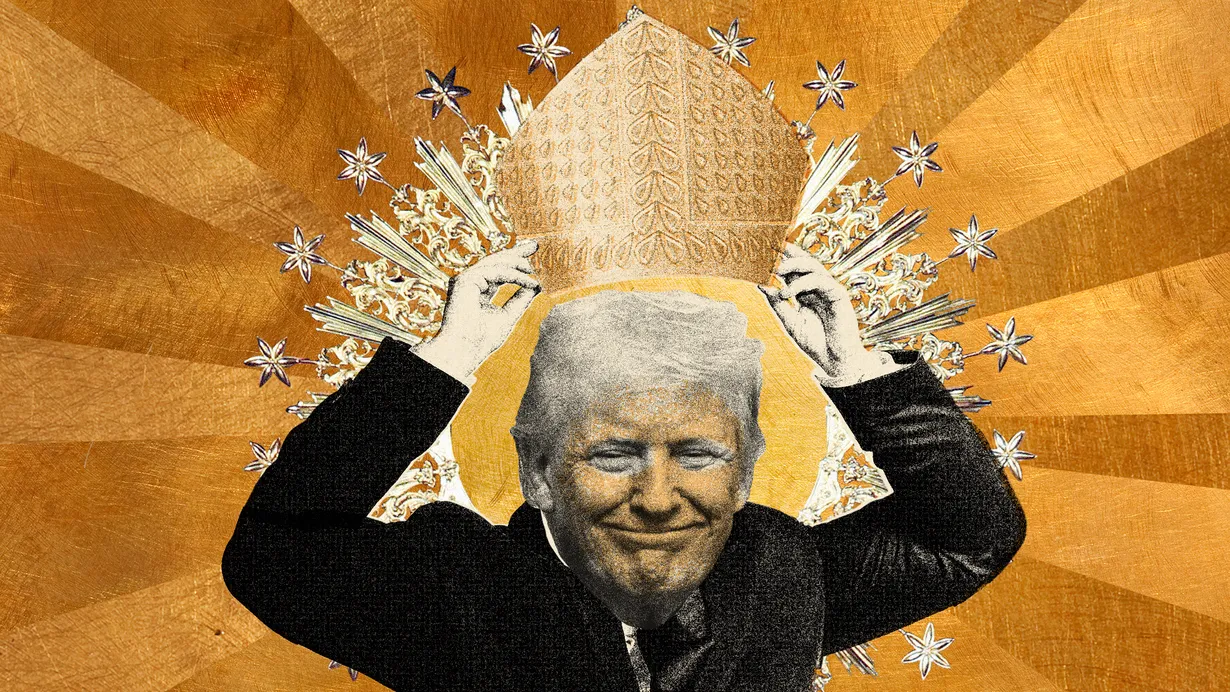
    President Donald Trump has called himself the “peace president,” but throughout his second term in office, he has demonstrated an ongoing willingness to use the military in overseas operations. Incursions in Ecuador, Iran and Venezuela represent the most recent ones the U.S. has engaged in, but several more countries became entangled with the U.S. military once Trump reentered the White House.

    Somalia
    Since February 2025, just weeks after taking office, Trump has been “conducting strikes in Somalia to target ISIS and al-Shabaab,” said NewsNation. There have been “more than 100 strikes launched, mostly using drones.” 

    Somali officials seem receptive to the military usage. The operation “reinforces the strong security partnership” between Somalia and the U.S. in “combating extremist threats,” Somali President Hassan Sheikh Mohamud said on X. 

    Iraq
    In March 2025, the military “conducted a precision airstrike” in Al Anbar Province, Iraq, that killed the Islamic State’s second-in-command, Abdallah Makki Muslih al-Rifai, according to the U.S. Central Command. And after the Iran war broke out last month, Trump administration officials had “discussions with Kurdish leaders in northern Iraq and northwestern Iran about potentially arming groups opposed to the Iranian regime,” said NBC News. This would be the latest in a decadeslong saga of military action between the U.S. and Iraq.

    Yemen
    From March to May 2025, the U.S. “launched naval and airstrikes against Yemen’s Houthi rebels in what was code-named Operation Rough Rider,” said Time. This was, up to that point, Trump’s largest military operation of his second term. The strikes were aimed at a variety of Houthi targets in the country, including “radar systems, air defenses, and missile and drone launch sites” in response to the Houthis attack on international ships in the Red Sea.

    At least one of these attacks by the U.S. “caused dozens of civilian casualties and significant damage to port infrastructure,” said Human Rights Watch, and the event should be “investigated as a war crime.” This assault, in the town of Hodeidah, targeted the port through which 80% of Yemen’s humanitarian assistance arrives.

    Read more


    QUOTE OF THE DAY

    ‘This is an art form that’s not “popular” and a part of pop culture as movies are, but that doesn’t mean it doesn’t have enduring relevance in culture.’

    Ballet dancer Misty Copeland, in a panel for Aveeno, on actor Timothée Chalamet’s claims that “no one cares” about ballet or opera. “There’s a reason that the opera and ballet have been around for over 400 years,” she added.


    Statistic of the day

    10,000: The number of authors who have published a book of completely blank pages called “Don’t Steal This Book” in protest of AI companies using their work without permission. Participants include Philippa Gregory, Kazuo Ishiguro and Richard Osman. Copies of the book were first distributed at a London book fair yesterday.


    IN THE SPOTLIGHT

    Trans inmates barred from gender-affirming care

    After being the focus of an aggressive legislative push to mitigate their access to health care in the last few years, transgender prisoners now face a similar offensive. President Donald Trump has instated a new policy for the federal incarceration system, one that mirrors an outdated, controversial practice.

    Trying to ‘cure’ trans prisoners
    The Trump administration released its new policy outlining how transgender people in Bureau of Prisons custody will be treated. Approximately 2,200 trans people held in federal prisons will be denied access to gender-affirming health care, be “subjected to constant misgendering by staff” and have items like binders, bras and makeup confiscated, said the Transitics Substack.

    The policy will impose treatment targeting “psychological distress/dysphoria” through talk therapy and “psychotropic medication” like antidepressants until the gender dysphoria diagnosis is considered “resolved,” said the Transitics Substack. The new policy designates gender dysphoria as a mental illness that requires “routine mental health care.” Under the new rules, federal prisons “won’t just medically and socially detransition trans people en masse,” they will “actively try to ‘cure’ them of their gender dysphoria.” The policy has been compared to conversion therapy, a dangerous practice recognized by the United Nations as a form of torture.

    ‘Not just cruel but reckless’
    Even before the latest policy, gender-affirming care was inconsistent for trans prisoners. Denying hormones to “people in distress” and withdrawing them from people who are “stable undermines safe facility operations,” Alix McLearen, who authored earlier versions of the Bureau of Prisons’ transgender policy manuals, said to the Marshall Project. “From a corrections management perspective, this is not just cruel but reckless.”

    Prisoners in Georgia are suing state officials over the state’s policy, which is similar to the federal one. If the new federal prison policy is implemented, and it’s “not enjoined, people will die,” Chinyere Ezie, an attorney representing the plaintiffs in the Georgia suit, said to the Marshall Project. People will die from suicide or will “die or be severely hurt from castration attempts.” Those who don’t lose their lives will “experience the very extreme physiological symptoms of hormone therapy withdrawal,” in addition to “psychological symptoms, including depression, anxiety and suicidal ideation.”


    Good day ❤️

    … for weight-loss drugs. GLP-1 medications such as Wegovy or Ozempic could be administered by paramedics at the scene of a heart attack to cut the risk of complications, according to a study published in the journal Nature Communications. The jabs have a “powerful effect in preventing tissue damage,” said The Times.


    Bad day 💻

    … for security protocols. The Social Security Administration is investigating allegations that a former DOGE worker had access to two sensitive agency databases and planned to share the information with his private employer. If true, the claim would be an “unprecedented breach of security” for the agency that serves over 70 million people, said The Washington Post.


    Picture of the day

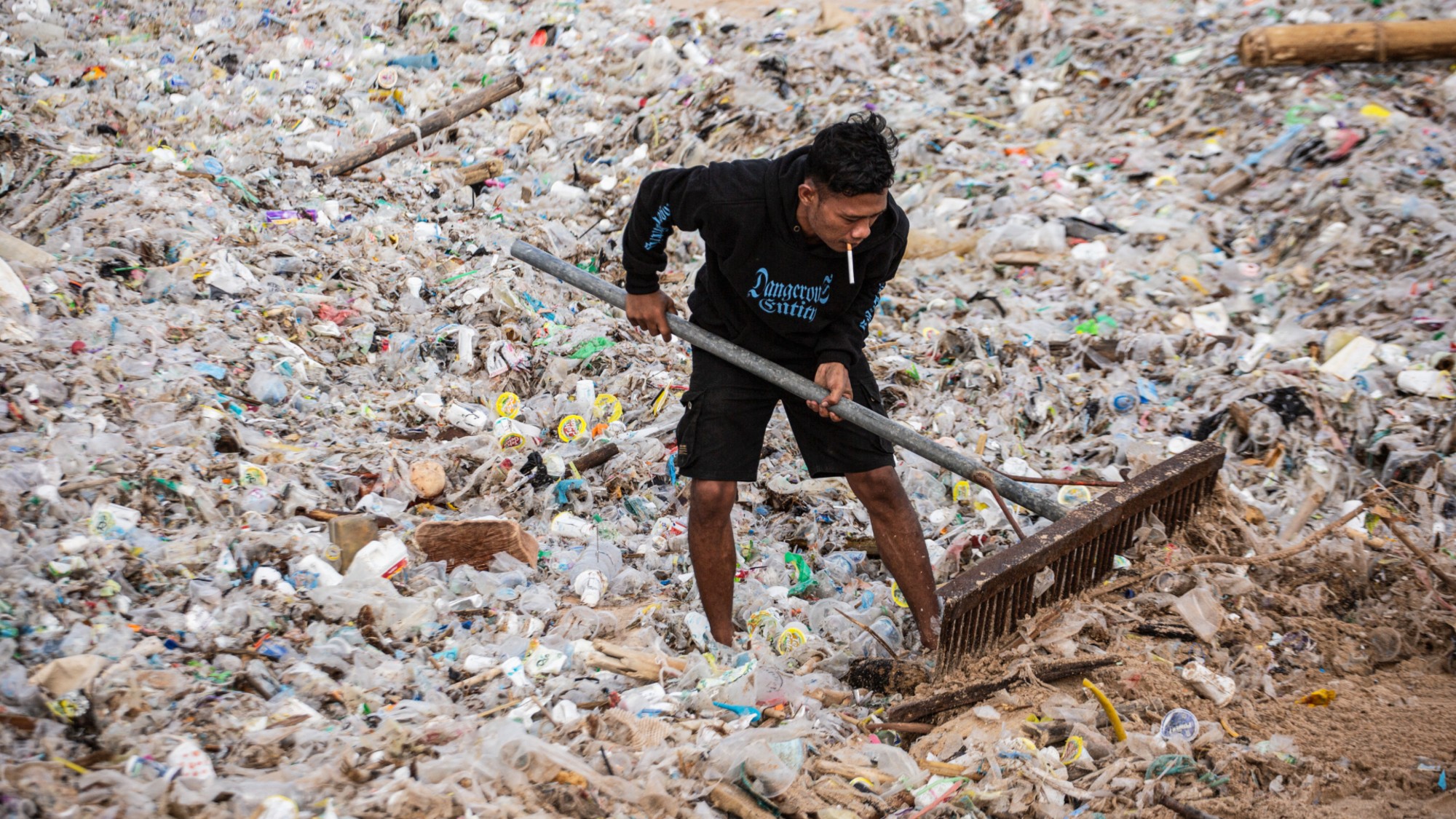
    Flood of plastic

    A man tries to clean up plastic waste washed ashore by monsoon waves at Jimbaran Beach on Bali. The Indonesian island is facing one of the worst rainy seasons in recent history, with widespread flooding and landslides.
    Lana Priatna / AFP / Getty Images


    Puzzles

    Daily sudoku

    Challenge yourself with The Week’s daily sudoku, part of our puzzles section, which also includes guess the number

    Play here


    The Week recommends

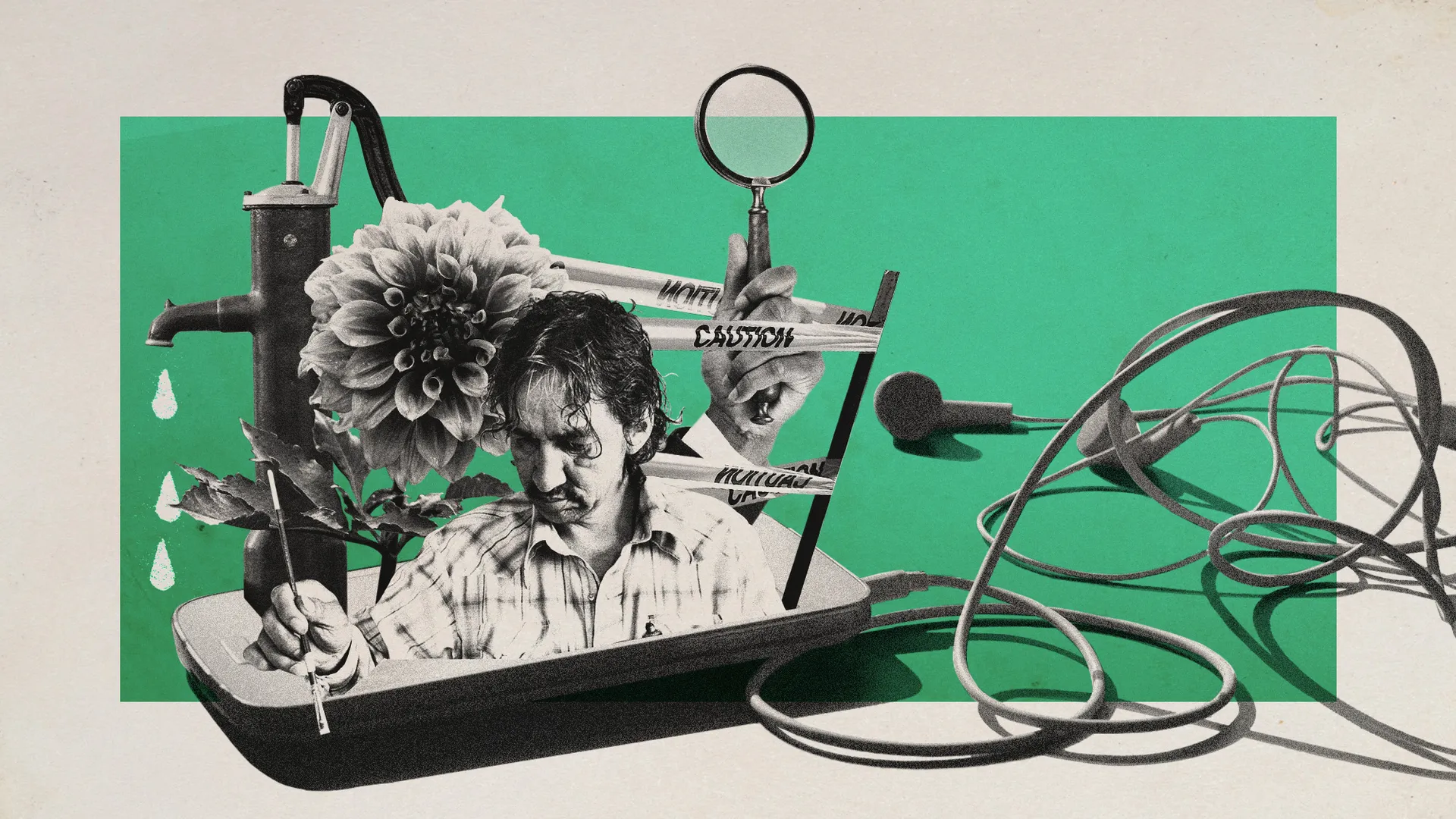
    Bone-chilling podcasts from this winter

    The cold months may have been rough for some, but as winter finally comes to a close, it’s the perfect time to look back at some of the podcasts that kept us company indoors. True crime remained a tried-and-true genre for podcasts fans, along with other thrilling shows that included a deep dive into an uncomfortable era of American history.

    History for the Reckoning (Independent)
    History for the Reckoning digs into moments in history that have been misremembered, “whether by accident or through deliberate censure,” said Podcast Review. The debut season focuses on the “forced removal and incarceration of more than 120,000 Japanese Americans following Executive Order 9066,” said Podcasting Today. The first guest on the show is actor, writer and activist George Takei, best known for portraying Lieutenant Sulu in the “Star Trek” franchise. (Spotify, Apple Podcasts)

    Safe to Drink (New Hampshire Public Radio)
    This four-part series chronicles the struggles of a New Hampshire town that discovers its water is contaminated with forever chemicals, known as PFAs. When a local man has the water tested, the result “sets off this chain reaction that leads to the United States Environmental Protection Agency stepping in” and “telling the town not to drink the water,” host Mara Hoplamazian said to NPR. (NHPR, Spotify, Apple Podcasts)

    Something About Cari (NBC News)
    Keith Morrison of “Dateline” leads this examination of the disappearance of Cari Farver in America’s heartland. Farver’s disappearance led to a “chain of events so unexpected that it challenged every assumption about what had really happened.” (NBC News, Spotify, Apple Podcasts)

    Read more


    Poll watch

    Two-thirds of Americans (67%) have confidence in career scientists working at federal health agencies compared with just 43% confidence in agency leaders overall, according to a survey from the Annenberg Public Policy Center of 1,650 adults. Confidence in their own doctors providing trustworthy information about public health remains the highest out of all, at 86%.


    INSTANT OPINION

    Today’s best commentary

    ‘Don’t let Gracie Mansion bomb scare obscure far-right’s danger’
    Sara Pequeño at USA Today
    After a bomb scare at an anti-Muslim protest outside the home of New York City Mayor Zohran Mamdani, the media “focused on the potential harm these IEDs could have caused,” says Sara Pequeño. But the “presence of far-right, Islamophobic protesters in New York City is also deplorable and failing to get the attention it deserves.” The protest organizer “lives in Florida,” and it’s “pathetic that someone would come all the way from Florida because they are outraged that New York City has a Muslim mayor.”

    ‘Mojtaba Khamenei brings monarchy back to Iran’
    Reuel Marc Gerecht and Ray Takeyh at The Wall Street Journal
    The late Iranian ayatollah’s son and successor, the Ayatollah Mojtaba Khamenei, 56, has “neither his father’s experience nor Khomeini’s pedigree,” say Reuel Marc Gerecht and Ray Takeyh. His ascent “marks the collapse of the last egalitarian pillar of the revolution, namely that the mullahs, unlike decadent Persian shahs, don’t do dynastic succession.” The revolution has “come full circle. Even without regime change, monarchy has returned to Iran,” and Mojtaba will “continue his father’s search for foreign devils.”

    ‘How many Waymos is too many Waymos?’
    Allison Arieff at the San Francisco Chronicle
    The number of Waymos on the street is a “critical question. And we don’t know the answer to it,” says Allison Arieff. That “needs to change, particularly as the company and others like it dramatically scale up.” Waymo has “eroded public trust in its technology,” and “offering greater data transparency would help restore it and start needed discussions about other regulations for Waymo and the rest of the burgeoning autonomous taxi industry.”


    WORD OF THE DAY

    lonsdaleite

    A rare hexagonal diamond about 50% harder than a regular cubic diamond. Chinese researchers have made diamonds even more “forever” and synthesized a lonsdaleite, according to a paper published in the journal Nature. The findings are the “first very accurate characterization of this elusive material,” Oliver Tschauner, a crystallographer who peer-reviewed the study, said to Nature News. 


    Evening Review was written and edited by Theara Coleman, Nadia Croes, Catherine Garcia, Scott Hocker, Anya Jaremko-Greenwold, Justin Klawans, Joel Mathis, Devika Rao and Rafi Schwartz, with illustrations by Stephen Kelly and Julia Wytrazek.

    Image credits, from top: Illustration by Stephen Kelly / Getty Images; Mowj / Middle East Images / AFP / Getty Images; MargJohnsonVA / Getty Images; Illustration by Julia Wytrazek / Getty Images
     

    Recent editions

    • Morning Report

      Iran weaponizes Strait of Hormuz

    • Evening Review

      Iran was ready for this

    • Morning Report

      Anthropic takes Pentagon to court

    VIEW ALL
    TheWeek
    • About Us
    • Contact Future's experts
    • Terms and Conditions
    • Privacy Policy
    • Cookie Policy
    • Advertise With Us
    • FAQ
    Add as a preferred source on Google Add as a preferred source on Google

    The Week is part of Future US Inc, an international media group and leading digital publisher. Visit our corporate site.

    © Future US, Inc. Full 7th Floor, 130 West 42nd Street, New York, NY 10036.