Sign up to get Today’s Best Articles in your inbox
Join 350,000+ subscribers and keep yourself informed with a selection of
The Week’s most interesting, enlightening and entertaining stories - plus daily puzzles.
You are now subscribed
Your newsletter sign-up was successful
Want to add more newsletters?
An account already exists for this email address, please log in.
Trans inmates at risk as prisons bar gender-affirming care
The new policy is reigniting concerns about forced conversion therapy
Transgender people have been the focus of an aggressive legislative push to mitigate their access to health care in recent years, and now trans prisoners are facing a new offensive. President Donald Trump has instated a policy for the federal incarceration system, one that mirrors an outdated, controversial practice.
‘Culture war targeting transgender civil rights’
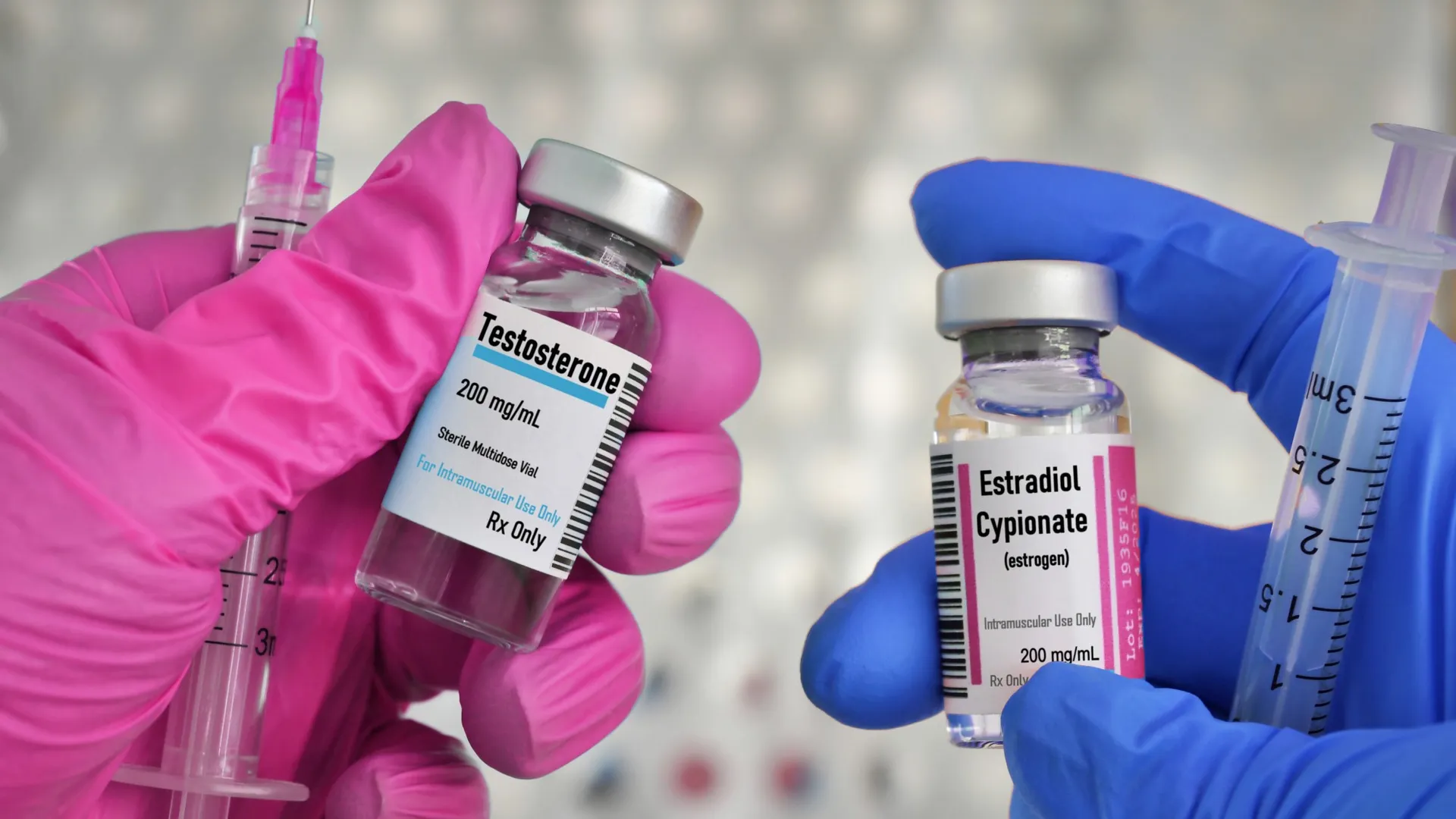
The Trump administration released its new policy outlining how transgender people in Bureau of Prisons (BOP) custody will be treated. Approximately 2,200 trans people held in federal prisons will be denied access to gender-affirming health care, be “subjected to constant misgendering by staff” and have items like binders, bras and makeup confiscated, said the Transitics Substack.
The policy will impose treatment targeting “psychological distress/dysphoria” through talk therapy and “psychotropic medication” like antidepressants until the gender dysphoria diagnosis is considered “resolved,” said the Transitics Substack. The new policy designates gender dysphoria as a mental illness that requires “routine mental health care.” Under the new rules, federal prisons “won’t just medically and socially detransition trans people en masse,” they will “actively try to ‘cure’ them of their gender dysphoria.” The policy has been compared to conversion therapy, a dangerous practice recognized by the United Nations as a form of torture.
The Week
Escape your echo chamber. Get the facts behind the news, plus analysis from multiple perspectives.
Join more than 350,000 subscribers and keep yourself informed with a selection of The Week’s most interesting, enlightening and entertaining stories - plus daily puzzles.
Join more than 350,000 subscribers and keep yourself informed with a selection of The Week’s most interesting, enlightening and entertaining stories - plus daily puzzles.
The changes align with an executive order Trump signed almost immediately after taking office, called “Defending women from gender ideology extremism and restoring biological truth to the federal government.” The order said that the federal prison system would ensure that no federal funds would be used for any “medical procedure, treatment or drug” for the purpose of “conforming an inmate’s appearance to that of the opposite sex.” In a lawsuit challenging the order, a federal judge ordered that the prison would continue providing hormones and accommodations. However, in court papers and interviews, transgender people have “described their access to hormone treatments and social transition supports as inconsistent,” said The Marshall Project.
The new policy is the “latest move amid a culture war targeting transgender civil rights nationwide,” with hundreds of anti-trans bills passed at the state-level over the last several years, said the Marshall Project. Last year, the Supreme Court upheld gender-affirming care bans for young people, which have been passed in 20 states. The decision “made it pretty clear” that a ban with “any conceivable rational basis” must be allowed, Jared Littman, a government attorney, said at the hearing announcing the prison bans. In addition to the federal policy, prison systems in Georgia, Kentucky, Utah and Florida have banned access to gender-affirming care.
‘Not just cruel but reckless’
Even before the latest policy, gender-affirming care was inconsistent for trans inmates. Denying hormones to “people in distress” and withdrawing them from “people who are stable undermines safe facility operations,” Alix McLearen, who authored earlier versions of the Bureau of Prisons’ transgender policy manuals, said to the Marshall Project. “From a corrections management perspective, this is not just cruel but reckless.”
Prisoners in Georgia are suing state officials over the state’s policy, which is similar to the federal one. If the new federal prison policy is implemented, and “it’s not enjoined, people will die,” Chinyere Ezie, an attorney representing the plaintiffs in the Georgia suit, said to the Marshall Project. People will die from suicide or will “die or be severely hurt from castration attempts.” Those who don’t lose their lives will “experience the very extreme physiological symptoms of hormone therapy withdrawal,” in addition to “psychological symptoms, including depression, anxiety and suicidal ideation.”
Sign up to get Today’s Best Articles in your inbox
A free daily email with the day’s biggest news and analysis – and the best features from TheWeek.com
Rebecca-James Meskill, a transwoman incarcerated in Alabama, told Uncloseted Media she was taken off hormones following the original executive order. She did not receive them again until six months after the judge issued the injunction. During that time, she frequently broke out in hives, and the dysphoria about her body hair caused her to scratch her arms until they became scarred. Being off hormone therapy has “left me feeling diminished in every aspect of life,” Meskill said. Her body “started re-masculinizing,” and her body hair is “growing thicker and faster.” The lack of gender-affirming care makes her feel “hopeless and like I need to avoid people.”
Theara Coleman has worked as a staff writer at The Week since September 2022. She frequently writes about technology, education, literature and general news. She was previously a contributing writer and assistant editor at Honeysuckle Magazine, where she covered racial politics and cannabis industry news.



 talking pointsAfter Pike disaster, is it time to rethink death penalty?
 QUOTE OF THE DAY‘What it actually means in the American context is you want to replace American workers with foreign workers and you want boys to play in girls’ sports.’
 the explainerJustice Dept. launches largest-ever effort to strip citizenship