Sign up to get Today’s Best Articles in your inbox
Join 350,000+ subscribers and keep yourself informed with a selection of
The Week’s most interesting, enlightening and entertaining stories - plus daily puzzles.
You are now subscribed
Your newsletter sign-up was successful
Want to add more newsletters?
An account already exists for this email address, please log in.
The ‘golden age’ of HIV treatment
Single-pill treatment proves as effective at suppressing virus as multi-pill therapy, while long-acting preventive injections are increasingly available
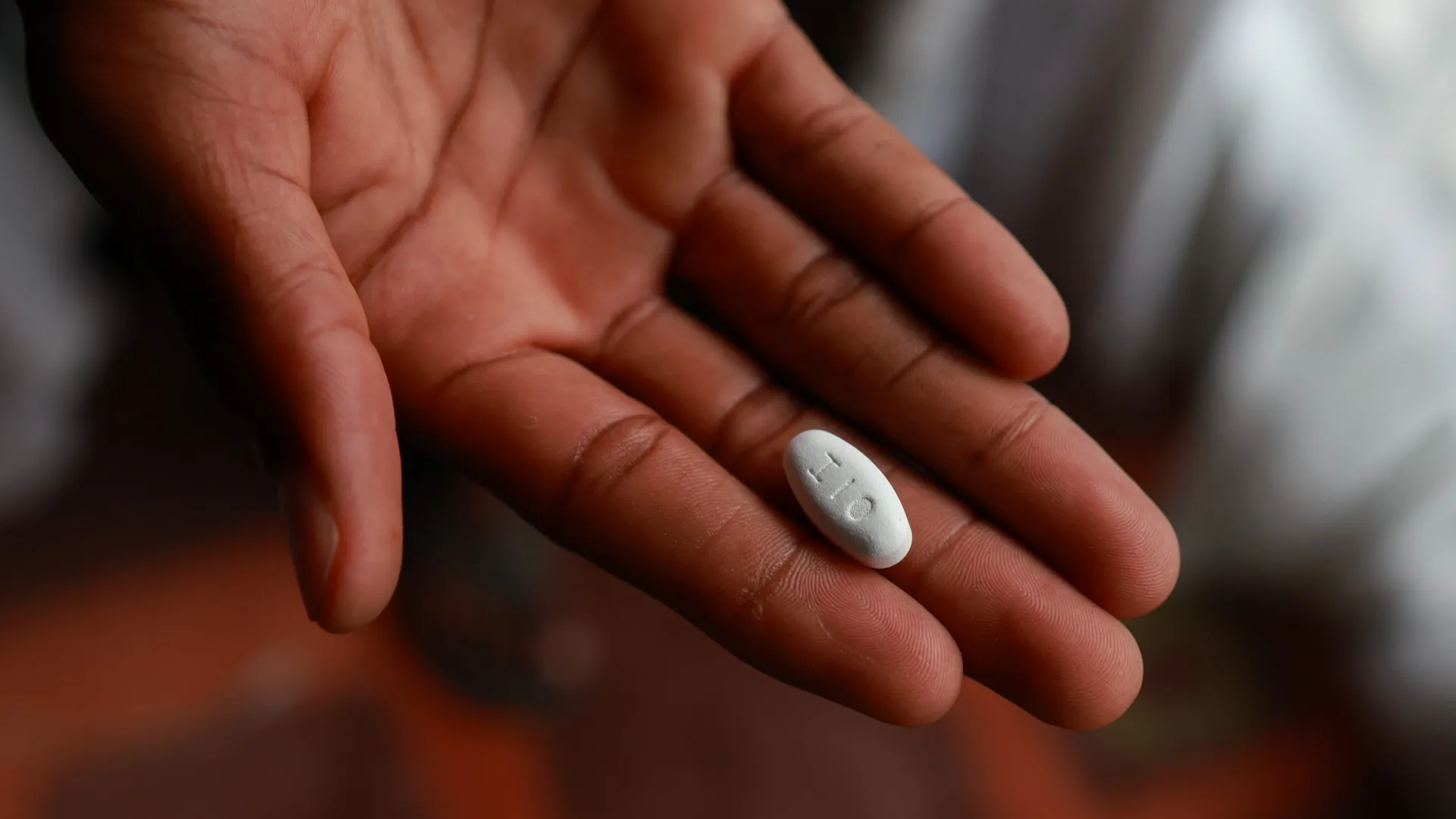
A new single-pill HIV treatment has proved as effective as regimens of up to 11 tablets a day in suppressing the virus in hard-to-treat patients. It’s “a potential breakthrough for a growing cohort of long-term HIV survivors” who are resistant to standard treatments and struggle to keep to complex medication schedules, said the Financial Times.
Along with the rollout of a twice-yearly jab to prevent HIV infection, this represents “the latest advance in a scientific ‘golden age’ for treating the virus” – even as wealthy countries cut their funding.
How well does the new single-dose pill work?
Researchers recruited, from 15 countries, more than 550 people living with HIV for whom conventional therapies were no longer effective. They had a median age of 60, and many had other health conditions. Their HIV treatment involved taking between three and 11 pills a day. They were randomly assigned to continue their treatment or switch to the new single pill.
The Week
Escape your echo chamber. Get the facts behind the news, plus analysis from multiple perspectives.
Join more than 350,000 subscribers and keep yourself informed with a selection of The Week’s most interesting, enlightening and entertaining stories - plus daily puzzles.
Join more than 350,000 subscribers and keep yourself informed with a selection of The Week’s most interesting, enlightening and entertaining stories - plus daily puzzles.
Almost 96% of those who switched continued to suppress the virus, without new signs of drug resistance, according to the study results published in The Lancet. That is a similar rate to the control group who stayed on their more complicated multi-pill treatment. But the “switchers” found the new regimen easier to follow, and experienced a decrease in some side effects, such as elevated cholesterol levels.
The findings are “game-changing” for people who have lived with the virus for decades and have conditions “associated with ageing”, said study lead Chloe Orkin, a professor of infection and inequities at Queen Mary University of London. “The participants found the regimen far more convenient.”
The pill, a combined dose of established HIV drugs bictegravir and lenacapavir, could be “transformative” for those who struggle to access clinics because of age or poverty, said Anne Aslett of the Elton John Aids Foundation. “The challenge now” is to ensure this treatment breakthrough is “complemented by political will, funding and community engagement”, she told the Financial Times.
Sign up to get Today’s Best Articles in your inbox
A free daily email with the day’s biggest news and analysis – and the best features from TheWeek.com
An injection like this has a clear advantage over daily prevention pills in poorer countries, where patients – particularly young women – might struggle to access clinics or feel stigmatised for seeking treatment. Last year, the World Health Organization recommended it; the director general Tedros Adhanom Ghebreyesus described it as “the next best thing” to an HIV vaccine.
There was initial concern that the drug would not be affordable in poorer countries. In the US, it was launched with a price tag of more than $28,000 (£21,000). But last year, manufacturer Gilead granted licences to six manufacturers to produce generic versions of the drug in 120 low and middle-income countries at a cost of $40 (£29) per patient per year. This is a “historic breakthrough”, said Philippe Duneton of the Unitaid global-health initiative.
Meanwhile, in October, another long-acting HIV-preventive injection, cabotegravir (given six times a year), became available on the NHS in England and Wales. (It has already been made available in Scotland). This is a “cutting-edge treatment”, said Health Secretary Wes Streeting. “For vulnerable people who are unable to take other methods of HIV prevention, this represents hope.”
What other progress has been made?
Promising results have been seen with stem cell transplantation. Seven people have been declared HIV-free after receiving a stem cell transplant – and, significantly, two of them had received stem cells that were not actually HIV-resistant.
This “upends our understanding of what’s required” for a cure, said New Scientist. If HIV-resistant cells aren’t necessary to destroy the virus, then scientists have a wider potential pool of stem cell donors, and greater options in their search for an effective HIV cure.
Other trials are exploring ways to cure HIV by genetically editing immune cells.
Harriet Marsden is a senior staff writer and podcast panellist for The Week, covering world news and writing the weekly Global Digest newsletter. Before joining the site in 2023, she was a freelance journalist for seven years, working for The Guardian, The Times and The Independent among others, and regularly appearing on radio shows. In 2021, she was awarded the “journalist-at-large” fellowship by the Local Trust charity, and spent a year travelling independently to some of England’s most deprived areas to write about community activism. She has a master’s in international journalism from City University, and has also worked in Bolivia, Colombia and Spain.