Sign up to get Today’s Best Articles in your inbox
Join 350,000+ subscribers and keep yourself informed with a selection of
The Week’s most interesting, enlightening and entertaining stories - plus daily puzzles.
You are now subscribed
Your newsletter sign-up was successful
Want to add more newsletters?
An account already exists for this email address, please log in.
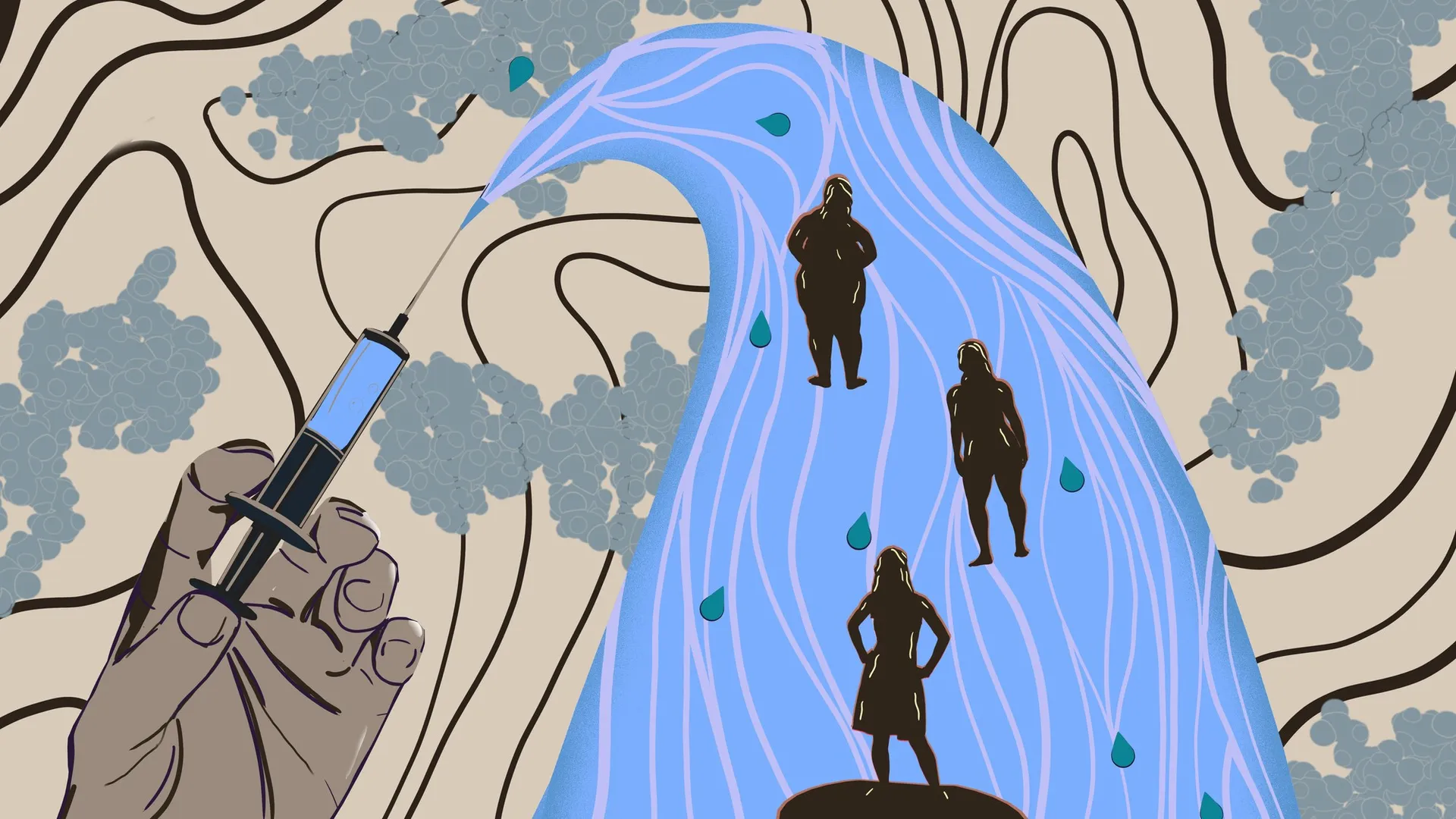
Ozempic, Wegovy, Mounjaro and other GLP-1s have been touted as miracle drugs with a myriad of health benefits. However, they come at a high environmental cost. The manufacturing of these weight-loss medications can produce toxic byproducts that end up in waterways and increase plastic waste. Scientists are working to clean up the process.
How do GLP-1s affect the environment?
GLP-1s are peptide drugs that produce “unsustainable volumes of toxic waste and non-degradable solid supports,” said a study published in the journal Nature Sustainability. Peptide manufacturing uses a method called solid phase peptide synthesis, which “anchors the first amino acid building block to a synthetic resin, such as polystyrene beads,” said Futurism. Then, toxic solvents, “including dimethylformamide, a component of paint strippers,” are “used to add each amino acid one by one, which can then leak into the water supply.” Peptide drugs are also “cold chain dependent,” which means “every unit must be refrigerated from factory to pharmacy shelf, multiplying emissions across the supply chain,” said IDR Medical.
Along with the manufacturing process, the use of the drugs creates its own waste. Patients who take GLP-1 injectables self-inject once per week. Because of this, “every month, there are four disposable auto-injectors that they have to throw out,” that are “made of solid plastic material that can persist in landfills for decades to centuries,” said Thanigavelan Jambulingam, a business professor at Saint Joseph’s University, in an interview with the school. Millions of people are producing this waste, which could “end up in the water systems” or it could be in “other areas where it causes harm.”
The Week
Escape your echo chamber. Get the facts behind the news, plus analysis from multiple perspectives.
Join more than 350,000 subscribers and keep yourself informed with a selection of The Week’s most interesting, enlightening and entertaining stories - plus daily puzzles.
Join more than 350,000 subscribers and keep yourself informed with a selection of The Week’s most interesting, enlightening and entertaining stories - plus daily puzzles.
The increased usage of GLP-1s may help the environment in some ways, however. By treating diabetes and obesity, they “could reduce the incidence of cardiovascular disease, kidney failure and other conditions, each of which carries a heavy environmental cost through surgeries, hospitalizations and long-term drug use,” said IDR Medical.
The drugs are also changing people’s diet. “People taking these drugs are eating less beef, choosing more vegetables and turning away from processed snacks,” said Anne Jomard, a scientist and nutritionist from Zurich, at Food Facts. This “could meaningfully reduce the environmental damage caused by industrial food production.”
Even so, unless “manufacturing and delivery evolve, the environmental gains from healthier populations could be offset by the waste created to get there,” said IDR Medical. Luckily, a better way to produce peptide drugs may be on the horizon in the form of water-based synthesis.
The method pairs amino acids with specific salts, making them water-soluble. This replaces “conventional non-degradable supports” and enables “clean, efficient peptide synthesis entirely in water, without the unwanted side reactions,” said John Wade, a chemistry professor at the University of Melbourne and lead author of the study, in a university publication about the research.
Sign up to get Today’s Best Articles in your inbox
A free daily email with the day’s biggest news and analysis – and the best features from TheWeek.com
GLP-1s are not the only products that require peptide synthesis. Certain cancer treatments, as well as crop treatments, veterinary drugs and cosmetic ingredients, also require it. “Why are we still making life-saving medicines using chemical processes that produce mountains of toxic waste?” asked Wade. “Could water, the cleanest and most familiar solvent of all, offer a way out?”
Devika Rao has worked as a staff writer at The Week since 2022, covering science, the environment, climate and business. She previously worked as a policy associate for a nonprofit organization advocating for environmental action from a business perspective.