Sign up to get Today’s Best Articles in your inbox
Join 350,000+ subscribers and keep yourself informed with a selection of
The Week’s most interesting, enlightening and entertaining stories - plus daily puzzles.
You are now subscribed
Your newsletter sign-up was successful
Want to add more newsletters?
An account already exists for this email address, please log in.
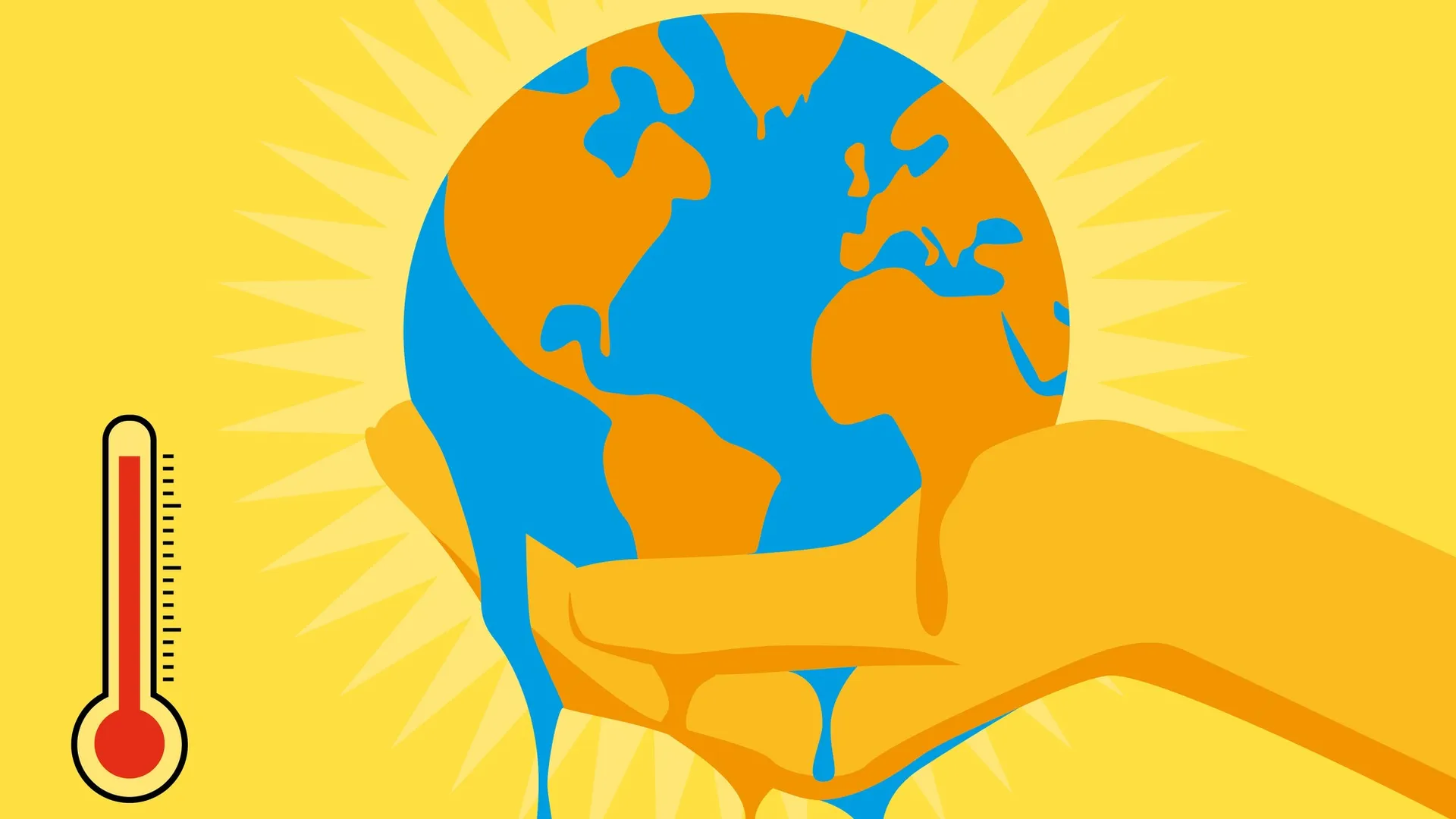
Earth is rapidly approaching a ‘hothouse’ trajectory of warming
Our planet may be heading to a point of no return. Scientists predict that a domino effect of damage is on the horizon if there is no intervention, including “hothouse” level warming. Climate change is likely to worsen, especially with relaxed emissions regulations, which will lead to irreparable harm to the ecosystem and human health.
What’s ‘hothouse’ warming?
Earth’s climate is “departing from the stable conditions that supported human civilization for millennia” and barreling toward several tipping points, which “could commit the planet to a hothouse trajectory,” said an analysis published in the journal One Earth. “Most tipping interactions are destabilizing in nature,” and if “one element tips, it can trigger a cascade effect, pushing other systems past their thresholds.” This tipping may “already be underway or could occur soon for the Greenland and West Antarctic ice sheets, boreal permafrost, mountain glaciers and parts of the Amazon rainforest.” The shift could “raise global temperatures, accelerate sea-level rise, release vast stores of carbon and destabilize ecosystems.”
In the hothouse trajectory, “global temperature stays significantly above the 4°C rise of current worst-case climate scenarios for thousands of years, driving a huge rise in sea level that drowns coastal cities,” said The Guardian. Unfortunately, global temperatures are likely already as “warm as, or warmer than, at any point in the last 125,000 years,” and the progress is “advancing faster than many scientists predicted,” said Christopher Wolf, a scientist at Terrestrial Ecosystems Research Associates and one of the authors of the analysis, to The Guardian. “Policymakers and the public remain largely unaware of the risks posed by what would effectively be a point-of-no-return transition.”
The Week
Escape your echo chamber. Get the facts behind the news, plus analysis from multiple perspectives.
Join more than 350,000 subscribers and keep yourself informed with a selection of The Week’s most interesting, enlightening and entertaining stories - plus daily puzzles.
Join more than 350,000 subscribers and keep yourself informed with a selection of The Week’s most interesting, enlightening and entertaining stories - plus daily puzzles.
Despite the warning, there is still a lot of uncertainty. Scientists “do not yet know the exact thresholds for many tipping elements, how feedback will interact with climate sensitivity, or how quickly tipping cascades might unfold,” said the analysis. Regardless, we “may be approaching a perilous threshold, with rapidly dwindling opportunities to prevent dangerous and unmanageable climate outcomes.” The risks are higher as the Trump administration is working to roll back caps on carbon dioxide emissions. The “added pollution could lead to as many as 58,000 premature deaths and an increase of 37 million asthma attacks between now and 2055,” said The New York Times.
The U.S. is “currently the world’s second-largest climate polluter (after China) but is the nation that has pumped the most greenhouse gases into the atmosphere since the Industrial Revolution,” said the Times. Time is of the essence now as the “boulder is going off over the edge of the cliff,” said Jillian Gregg, a study co-author and the CEO of Terrestrial Ecosystems Research Associates, to KLCC. “We are on this trajectory, and we don’t have recourse in how to get back.” However, even with evidence to show the dangers of climate change, we may be living in a “post-truth era in which too many people prefer pleasant lies over unpleasant truths,” said Reinhard Steurer, a professor of climate policy and governance at the University of Natural Resources and Life Sciences in Vienna, to Inside Climate News.
Sign up to get Today’s Best Articles in your inbox
A free daily email with the day’s biggest news and analysis – and the best features from TheWeek.com
Devika Rao has worked as a staff writer at The Week since 2022, covering science, the environment, climate and business. She previously worked as a policy associate for a nonprofit organization advocating for environmental action from a business perspective.