Sign up to get Today’s Best Articles in your inbox
Join 350,000+ subscribers and keep yourself informed with a selection of
The Week’s most interesting, enlightening and entertaining stories - plus daily puzzles.
You are now subscribed
Your newsletter sign-up was successful
Want to add more newsletters?
An account already exists for this email address, please log in.
Pakistan and Afghanistan are in ‘open war’ amid growing regional troubles
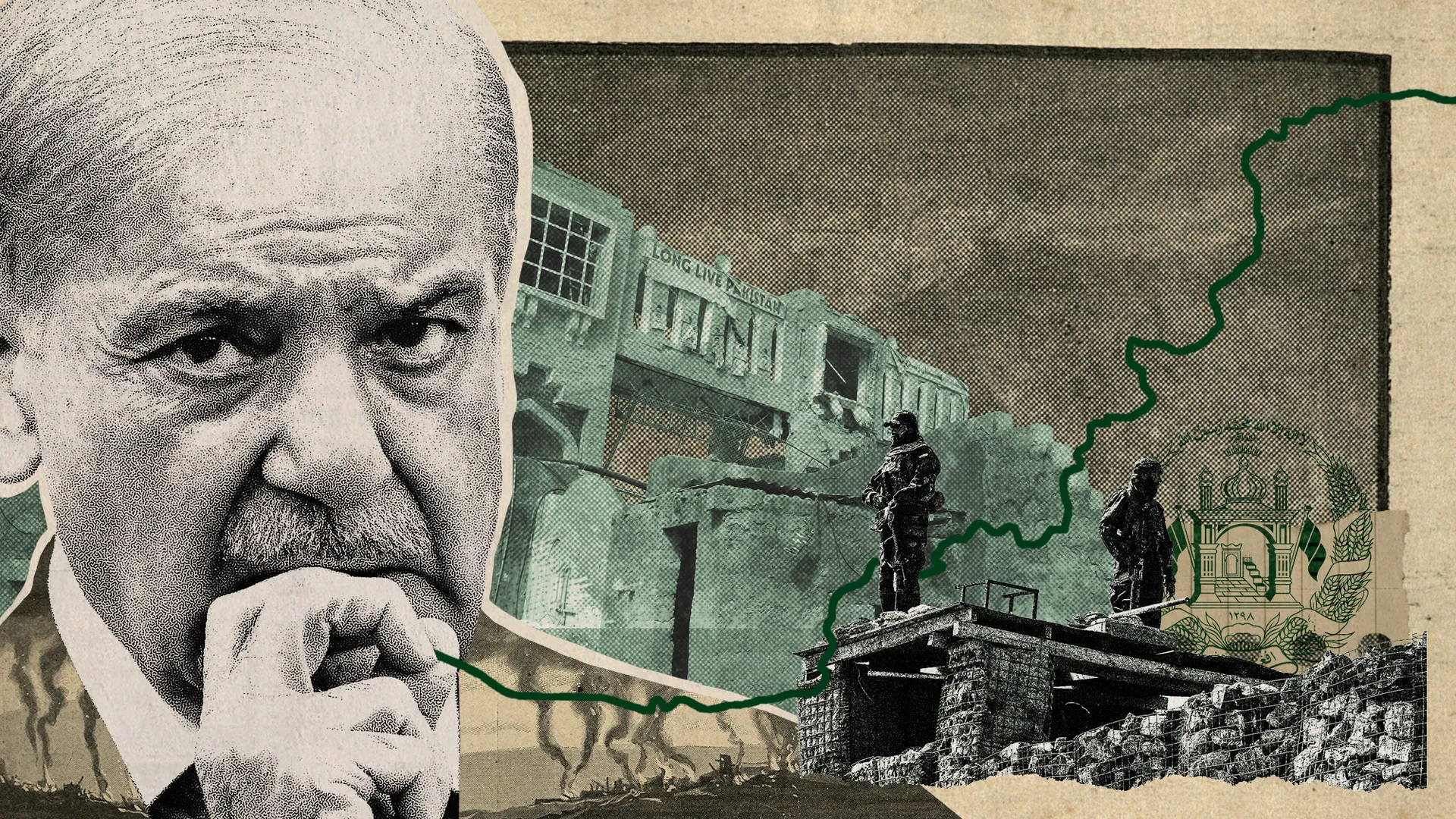
While the U.S. and Iran have been ratcheting up threats against each other, a simmering conflict in two neighboring countries just boiled over: Afghanistan and Pakistan devolved into armed conflict on Friday, with the latter declaring the countries in a state of “open war.” Tensions between the two sides have been increasing for months, and experts fear the fighting could represent a breaking point for the broader region.
Taliban began the conflict
The fighting started when the Taliban, the ruling government of Afghanistan, launched “what it called retaliatory attacks on military installations in northwest Pakistan,” said NBC News. As residents were forced to flee their homes, Pakistan hit back, announcing it had “struck military targets in Kabul, the capital of Afghanistan, as well as Kandahar and Paktia provinces.” A death toll has not been confirmed, but Pakistan said at least 70 people were killed while Afghan officials reported that “dozens of civilians were killed, including women and children.”
In all, Pakistan bombed more than 20 locations in Afghanistan. Following the initial combat, Pakistan “showed no willingness to stop the most expansive fighting in years,” said The New York Times. Pakistan “made every effort to keep the situation normal, directly and through friendly countries,” said Pakistani Defense Minister Khawaja Asif in a translated post on X. “Our cup of patience has overflowed. Now it is open war between us and you.”
The Week
Escape your echo chamber. Get the facts behind the news, plus analysis from multiple perspectives.
Join more than 350,000 subscribers and keep yourself informed with a selection of The Week’s most interesting, enlightening and entertaining stories - plus daily puzzles.
Join more than 350,000 subscribers and keep yourself informed with a selection of The Week’s most interesting, enlightening and entertaining stories - plus daily puzzles.
This “marks one of the biggest escalations in outright hostilities between Pakistan and Afghanistan since 2021 and could be the start of more violence,” said Time. The two countries had a shaky ceasefire deal since October 2025 and were historical allies. But tensions emerged over a border dispute; the Taliban does not consider the Durand Line, a boundary established by the colonial British, to be the border between Afghanistan and Pakistan, but Pakistani officials do. Relations also devolved because the Taliban is getting “closer to India, with which Pakistan has fought over the disputed region of Kashmir.”
‘Further escalation could compound instability’
When Pakistan and Afghanistan have fought before, other countries often enter via diplomacy, with “mediation by foreign governments including Saudi Arabia, Turkey and Qatar,” said CNN. But while the fighting has typically only lasted several days, many fear that “further escalation could compound instability.” This comes as tensions in nearby Iran are also increasing.
Experts believe the war this time could be worse. Any “retaliation by the Afghans will be in Pakistan’s urban centers,” said Abdul Basit, a senior associate fellow from the S. Rajaratnam School of International Studies, to CNN. “This is a recipe for chaos and chaos is what terrorist networks seek to flourish.” But the Taliban has warfighting methods Pakistan may be unprepared for. “The Afghan Taliban have drones, they have suicide bombers, they are innovative.”
Afghanistan’s retaliation could also “come in the way of raids on border posts and more cross-border guerrilla attacks to target security forces,” said Reuters. But there is also a “wide mismatch between the military capabilities” of the two sides. The Taliban’s reported fighting force of 172,000 is “less than a third of Pakistan's personnel,” and Pakistan is also known to possess nuclear weapons. The United Nations is urging both sides to “continue to seek to resolve any differences through diplomacy,” the organization said.
Sign up to get Today’s Best Articles in your inbox
A free daily email with the day’s biggest news and analysis – and the best features from TheWeek.com
Justin Klawans has worked as a staff writer at The Week since 2022. He began his career covering local news before joining Newsweek as a breaking news reporter, where he wrote about politics, national and global affairs, business, crime, sports, film, television and other news. Justin has also freelanced for outlets including Collider and United Press International.