Sign up to get Today’s Best Articles in your inbox
Join 350,000+ subscribers and keep yourself informed with a selection of
The Week’s most interesting, enlightening and entertaining stories - plus daily puzzles.
You are now subscribed
Your newsletter sign-up was successful
Want to add more newsletters?
An account already exists for this email address, please log in.
Is Iran one ‘risky gamble’ too many for the Trump economy?
Concerns about an oil shock and stagflation are rising
President Donald Trump spent the last year launching trade wars and pressuring the Federal Reserve to lower interest rates, challenging the resiliency and foundations of the U.S. economic system. The Iran war is fast becoming another test of America’s economic stability.
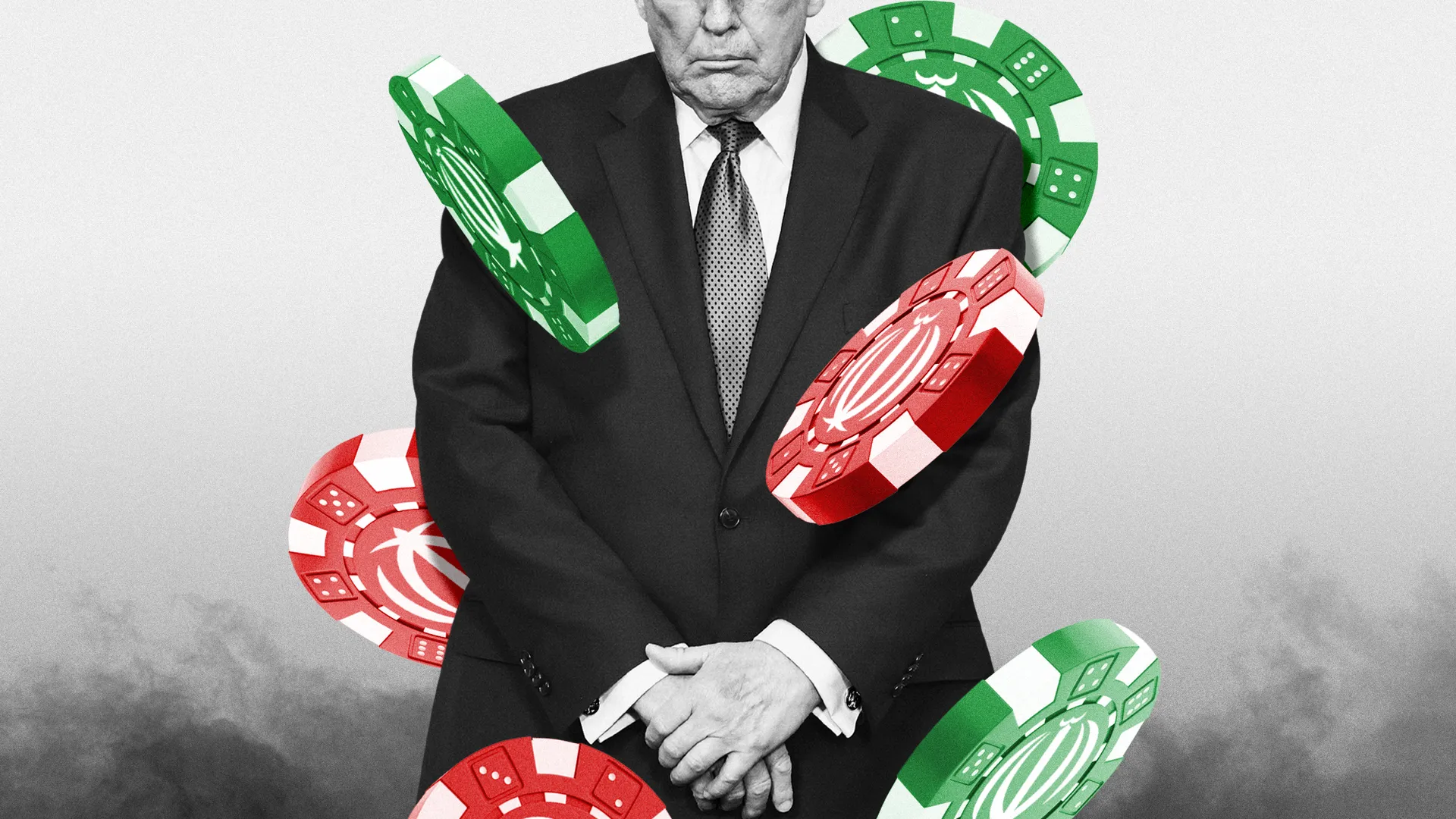
Trump has been “living dangerously” with a series of “risky economic gambles” and “mostly getting away with it,” said Politico. That is because the U.S. economy is a “consumer-driven powerhouse that seems hard to crush.” (The public does not necessarily agree: A recent Reuters/Ipsos poll shows just 35% of Americans approve of Trump’s economic leadership.) But the attack on Iran is becoming an “acute economic risk situation,” triggering market jitters.
Worries about stagflation are “rising on Wall Street,” said Axios. Climbing oil costs, combined with last week’s “lousy jobs report,” are “driving the concern.” The crisis in the Middle East is “pushing up energy and food costs, lifting inflation and squeezing growth,” said Bloomberg strategist Skylar Montgomery Koning. Those forces could create “exactly the kind of stagflationary environment” that economic experts fear, said Chicago Fed President Austan Goolsbee.
The Week
Escape your echo chamber. Get the facts behind the news, plus analysis from multiple perspectives.
Join more than 350,000 subscribers and keep yourself informed with a selection of The Week’s most interesting, enlightening and entertaining stories - plus daily puzzles.
Join more than 350,000 subscribers and keep yourself informed with a selection of The Week’s most interesting, enlightening and entertaining stories - plus daily puzzles.
“Trump’s ‘warflation’ has just begun,” Catherine Rampell said at The Bulwark. Roughly a “fifth of the world’s oil” passes through the Strait of Hormuz but “shipping traffic through the strait has virtually stopped.” That is “turbocharging” gasoline prices, plus markets for liquid natural gas, aluminum and fertilizer are also affected. Trump is probably not trying to raise prices for Americans already consumed with concerns about affordability, “but if he were, it’s not clear how much he’d be doing differently right now.”
The war-driven oil shock “probably won’t derail the economy,” Greg Ip said at The Wall Street Journal. While those with “long memories smell stagflation” reminiscent of 1970s instability, the odds are against both stagflation and recession. The U.S. has become “less energy dependent” on foreign oil, consuming less gasoline while becoming a “net exporter” of petroleum and liquid natural gas. That, along with an AI-assisted “productivity renaissance,” has created resilience that “should help sustain growth and cushion cost pressures.”
Trump’s decision to wage war on Iran is a “military, diplomatic, environmental and humanitarian disaster,” Jeet Heer said at The Nation. Trump may be “indifferent to the human costs of war,” but the “economic shock” is “another matter.” Rising oil prices and leery markets could spook the president into pulling back from the conflict. “The fear of losing money is a powerful incentive.”
What next?
The Iran war is “becoming the world’s latest economic headache,” said The New York Times. World leaders are “scrambling for ways” to limit the damage, considering “tapping their national stores of oil” to increase the available supply and keep prices from rising too high. Officials say the price pressures should be short-lived, though. Gas prices will “drop dramatically once the objectives of Operation Epic Fury are achieved,” said a White House spokesperson.
Sign up to get Today’s Best Articles in your inbox
A free daily email with the day’s biggest news and analysis – and the best features from TheWeek.com
Joel Mathis is a writer with 30 years of newspaper and online journalism experience. His work also regularly appears in National Geographic and The Kansas City Star. His awards include best online commentary at the Online News Association and (twice) at the City and Regional Magazine Association.