Sign up to get Today’s Best Articles in your inbox
Join 350,000+ subscribers and keep yourself informed with a selection of
The Week’s most interesting, enlightening and entertaining stories - plus daily puzzles.
You are now subscribed
Your newsletter sign-up was successful
Want to add more newsletters?
An account already exists for this email address, please log in.
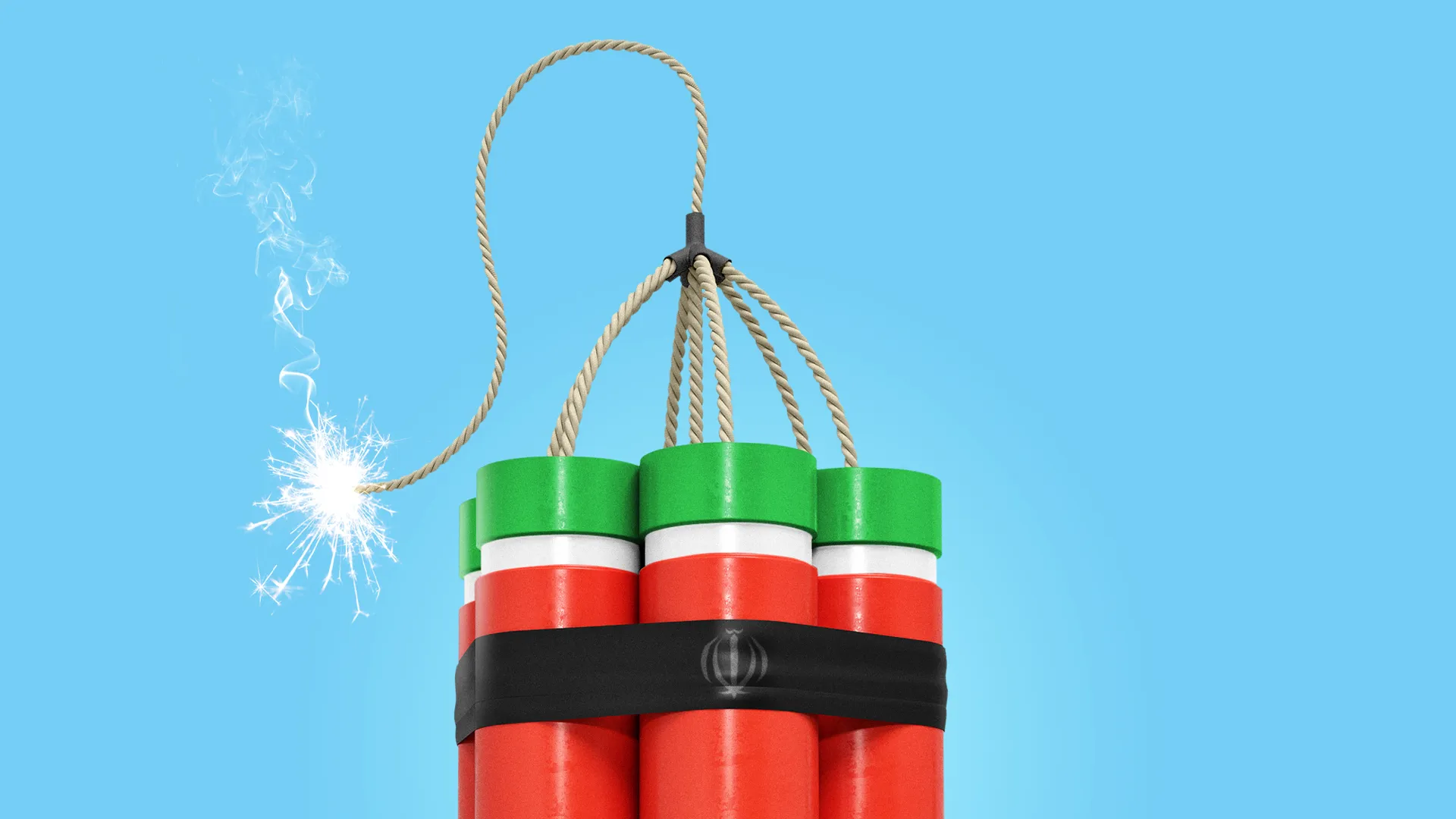
Will increasing tensions with Iran boil over into war?
President Donald Trump has recently been threatening the country
President Donald Trump’s consistent prodding of Iran hasn’t developed into armed conflict, but some foreign analysts are fearful it could be on the horizon. The White House has been pressuring Iran over its nuclear program and recently dispatched a second aircraft carrier to the Middle East as military tensions heighten. Despite this, other experts say the prospect of war with Iran remains unlikely.
What did the commentators say?
Trump has long hinted at the idea of a strike against Iran, and his administration did attack the country’s alleged nuclear weapons armaments in 2025. But White House officials have “discovered that the U.S. could not conduct a major offensive as quickly as they had hoped without real risks to American forces, support from allies, and regional stability,” said The Atlantic. The administration also doesn’t appear to have a plan of attack, as it has “yet to outline to military commanders what it would want to achieve through strikes.”
This likely suggests that the “use of force is not imminent” in Iran, said The Atlantic. Trump has “no good options when it comes to using force,” said CNBC, largely because the U.S. does not have the troop presence built up near Iran to mount a full-on war. While American forces in the region are growing, they are “not adequate to support a significant long-term military operation in Iran which would be necessary to achieve any major military objective,” said Alireza Ahmadi, an executive fellow at the Geneva Center for Security Policy, to CNBC.
The Week
Escape your echo chamber. Get the facts behind the news, plus analysis from multiple perspectives.
Join more than 350,000 subscribers and keep yourself informed with a selection of The Week’s most interesting, enlightening and entertaining stories - plus daily puzzles.
Join more than 350,000 subscribers and keep yourself informed with a selection of The Week’s most interesting, enlightening and entertaining stories - plus daily puzzles.
But Trump has never shied away from conflict, and things could continue to devolve if negotiations between the U.S. and Iran break down. If he did decide to go to war, or even launch a targeted attack, it would be “something much larger, likely” than “what the Israelis did in the 12-day war,” retired U.S. Army Gen. Jack Keane said on “The Cats Roundtable” radio show. The conflict could create “something that would be quite formidable, that would put the regime clearly on a pathway to regime collapse.”
What next?
Despite “ongoing diplomacy to ease tensions with Iran,” said Al Jazeera, the Trump administration appears to be moving ahead with shoring up its Middle East forces. Recent moves by the White House “put two carriers and their accompanying warships in the region.” This occurred just hours after Israeli Prime Minister Benjamin Netanyahu met with Trump in Washington, D.C., and “reaffirmed his preference for a diplomatic deal with Iran.” Trump “insisted that negotiations with Iran continue to see whether or not a Deal can be consummated,” the president wrote on social media.
Diplomatic negotiations have largely been positive, Iranian Foreign Minister Abbas Araghchi said. But Iran also temporarily closed the Strait of Hormuz to “conduct military drills in the waterway,” causing concern since the “strait is the world's most vital oil export route,” said Reuters. And Iran may already be resigned to the fact that a U.S. attack is coming. The country is “preparing for the possibility” of an offensive move by the U.S., The Jerusalem Post reported; satellite images have shown a “larger push to create defensive layers to [Iran’s] nuclear and ballistic missile facilities,” said Jonathan Hackett, a U.S. Marine Corps veteran, to the Post. This is likely in “anticipation of a possible U.S. strike.”
Sign up to get Today’s Best Articles in your inbox
A free daily email with the day’s biggest news and analysis – and the best features from TheWeek.com
Justin Klawans has worked as a staff writer at The Week since 2022. He began his career covering local news before joining Newsweek as a breaking news reporter, where he wrote about politics, national and global affairs, business, crime, sports, film, television and other news. Justin has also freelanced for outlets including Collider and United Press International.