Sign up to get Today’s Best Articles in your inbox
Join 350,000+ subscribers and keep yourself informed with a selection of
The Week’s most interesting, enlightening and entertaining stories - plus daily puzzles.
You are now subscribed
Your newsletter sign-up was successful
Want to add more newsletters?
An account already exists for this email address, please log in.
Trump wants a weaker dollar, but economists aren’t so sure
A less-powerful dollar can make imports more expensive but also boost gold
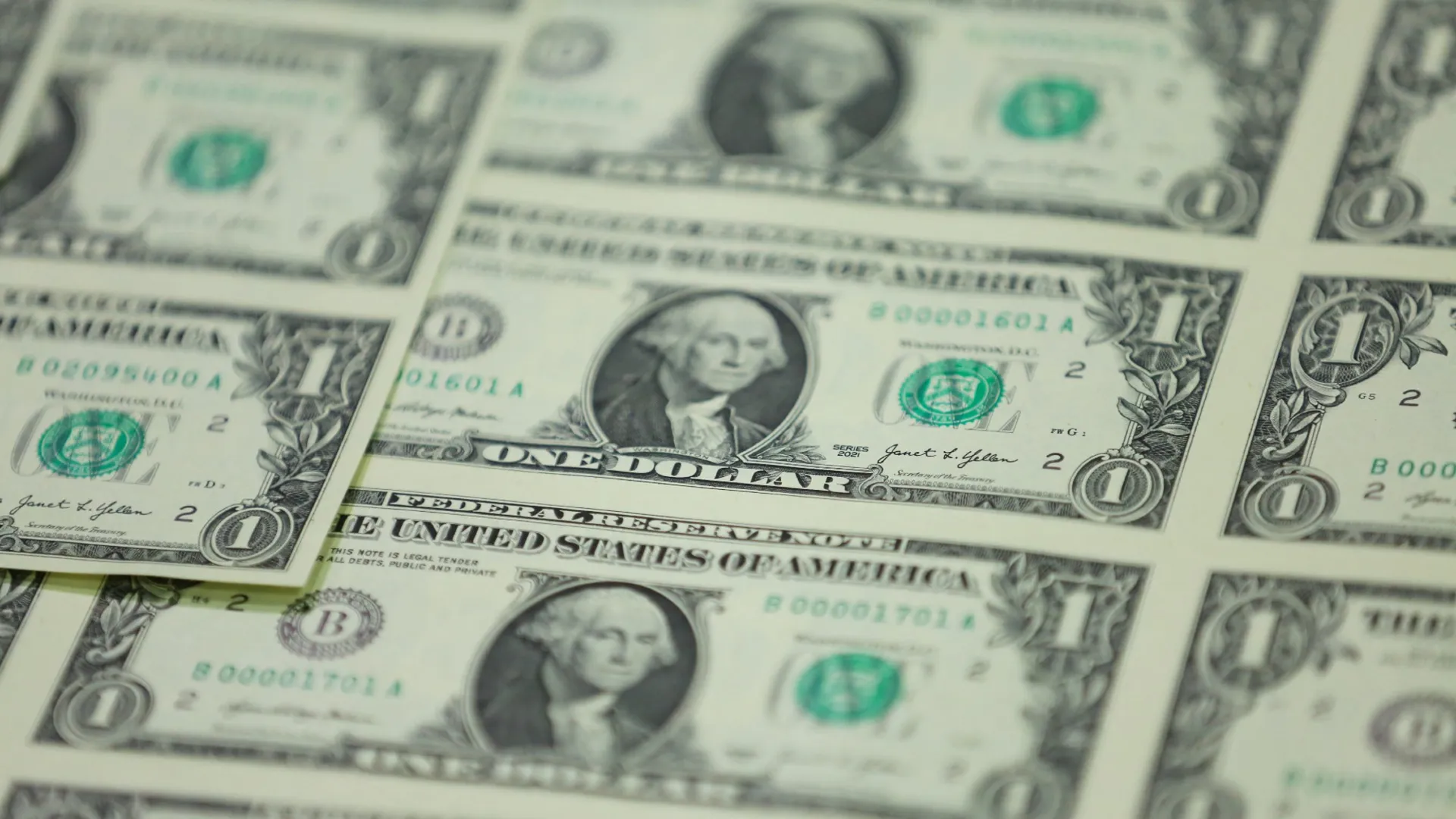
The value of the U.S. dollar has been steadily declining, but one person who doesn’t seem worried is President Donald Trump. On the contrary, he has been lauding the dollar’s fall as a positive change for the American economy. “I think it’s great,” Trump said to reporters last week. The president has repeatedly stated that a declining dollar is good for U.S. businesses. But with the dollar recently hitting a value of 95.56, a four-year low, some economists are sounding warning bells.
‘Interferes with his priorities’
Trump’s main argument is that having a weaker dollar breeds more competition among American businesses, and in his view, a “strong dollar, like higher interest rates, interferes with his priorities: faster growth, reshored manufacturing and a smaller trade deficit,” said The Wall Street Journal. This is an idea Trump has had since his first term. “I think our dollar is getting too strong,” and “that’s hurting — that will hurt ultimately,” Trump told the Journal in 2017.
A weaker dollar could provide “near-term benefits to the U.S. economy,” as a “lower currency also boosts exports, without the uncertainty and distortions that tariffs entail,” said the Journal. This occurs even as the weakening currency, combined with Trump’s sweeping tariffs, can “discourage imports.” Historically, Trump has also felt that the dollar “appreciated when the U.S. economy outperformed.”
The Week
Escape your echo chamber. Get the facts behind the news, plus analysis from multiple perspectives.
Join more than 350,000 subscribers and keep yourself informed with a selection of The Week’s most interesting, enlightening and entertaining stories - plus daily puzzles.
Join more than 350,000 subscribers and keep yourself informed with a selection of The Week’s most interesting, enlightening and entertaining stories - plus daily puzzles.
Some seem to be fine with this economic stance, as trading floors are “abuzz with talk of the ‘debasement trade,’ a broad term for bets on the deterioration of American financial exceptionalism,” said The Economist. Another reason some economists aren’t panicking is that the dollar is “not actually all that weak,” as its real exchange rate (which accounts for inflation discrepancies between countries) was, in 2025, “13% above its average of the past 30 years.”
‘Signifies diminished confidence’
Trump may not have a problem with a weakened dollar, but most economists feel differently. A weak dollar is “not the weather, it’s the barometer,” said Steve Englander, a researcher at U.K. bank Standard Chartered, to CNBC. A weaker currency “reflects the fact that something’s going wrong, either domestically or internationally, and the currency weakness is sort of an escape valve.” Having a weak dollar also “signifies diminished confidence in the U.S. as foreign investors grow wary over the country’s fiscal outlook,” said CNBC.
Since the dollar has been doing well for a long time, many people might be “unable to process the scenario of a weakening dollar and a strong U.S. economy,” said Stephen Jen, founder of asset management group Eurizon SLJ Capital, to Bloomberg. If the dollar’s slide continues, it could mark the “beginning of the next leg lower in the dollar, and many may not be prepared for it.”
And the dollar’s fall has largely been Trump’s own doing, as it has been “driven, in part, by concerns about Trump’s unpredictable, and often unorthodox, approach to economic policy,” said NPR. Having a weaker dollar can also make items overseas more expensive, a “major issue given that the U.S. has traditionally imported more from abroad than it exports.” As the dollar continues to drop, alternative assets like gold, which has risen nearly 8% year to date, are “outperforming as a safe haven for investors,” said Fortune.
Sign up to get Today’s Best Articles in your inbox
A free daily email with the day’s biggest news and analysis – and the best features from TheWeek.com
Justin Klawans has worked as a staff writer at The Week since 2022. He began his career covering local news before joining Newsweek as a breaking news reporter, where he wrote about politics, national and global affairs, business, crime, sports, film, television and other news. Justin has also freelanced for outlets including Collider and United Press International.



 talking pointsA leadership power vacuum may await Republicans
 QUOTE OF THE DAY‘What kind of culture looks at sexual violence and sees an opportunity for profit? This is rape culture. And it should disturb every single one of us.’
 today’s big questionHow long can US consumers continue their spending spree?