Sign up to get Today’s Best Articles in your inbox
Join 350,000+ subscribers and keep yourself informed with a selection of
The Week’s most interesting, enlightening and entertaining stories - plus daily puzzles.
You are now subscribed
Your newsletter sign-up was successful
Want to add more newsletters?
An account already exists for this email address, please log in.
The end for central bank independence?
Trump’s war on the US Federal Reserve comes at a moment of global weakening in central bank authority
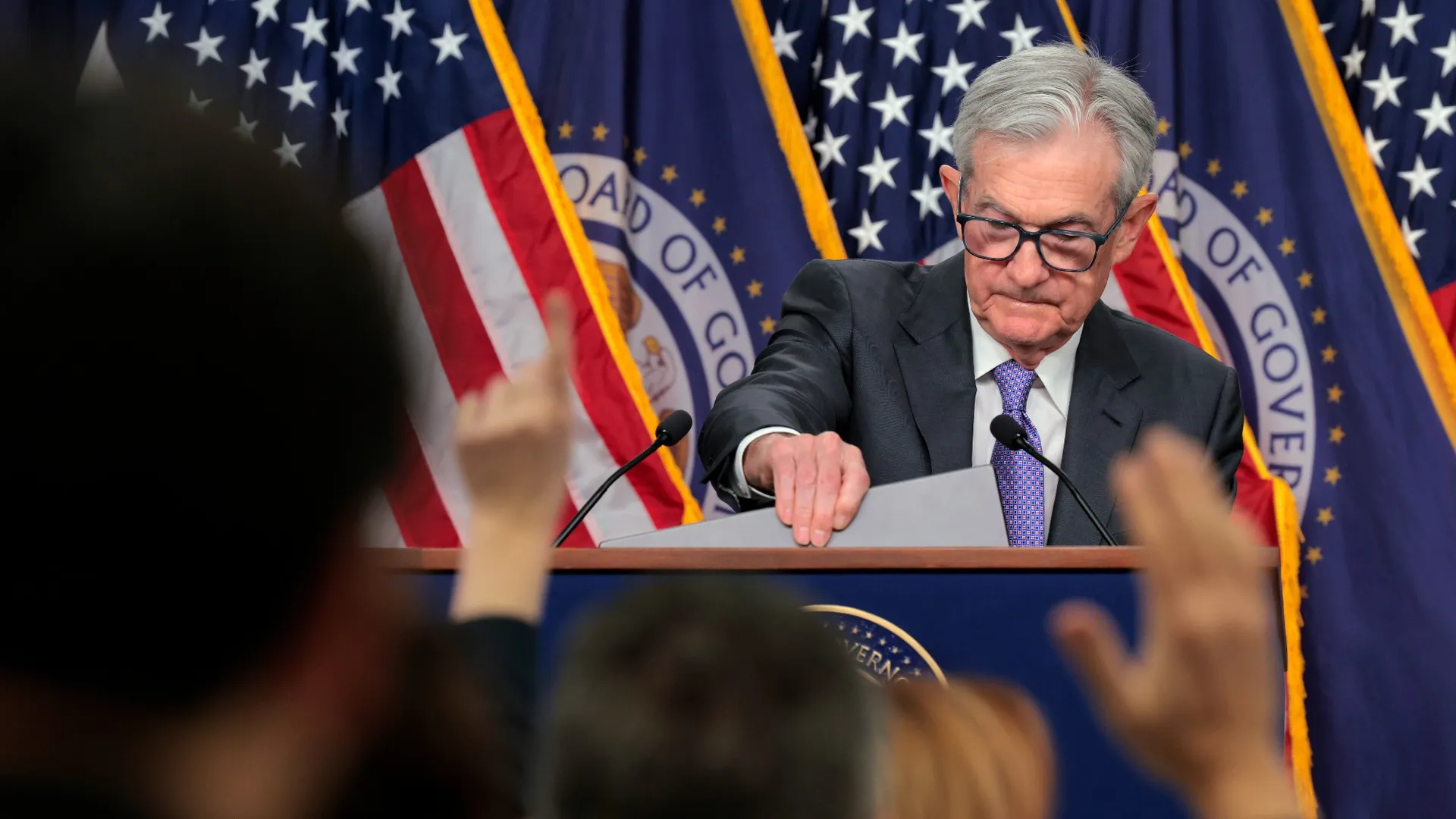
The independence of the US Federal Reserve seems ever more at risk as Donald Trump continues to try to influence the central bank’s policies, and has even ordered a criminal investigation into its chair, Jerome Powell.
Since the beginning of his second term, Trump has repeatedly called for Powell to be replaced. He has also attempted to remove board member Lisa Cook, accusing her of mortgage fraud. Trump’s attacks on the Fed have widely been seen as an attempt to “force interest rate cuts out of the central bank, in defiance of its mandate and independence”, said Sky News.
Outside the US, too, there is growing (if more restrained) criticism of the idea of central bank independence. The long-accepted notion that a central bank, unsaddled by political turmoil, is the best vehicle for delivering economic results looks weaker in the face of continuing global instability, swelling deficits and high inflation.
The Week
Escape your echo chamber. Get the facts behind the news, plus analysis from multiple perspectives.
Join more than 350,000 subscribers and keep yourself informed with a selection of The Week’s most interesting, enlightening and entertaining stories - plus daily puzzles.
Join more than 350,000 subscribers and keep yourself informed with a selection of The Week’s most interesting, enlightening and entertaining stories - plus daily puzzles.
The pro-independence argument is that politicians are likely to be “tempted by self-defeating monetary policies” in pursuit of short-term electoral goals, such as decreasing unemployment and “inflating away debts”, said The Economist. Monetary policies that “make everyone better off” in the long run are more attainable and more sustainable if they’re “delegated to a conservative central banker, perhaps even an price-obsessed ‘inflation nutter’”.
The principle that central banks should “enjoy some independence” is certainly not new. In 1806, Napoleon Bonaparte said that the recently created Bank of France should “be sufficiently in the hands of the government”, but “not too much”. But it was really after the Second World War that the modern idea of central-bank independence emerged. In 1951, the “Treasury-Fed accord” gave the US Federal Reserve increased independence and, around the same time, Germany’s Bundesbank was given more autonomy, soon becoming “a model for the rest of the continent”.
Central banks have since been seen as a “triumph of applied economics”. As “independence rose, inflation fell” and “recessions became rarer”. But now this “triumph” is “under threat” in the US and elsewhere.
Why is that changing?
Recent surges in inflation have damaged public trust in central banks and sparked vocal criticism from politicians. The global financial crisis, a prolonged period of quantitative easing, and the “pressures of climate risk, geopolitical shocks and fiscal activism” are further raising the “fundamental” question of whether the “orthodox consensus” has “reached its limits”, said Chatham House.
Independence worked well when most politicians and experts “agreed on what central banks should do to stabilise the economy”, said UnHerd. But that consensus has “disappeared” and “independence without consensus is tyranny”.
Sign up to get Today’s Best Articles in your inbox
A free daily email with the day’s biggest news and analysis – and the best features from TheWeek.com
Should we be worried?
Trump’s interference with monetary policy “could lead to financial panic and economic disaster” that would be felt around the world, said Bloomberg. A monetary policy dictated by “short-term political calculations” might lead to lower interest rates but would then spark higher inflation and, ultimately, “increase the cost of credit, discourage private investment and make public debt (which, in the US, is already rising unsustainably) harder to service”.
But Trump’s “damaging attacks on the Fed shouldn’t obscure its failures”, said Investors’ Chronicle. “Technocratic policymakers with limited democratic accountability shouldn’t be beyond censure.” The Fed’s recent “rate calls” have “contributed directly to house price and asset bubbles” and its “regulatory failures” in the past “helped lead to the subprime mortgage disaster” and the 2008 crash. Changes to how central banks operate are not “inherently a terrible idea”.
Chas Newkey-Burden has been part of The Week Digital team for more than a decade and a journalist for 25 years, starting out on the irreverent football weekly 90 Minutes, before moving to lifestyle magazines Loaded and Attitude. He was a columnist for The Big Issue and landed a world exclusive with David Beckham that became the weekly magazine’s bestselling issue. He now writes regularly for The Guardian, The Telegraph, The Independent, Metro, FourFourTwo and the i news site. He is also the author of a number of non-fiction books.

 talking pointsA leadership power vacuum may await Republicans
 QUOTE OF THE DAY‘What kind of culture looks at sexual violence and sees an opportunity for profit? This is rape culture. And it should disturb every single one of us.’
 today’s big questionHow long can US consumers continue their spending spree?