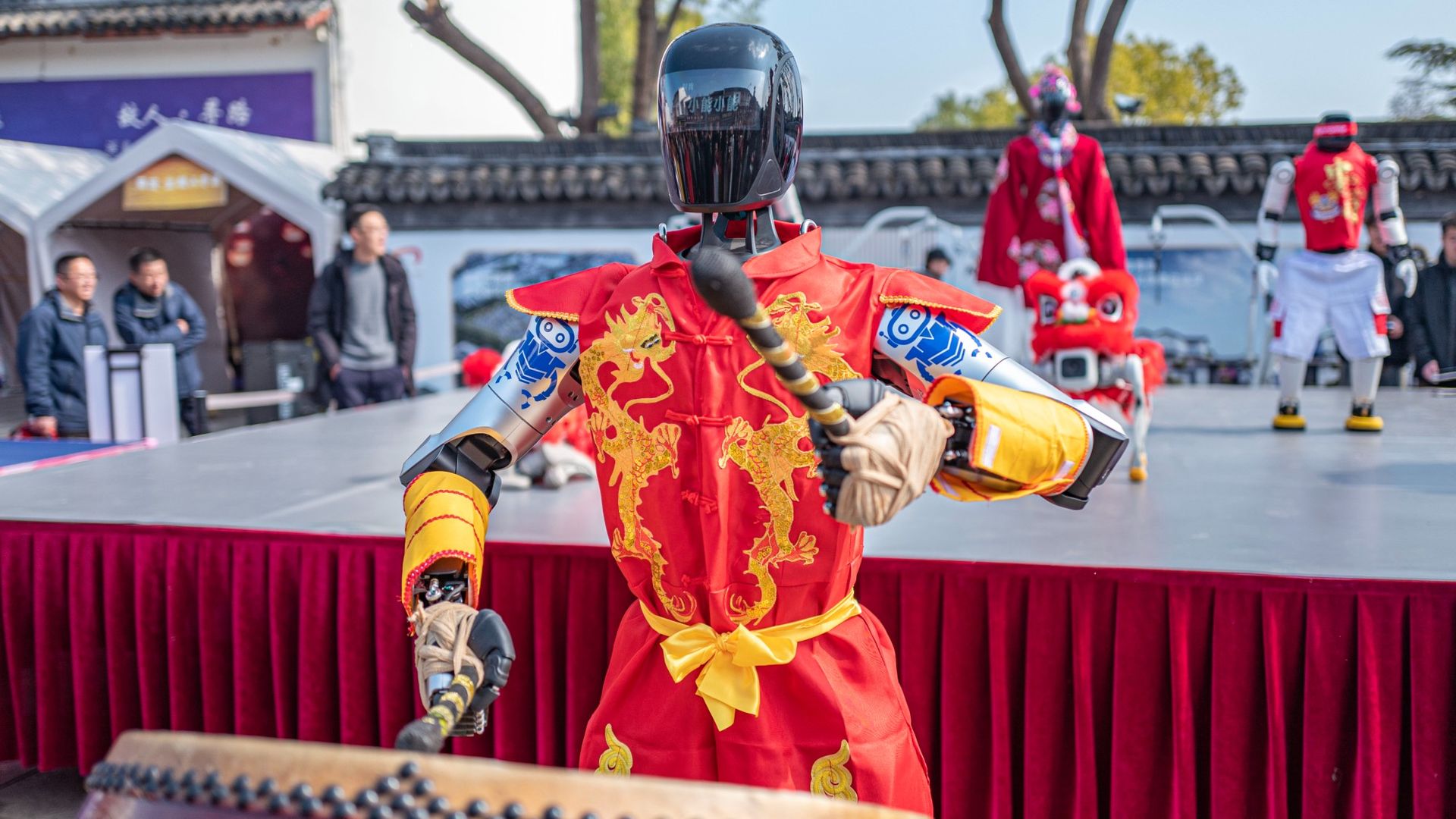
Gone are the days when China’s humanoid robots were something of a joke. In a “dazzling” performance, said Futurism, humanoid robots took centre stage in China’s Spring Festival Gala, “showcasing how far the country’s robotics industry has come in a few short years”. With backflips and sophisticated choreography – including sparring with children using nunchucks – the performance was in stark contrast to the “awkwardly shuffling” humanoids that preceded them.
Are humanoids a realistic goal?
Machines with human likeness have appeared in “mythology and history for millennia”, yet the idea that they could become “practical consumer products” is entirely realistic, said social robotics researcher Eduardo B. Sandoval on The Conversation. Progress in other fields has helped the sector to develop rapidly. There have been major improvements to battery capacity, motors and sensors thanks to the electric vehicle industry, and the AI systems that control such hardware “have also become far more capable”.
How invested is China in the technology?
China’s “bustling” robotics industry is “home to the world’s deepest supply chain for humanoids”, said The Economist. According to research firm Omdia, more than 14,500 “automatons” were delivered globally last year, a near 400% rise on the year before. China’s two leading firms, Agibot and Unitree, “accounted for around three-quarters of the total”.
The Chinese state will “probably remain the biggest source of demand for some time”. Though subsidies provide important financial platforms for expansion, the government’s “most important role by far is as a buyer”; it was the largest purchaser of humanoids last year.
Should we be worried?
In the not too distant future, there is “likely” to be room for “robots in the shape of humans and animals” for “military and security organisations”, Hans Liwång, from the Swedish Defence University, told Euronews.
China’s robotics market rush is worrying some in the West, who believe that humanoids will “eventually become one of the largest industries in the world”, said The Economist. But China’s latest displays of expertise should be viewed with caution, and at the very least “through a lens of state propaganda”, said The Guardian. The humanoids were programmed to enact a fixed routine “hundreds or thousands of times”, requiring very little “environmental perception”, an essential requirement for factory-grade development. |