The Week The Week
flag of US
US
flag of UK
UK
https://cdn.mos.cms.futurecdn.net/flexiimages/jacafc5zvs1692883516.jpg

SUBSCRIBE & SAVE

Less than $3 per week

Sign in
  • View Profile
  • Sign out
  • The Explainer
  • The Week Recommends
  • Newsletters
  • Cartoons
  • From the Magazine
  • The Week Junior
  • Student Offers
  • More
    • Politics
    • World News
    • Business
    • Health
    • Science
    • Food & Drink
    • Travel
    • Culture
    • History
    • Personal Finance
    • Puzzles
    • Photos
    • The Blend
    • All Categories
  • Newsletter sign up Newsletter
  • The Week Evening Review
    Russia’s progress in Ukraine, the Labour Together claims, and a slur at the Baftas

     
    TODAY’S BIG QUESTION

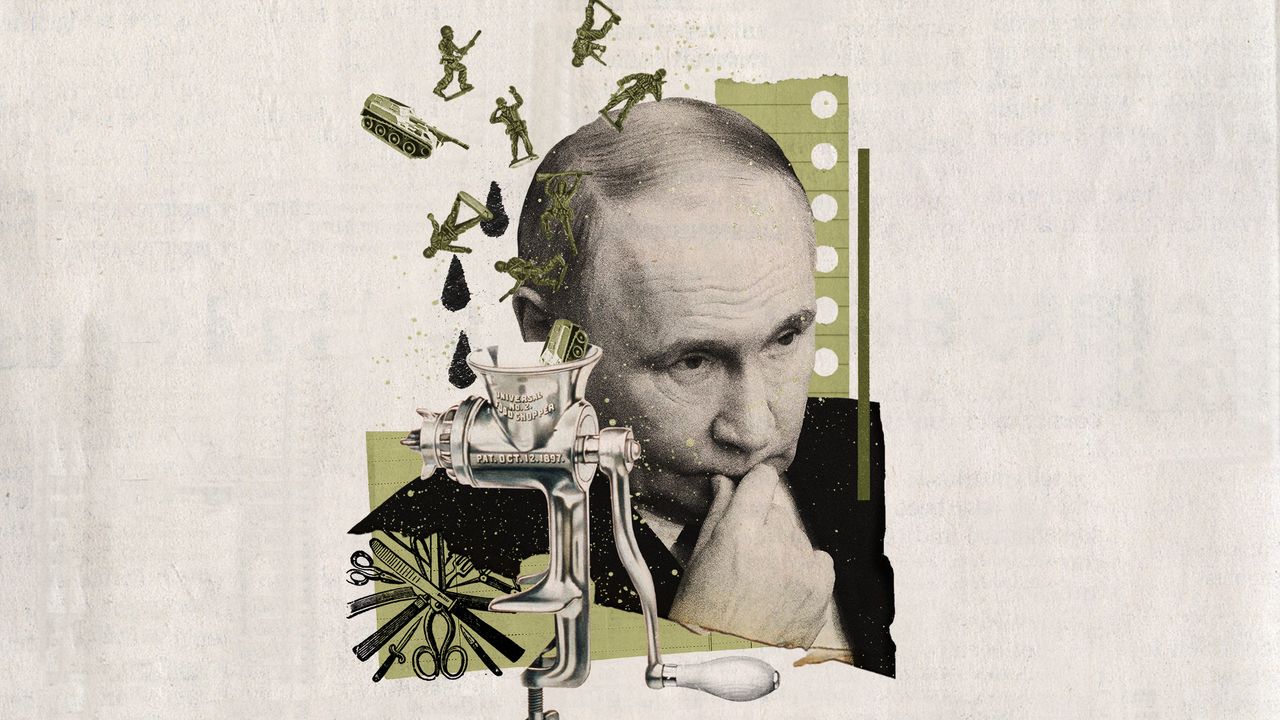
    How long can Russia hold out in Ukraine?

    “Vladimir Putin has not achieved his goals,” a defiant Volodymyr Zelenskyy said today in a televised address marking the fourth anniversary of Russia’s full-scale invasion of Ukraine.

    The February 2022 invasion was meant to be a “short and successful military operation” that would “force Kyiv back into Moscow’s orbit” and “overturn the entire post-Cold War security architecture in Europe”, said the BBC’s Russia editor Steve Rosenberg. “It didn’t go to plan.”

    What did the commentators say?
    As the conflict enters its fifth year, Russian victory seems as far off as ever and Putin has little to show for his country’s estimated 1.2 million casualties, according to Seth G. Jones and Riley McCabe at the Center for Strategic and International Studies. The average pace of Russia’s progress has sometimes been as little as 15 metres per day, “slower than almost any major offensive campaign in any war in the last century”.

    Russia’s economy is starting to teeter. It faces a huge shortfall in oil revenues and has been forced to sell gold reserves to cover its budget deficit. The West has always believed that domestic discontent as a result of the ongoing sanctions would “persuade Putin to abandon the war”, said politics experts Peter Rutland and Elizaveta Gaufman on The Conversation. But this approach “tends to downplay the role of ideology”, which has been successfully exploited by the Kremlin to spin the war as an existential threat and maintain support for the president.

    The Kremlin’s version of events has also been fed to Russia’s opponents. Claims that Ukraine’s front line faces “imminent collapse” are “an effort to coerce the West and Ukraine into capitulating to Russian demands that Russia cannot secure itself militarily”, said the Washington-based Institute for the Study of War. This is a “false narrative”.

    What next?
    “Standard economic theory suggests that deteriorating conditions should push the Kremlin towards negotiations on ending the war,” said The Economist. “A rational actor facing mounting costs seeks an exit.” But Putin is watching the West grappling with its own problems and wavering in its support for Ukraine. “If your competitors are also weakening – and if you believe you can tolerate the pain longer than they can – the calculus flips.”


    THE EXPLAINER

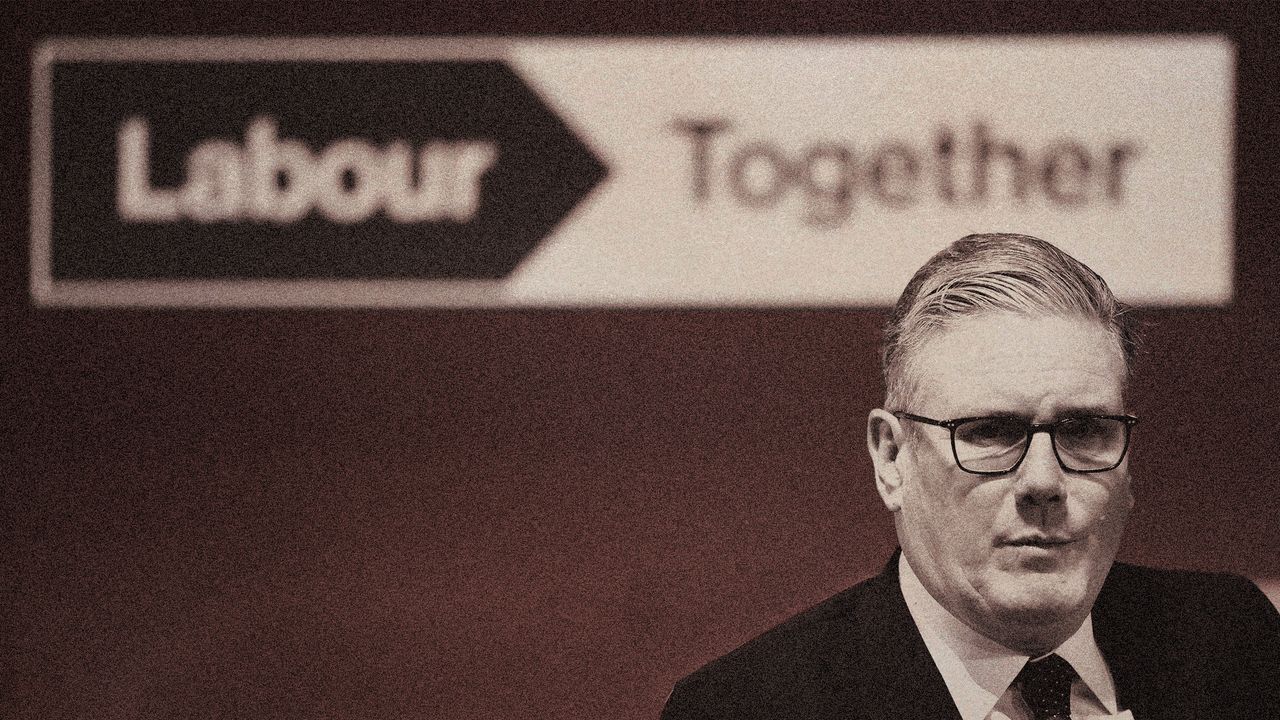
    Labour Together’s ‘smear campaign’ against journalists

    Keir Starmer will ask his independent ethics adviser to investigate whether Cabinet Office minister Josh Simons breached the ministerial code, following claims he was involved in a smear campaign targeting journalists.

    Simons was director of Labour Together when it allegedly paid thousands of pounds to a PR firm to investigate the backgrounds of journalists digging into how the think tank’s undeclared funding bankrolled Starmer’s party leadership campaign.

    What is alleged?
    In November 2023, The Sunday Times reported that the pro-Starmer think tank had failed to declare £730,000 in political donations between 2017 and 2020. Labour Together was headed at that time by Morgan McSweeney, who later served as Starmer’s chief of staff in Downing Street. The think tank attributed the discrepancy to an administrative error.

    An investigation by Khadija Sharife and Peter Geoghegan, published on the latter’s Substack site Democracy for Sale, revealed that Labour Together paid PR firm Apco “at least £30,000” for material on the journalists. At the time of the payment, the directorship of the think tank had passed to Simons.

    Apco’s report, codenamed “Operation Cannon”, divulged personal information about the journalists involved, including claims about the “faith, relationships and upbringing” of Sunday Times reporter Gabriel Pogrund, said the BBC. Labour Together then passed “some of Apco’s material” on to the security services, “raising serious questions about whether public authorities were drawn into an effort to discredit legitimate journalism”, said Geoghegan in The Guardian.

    What has the response been?
    While not denying that Labour Together hired Apco, Simons has said he was “surprised and shocked” that the report included “unnecessary information” on Pogrund. “I asked for this information to be removed before passing the report to GCHQ,” he told The Sunday Times.

    Starmer has said he “didn’t know anything” about the Apco report, and has asked the Cabinet Office to “establish the facts”. An investigation has since been launched by its propriety, ethics and constitution group, but critics claim the government is effectively marking its own homework. More than 20 Labour MPs have written to the PM and Labour Party general secretary Hollie Ridley to demand an independent investigation.


    QUOTE OF THE DAY

    “It was simply a miracle.”

    Grace Bell shares her joy after becoming the first woman in the UK to give birth following a womb transplant from a dead donor. “I never, ever thought this would be possible,” she told reporters about her son Hugo, now 10 weeks old.


    Poll watch

    Three in five (61%) Americans think Donald Trump has “become erratic with age”. Almost a third (31%) of Republicans agreed with that description, rising to 89% among Democrats, according to a Reuters/Ipsos poll of 4,638 adults ahead of the 79-year-old president’s State of the Union address today.


    TALKING POINT

    The Tourette row at the Baftas

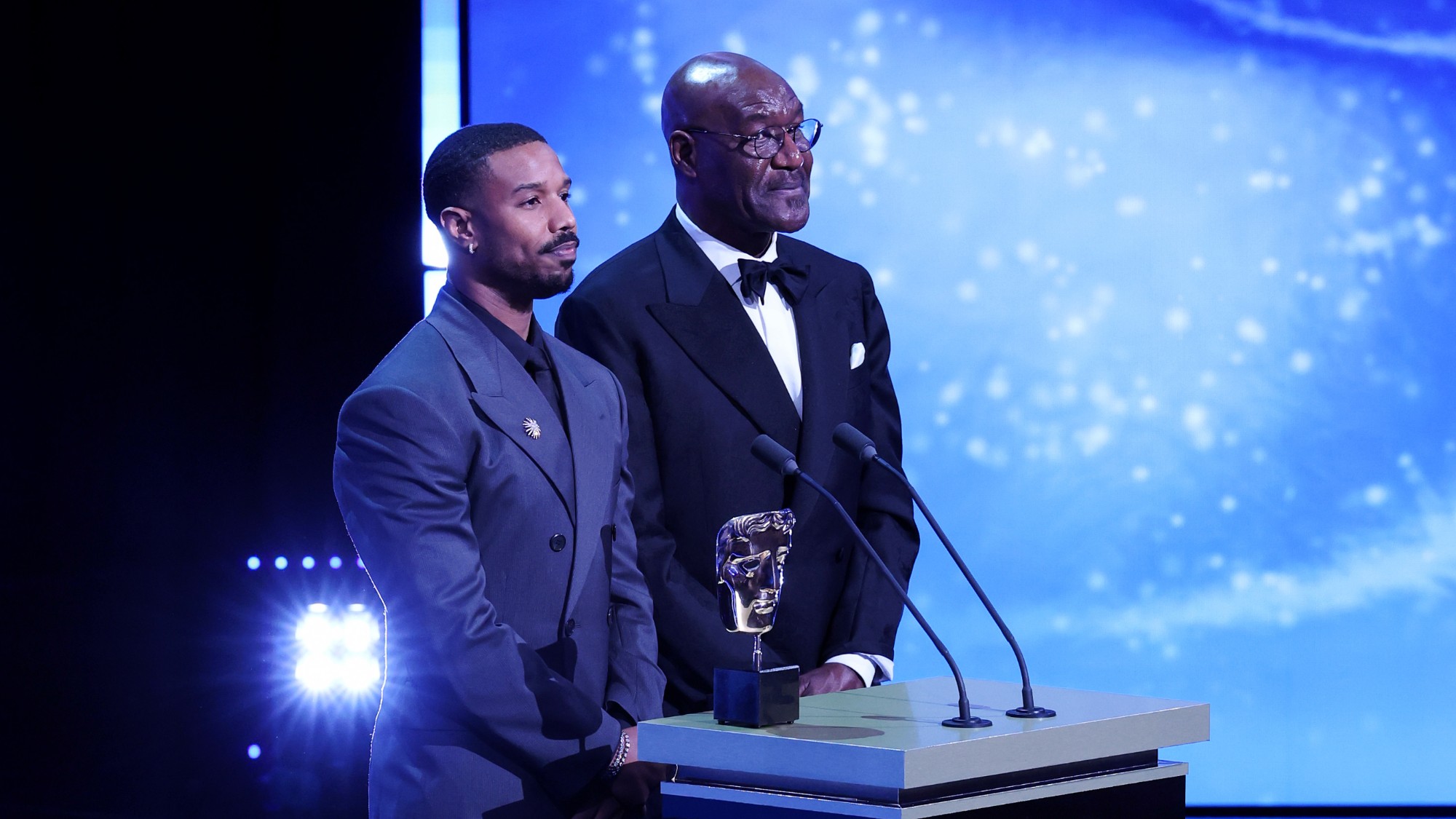
    The BBC has apologised for failing to edit out a racial slur shouted during the Bafta awards ceremony by a guest with Tourette syndrome. John Davidson, whose life story inspired the movie “I Swear”, yelled the N-word while Black actors Michael B. Jordan and Delroy Lindo were presenting an award.

    Shortly afterwards, ceremony host Alan Cumming apologised. A BBC spokesperson later also said sorry for “any offence caused by the language heard” during the broadcast. 

    ‘Empty’ apologies
    “Can we stop making these kinds of apologies?” said Ava Vidal in The Independent. These vaguely worded hypotheticals “feel empty” and avoid the reality that “people were offended – Black people”. Jordan and Lindo (pictured above) were “violated in front of their peers” and then again “on almost-live TV”.

    Grace is due to Davidson, too: “what some people have said about this disability campaigner is beyond disgusting”. Involuntary tics and outbursts don’t “indicate a person’s true feelings and are not a reflection of their character”, and he “will be absolutely mortified by his outburst”. Some Black commenters argued on social media that Davidson should have watched the ceremony from “a private, soundproofed box where he could not be heard”, but “people belonging to a community that knows about segregation should know better”.

    Big error
    The moment was “shocking”, said Josh Pizzuto-Pomaco in The Herald, but so is the fact that “two hours later, the BBC inexplicably aired the segment on television, with Davidson’s shout audible in the background”. In the predictable subsequent “pile-on”, some people suggested Davidson should “wear a muzzle” or “tape his mouth shut”. 

    “Rather than pick a side between racism and ableism, we should instead direct our ire towards the BBC”, which “failed” in its “duty of care to all parties involved”. This is “another indictment of a failing public institution”.

    The “big” error was “in the editing, or the lack of”, said Catherine Shoard in The Guardian. “No one could have stopped” Davidson “yelling out the N-word” but, given that BBC editors found time to “judiciously remove Akinola Davies Jr’s shout of ‘Free Palestine’” from the broadcast, it “seems a perverse decision” not to edit out the “appalling racial insult” too.


    Good day 🐎

    … for equines in Italy, where a bipartisan parliamentary group is proposing a ban on horse meat. Under the draft bill, horses, donkeys and mules would be classified as pets, making it a criminal offence to kill them for carne di cavallo, of which Italy is currently one of Europe’s leading consumers.


    Bad day 🍫

    … for chocolate sellers, who are being targeted by criminal gangs as cocoa prices soar. Some shops are locking chocolate bars in plastic security boxes amid warnings from the Association of Convenience Stores that stolen confectionery “is being resold through illicit markets that help fund wider criminal activity”.


    picture of the day

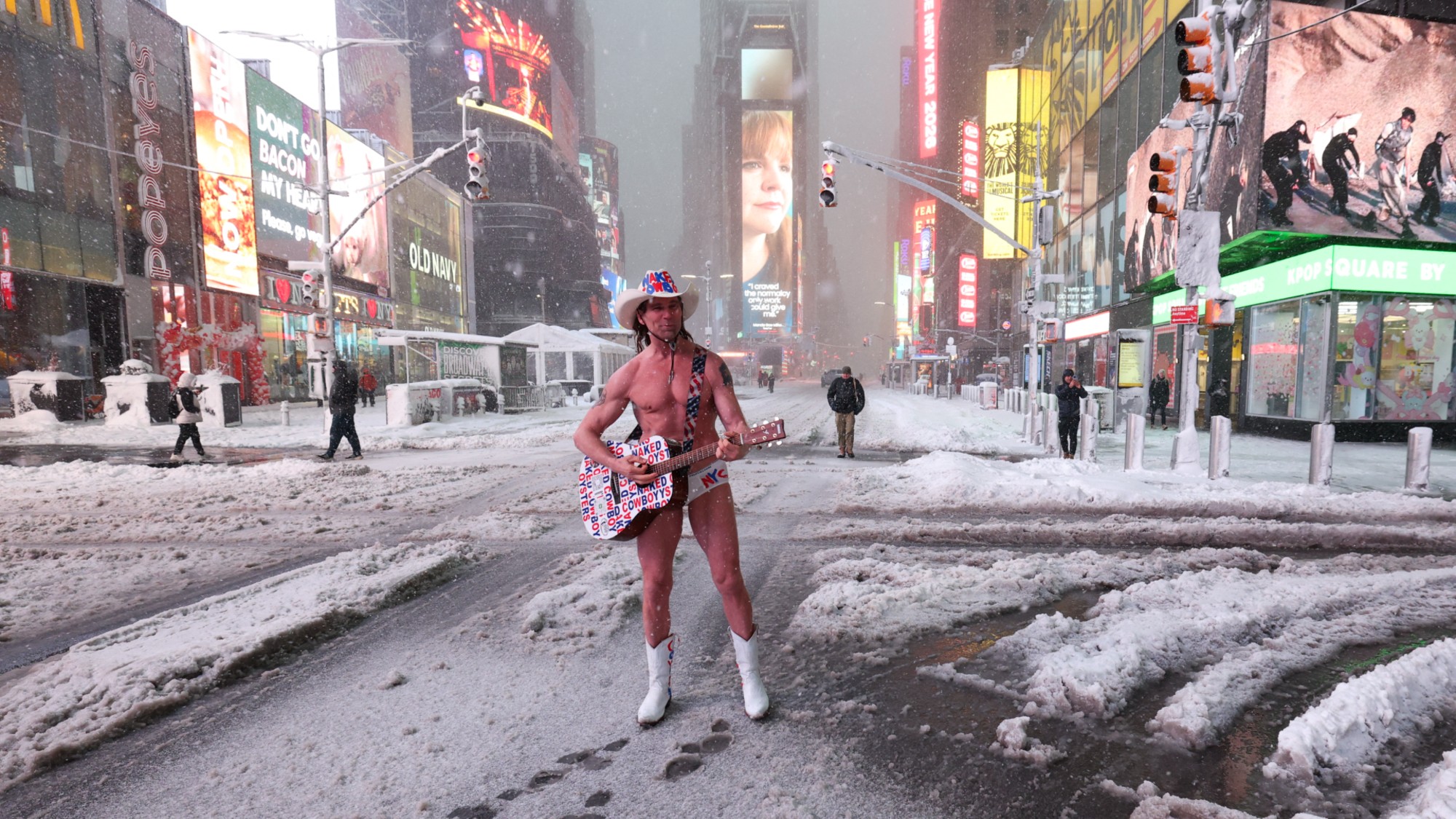
    Spur of the moment

    New York’s Robert John Burck, aka the Naked Cowboy, performs in Times Square. The street performer braved the cold yesterday as a snowstorm lashing the US Northeast triggered school closures and a travel ban across the city.

    Timothy A. Clary / AFP / Getty Images


    Puzzles

    Guess the number

    Try The Week’s new daily number challenge in our puzzles and quizzes section

    Play here


    THE WEEK RECOMMENDS

    A Wuthering Heights weekend in Yorkshire

    Emerald Fennell’s film adaptation of “Wuthering Heights” has sparked “a new wave of Brontë pilgrims”, said Maria Crawford in the Financial Times. I made my own trip to West Yorkshire to experience the “tumult of windswept moors” that inspired Emily Brontë’s 1847 novel, and the books of her sisters.

    Today, it feels a bit like an “open-air literary theme park”. My first stop was the village of Thornton, near Bradford, to visit the Brontë Birthplace, which is “part museum, part magical guesthouse”. Charlotte, Anne, Emily and brother Branwell were all born here, and the community-owned property was revamped and opened to the public last year.

    “Excitingly”, its three bedrooms can be booked by those eager to “sleep where their literary heroes once did”, said Cathy Toogood in The Telegraph. But it was the “handsome” village of Haworth, where Emily moved in 1820 as a toddler, and the “moody moors around it”, that inspired much of “Wuthering Heights”. Her old family home – now the Brontë Parsonage Museum – houses the world’s biggest collection of Brontë manuscripts, personal possessions and furnishings. Emily is buried in the family vault beneath St Michael and All Angels Church next door.

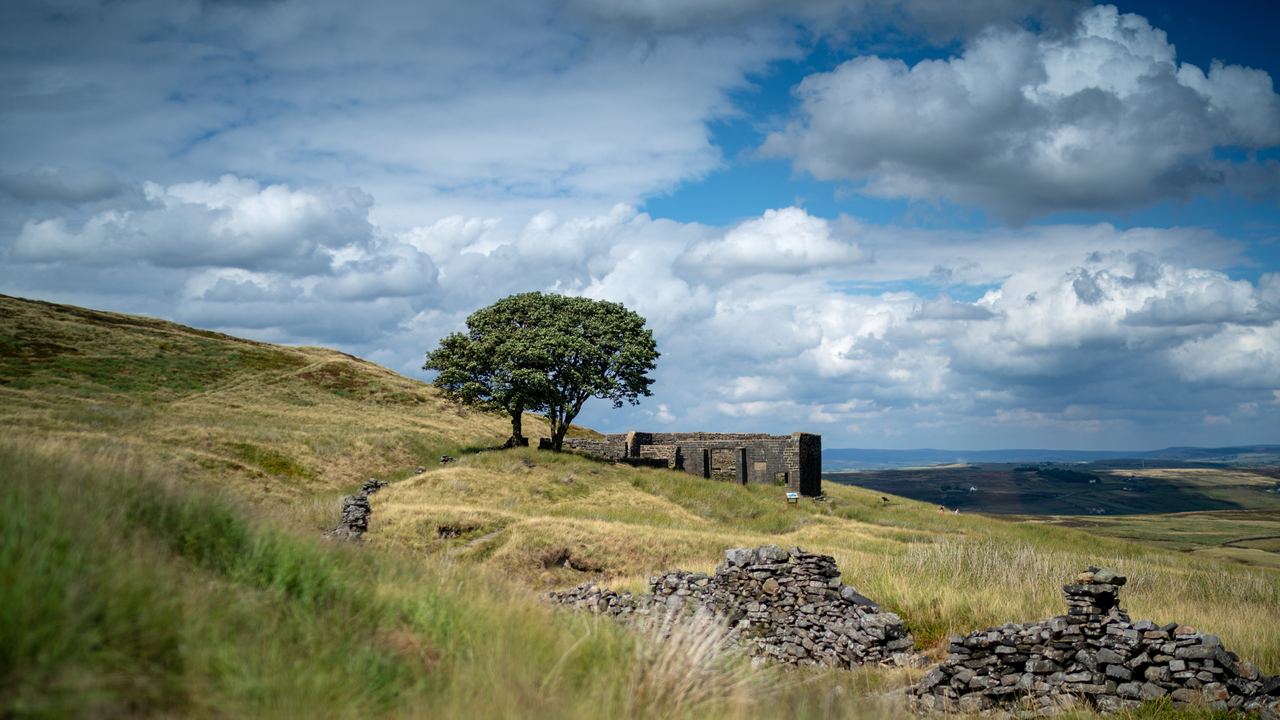
    Stop for lunch at the Black Bull Inn, where Branwell “the struggling Brontë brother fed his addictions”, said Crawford. Then head out into the “untamed wilderness” of the countryside. It’s a four-mile walk to Top Withens – the ruined farmhouse said to have inspired “Wuthering Heights” – via the Brontë Waterfall, a tranquil spot beloved by the sisters.


    Statistic of the day

    £63,011,900,191,687,378.60: The balance left on a woman’s £10 gift card after she ordered a matcha latte from a cafe in Nottingham. Sophie Downing was briefly a quadrillionaire and the richest person in the world after a staff member at 200 Degrees accidentally entered the gift-card number, rather than the value, on the till.


    instant opinion

    Today’s best commentary

    The United States Is Dangerously Misreading Iran
    Ali Hashem on Foreign Policy
    There’s talk in Washington of a “limited strike” on Iran to force “concessions without starting a larger war”, writes Middle East expert Ali Hashem. But conflicts are “limited only when both sides want to keep them contained”. While the US views “military pressure as a means of diplomatic leverage”, Tehran is moving towards the “glorification of resistance in the face of existential threat”. A US strike could unite Iran’s leaders “around a wartime mindset”.

    The QR code is killing off our paper trails
    Laura Freeman in The Times
    My three-year-old daughter is “passionately attached to her scraps”, writes Laura Freeman. For her, “the gift tag is better than the present” and “the Tesco receipt is a prize to be carried aloft”. But the paper trail of our lives – “the tickets and chits, stubs and tokens” – is disappearing as “the QR code conquers all”. With “nothing to prop on the mantlepiece” or “stick on the fridge”, our “experience is diminished, remembrance dimmed”.

    El Mencho’s killing won’t solve Mexico’s cartel problem – or anything else
    Belén Fernández on Al Jazeera
    “As anyone who has ever paid remote attention to global affairs might have predicted”, writes Belén Fernández, the killing of drug lord El Mencho by Mexican security forces has triggered violence across the country. This is “what happens when you take out a cartel kingpin”. And yet his death “will do precisely nothing” to resolve Latin America’s “narcotrafficking problem”. If officials were “actually serious” about getting rid of cartels, they would make trading drugs “less fantastically lucrative” by decriminalising them.


    word of the day

    Djungelskog

    “Jungle forest” in Swedish, and the name of an Ikea soft toy range that includes the orangutan co-star of viral videos about a real-life monkey. Zookeepers at Ichikawa City Zoo in Japan gave the Djungelskog plushie to baby macaque Punch after he was rejected by his mother and troop, prompting not only sympathy but also global demand for the toy.


    Evening Review was written and edited by Hollie Clemence, Rebecca Messina, Elliott Goat, Chas Newkey-Burden, Irenie Forshaw, David Edwards, Helen Brown and Kari Wilkin, with illustrations by Julia Wytrazek.

    Image credits, from top: illustration by Julia Wytrazek / Getty Images; illustration by Julia Wytrazek / Getty Images; Tristan Fewings / Bafta / Getty Images for Bafta; Timothy A. Clary / AFP / Getty Images; Christopher Furlong / Getty Images

    Morning Report and Evening Review were named Newsletter of the Year at the Publisher Newsletter Awards 2025
     

    Recent editions

    • Evening Review

      How Democrats will counter the SOTU

    • Morning Report

      The chaotic fallout of Trump’s tariff defeat

    • Sunday Shortlist

      Tom Cruise fights Brad Pitt — or does he?

    VIEW ALL
    TheWeek
    • About Us
    • Contact Future's experts
    • Terms and Conditions
    • Privacy Policy
    • Cookie Policy
    • Advertise With Us
    • FAQ
    Add as a preferred source on Google

    The Week is part of Future US Inc, an international media group and leading digital publisher. Visit our corporate site.

    © Future US, Inc. Full 7th Floor, 130 West 42nd Street, New York, NY 10036.