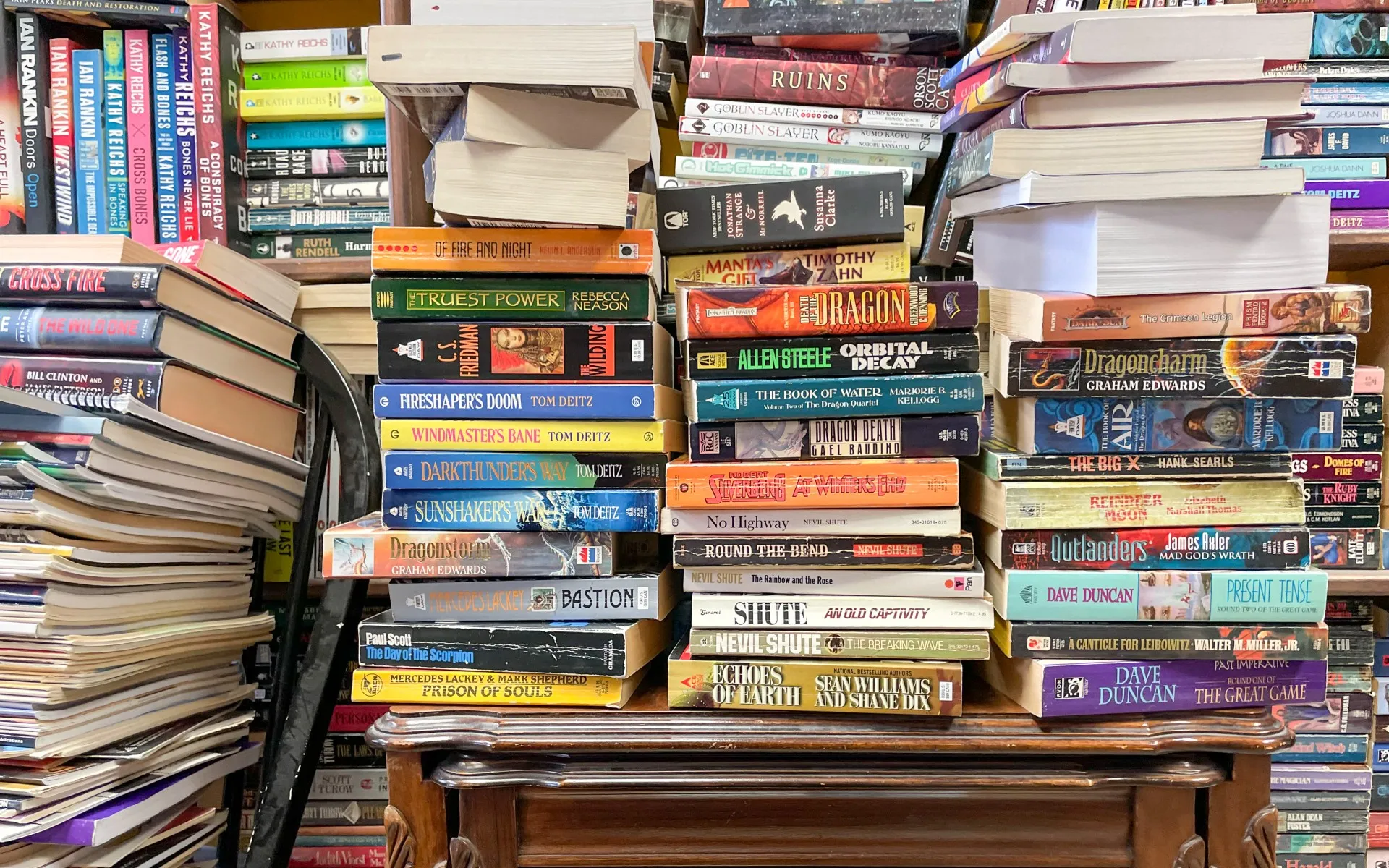
For years, mass-market paperbacks have been credited with making books more accessible and affordable. The compact books could be found in places most people shop, like grocery stores, and were even responsible for the popularity of some authors, including horror icon Stephen King. However, a decline in sales and shifts toward other, more expensive books have led to what may be the end of the pocket-sized format.
Mass market unit sales “plunged from 131 million in 2004 to 21 million in 2024, a drop of about 84%,” according to Circana BookScan, and sales through October 2025 were about 15 million units, said Publishers Weekly. Last year, ReaderLink, the country’s largest distributor of books to airports, pharmacies and big-box stores, announced that it would no longer carry mass-market paperbacks. The books can still be found in some places, but “as a format, I would say it’s pretty much over,” Ivan Held, the president of publishing imprints Putnam, Dutton and Berkley, said to The New York Times.
It wasn’t publishers “leading the move away from mass markets,” said the Times. “It was readers.” They appear “more willing to buy books in larger, pricier formats.”
Industry insiders are mourning what they see as an end to accessible literature. Mass-market paperbacks “democratized America,” Esther Margolis, the publisher of Newmarket Books, said to Publishers Weekly. For the equivalent of a dollar or two, “you could be educated,” she told NPR. You could “pick them up at the school book fair” or at the local gas station. “You can’t really do that today.” |