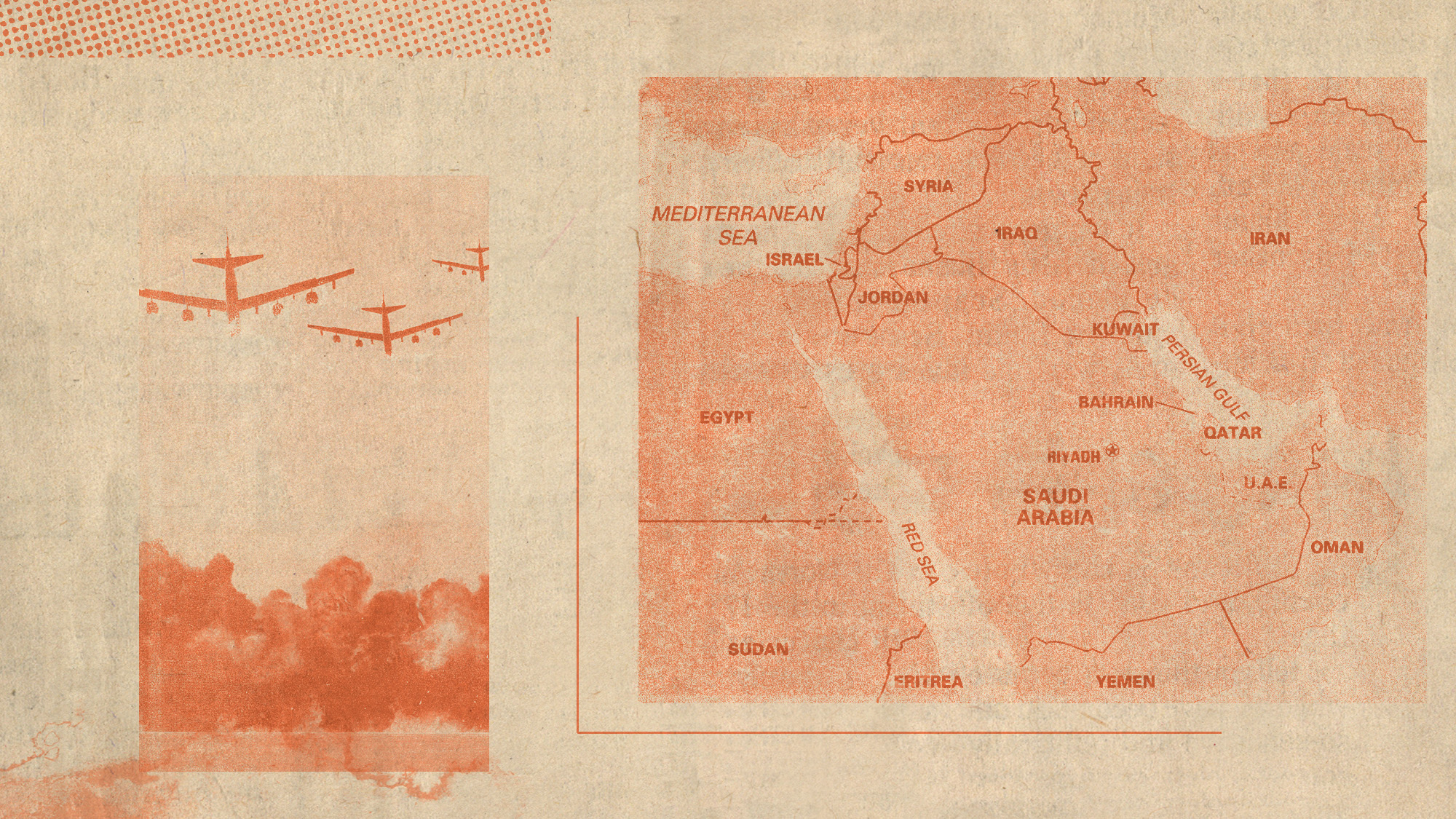
As Iran attacks its Middle Eastern neighbours in response to US strikes, the Gulf states “face a difficult choice”, said Samer Al-Atrush in The Times. Either they press Donald Trump to “end the war quickly” or encourage him to “double down and hit Iran even harder, possibly with their help”. Neither option is “ideal for an energy-rich region that has been sucked into a war it had hoped to avoid”.
The Gulf Cooperation Council – a six-member organisation including the UAE and Qatar – have not ruled out using force, and Qatar’s foreign ministry has said the aggression from Iran “cannot go unanswered”.
What did the commentators say?
The Islamic regime is banking on “inflicting as much pain on the region until it begs Trump to end the war”, said Al-Atrush in The Times. But this could have the opposite effect. If the Gulf states abandon their current “defensive posture”, they could quickly “escalate” the conflict by allowing the US to use their airspace and bases for attacks on Iran, or “even conduct their own”.
The Gulf states “did not want this confrontation”, said Al Jazeera, and Iranian air strikes pose a serious threat to their “vulnerable infrastructure”. If power grids and water desalination plants are bombed out of action, “the scorching hot and bone-dry Gulf countries are essentially uninhabitable”, Monica Marks, a professor of Middle East politics at New York University Abu Dhabi, told the site.
The current turmoil also risks “undoing years of work to de-risk the region” and develop its thriving economies, said Kristian Coates Ulrichsen, of Rice University, on The Conversation. The Gulf states are “critical hubs in the global economy” for oil, gas, international shipping and travel. Gulf states have “long viewed the Islamic Republic as a menace”, said The Economist, but they made concerted efforts towards “rapprochement with their foe, hoping to avoid exactly this scenario”.
What next?
It is “possible” that Gulf states’ forces will “enter the war directly”, Andreas Krieg, from King’s College London, told Deutsche Welle. But it’s more likely that they will engage in “narrow self-defence” operations rather than widespread offensive strikes. As well as trying to maintain diplomatic channels – probably through Oman and Qatar – the Gulf states will also look to “improve their defensive posture” and protect their critical infrastructure.
|