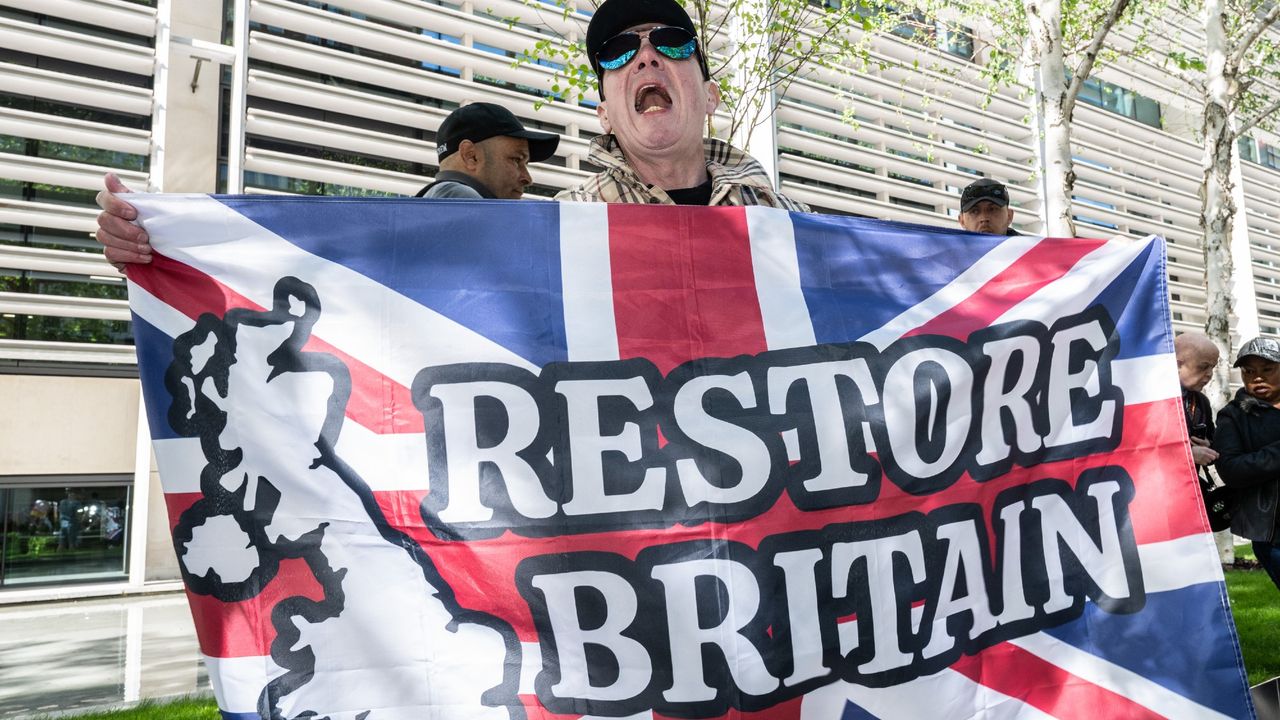
Restore Britain was “conceived as a pressure group”, said LBC. But its founder, former Reform MP Rupert Lowe, has “stepped up his ambitions and appears willing to challenge his old party for the space on the right”.
After being suspended by Reform UK over bullying allegations, which he denied, the Great Yarmouth MP set up his party last year, and it’s already polling at 4%, according to YouGov. Last week, former Chelsea captain John Terry appeared to endorse Restore Britain, responding “100% yes” to an Instagram post by Lowe calling for the country to “ban foreigners from claiming benefits, and remove migrants who are incapable of financially supporting themselves”.
What are Restore Britain’s policies?
Restore would “reverse mass immigration” by deporting all illegal migrants and introducing a “red list” of countries with “higher barriers to entry”, according to its website. It would use tents to house “so-called asylum seekers”, before getting rid of the asylum system altogether. Benefits for those on indefinite leave to remain would be abolished, and “rape gang collaborators” and foreign criminals would be deported.
The party also promises to abolish inheritance tax, establish the lowest corporation tax in Europe and get “able-bodied Britons on benefits back to work”. Other plans include scrapping foreign aid, spending more on defence, defunding the BBC, banning the burqa and repealing net zero goals. Perhaps most controversially, Restore would hold a binding referendum on restoring the death penalty.
What impact could it have on Reform?
Lowe’s party has sought to present itself as the true voice of the right and has used social media to amplify its anti-immigration rhetoric. Boosted by backing from Elon Musk, Lowe is now one of the most followed UK politicians online. Such a force “could cost Reform a number of seats – and potentially even power, in a wafer-thin general election result – by splitting support among those drawn to hard-right anti-immigration populism”, said The Guardian.
For now, Restore is “really very small fry”, Queen Mary University politics professor Tim Bale told Politics Home. Its impact will be determined in large part by how Nigel Farage reacts. He might position Reform as more “mainstream” than Restore. But he might be drawn into adopting some of its policies, which runs the risk of Reform “moving too far out of the kind of what is sometimes called the zone of acceptability, as far as most voters are concerned”.
|